Most food plants end up building three separate audit trail patches over the years, one bolted on for a 21 CFR Part 11 electronic records requirement, another layered in to satisfy an ALCOA+ data integrity expectation during a GFSI-aligned audit, and a third cobbled together whenever a specific customer's auditor asked for something the first two didn't cover. That patchwork approach means every new audit becomes its own scramble, even though the underlying requirements across these standards actually overlap far more than most quality teams realize. A single, well-designed audit trail specification, built once against the combined requirements of 21 CFR Part 11, ALCOA+, and GFSI expectations, satisfies every one of these audits from the same underlying implementation rather than requiring a different system for each. Manufacturers ready to build one audit trail that actually covers every standard they face can start that conversation with iFactory's support team.
Stop Building a Separate Audit Trail for Every Standard You Face
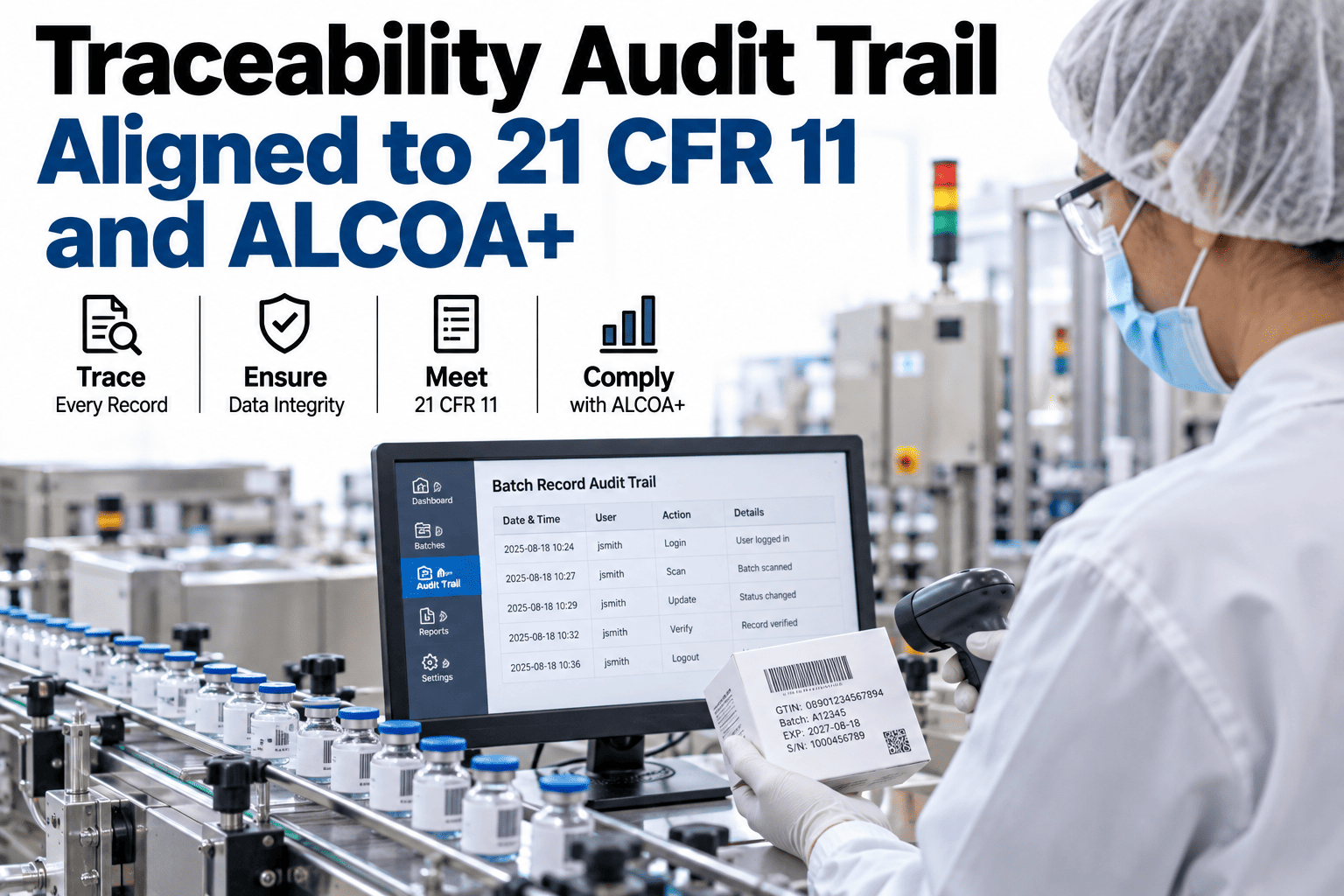
iFactory designs one audit trail implementation that satisfies 21 CFR Part 11, ALCOA+, and GFSI-aligned expectations together, so every audit draws from the same trusted record instead of a different patchwork system.
Why Three Separate Audit Trails Waste Effort and Still Leave Gaps
Building a compliance system reactively, standard by standard as each audit requirement surfaces, tends to produce overlapping but inconsistent records that satisfy no single standard particularly well, since each patch was designed to answer one auditor's specific question rather than the underlying principle behind it.
Electronic Signature Requirements Get Handled Inconsistently
21 CFR Part 11's specific requirements for secure, attributable electronic signatures can get implemented one way for one system and differently for another.
Data Integrity Gets Treated as a Checklist Instead of a Design Principle
ALCOA+ principles like contemporaneous recording and enduring records work best when built into a system's core design, not retrofitted after the fact.
GFSI Audits Uncover Gaps the Other Two Standards Missed
A system built only around 21 CFR Part 11 or ALCOA+ can still fail a GFSI-aligned audit's broader documentation expectations.
Every New Audit Becomes a Fresh Scramble
Without a unified specification, each audit season means re-explaining and re-justifying the same records against a slightly different lens.
Where the Three Standards Actually Overlap
Despite coming from different regulatory and industry bodies, these three frameworks converge on remarkably similar underlying principles once mapped side by side.
| Requirement | 21 CFR Part 11 | ALCOA+ | GFSI |
|---|---|---|---|
| Who Made the Change | Attributable electronic signature | Attributable | Documented responsibility |
| When It Happened | Timestamped audit trail | Contemporaneous | Real-time record keeping |
| Can It Be Changed Later | Secure, tamper-evident records | Original, Accurate | Document control procedures |
| Is It Still Available | Long-term record retention | Enduring, Available | Audit-ready recordkeeping |
Designing One Audit Trail Specification for All Three
Building a unified specification means identifying the strictest requirement across all three standards for each dimension, then designing the system to meet that highest bar consistently.
Map Every Requirement Across All Three Standards Side by Side
Identifying where requirements overlap and where one standard demands more than another for the same underlying principle.
Design to the Strictest Requirement for Each Dimension
Building the system to satisfy whichever standard is most demanding on a given point, rather than the minimum any single one requires.
Build Attribution and Timestamping Into the System's Core
Making every record automatically attributable and timestamped at the point of creation, rather than relying on a separate audit layer bolted on afterward.
Test the Same Record Set Against All Three Audit Lenses
Confirming the unified system genuinely satisfies each standard's specific expectations before relying on it during a real audit.
Build One Audit Trail That Passes Every Standard You Face
iFactory designs a unified audit trail specification against 21 CFR Part 11, ALCOA+, and GFSI expectations together, so every audit draws from the same trusted record.
A Composite Scenario: Three Audits, One System, No Scrambling
A composite dairy processor had historically treated its 21 CFR Part 11 electronic signature compliance, its ALCOA+ data integrity documentation, and its GFSI-aligned certification audit as three separate preparation efforts, each requiring the quality team to pull records into a different format depending on which auditor was arriving that quarter.
After mapping all three standards' requirements side by side and rebuilding their record-keeping system around the strictest combined specification, the same underlying audit trail successfully supported all three audit types within a single year without requiring separate preparation each time. The quality team estimated they cut audit preparation time by more than half simply by no longer needing to reformat or re-justify the same records differently for each standard.
Common Mistakes in Multi-Standard Audit Trail Compliance
Building a Separate System for Each Standard as It Comes Up
Reactive, one-off compliance patches tend to overlap inconsistently rather than satisfying any standard particularly well.
Treating ALCOA+ as a Documentation Checklist
Data integrity principles work best when built into how a system captures records from the start, not retrofitted as after-the-fact documentation.
Assuming 21 CFR Part 11 Compliance Automatically Covers GFSI Expectations
Meeting one standard's specific electronic records requirements doesn't guarantee coverage of a different standard's broader documentation expectations.
Never Testing the System Against All Applicable Standards Together
A system validated against only one standard in isolation may still reveal gaps the first time it faces a different audit lens.
Is Your Plant Ready to Build a Unified Audit Trail Specification
You know exactly which standards apply to your facility
A clear list of applicable regulatory and certification requirements is the starting point for mapping overlap.
You're willing to design to the strictest requirement across standards
Building to the highest bar for each dimension is what makes one system satisfy every applicable audit.
Your current systems capture attribution and timestamps automatically
Built-in attribution at the point of record creation is far more reliable than a bolted-on audit layer.
You can test the same record set against multiple audit types
Validating the unified system against every applicable standard confirms it genuinely covers each one before relying on it.
Frequently Asked Questions
How much overlap actually exists between 21 CFR Part 11, ALCOA+, and GFSI audit trail requirements?
Substantial overlap exists at the level of underlying principles, since all three frameworks ultimately care about who made a record, when they made it, whether it can be altered without detection, and whether it remains available over time, even though each standard phrases and formalizes these principles somewhat differently. Mapping the three side by side typically reveals that a system designed to the strictest version of each principle satisfies all three standards without needing separate implementations. Manufacturers wanting help building this kind of mapping can talk to iFactory support.
What does ALCOA+ actually stand for, and why does it matter for food manufacturing?
ALCOA+ describes a set of data integrity attributes, including that records should be Attributable, Legible, Contemporaneous, Original, and Accurate, plus Complete, Consistent, Enduring, and Available, and it matters because auditors increasingly use these principles as the lens for evaluating whether a facility's quality and traceability records can genuinely be trusted. A system that satisfies ALCOA+ principles tends to naturally align well with GFSI-aligned certification expectations too, since both are fundamentally concerned with record trustworthiness.
Does 21 CFR Part 11 apply to every food manufacturer, or only certain facilities?
21 CFR Part 11 specifically governs electronic records and electronic signatures used to satisfy other FDA regulatory requirements, so its direct applicability depends on which specific FDA regulations a facility is subject to and whether electronic records are being used to meet those requirements. Many food manufacturers building modern, electronic traceability and quality systems find it useful to design toward Part 11 principles regardless, since doing so also supports the broader data integrity expectations increasingly common across GFSI-aligned certification audits.
How do we test whether our audit trail actually satisfies all three standards?
The most reliable approach is running a structured internal review, or a formal mock audit, against each standard's specific checklist using the same underlying record set, which reveals any gap where one standard's expectation isn't fully met by the current system design. Book a demo to see how a unified audit trail gets validated against multiple compliance standards at once.
Is it worth rebuilding an existing system to unify audit trail compliance, or should we just patch what we have?
For most facilities facing more than one applicable standard, a unified rebuild tends to save significant time over the following years compared to continuing to patch and reconcile separate systems for each new audit, even though the upfront investment is real. The savings compound each audit cycle once the same trusted record set can support every applicable standard without separate preparation.
Satisfy Every Audit Standard From the Same Trusted Record
iFactory builds one unified audit trail specification against 21 CFR Part 11, ALCOA+, and GFSI expectations, ending the patchwork compliance cycle.