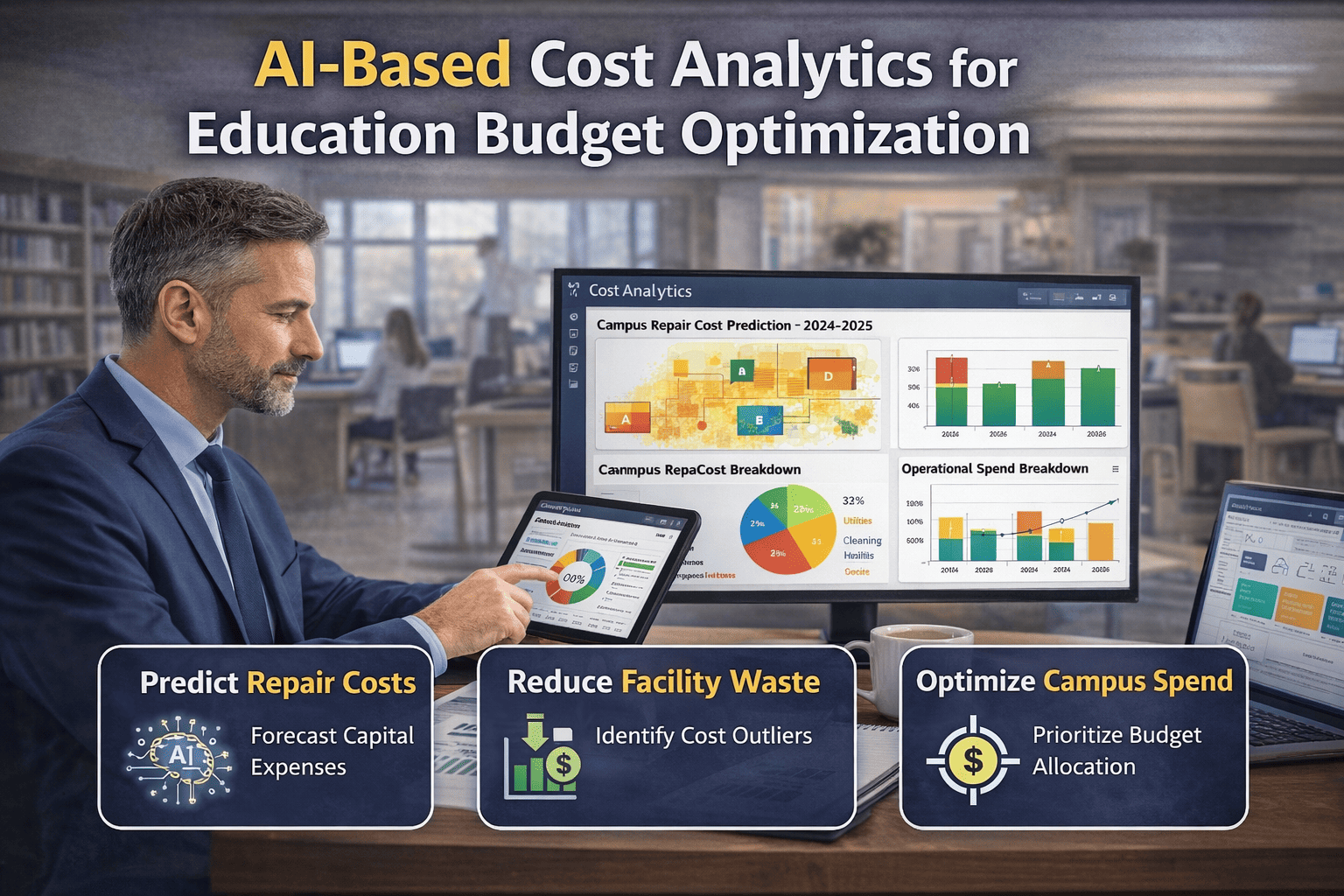
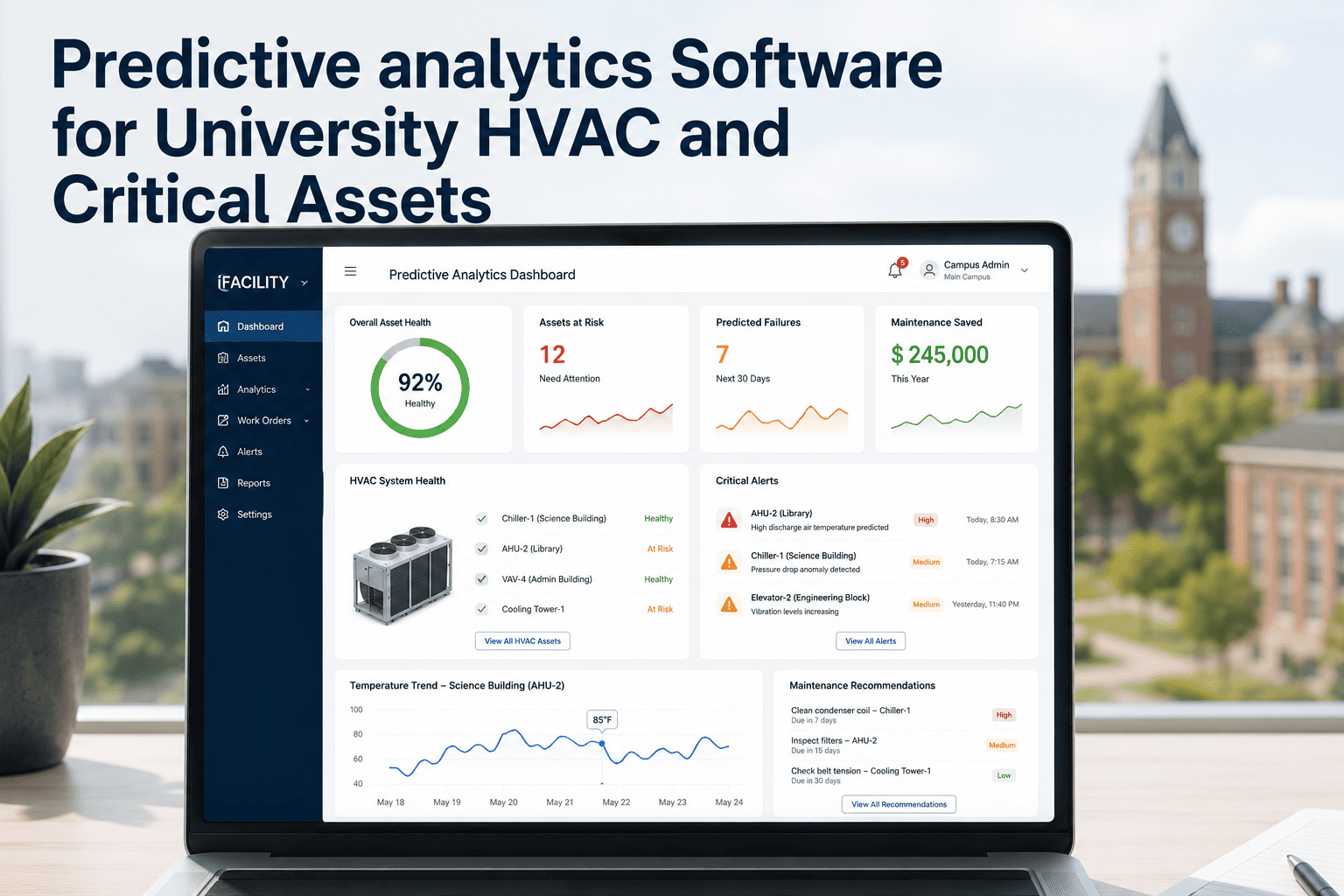
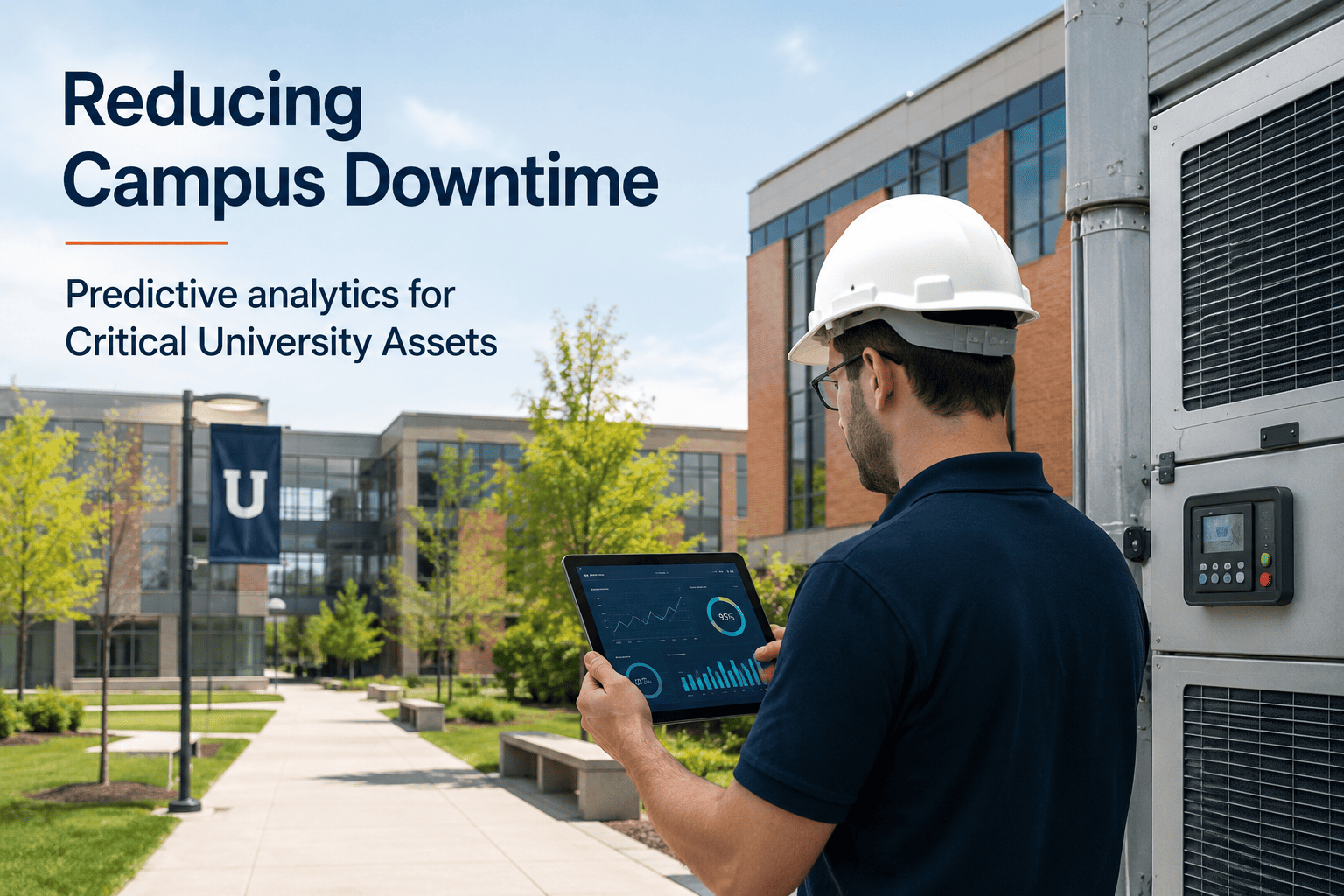
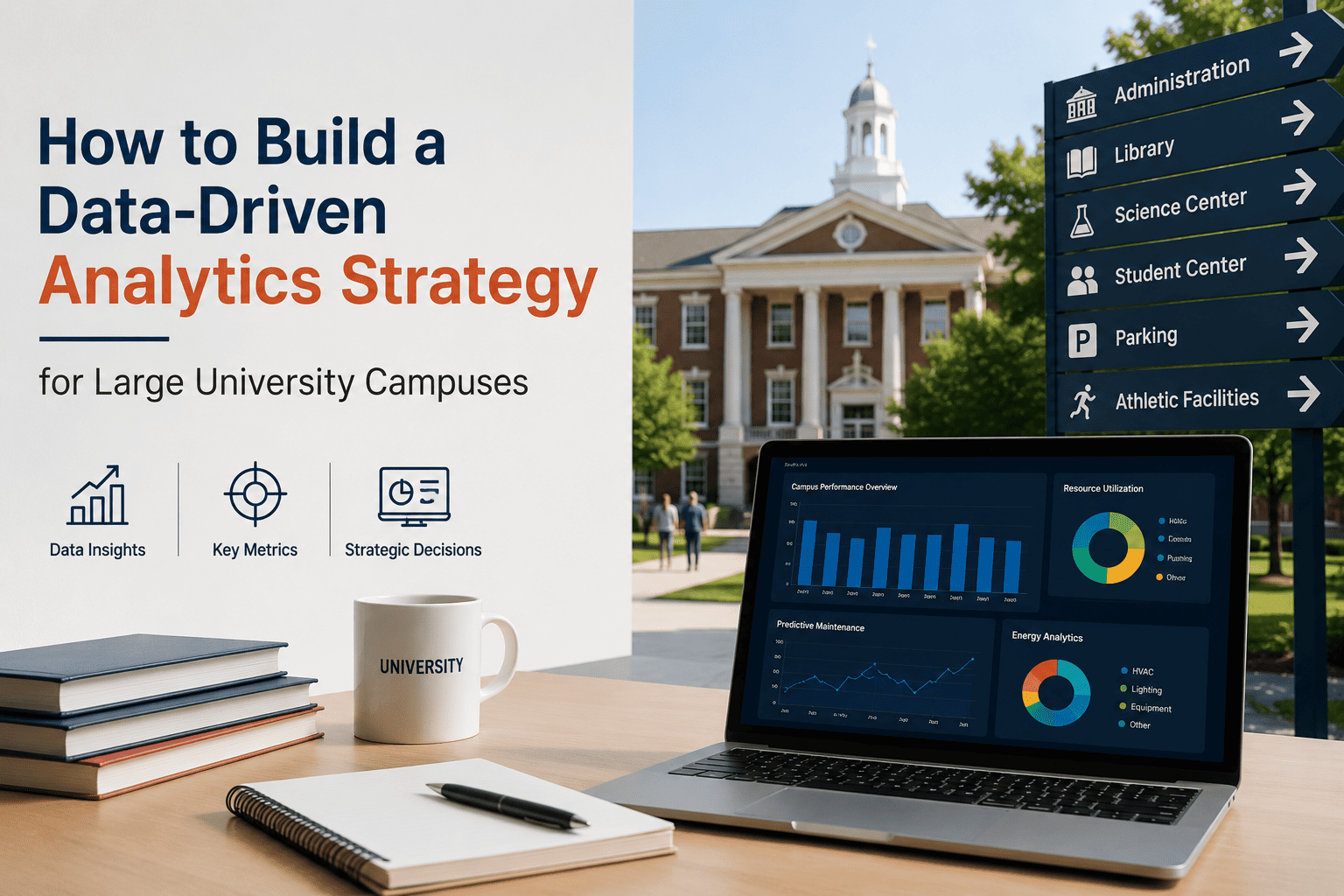
University CFOs in 2026 face a structural contradiction: facilities budgets are built on historical averages while asset failures arrive as unpredictable spikes that consume contingency reserves and force emergency board reallocations. A CFO at a 28-building campus deployed AI maintenance analytics after a $94,000 emergency chiller replacement consumed her entire contingency reserve in March. The AI had enough data to predict that failure 11 months earlier with a confidence interval she described as the first maintenance forecast she had ever trusted completely. The planned replacement cost $62,000. The difference was not luck. It was data. Book a free demo to see how iFactory turns your campus maintenance data into a CFO-grade budget forecasting tool.
The Five Budget Problems AI Maintenance Analytics Solves for CFOs
The finance office does not need a maintenance dashboard. It needs a financial forecasting tool that is powered by maintenance data. These are the five gaps iFactory closes between what the facilities team knows and what the CFO can actually budget for.
The CFO Budget Forecasting Dashboard: What AI Produces
iFactory translates raw maintenance data into five financial outputs the CFO office can use directly in budget submissions, board presentations, and bond documentation. Contact our support team to see which outputs integrate with your existing ERP and financial planning system.
| Financial Output | What the AI Generates | Used For | ERP Integration |
|---|---|---|---|
| 5 and 10 Year Capital Plan | Asset-by-asset replacement schedule with cost projections based on remaining useful life, condition score, and failure probability | Annual budget submission, board capital request, state funding application | SAP, Workday Financials, Banner |
| Facility Condition Index per Building | APPA-aligned FCI score per building updated from live work order and inspection data with trend line over time | Bond underwriting documentation, credit rating review, deferred maintenance reporting | Exports to PDF, Excel, board formats |
| Cost of Deferral Projection | Dollar impact of delaying each capital project by 12, 24, or 36 months calculated from deterioration rate and inflation factors | Converting board objections into funded approvals by showing deferral costs more than investment | Exports to board presentation formats |
| Emergency Spend Forecast | Probability-weighted estimate of emergency repair spend for the coming fiscal year based on asset age profiles and failure patterns | Contingency reserve sizing, risk disclosure in budget narrative, finance committee reporting | Workday, Banner, PeopleSoft |
| Per-Building Cost Intelligence | Cost per gross square foot by building for maintenance, energy, and capital spend benchmarked against APPA averages | Identifying highest-cost buildings for capital prioritization and space consolidation decisions | Integrates with space management systems |
How AI Budget Forecasting Works: From Asset Data to Finance Output
The forecasting process runs in four stages that connect the facilities operation to the finance office without manual data transfer or analyst interpretation in between.
What the Enrollment Cliff Means for Facilities Finance
The 2026 enrollment cliff compresses tuition revenue at the exact moment infrastructure costs are accelerating. AI maintenance analytics helps CFOs navigate this squeeze from both sides of the budget simultaneously.
- Well-maintained facilities are a top-3 enrollment decision factor in 2026 for prospective students and families evaluating competing institutions
- Institutions with documented FCI improvement demonstrate the fiscal stewardship that supports favorable bond ratings and lower debt servicing costs
- Research grant continuity depends on reliable lab infrastructure. AI-monitored research lab cooling and ULT freezer systems protect grant revenue streams that fund institutional operations
- 25 to 40 percent total maintenance spend reduction by converting emergency premium spend into planned work at standard contractor rates frees budget for strategic reallocation
- Energy waste elimination of 15 to 25 percent on aging HVAC systems recovers $450,000 to $750,000 annually at a mid-size institution that can redirect to scholarships or academic investment
- Contingency reserves freed from emergency spend absorption become available for enrollment marketing, financial aid expansion, and the academic investments that drive student decisions
FAQ: AI Budget Forecasting for University CFOs
Documented deployments show AI predicting HVAC and central plant failures 11 months ahead on average, with confidence intervals sufficient for capital budget submissions. Accuracy improves each year as the model accumulates your institution-specific failure patterns, asset age profiles, and maintenance history. The CFO receives probability-weighted cost projections rather than point estimates so the budget narrative reflects forecast uncertainty honestly.
Book a free demo to see prediction accuracy modeled against your existing asset data.Contact our support team to discuss confidence interval reporting for your board.
Budget forecast exports are formatted for direct import into SAP, Workday Financials, and Ellucian Banner without manual data transfer. Actual work order costs post back automatically to close the forecasting feedback loop. The platform also connects to existing BAS infrastructure via BACnet and standard protocols, meaning your Rockwell, Siemens, or Johnson Controls systems continue operating while iFactory reads their data and adds forecasting intelligence on top.
Contact our support team to confirm compatibility with your specific ERP and BAS configuration.Book a free demo to see the integration architecture and export formats live.
The AI begins generating useful capital forecasts from historical work order data, asset age records from your ERP or spreadsheets, and basic building inventory. Five or more years of work order history produces the most reliable failure pattern models, but the platform generates meaningful 5-year capital projections from as little as 2 years of records. IoT sensor data improves accuracy further but is not required to start. Implementation begins with a data audit in week one.
Book a free demo to see a capital forecast generated from a sample dataset matching your institution size.Contact our support team to discuss your current data availability and what forecasting outputs are realistic for year one.
iFactory generates board-ready and lender-ready exports including per-building FCI trend reports, 5 and 10 year capital replacement schedules with cost-of-deferral scenarios, and reactive-to-planned ratio benchmarks formatted to the standards that Moody's and bond underwriters recognize as creditworthy fiscal stewardship. Most CFOs report that the first board presentation using FCI data receives capital approvals that verbal requests had failed to secure for multiple prior budget cycles.
Book a free demo to see the board-ready and bond-grade export formats built from real campus data.Contact our support team to discuss the documentation requirements of your specific rating agency or bond counsel.