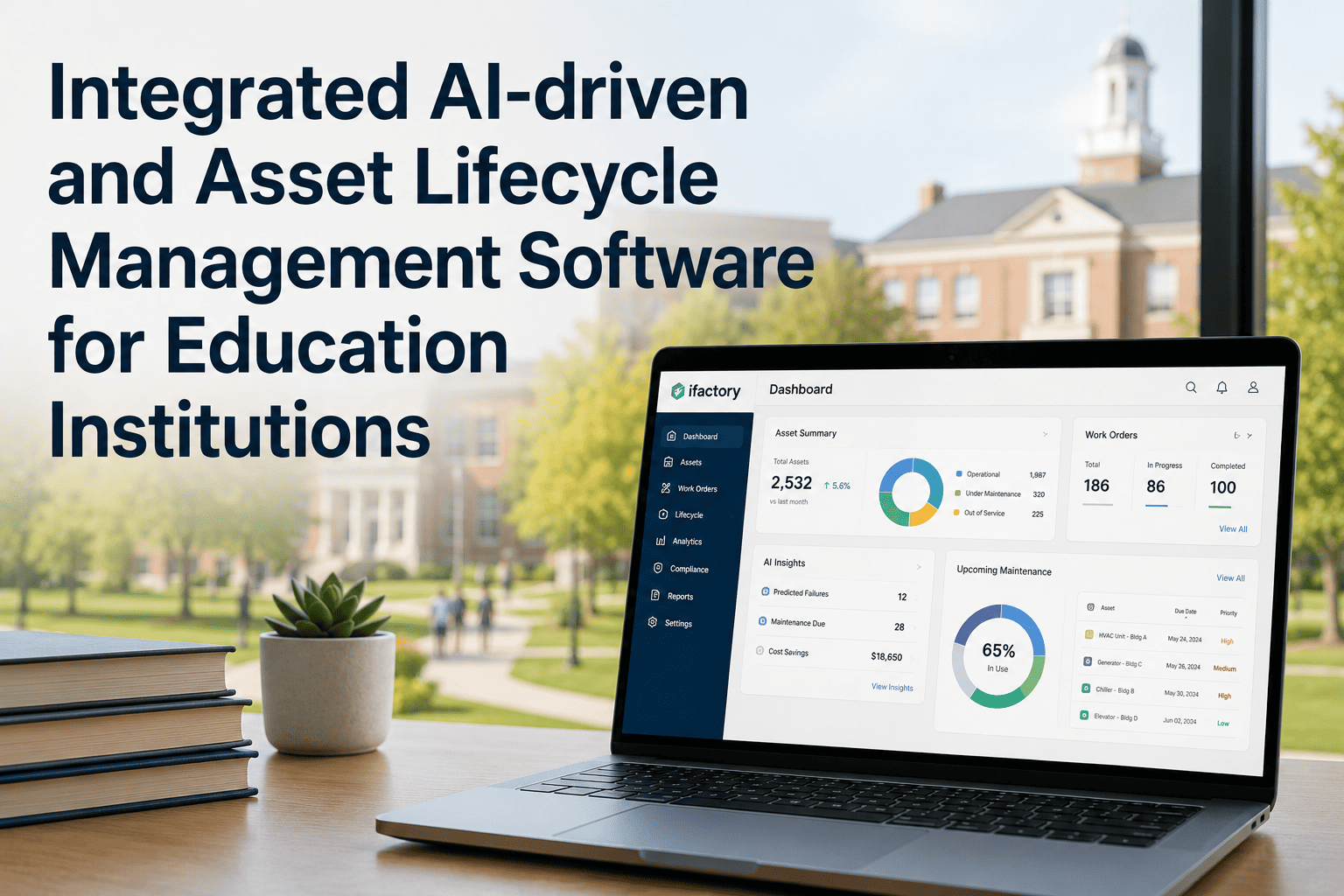
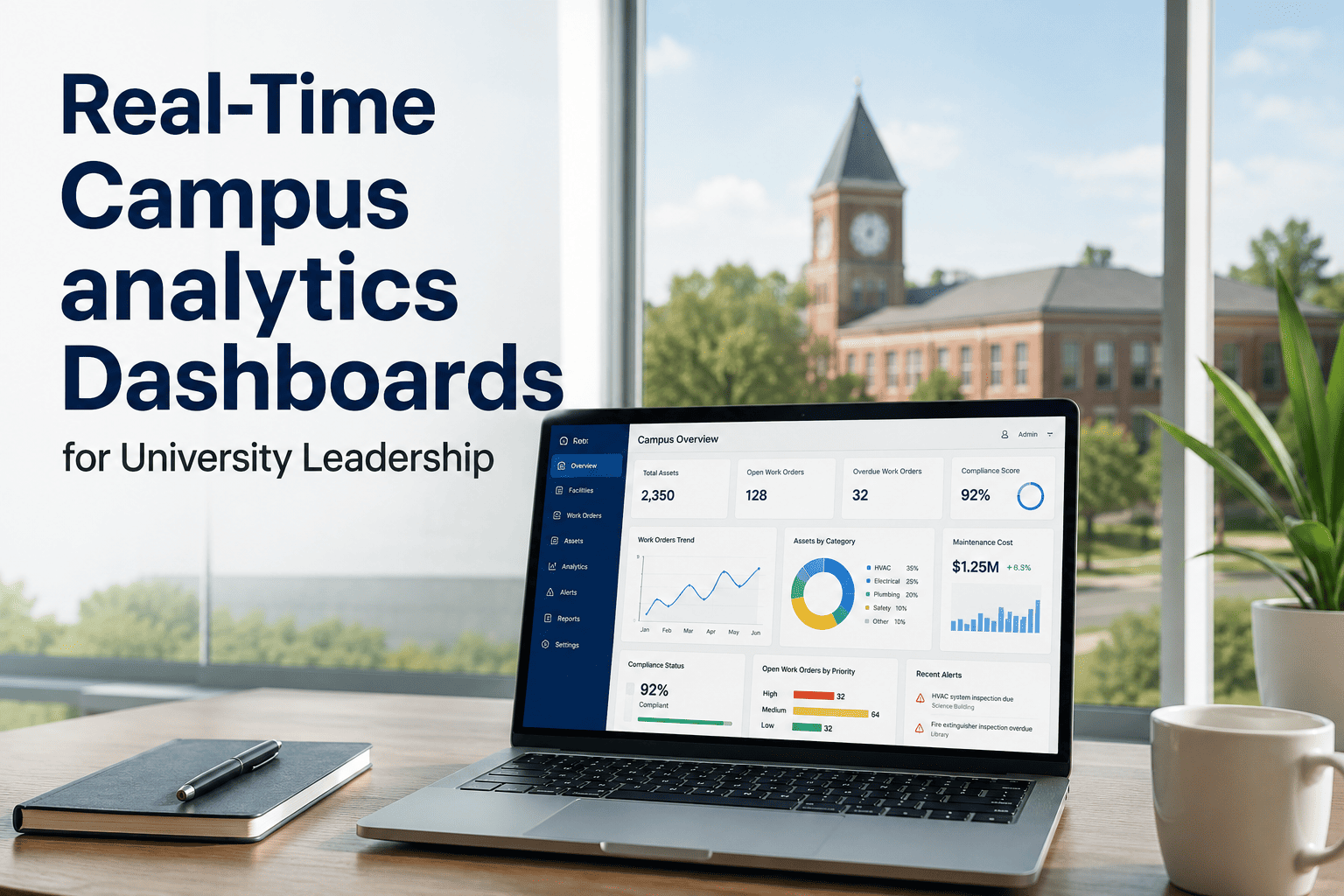
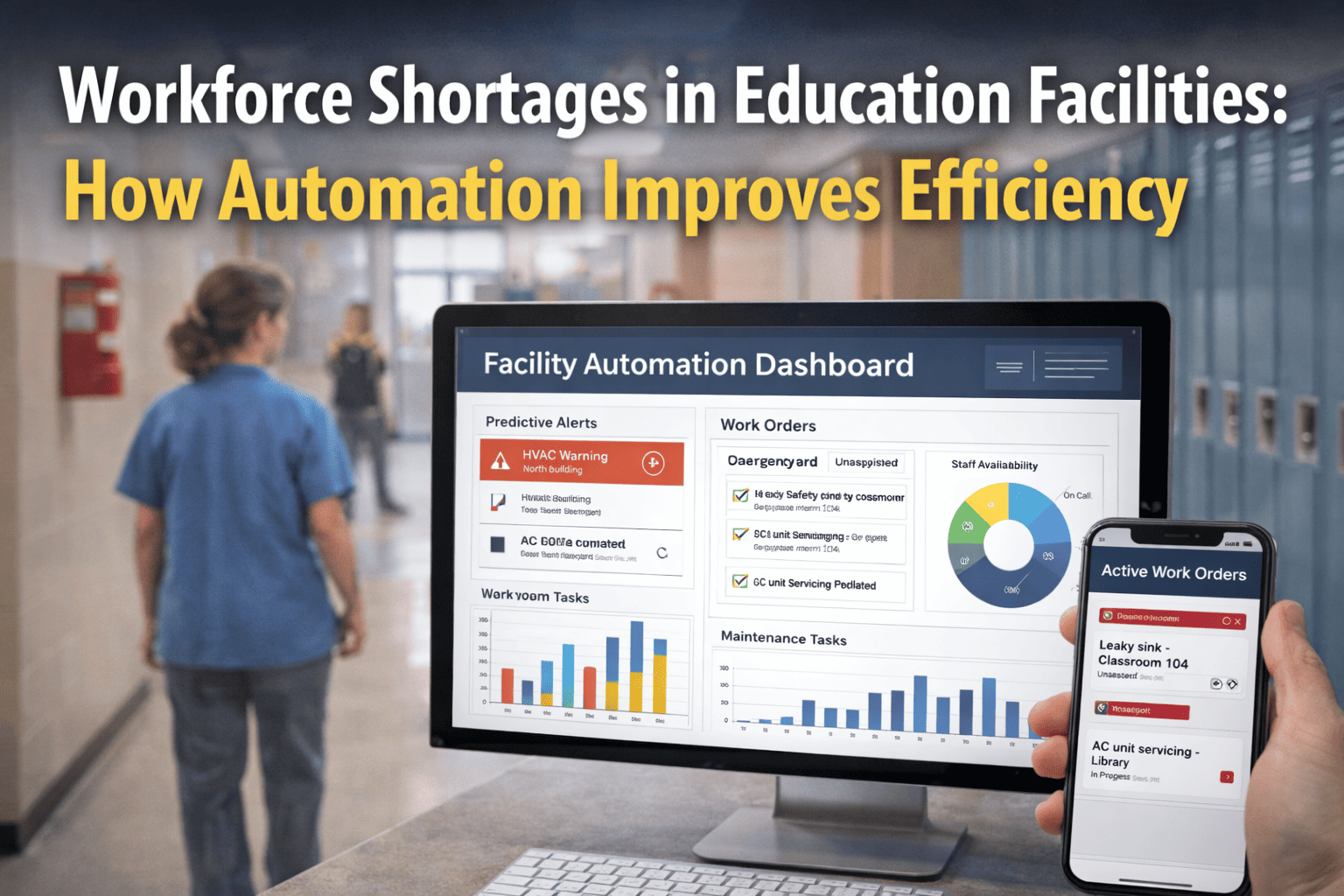
Campus operations teams are shrinking while facility complexity grows. Universities lose experienced technicians to retirement. Hiring freezes leave critical positions unfilled. Deferred maintenance backlogs balloon. Analytics teams stretched across HVAC, electrical, water systems, roofs, and grounds cannot respond to everything. AI-driven analytics automation extends team productivity — predicting equipment failures weeks in advance, automating data collection across buildings, and surfacing the highest-impact repairs first. A single analyst with AI assistance covers what previously required three. This guide explains how analytics automation reshapes campus operations teams.
AI-Driven Analytics Teams in Universities: Workforce Automation & Campus Resilience
Automated facilities analytics · Predictive maintenance at scale · Staff productivity 3x increase · Deferred maintenance triage · Real-time asset monitoring across campus.
Why Universities Need AI-Driven Analytics Teams Now
Campus facilities operations face a staffing crisis. Experienced technicians retire faster than universities can replace them. Hiring is frozen across many institutions. Remaining teams are overworked and reactive — responding to failures after they shut down buildings. Deferred maintenance climbs past $2.3 trillion across US higher education. Critical assets (chillers, boilers, electrical, roofs, pumps) age without predictive visibility. AI-driven analytics automates the data work — freeing analysts to focus on decisions, not data collection. A single analyst now manages what took three five years ago. See how AI analytics scales your team — Book Demo.
Campus Operations — The Five Critical Systems
Three Workforce Problems AI-Driven Analytics Solves
Campus Analytics Use Cases
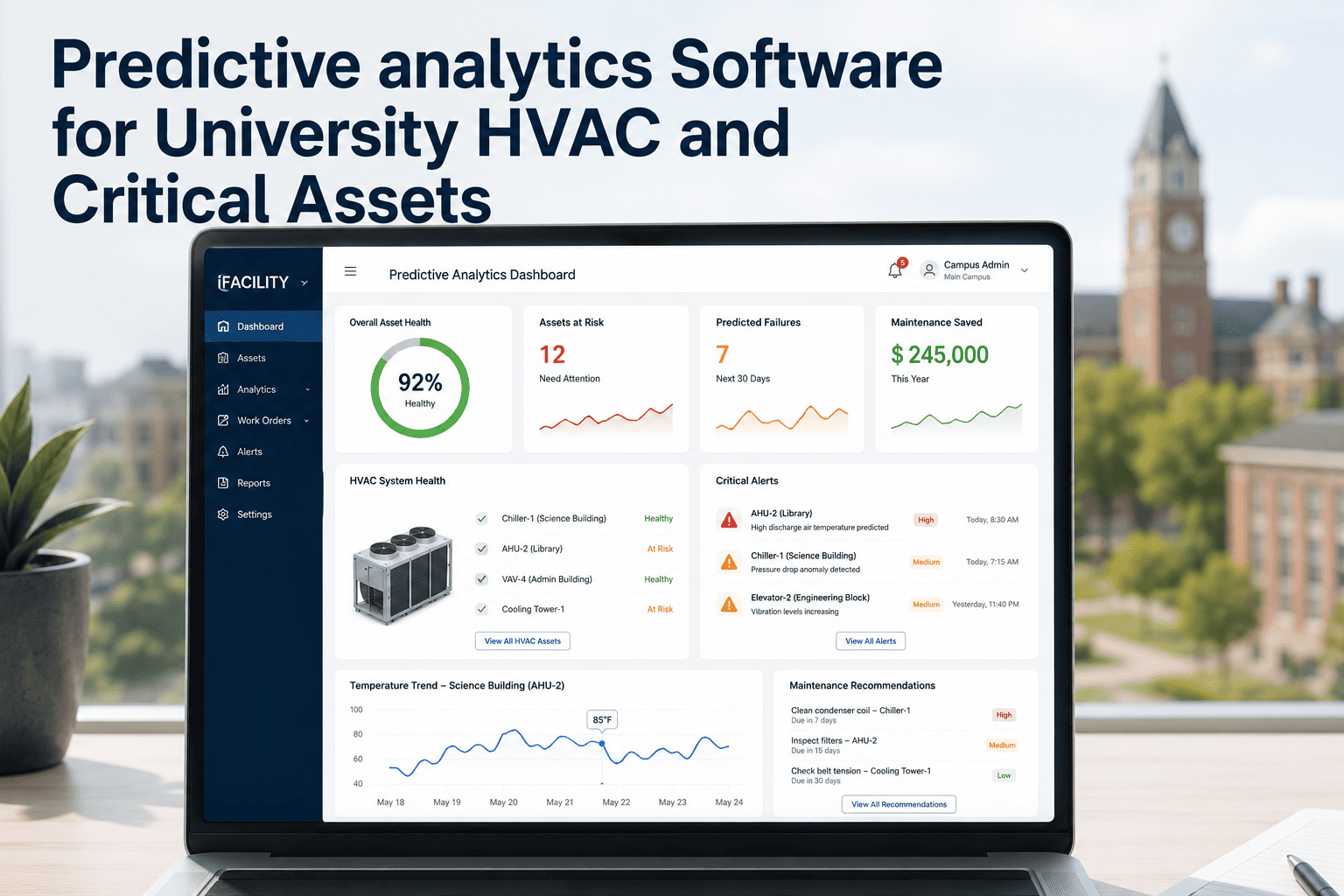
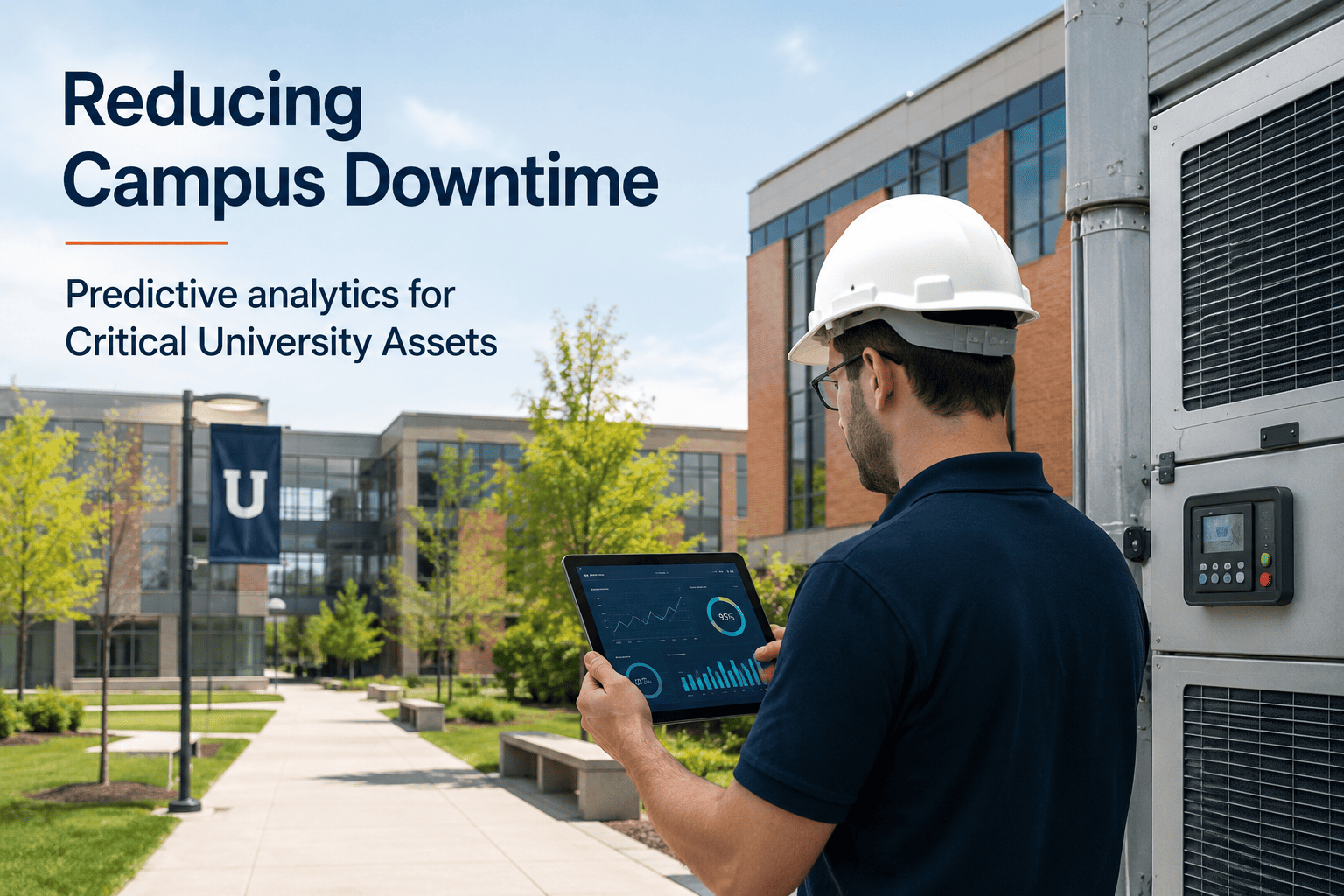
Every chiller and boiler on campus streams vibration, temperature, and pressure data. AI models detect bearing wear, refrigerant leaks, and tube degradation 48+ hours before failure. Work orders auto-generate with required parts and technician scheduling. Maintenance happens on planned downtime, not emergency calls at midnight.
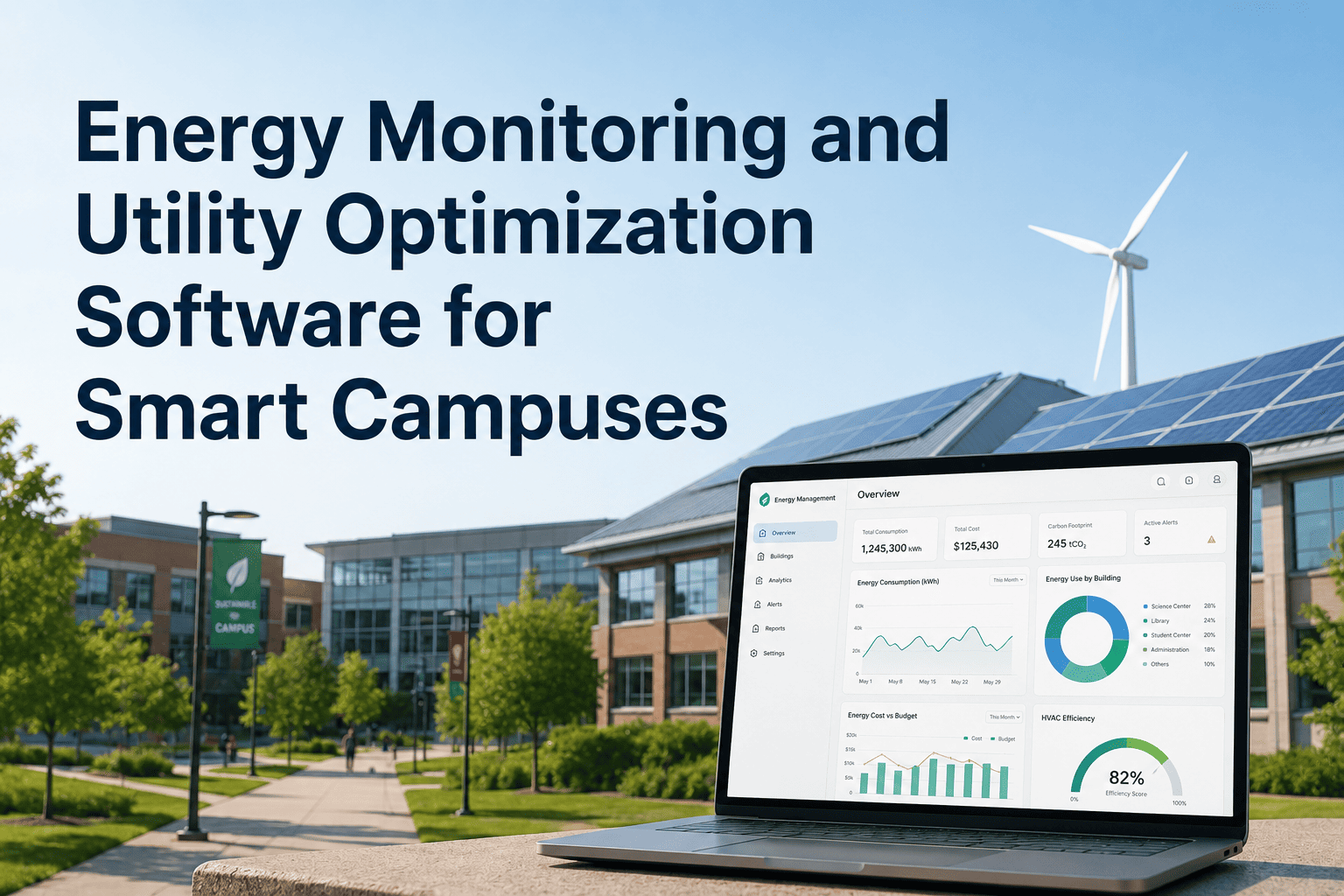
Electrical load data from every building feeds into campus-wide trending. AI identifies overloaded circuits, aging transformers approaching capacity, and generator utilization patterns. Capacity upgrades planned before failures. Load rebalancing prevents emergency shutdowns. Building expansions planned with electrical growth already predicted.
Campus water meters and pump telemetry reveal leaks within hours, not weeks. AI detects abnormal flow patterns — a broken supply line, irrigation valve stuck open, or underground leak. Usage trending surfaces water conservation opportunities. Treatment system efficiency monitored continuously. Each building's water cost becomes transparent and controllable.
What AI-Driven Analytics Delivers
FAQ
Scale Your Campus Analytics Team With AI
Shrinking teams managing growing facility complexity. AI-driven analytics automates data work — freeing analysts to focus on decisions. One analyst now covers what took three. Predictive maintenance prevents cascading failures. Deferred maintenance gets prioritized by condition, not age. Campus operations shift from reactive to predictive.