The HVAC industry is short roughly 110,000 technicians today, with about 25,000 leaving the workforce every year against 40,000+ new openings. The honest fix isn't hiring faster, it's cutting the time a new hire needs before they can diagnose a no-cool call alone — and that's a coaching problem, not a staffing one. A diagnostic copilot that catches the specific mistakes a novice makes, in the moment, shortens ramp-up without putting an undertrained tech alone on a job they can't yet handle. Contractors ready to see this on their own dispatch data can book a demo of iFactory AI's technician copilot.
Guided Diagnosis That Catches Apprentice Mistakes Before the Callback Does
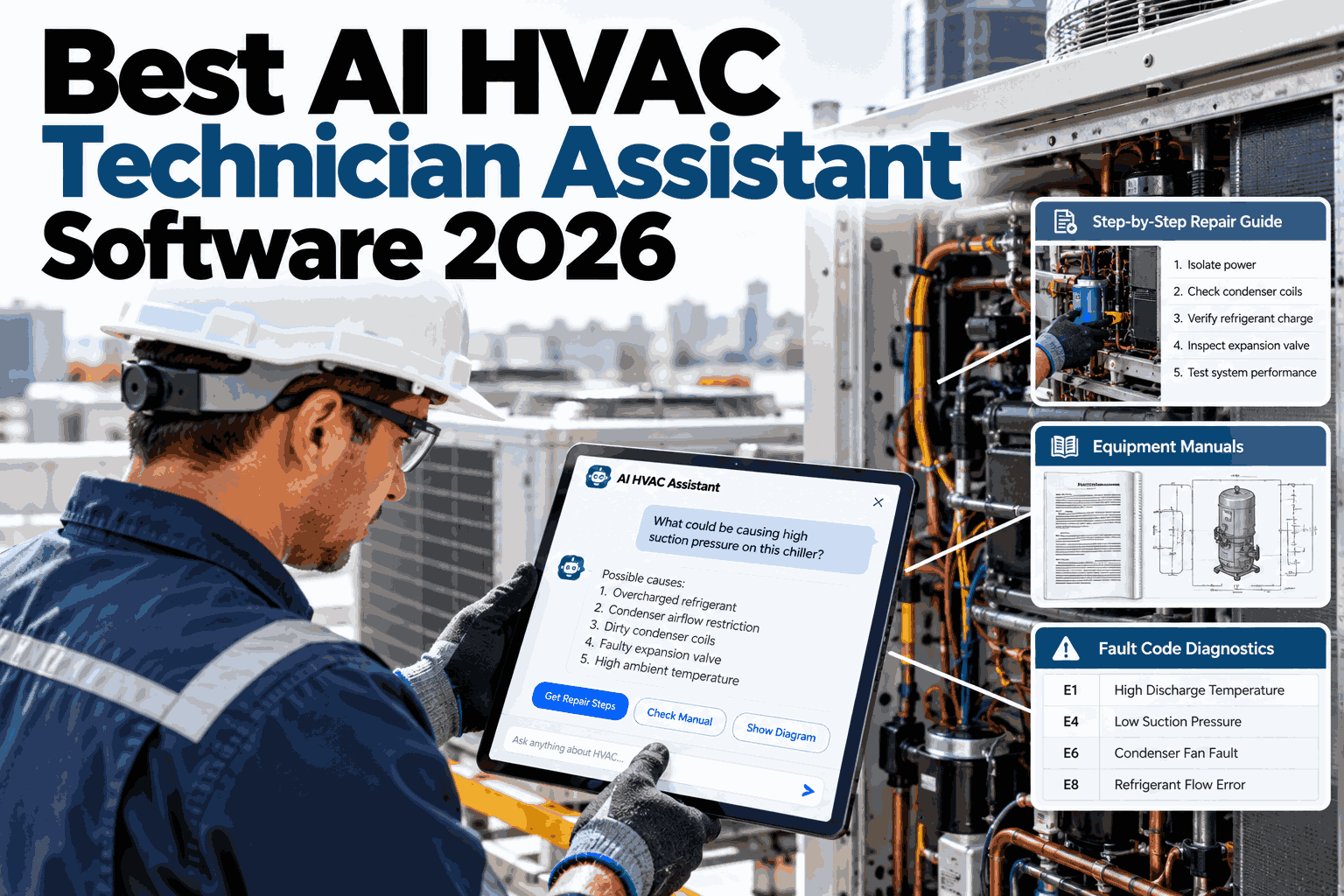
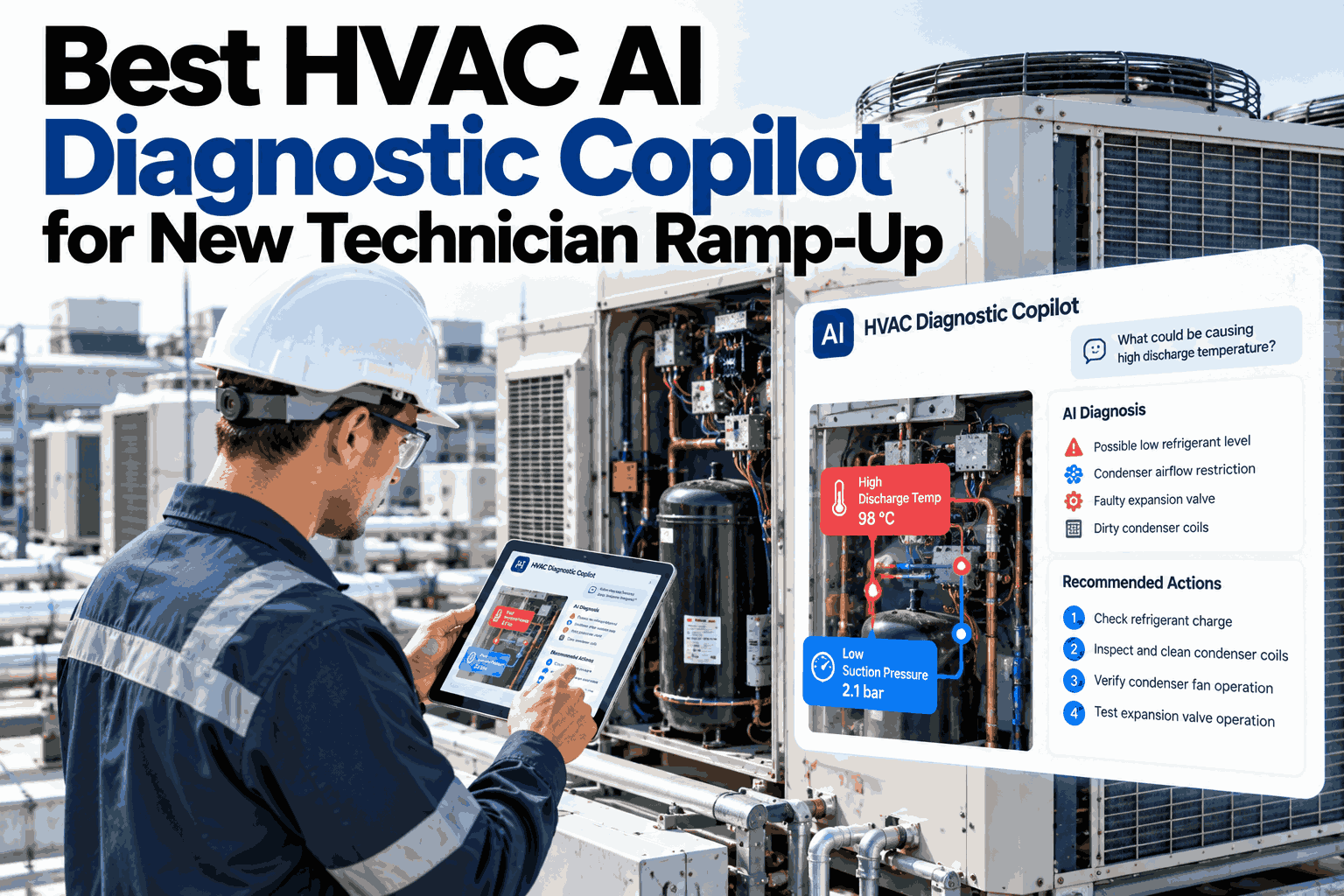
iFactory AI's diagnostic copilot walks a new HVAC technician through a guided fault tree in real time, flagging the specific errors apprentices make most often, so ramp-up gets shorter without sending someone out undertrained.
The Shortage Everyone Names, the Ramp-Up Time Nobody Measures
Every HVAC hiring conversation leads with the national shortage number. Far fewer contractors can say how long it actually takes a new hire to diagnose a routine no-cool call without a senior tech on the phone.
Guided, Not Generic
A chatbot that answers HVAC questions is not the same thing as a copilot that walks a specific symptom through a specific fault tree, in the order a trained tech would actually check it.
Why Apprentices Actually Learn Faster This Way
The ramp-up benefit isn't just fewer mistakes on any single call. It's that every guided call becomes a repeatable lesson instead of a one-off correction from whoever happened to pick up the phone.
Where New Technicians Actually Go Wrong
The errors that stretch a new hire's ramp-up aren't random. A handful of patterns show up across almost every apprentice's first year in the field.
Wrong-order checks
Jumping to a refrigerant charge check before confirming airflow, electrical, and controls — the most common sequencing error.
Misread readings
Superheat and subcooling numbers pulled correctly but interpreted against the wrong chart or ambient condition.
Skipped safety steps
Lockout/tagout, refrigerant recovery procedure, or electrical isolation steps rushed under time pressure on a call.
Premature part swaps
Replacing a capacitor or contactor that tested fine, because the actual fault sat one step further down the tree.
See the Apprentice Error-Catch Patterns Live
iFactory AI can walk through the specific error patterns its copilot flags for new technicians. Book a demo to see it on a real fault tree.
A Fault Tree the Copilot Actually Walks
Take a routine no-cool call. A guided copilot doesn't skip to an answer — it walks the same sequence a senior tech would, confirming each step before moving to the next.
The Cost of Skipping Ahead, in Plain Numbers
A premature part swap isn't just a wasted part. It costs a second truck roll, a frustrated customer, and time the apprentice spends relearning a lesson they could have gotten right the first time.
Real-Time Coaching, Not After-the-Fact Review
The value of a diagnostic copilot comes from catching an error while the technician is still at the unit, not from a supervisor reviewing the ticket the next morning.
Shorten Ramp-Up Without Skipping the Safety Line
iFactory AI's copilot escalates genuinely hazardous calls to a senior tech automatically. Book a 30-minute walkthrough to see the escalation rules.
What the Copilot Is Actually Built From
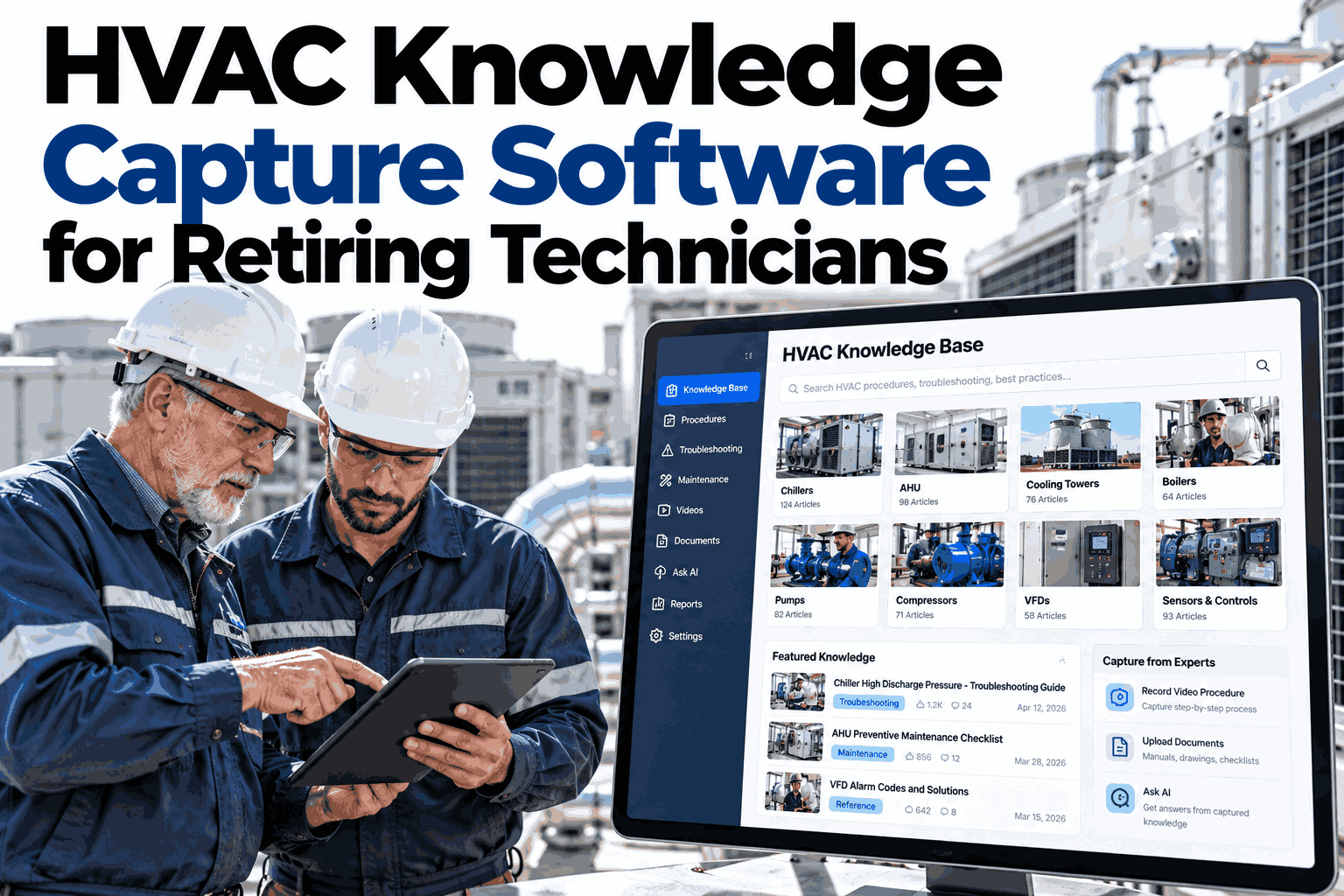
A guided fault tree has to come from somewhere. The copilot's diagnostic sequences are built from the same knowledge that would otherwise walk out the door with a retiring senior technician.
| Input | What it contributes | Why it matters for a new tech |
|---|---|---|
| Manufacturer service manuals | Baseline fault-tree sequence and spec ranges per model | Grounds the copilot in documented procedure, not improvisation |
| Senior technician call history | The order and shortcuts experienced techs actually use on real jobs | Captures field judgment that manuals alone don't cover |
| Past callback records | Which fixes held and which came back within 30 days | Flags diagnostic paths that look right but historically fail |
| Equipment service history | This specific unit's prior faults and repairs | Narrows the fault tree using the unit's own pattern, not a generic one |
Measuring Ramp-Up, Not Just Call Volume
A contractor rolling this out needs a way to tell whether ramp-up is actually shortening, not just whether the new hire is staying busy.
Who Uses This Day to Day
A diagnostic copilot touches more than just the apprentice at the unit. Three other roles rely on the same underlying record for different reasons.
Getting Started Without Retraining the Whole Fleet at Once
Rolling a diagnostic copilot out to every technician on day one is rarely the fastest path to results. A staged pilot gets useful data sooner.
A Composite Illustration: The Capacitor That Wasn't the Problem
This is an illustrative composite, not a specific named technician or contractor, built to show how a guided sequence changes a specific call.
Where iFactory AI Fits
A diagnostic copilot needs real fault-tree logic, live equipment context, and a safety escalation line built in from day one. iFactory AI's technician assistant is built around exactly that.
Guided Fault-Tree Diagnosis
Step-by-step sequencing matched to the symptom and equipment, not a generic Q&A response.
Real-Time Error Catching
Flags out-of-range readings, skipped safety steps, and premature part swaps as they happen.
Senior Technician Knowledge Capture
Builds the fault tree from manufacturer manuals, senior-tech call history, and real callback outcomes.
Safety Escalation Rules
Automatically routes genuinely hazardous call patterns to a live senior technician instead of the copilot alone.
Turnkey AI, Live in 6-12 Weeks
iFactory AI ships as a complete hardware-and-software bundle — a pre-configured NVIDIA AI server, racked and ready, with software pre-loaded. Rack it, plug in power and Ethernet, and the AI is live. iFactory's team handles cabling, network setup, PLC/SCADA integration, operator training, and 24x7 remote monitoring.
Expert Review
This page's labor-market figures and diagnostic framework were reviewed for accuracy against published HVAC industry workforce research before publication.
Frequently Asked Questions
Does a diagnostic copilot replace the need for a licensed senior technician?
No. The copilot is built to accelerate how quickly a new technician can diagnose routine, lower-risk calls independently — it is not a substitute for a licensed senior technician on genuinely hazardous work. Call patterns matching known high-risk faults, such as gas or high-voltage issues, are designed to escalate to a live senior tech rather than being handled by the copilot alone.
How is this different from giving a new technician access to service manuals and a general AI chatbot?
A manual gives static reference information, and a general chatbot answers isolated questions without tracking where the technician actually is in a diagnosis. A guided copilot follows the same step-by-step fault-tree sequence a trained technician would use, takes the technician's live readings as input, and narrows the next check accordingly — closer to a senior tech looking over a shoulder than a search engine. Book a demo to see the sequencing on a real fault tree.
What specific mistakes does the copilot catch that a new technician is most likely to make?
The most common patterns are checking steps out of order (jumping to a refrigerant charge check before confirming airflow and electrical), misreading a superheat or subcooling number against the wrong chart, skipping a safety or lockout step under time pressure, and swapping a part that tested within spec rather than continuing down the sequence to the actual fault.
How is the copilot's fault-tree logic actually built?
It draws on manufacturer service manuals for baseline sequencing and spec ranges, senior technician call history for the field judgment manuals don't capture, past callback records to flag diagnostic paths that looked right but failed within 30 days, and the specific equipment's own service history to narrow the tree further.
How should a contractor measure whether ramp-up is actually improving?
Calls completed per week measures activity, not competence, since a fast but wrong diagnosis still counts as completed. A more reliable pair of metrics is the independent-diagnosis rate — how often a new technician resolves a call via the guided sequence without escalating — alongside the 30-day callback rate on those same calls. Book a 30-minute session and iFactory AI's team can help set up that tracking.
Shorten the Path From New Hire to Independent Technician
iFactory AI's diagnostic copilot catches apprentice mistakes in real time and builds its fault tree from your own senior techs' knowledge. Book a demo to see it on your equipment mix.