A boiler burner that is out of tune rarely announces itself the way a tripped safety does. It just quietly burns more fuel than it needs to, firing rate after firing rate, day after day, while the flame still looks fine to anyone glancing through the sight glass. The only way to actually know whether a burner is running at its optimal air-fuel ratio is to measure it, and the only way to know whether it stays that way across every firing rate and every outdoor air condition is to measure it continuously rather than once a year during a combustion tune-up. Maintenance managers who want that continuous picture can start at ifactory support.
Keep Every Firing Rate Tuned, Not Just the One You Tested
AI reads O2 and CO continuously across the full firing range, catching linkage drift and combustion inefficiency long before the next scheduled tune-up would ever find it.
Why a Once-a-Year Tune-Up Is Not the Same as a Tuned Burner
A standard annual combustion tune-up measures O2 and CO at a handful of firing rates, adjusts the linkage or the parallel positioning controls to hit target values at those points, and calls the job done. That snapshot is genuinely useful, but it only describes the burner's performance on that one day, at those specific ambient conditions, at those specific test points. A burner tuned in October under cool, dry air can drift meaningfully out of tune by the following summer as ambient temperature and humidity shift the actual air-fuel ratio delivered at every damper position, even though nobody touched the linkage.
Mechanical linkage systems compound the problem further. Cam-and-jackshaft designs rely on physical linkages between the fuel valve and the combustion air damper, and every one of those mechanical joints accumulates slack over time. That slack means the same damper command no longer produces the same actual air-fuel ratio it did when the burner was last tuned, and the drift is worst at the firing rates that were not directly tested during the last tune-up. A burner can pass its annual test with flying colors at high fire while quietly running rich or lean everywhere in between.
Bring Your Last Combustion Test Report to a 30-Minute Call
We will show what continuous monitoring across the full firing range would likely reveal beyond what an annual test alone can see.
The Narrow Window Between Too Much Air and Too Little
Combustion tuning is a genuine balancing act, and the target window is narrower than most people expect. Too much excess air, meaning a high O2 reading, wastes fuel because the burner has to heat air that carries no combustible content out the stack along with the actual combustion products. Too little excess air, meaning a low O2 reading approaching the point of incomplete combustion, risks CO formation, soot buildup on heat transfer surfaces, and in more severe cases outright combustion instability. The optimal point sits in a relatively narrow band between those two failure directions, and that band shifts slightly with firing rate, fuel quality, and ambient conditions.
| Firing Rate | Target O2 Range | CO Alarm Threshold | Typical Efficiency Penalty if Untuned |
|---|---|---|---|
| Low Fire | 4.5% - 6.0% | >100 ppm | 3 - 5% |
| Mid Fire | 3.0% - 4.5% | >100 ppm | 2 - 4% |
| High Fire | 2.5% - 3.5% | >100 ppm | 1 - 3% |
Linkage-Less Systems Change the Game, but Do Not Eliminate Drift
Modern burners with linkage-less, fully metered control systems remove the mechanical slack problem almost entirely, since each actuator, the fuel valve and the air damper, is positioned independently by an electronic controller rather than a shared mechanical cam. That is a genuine improvement over older linkage designs, and it holds air-fuel ratio far more consistently across the firing range. It does not, however, eliminate every source of drift. Fuel gas heating value can vary by supplier or season, damper actuators still wear over years of cycling, and flue gas analyzer probes themselves need periodic verification against a calibrated reference to keep the entire control loop trustworthy.
This is where continuous monitoring earns its value even on the most modern burner hardware. Rather than assuming a linkage-less system is permanently tuned once commissioned, ongoing O2 and CO trending confirms that the control loop is actually holding its target across real operating conditions, and flags the specific point in the firing curve if it starts to wander.
Fuel Quality Variation Is an Underrated Source of Drift
Most discussions of combustion tuning focus on the mechanical side, linkage slack, actuator wear, damper positioning, because those are the causes a technician can physically inspect and adjust. Fuel quality variation gets much less attention despite being a genuine and fairly common source of air-fuel ratio drift, particularly for facilities on interruptible or variable-source natural gas contracts. Heating value can shift meaningfully between different gas sources blended into the same pipeline, and a burner tuned for one heating value will run at a subtly different air-fuel ratio when the actual delivered gas shifts, even though nothing on the burner itself has changed at all.
Continuous O2 and CO monitoring is particularly well suited to catching this specific failure mode, because it does not need to know the cause of a drift to detect that one has occurred. A facility whose combustion efficiency degrades on a pattern that correlates more closely with gas supply schedules than with equipment age or run hours is showing a strong signal that fuel quality, not mechanical wear, is the driver, and that distinction changes the appropriate response entirely, from a maintenance work order to a conversation with the gas supplier or a review of the burner's turndown calibration for a wider heating value range.
Getting the Most From an Existing Flue Gas Analyzer Investment
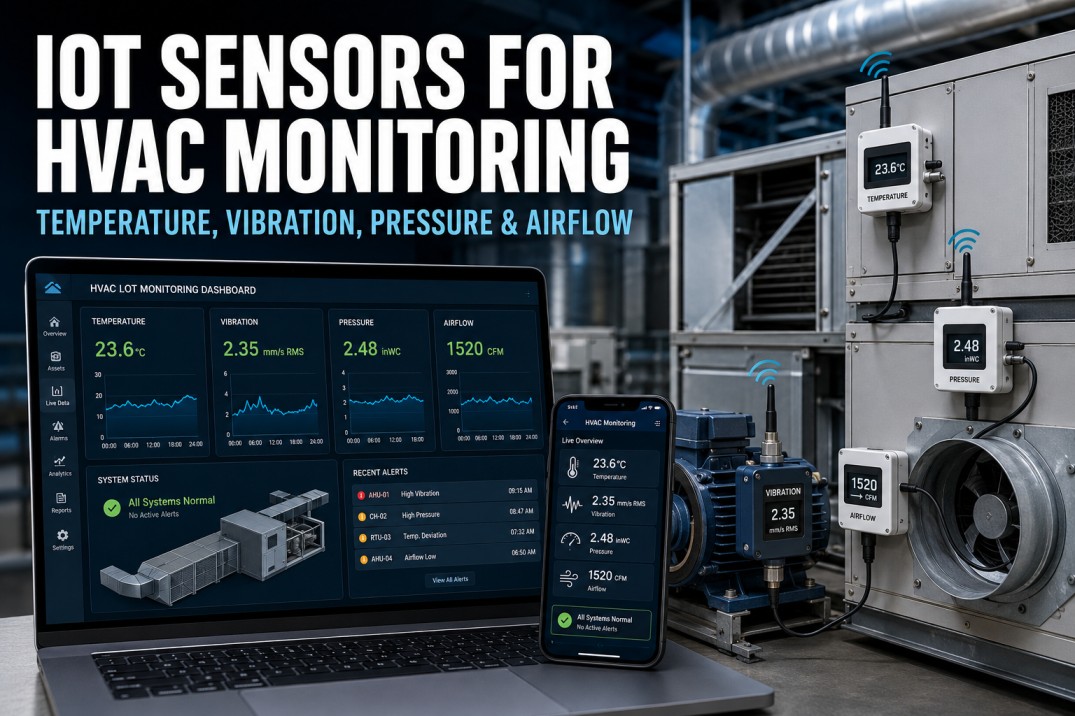
Many facilities already own a portable or fixed flue gas analyzer used during annual tune-ups, and it is worth being clear that continuous monitoring is not about replacing that investment, it is about extending the value of the readings that analyzer already produces. A fixed analyzer feeding data continuously into a monitoring platform turns what was previously a once-a-year snapshot into an ongoing record, and that record becomes more valuable every month it accumulates, since a full year of seasonal variation gives a far more complete picture of true burner performance than any single test day ever could, regardless of how carefully that one test was performed.
Frequently Asked Questions
Get Continuous Combustion Visibility Across the Full Firing Range
Bring your last combustion test results to the call, and we will show where drift is most likely developing between now and your next scheduled tune-up.