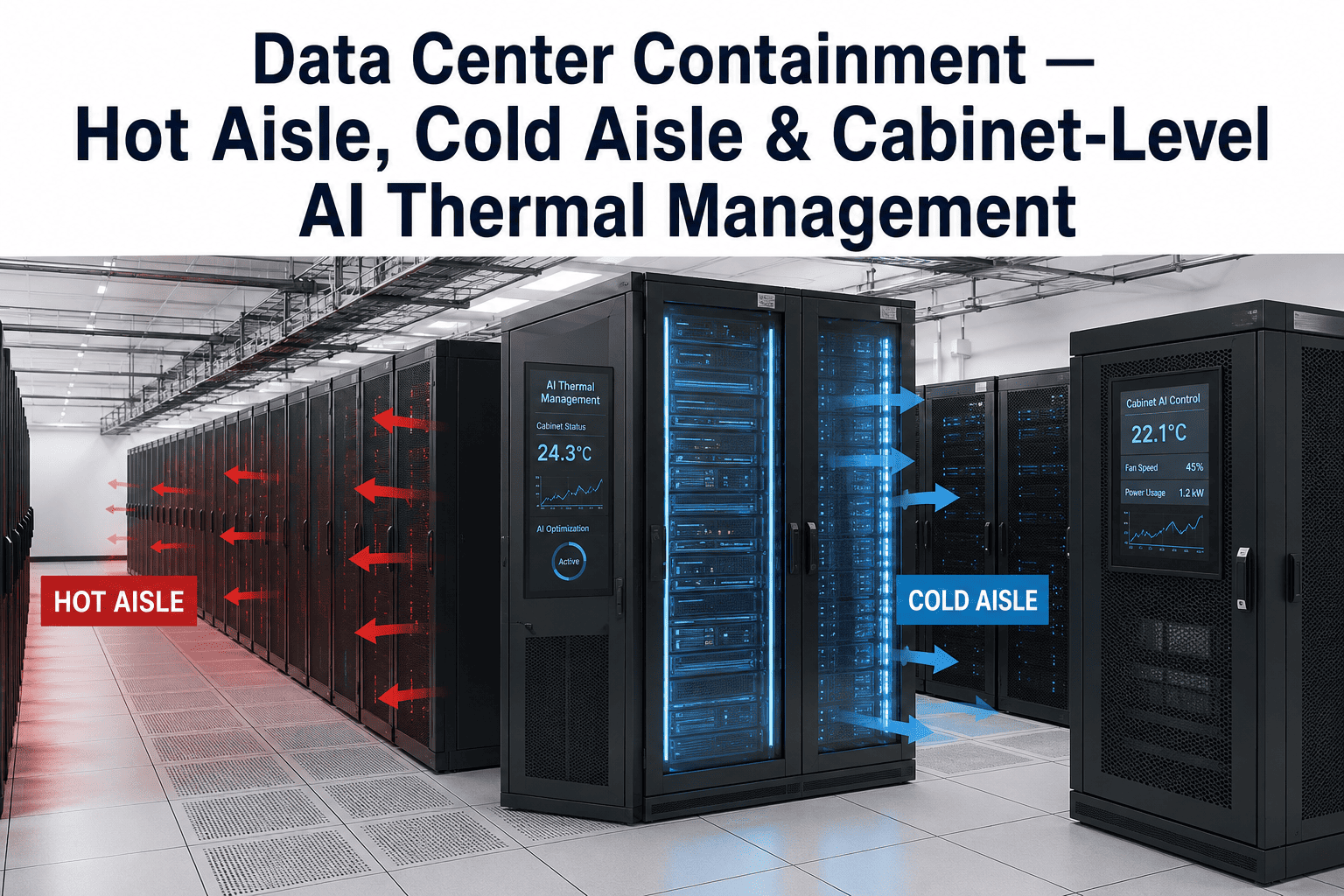
Bypass air is the silent tax on every data center cooling budget. Cold supply air that never reaches a server intake, and hot exhaust air that recirculates back into a cold aisle before it reaches the CRAC return, both waste cooling capacity that was never available to actually cool anything. Most facilities discover the scale of the problem only after PUE stops improving despite adding more cooling capacity, because the real issue isn't tonnage — it's containment. Hot aisle, cold aisle, and cabinet-level chimney containment each solve a different piece of the airflow mixing problem, and AI-based thermal management now makes it possible to see exactly where mixing is still happening, rack by rack, in real time. See where your containment strategy is leaking cooling capacity before the next capacity expansion gets planned.
Cooling Capacity You're Not Actually Using Is Still Costing You
Bypass air and hot-cold recirculation quietly erode cooling efficiency in nearly every data center. AI thermal management maps exactly where containment is failing at the rack and cabinet level.
of delivered cold air in an uncontained data hall never reaches a server intake as usable cooling
typical PUE improvement achievable by moving from open aisles to properly sealed containment
racks in a mid-size data hall, each one a potential source of bypass air or recirculation
Hot Aisle vs. Cold Aisle Containment
Both approaches solve the same mixing problem from opposite directions, and the right choice usually depends on existing raised-floor infrastructure and how the hall's CRAC units are positioned.
Cold Aisle Containment
Seals the cold aisle between rack rows, keeping conditioned supply air concentrated at server intakes and preventing it from mixing with room-temperature air before it does useful work. Works well where the surrounding room can safely run warmer, since heat is allowed to disperse into the general hall space.
Hot Aisle Containment
Seals the hot aisle behind server racks, capturing exhaust heat before it can recirculate and ducting it directly back to the CRAC return. Keeps the rest of the data hall at a comfortable working temperature, which is often preferred in facilities with frequent technician access between rows.
Cabinet-Level Chimney Containment
Where aisle-level containment isn't practical, chimney containment solves the mixing problem one cabinet at a time.
Ducted Exhaust Chimneys
Vertical ducts on individual cabinets route hot exhaust directly into a ceiling plenum, eliminating recirculation without requiring aisle-level structural changes.
High-Density Rack Isolation
Cabinets running well above average power density get isolated cooling paths so their heat load doesn't distort thermal conditions for neighboring racks.
Mixed-Density Hall Flexibility
Chimney containment lets legacy low-density racks and new high-density deployments share the same hall without redesigning the entire aisle layout.
Map Your Hall's Bypass and Recirculation Zones
iFactory analyzes rack-level thermal data across your data hall to show exactly where bypass air and hot-cold recirculation are wasting cooling capacity today.
Containment Strategy Compared
Each containment approach trades off implementation complexity against efficiency gain differently, which is why most halls end up using more than one strategy across different zones.
Where to Start When You Can't Contain Everything at Once
Most facilities phase containment rollouts rather than converting an entire hall at once. Prioritizing by density and existing recirculation severity gets the fastest efficiency return.
Tier 1 — Highest-density rows with confirmed recirculation
Rows already showing elevated inlet temperatures on high-density racks are both the biggest efficiency loss and the highest risk zone for thermal throttling, making them the clearest starting point for any containment investment.
Tier 2 — Rows adjacent to open hall space
Rack rows bordering unenclosed areas of the hall tend to show the worst bypass air losses, since conditioned air has an easy path to escape before reaching an intake, making these rows a high-value early target.
Tier 3 — Mixed-density legacy rows
Rows combining older low-density equipment with newer high-density deployments often benefit most from cabinet-level chimney containment rather than a full aisle retrofit, since it solves the mixing problem without disrupting the entire row.
Tier 4 — Stable, low-density rows
Rows running well below average density and showing no recirculation signal in thermal data can typically wait for a later phase, since the efficiency return on containing them is proportionally smaller.
What Changes When Containment Is Data-Driven
Figures reflect typical outcomes within the first two quarters after deploying rack-level thermal monitoring alongside a phased containment rollout.
A Process Engineer's View on Containment ROI
We had added two extra CRAC units over three years chasing hot spots that kept appearing in the same rows, and it never actually fixed the problem because the air was mixing before it ever reached the racks. Once we had rack-level thermal data showing exactly where recirculation was happening, we contained three rows instead of adding a third cooling unit, and our PUE improved more from that than from anything else we'd tried.
The Bottom Line on Containment and Thermal Management
Adding cooling capacity without solving bypass air and recirculation just means paying to move air that was never going to reach a server intake anyway. Hot aisle, cold aisle, and cabinet-level chimney containment each address the mixing problem differently, and the right combination depends on rack density and existing hall layout more than any single rule. AI-based thermal management makes the decision data-driven instead of guesswork, showing exactly which rows and racks are losing cooling capacity to mixing today.
Frequently Asked Questions
How do I know whether to choose hot aisle or cold aisle containment?
The choice usually comes down to existing infrastructure and access patterns rather than a universal best answer. Cold aisle containment tends to fit facilities with raised-floor supply air already concentrated at rack fronts, while hot aisle containment fits facilities where keeping the general hall temperature comfortable for technicians matters more. Book a review to see which approach fits your hall's existing layout.
Does cabinet-level chimney containment work as well as full aisle containment?
Chimney containment typically delivers a smaller PUE improvement than a fully sealed aisle, but it solves the recirculation problem without requiring structural changes to an entire row, which makes it a practical option for mixed-density legacy rows or facilities that can't take an aisle offline for retrofit work. Many halls combine both approaches across different zones based on what each row actually needs.
How is bypass air actually measured at the rack level?
Temperature and airflow sensors positioned at rack inlets and within the aisle track the difference between supply air temperature at the CRAC unit and actual temperature reaching each server intake. A large gap between the two indicates conditioned air is escaping before doing useful cooling work, which is the core signature of bypass air loss.
Can containment be added incrementally without shutting down a hall?
Yes — most containment retrofits are designed for row-by-row or cabinet-by-cabinet installation without requiring a full hall shutdown, since panels, doors, and chimney ducts can typically be fitted around live equipment during scheduled maintenance windows rather than an extended outage.
What role does AI play beyond identifying where bypass air is occurring?
Beyond initial diagnosis, continuous thermal monitoring tracks whether containment improvements are actually holding over time, flagging seal degradation, door gaps, or new equipment deployments that reopen a mixing path that had previously been closed. Talk to a specialist about connecting this monitoring to your existing DCIM platform.
Stop Cooling Air That Never Reaches a Server
Book a 30-minute assessment. iFactory maps bypass air and recirculation across your data hall and shows exactly where containment pays off first.