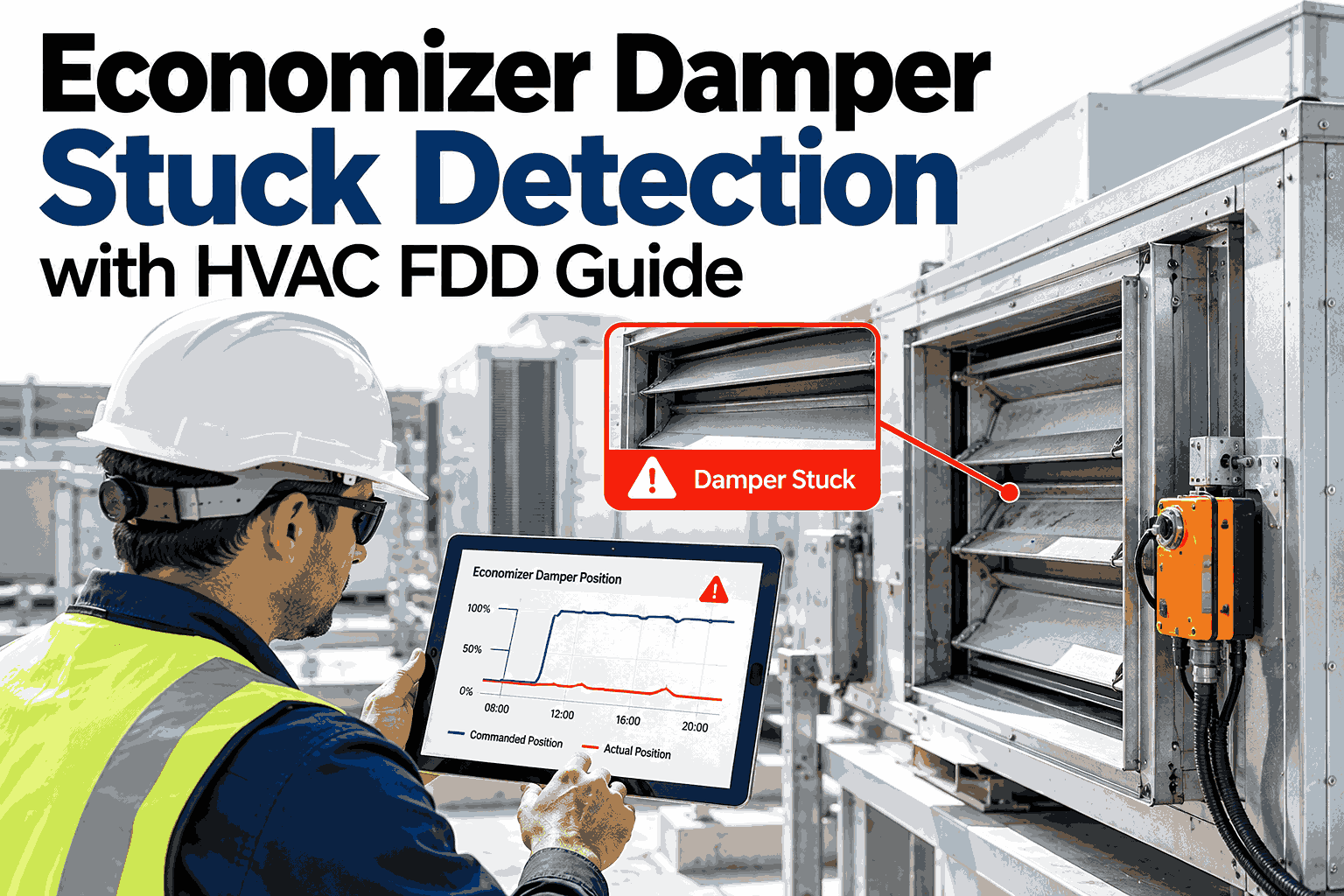
An economizer that is stuck rarely announces itself. The air handler keeps delivering cool air, occupants stay comfortable, and the only symptom is a utility bill that runs higher than it should. A damper frozen at the wrong position can waste cooling energy for months before anyone traces it back to a linkage or actuator. Fault detection built on mixed-air temperature, damper feedback, and outdoor-air fraction catches the problem from data the building already produces. Facility teams that want this running continuously can ask iFactory AI how stuck-damper detection works on their air handlers.
Find the Stuck Economizer Damper Before It Costs a Season of Energy
iFactory AI cross-checks three signals on every air handler, so a damper that is stuck closed, stuck open, or stuck partway shows up as a clear fault instead of a mystery on the bill.
What a Healthy Economizer Does
An economizer uses cool outdoor air to reduce mechanical cooling. The controller moves the outdoor-air, return-air, and relief dampers as outdoor conditions change, so detection starts with knowing what each position should look like.
Four Ways a Damper Gets Stuck
Stuck is not one fault. Each version wastes energy differently and leaves a different footprint in the data. See each pattern replayed on real air handler data in a guided session.
Stuck Closed
Free cooling never happens. The coil runs through mild weather that outdoor air could have handled.
Stuck Open
Outdoor air floods in during hot, humid, or freezing weather and the coil or heating system pays for it.
Stuck Partway
The damper moves but never reaches its commanded position, so free cooling is only partly delivered.
Actuator Disconnected
The command changes, the feedback follows, but the blades never move because a linkage has slipped or sheared.
See Which Air Handlers Have a Stuck Damper Right Now
Book a 30-minute session and iFactory AI will walk through how it checks damper behaviour against your own air handler data and trend history.
Signal One: Mixed-Air Temperature Analysis
Mixed-air temperature is a blend of return air and outdoor air. If the blend does not match what the damper command implies, the damper is not where the controller thinks it is.
What Outdoor-Air Fraction Looks Like When Dampers Fail
Each bar shows the calculated outdoor-air fraction against the command for a common fault. The gap between the two is what the detection logic looks for.
Signal Two: Damper Feedback Validation
Most air handlers report both a damper command and a position feedback. Comparing them catches one class of fault, but feedback itself can lie, which is why it is never used alone.
| Command | Feedback | Mixed-Air Response | Likely Diagnosis |
|---|---|---|---|
| Changes | Does not change | No change | Actuator failed or signal lost |
| Changes | Follows command | No change | Linkage slipped or blades seized |
| Changes | Follows command | Responds as expected | Damper healthy |
| Steady | Drifts away | Moves with feedback | Actuator drift or hunting |
Signal Three: Cross-Checking Everything Together
No single signal is trusted alone. A stuck-damper alarm fires only when the signals disagree in a way one sensor error cannot explain.
Pull command, feedback, return, outdoor, and mixed-air readings from the building automation system.
Keep only intervals where the temperature difference is large enough for the maths to hold.
Check expected fraction against calculated fraction across command levels.
Match the mismatch to one of the four stuck patterns or to a likely sensor fault.
Send a work order with the air handler, suspected cause, and supporting trend.
Why Weather Changes the Cost of the Same Fault
The same stuck position can be harmless one week and expensive the next. Fault priority should follow the season, not just the fault. Plan seasonal fault priorities in a guided working session built around your climate.
Mild Weather
A damper stuck closed costs the most here because free cooling hours are being lost every day.
Hot or Humid Weather
A damper stuck open drags heat and moisture into the building and loads the coil far beyond design.
Freezing Weather
A damper stuck open can chill mixed air enough to trip freeze protection and shut the unit down.
A Composite Scenario: The Quiet Stuck Damper
This is a composite example, not a named customer. It shows how the signals combine in a typical commercial building. Reserve a slot to replay this scenario on your own data and compare.
How iFactory AI Handles Stuck-Damper Detection
iFactory AI is smart manufacturing and industrial software that applies fault detection and diagnostics to the equipment keeping a facility running, including air handlers and their economizers. Explore the platform in a scheduled product tour tailored to your site.
Continuous Cross-Checking
Every qualifying interval compares command, feedback, and calculated fraction, so a fault is caught when it starts.
Pattern Classification
Stuck closed, open, partial, and disconnected faults are separated, so the right repair is sent out the first time.
Sensor Plausibility Checks
Drifting temperature sensors are flagged before they trigger a false damper alarm and a wasted truck roll.
Evidence With Every Alert
Each fault arrives with the trend that proves it, which shortens the path from alert to repair. See sample alerts with live trends before you decide.
Frequently Asked Questions
Can a stuck damper be found from trend data alone?
Yes, in most cases. Comparing the damper command with the calculated outdoor-air fraction exposes a stuck position without a site visit. A physical check is still needed to confirm the cause. The iFactory AI team can review your available points and tell you what is detectable.
Why is damper feedback not enough on its own?
Feedback usually reports the actuator position, not the blade position. If a linkage slips, feedback looks perfect while the blades stay put. Mixed-air temperature is the independent check that exposes this hidden failure. See a live feedback-versus-temperature comparison to understand the difference.
When does the mixed-air calculation stop being reliable?
It weakens when return and outdoor temperatures are close together, because small sensor errors then swing the result widely. Detection logic should skip those intervals and judge the damper only when the difference is large enough. Ask support which interval filters apply to your units before setup begins.
Will this work on older rooftop units?
It works wherever the building automation system exposes the needed temperatures and damper command. Older units with fewer points may support fewer checks. Schedule a walkthrough to see which checks apply to your equipment.
How quickly should a stuck damper be fixed?
Priority follows the season. A damper stuck open in freezing or very hot weather deserves a fast response, while one stuck closed in mild weather wastes money steadily. Ranking faults by cost helps crews fix the expensive ones first. Preview a cost-ranked fault list in a working demo using your own data.
Stop Paying for Dampers That Are Not Doing Their Job
iFactory AI watches every economizer around the clock and flags stuck dampers with the evidence to fix them. Book a walkthrough to see it against your own air handler data.