HVAC CMMS Buyer Guide for Commercial Facility Teams
By James Smith on September 9, 2026
Every HVAC CMMS vendor demo looks impressive for the same reason — it's running on clean sample data, presented by someone who knows exactly which screen to click next, showing the platform's best features in the best possible light. The gap between that demo and how the software actually performs against your specific equipment mix, technician workflows, and building portfolio only shows up once you ask the right questions, which is exactly what this buyer guide from iFactory is built to help commercial facility teams do before signing a contract.
BUYER GUIDE — CHECKLIST
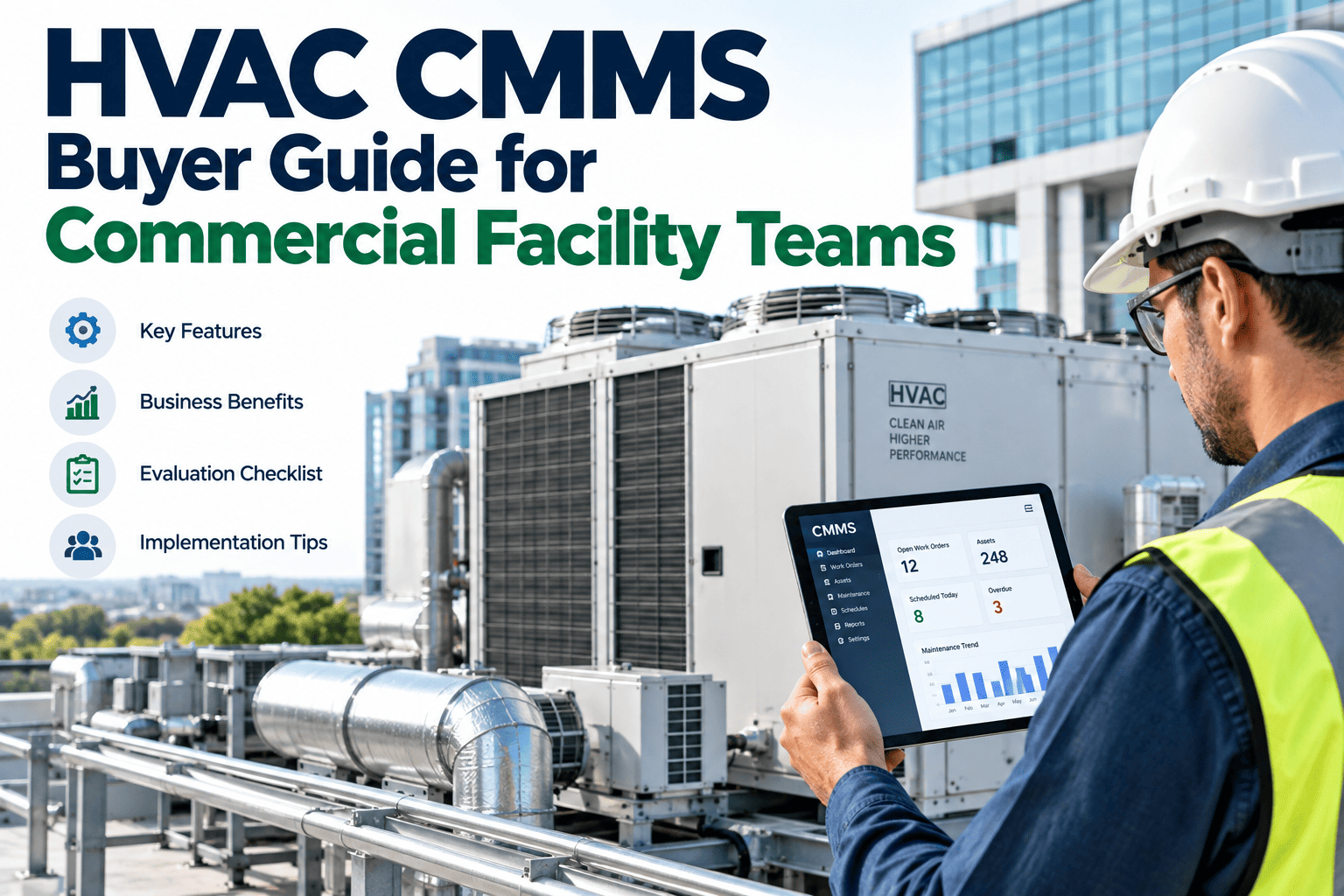
HVAC CMMS Buyer Guide for Commercial Facility Teams
40 evaluation questions across mobile capability, PM libraries, BMS integration, and reporting — the questions that actually shortlist the right platform for your portfolio.
Why a Structured Question Set Beats a Feature Checklist
Most CMMS RFPs are built as a long list of yes/no feature checkboxes, and nearly every vendor will check "yes" on almost every box, because the feature technically exists somewhere in the product even if it's clunky, limited, or an add-on cost. Asking a specific, pointed question instead of a checkbox forces a vendor to demonstrate rather than simply claim, which is the entire premise behind the 40 questions organized into the four categories below.
Category 1 — Mobile Capability Questions
Mobile functionality is the category where vendor claims and technician reality diverge most often. These questions are designed to surface that gap before you commit.
Category 2 — PM Library Questions
The strength of a platform's preventive maintenance library often determines whether technicians follow the PM as intended or work around it. These questions probe the depth and flexibility of that library.
Category 3 — BMS Integration Questions
Building management system integration ranges from genuinely real-time to essentially nonexistent depending on the platform, and these questions are designed to find out which one you're actually evaluating.
Run This Buyer Guide Against Your Own Shortlist
iFactory's team will walk through these exact 40 questions live against our own platform, so you can evaluate our HVAC CMMS with the same rigor as any other vendor on your list.
Reporting is where a lot of platforms quietly reveal their actual limitations, particularly for teams managing more than a single building. These final questions focus specifically on portfolio-level visibility.
Using the Answers to Actually Shortlist a Platform
Collecting 40 answers across several vendors only helps if there's a clear method for turning those answers into a decision. The approach below is what most facility teams use to move from a long question list to a confident shortlist.
1
Score Each Answer, Not Just Presence or Absence
A "yes" with a live demo of the feature working scores higher than a "yes" with a vague verbal confirmation and no demonstration.
2
Weight Categories by Your Actual Priorities
A portfolio with heavy BMS investment should weight that category higher than a team with no current BMS integration plans.
3
Request References From Similar Portfolios
A vendor's answer to a question is less convincing than an existing customer with a similar equipment mix confirming it in practice.
A Facilities Procurement Lead on What the Question List Caught
"
Two of the three vendors we were evaluating answered "yes" to nearly every single question on our checklist during the initial sales conversation, and if we had stopped there, we would have had almost no basis for distinguishing between them. The moment we asked for a live demonstration of a specific capability — automatic work order generation from a BMS trigger, in our case — one of those two vendors couldn't actually show it working, and it became clear during that call that the feature existed in their roadmap rather than their current product. That's a meaningfully different answer than "yes," and we never would have caught the distinction without insisting on seeing it live rather than accepting a verbal confirmation. The other vendor we brought in actually pulled up a live BMS trigger running for one of their existing customers on the call, unprompted, which told us a lot about how confident they were in that specific capability. We ended up choosing based almost entirely on which vendor could show rather than tell.
Should we send all 40 questions to a vendor in writing before a demo call?
Sending the questions in advance can be useful for giving a vendor time to prepare specific demonstrations rather than improvising answers on the spot, but it's worth reserving at least a few key questions to ask live and unannounced during the call, since a vendor's ability to answer without extensive advance preparation is itself useful information about how well they know their own product. A hybrid approach — sharing the general categories in advance while keeping specific questions for the live session — tends to produce the most honest picture.
How many vendors should realistically be evaluated using this question set?
Three to four vendors is a manageable number for most commercial facility teams to evaluate thoroughly using a 40-question framework without the process dragging on for months, since a genuinely rigorous evaluation of each vendor — including live demonstrations and reference checks — takes real time and internal effort per vendor evaluated. Evaluating more than four simultaneously often leads to a shallower review of each one, which defeats the purpose of asking pointed questions in the first place.
What if a vendor's answer changes between the initial sales call and a technical follow-up?
This is worth treating as a meaningful signal rather than dismissing as a minor inconsistency — a discrepancy between what a sales representative claims and what a technical or implementation team confirms later often points to a genuine gap between marketing positioning and actual product capability. It's reasonable to ask directly for clarification and, ideally, a live demonstration that resolves the discrepancy definitively before proceeding further in the evaluation.
Should reference checks happen before or after narrowing down to a final vendor choice?
Reference checks are most valuable when conducted with at least two vendors still under serious consideration, rather than waiting until a decision is nearly finalized with a single vendor, since a comparative reference conversation across two platforms tends to surface more useful, specific detail than a single reference call conducted in isolation. Requesting a reference with a similarly sized portfolio and similar equipment mix to your own provides the most relevant comparison point.
Can iFactory walk through these 40 questions directly during an evaluation?
Yes — iFactory's team is glad to work through this exact question set live, including direct demonstrations of mobile offline functionality, PM library customization, BMS integration triggers, and portfolio reporting rather than verbal confirmation alone. We can also connect you with existing customers managing a similar equipment mix and portfolio size for a reference conversation. To schedule a walkthrough against this buyer guide, book a demo with our team.
Evaluate Every Vendor With the Same Rigor
A feature checklist tells you what a vendor claims. Forty pointed questions across mobile, PM libraries, BMS integration, and reporting tell you what the platform actually does. Run this guide against iFactory's HVAC CMMS and see for yourself.