A rooftop chiller running 15% low on charge for three months before anyone notices is not a rare event, it is the default outcome of a leak detection program built around annual inspections and a technician's nose catching a faint smell during a routine service call. By the time capacity loss shows up as a comfort complaint, the leak has usually been running long enough to trigger a mandatory EPA repair timeline and a refrigerant bill nobody budgeted for. Maintenance managers can see how continuous monitoring closes that detection gap by choosing to book a demo with our team.
Most Refrigerant Leaks Are Found by Accident, Not by Design
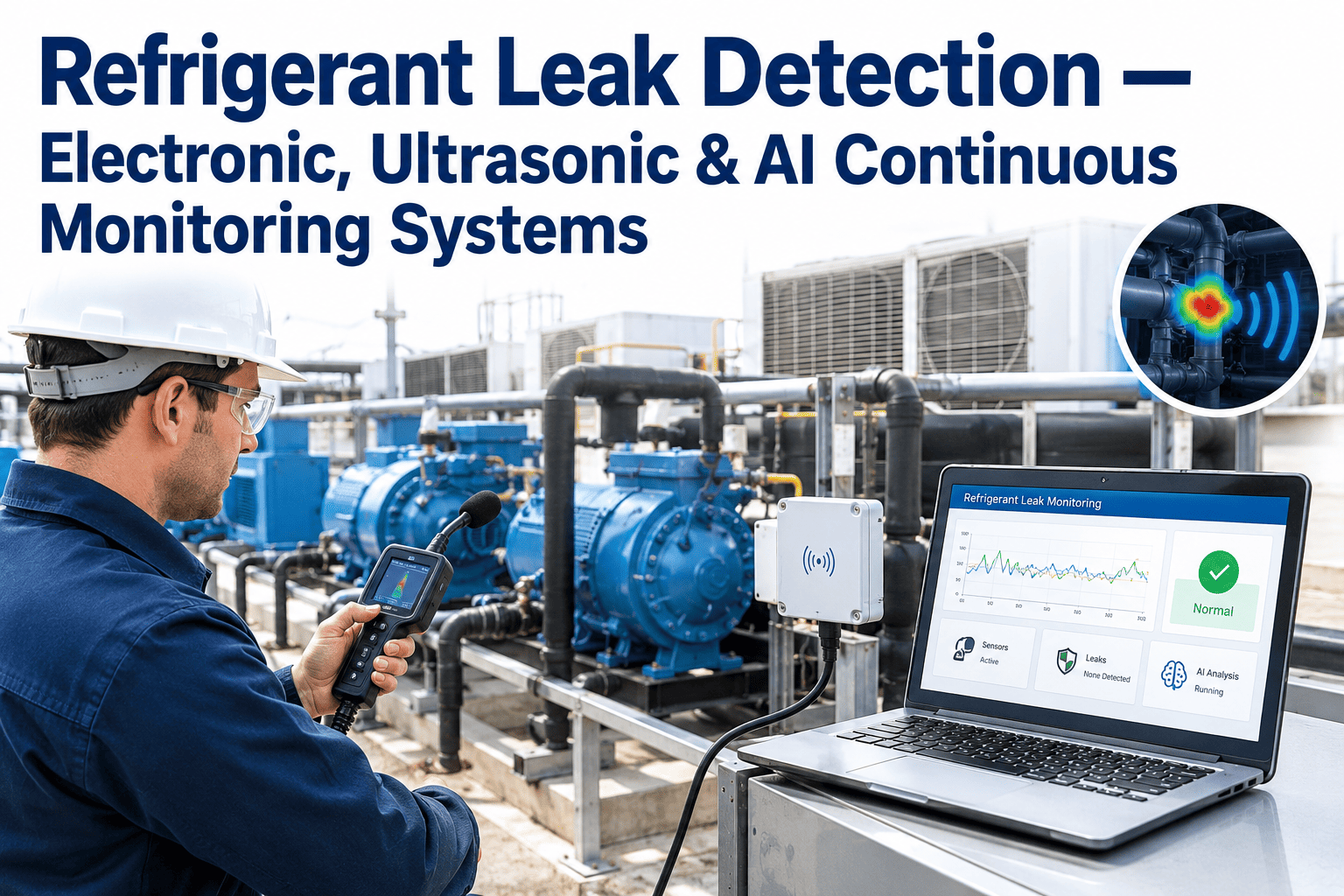
Periodic inspections catch a leak whenever the technician happens to be looking, which in practice means most leaks run for weeks or months before detection. iFactory helps maintenance teams deploy electronic, ultrasonic, and AI-driven continuous monitoring so leaks get caught within hours of starting, not whenever the next scheduled inspection happens to fall.
Three Separate Costs Stack Up the Longer a Leak Goes Unnoticed
A refrigerant leak left undetected does not carry one cost, it carries three that compound together the longer detection is delayed. The direct cost is the refrigerant itself, increasingly expensive under the AIM Act phase-down and, once a system runs low enough on charge, the additional cost of restoring full capacity from scratch rather than topping off a minor loss. The operational cost is capacity degradation, a system running on reduced charge works harder to deliver the same cooling output, consuming more energy and accelerating compressor wear in the process. The compliance cost is the EPA repair timeline itself, which starts the moment a leak crosses the applicable threshold, meaning slow detection eats directly into the window a facility has to complete the mandated repair.
Maintenance managers who track these costs together, rather than looking at refrigerant replacement cost in isolation, consistently find that the energy and compliance costs of a slow-detected leak meaningfully exceed the refrigerant cost alone, sometimes by a wide margin once a leak has run for an extended period before discovery. This is the core economic argument for continuous monitoring over periodic inspection, the value is not primarily in avoiding refrigerant replacement, it is in avoiding everything that a slow detection window allows to compound around it.
Electronic, Ultrasonic, and Infrared, Compared Honestly
No single leak detection technology is universally superior, each operates on a different physical principle and each has application scenarios where it clearly outperforms the alternatives. Understanding these differences matters because a maintenance program built entirely around one technology will have systematic blind spots that a different technology would have caught, which is exactly why the most robust monitoring programs layer more than one detection method rather than standardizing on a single approach across every system type.
Find Out Which Detection Technology Fits Each of Your Systems
iFactory reviews your equipment mix and mechanical space layout to recommend the right combination of detection technology for genuinely continuous coverage.
Detection Is Only the First Half of the Compliance Obligation
Section 608 does not simply require leak detection, it requires a documented repair completed within a defined timeline once a system's calculated leak rate crosses the applicable charge-size threshold, followed by a verification test confirming the repair actually resolved the leak. A maintenance program that detects leaks quickly but does not have a structured process for managing the resulting repair timeline against the regulatory clock still ends up out of compliance, just for a different reason than slow detection.
This is where the value of continuous monitoring extends beyond faster detection into the compliance workflow itself. A system that automatically calculates leak rate the moment a detection event occurs, checks it against the applicable regulatory threshold for that specific piece of equipment, and opens a tracked repair timeline with the correct regulatory deadline attached, removes the manual calculation step that is a common source of compliance error in facilities relying on spreadsheet-based tracking.
| Compliance Step | What Continuous Monitoring Automates |
|---|---|
| Leak Detection | Continuous sensor coverage flags a leak within hours rather than at the next scheduled inspection |
| Leak Rate Calculation | System calculates the per-equipment leak rate automatically against the applicable threshold |
| Repair Timeline Tracking | A tracked deadline opens automatically once the threshold is crossed, with alerts before it lapses |
| Verification Documentation | Post-repair sensor readings provide documented evidence the leak was actually resolved |
Where Sensors Go Matters as Much as Which Sensors You Choose
Poorly placed detection sensors, even good hardware, produce disappointing results, since refrigerant gas does not distribute evenly through a mechanical space, it tends to pool near the floor for refrigerants heavier than air and concentrate near likely leak points, joints, valves, and compressor seals, rather than spreading uniformly through the room. Sensor placement decisions should be driven by the specific refrigerant's density characteristics and the mechanical layout of each space, not a generic one-sensor-per-room rule applied identically everywhere.
Ventilation patterns within a mechanical room also affect where leaked gas actually travels before it reaches a sensor, an HVAC exhaust fan or an open door pulling air toward a specific corner of the room changes where gas concentration will build fastest, and a placement plan that ignores the room's actual airflow pattern can leave sensors detecting a leak much later than a properly positioned sensor would have. A short airflow assessment during initial deployment planning, mapping how air actually moves through the specific space rather than assuming a uniform mixing pattern, meaningfully improves real-world detection speed compared to a placement plan based on floor plan geometry alone.
Identify where gas would accumulate based on its specific density and the location of joints, valves, and seals.
Map how ventilation and existing air movement would carry leaked gas toward or away from sensor locations.
Position detection hardware where density and airflow analysis both indicate gas is most likely to concentrate first.
Confirm actual detection response time against the planned placement before relying on it for compliance purposes.
Reducing False Alarms Without Missing Real Leaks
Continuous monitoring introduces its own version of the alarm fatigue problem if every minor sensor fluctuation triggers a full response, since ambient conditions, temperature swings, and normal equipment cycling can all produce brief readings that look superficially similar to the early stage of a genuine leak. AI-driven analysis of sensor trend data, rather than a single threshold crossing, distinguishes a genuine developing leak, characterized by a sustained upward trend, from transient noise that resolves on its own within a short window.
This trend-based approach also enables earlier confident detection than a simple threshold system would allow, since a leak's concentration signature typically builds gradually rather than crossing an alarm threshold instantly, and a model trained to recognize the shape of that build-up curve can flag a developing leak before it fully crosses a fixed threshold a simpler system would wait for. The practical result is a monitoring program that catches leaks earlier while simultaneously reducing the false-positive rate that erodes trust in any detection system left unmanaged over time.
Questions Maintenance Managers Ask About Leak Detection
Catch the Next Leak in Hours, Not Months
iFactory helps maintenance teams deploy the right mix of electronic, ultrasonic, and infrared detection with AI-driven trend analysis, so leaks get caught and documented before they become a compliance problem.