A technician tops up a chiller with sixty pounds of refrigerant, signs the service ticket and moves on to the next call. Nobody calculates the leak rate that day, and the ticket goes into a drawer. Months later an audit asks for the annualized leak rate, the repair dates and the verification tests, and the plant cannot show any of them. Under EPA refrigerant rules, that single top-up can start a clock that decides whether a repair, a retrofit or a fine follows. This article walks through the leak rate formula, the trigger thresholds and the follow-up actions in plain steps, and if you want your own register set up correctly, you can review your refrigerant compliance workflow with our team.
EPA refrigerant compliance
Refrigerant Leak Rate Calculation for HVAC Under EPA Rules
The annualized leak rate formula, the trigger thresholds by appliance type, and the repair and verification steps that follow, with worked examples for chillers and industrial systems.
Annualizing method at a glance
Pounds added
divided by
Full charge
times
365 divided by days
times
100
Why it matters
The Leak Rate Is the Number Everything Else Depends On
The leak rate decides whether you must repair, verify, retrofit or retire an appliance. A wrong or missing figure means a missed deadline.
This guide is an educational summary and not legal advice. Always confirm requirements against the current EPA text for your refrigerant and appliance.
The formulas
Two Ways to Calculate the Annualized Leak Rate
EPA allows two recognized methods. Both compare refrigerant added against the full charge, but they look at time differently.
Method one: annualizing
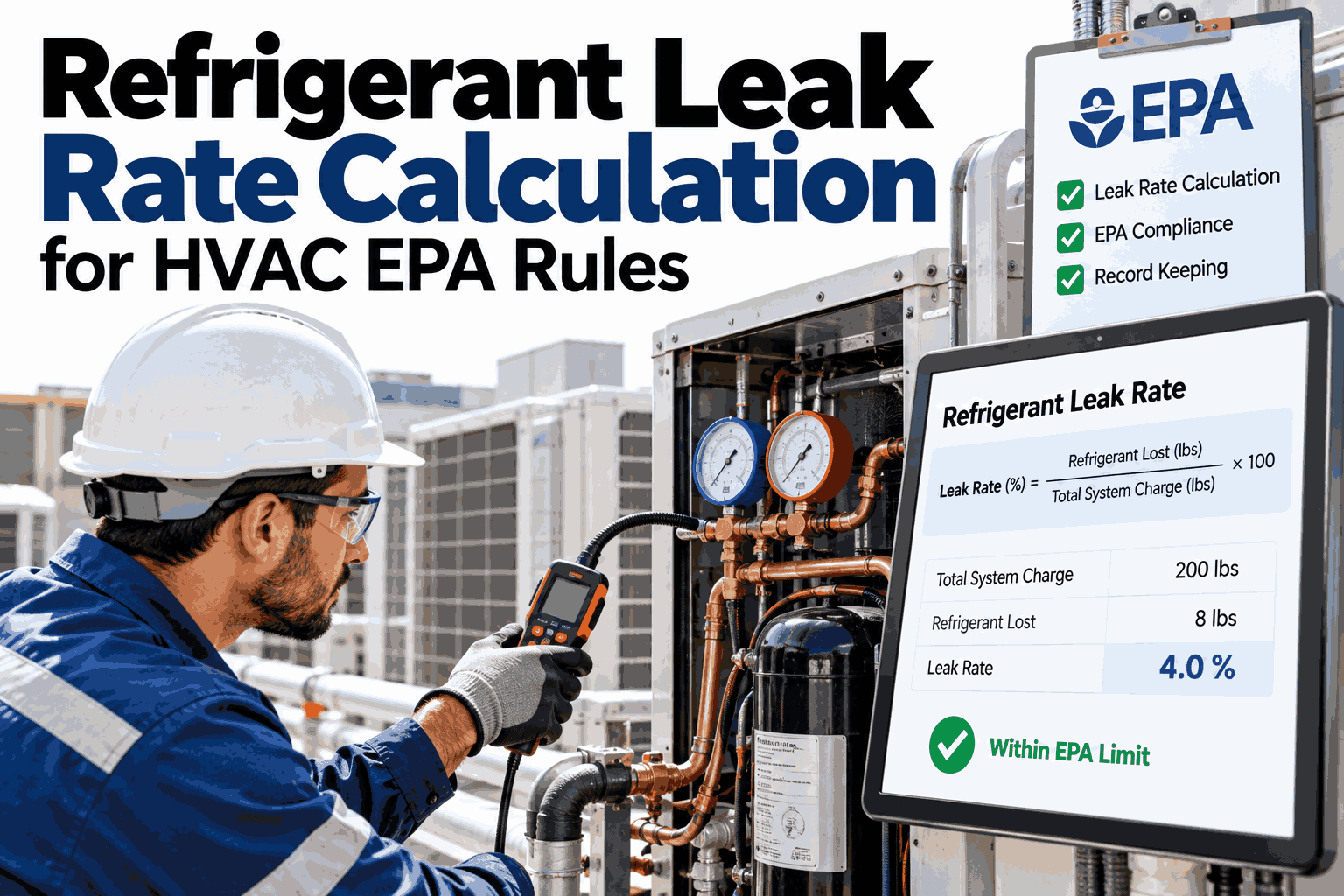
Leak rate = (pounds added / full charge) x (365 / days since last addition) x 100
Best when additions are spread out, since it scales the latest top-up to a full year.
Method two: rolling
Leak rate = (total pounds added over the past 365 days / full charge) x 100
Best when you want a simple year-to-date view that updates after each addition.
Pick one method per appliance and use it consistently, and keep the calculation with the service record.
Worked examples
Two Real-World Style Calculations, Step by Step
These examples use round numbers so the arithmetic is easy to follow and check.
Comfort cooling chiller
Full charge: 400 lb
Added: 60 lb, 200 days after the last addition
60 / 400 = 0.15
365 / 200 = 1.825
0.15 x 1.825 x 100 = 27.4 percent
Industrial process system
Full charge: 1,000 lb
Added: 150 lb, 120 days after the last addition
150 / 1,000 = 0.15
365 / 120 = 3.04
0.15 x 3.04 x 100 = 45.6 percent
Notice how the same fifteen percent top-up gives very different results depending on how soon the next addition follows.
Trigger thresholds
How High Is Too High? Limits by Appliance Type
Commonly cited trigger rates are shown below. Above the line for your appliance type, repair duties start.
Commercial refrigeration
20%
Both examples above exceed their limits. The chiller at 27.4 percent is well over the 10 percent comfort cooling line, and the industrial system at 45.6 percent is over 30 percent.
Never miss a trigger again
Let Your Leak Register Calculate the Rate Automatically
Share how you track top-ups today, and we will show how rates, deadlines and follow-ups can be tracked in one register.
After the trigger
The Follow-Up Timeline Once a Threshold Is Exceeded
Deadlines are short, so the clock matters as much as the maths. These are the typical steps and windows.
Within 30 days of adding
Calculate and record the leak rate for the appliance.
Within 30 days of discovery
Repair the leaks so the rate falls below the threshold.
After repair
Run an initial verification test, then a follow-up once the system is back to normal operation.
If repair is not possible
Prepare a retrofit or retirement plan and complete it within the allowed period.
Check the current rule for exact timing, exemptions and extensions that apply to your system. You can ask support how deadlines are tracked in the register.
Decision path
Quick Decision Flow for Every Top-Up
Refrigerant added
then
Calculate rate
then
Compare to threshold
Below: log and monitor
Above: repair, verify, document
Keep the proof
Records an Inspector Will Expect to See
Appliance details
Location, type, refrigerant and full charge.
Service events
Dates, technician and pounds added or recovered.
Leak rate math
Method used, inputs and result for each addition.
Repairs and tests
Work done, dates and verification results.
Plans and extensions
Retrofit or retirement plans with sign-off.
Retention period
Records kept for the period the rule requires.
Avoid these
Five Mistakes That Cause Compliance Gaps
1Treating a top-up as routine and not calculating the rate.
2Using an estimated charge instead of the nameplate or verified charge.
3Mixing both methods on one appliance without a reason.
4Missing the follow-up verification after a repair.
5Keeping records on paper tickets that cannot be searched.
Frequently asked questions
What HVAC Teams Ask About Leak Rate Rules
Which calculation method should we use?
Either recognized method can be used, and the best choice depends on how often you add refrigerant. Whichever you pick, apply it consistently per appliance.
Compare both methods on your own data with our team.
Do these rules apply to every system we own?
Applicability depends on refrigerant type, charge size and appliance category, so each system should be checked individually. Small systems may fall outside the leak repair duties.
Ask support how to classify your assets in the register.
What if we cannot repair a leak within the deadline?
The rules provide for retrofit or retirement plans and, in limited cases, extensions, but each needs documented reasons and dates. Acting early keeps options open.
Plan your deadline tracking before a trigger happens.
How do we handle a site with many chillers?
Use one register with a unique ID per appliance, shared fields for charge and refrigerant, and automatic rate calculation on every addition. This avoids spreadsheet drift.
See how multi-site registers are set up by our support team.
Can software replace a compliance specialist?
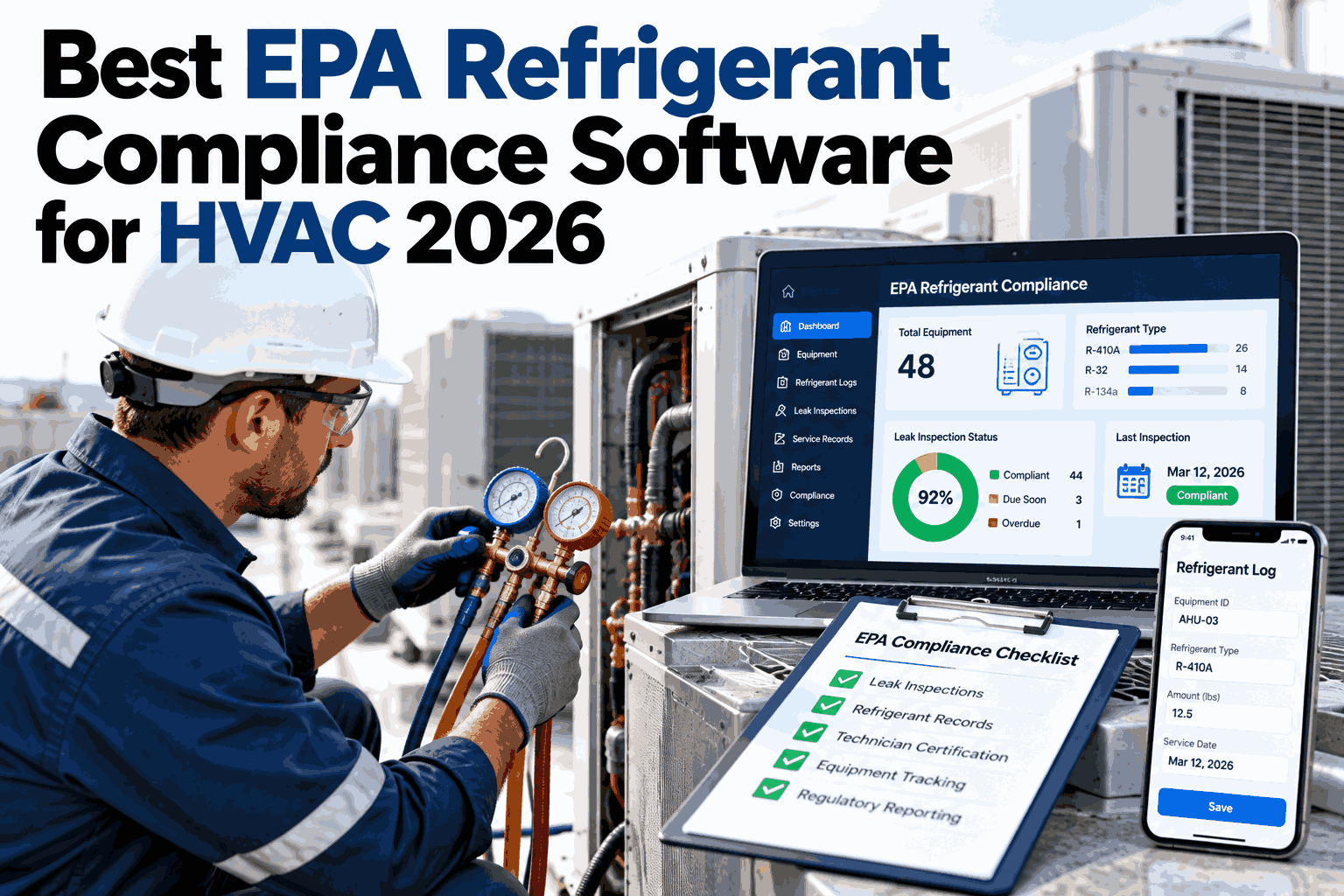
Software handles calculation, reminders and records, but your team still decides on repairs and interprets the rules for edge cases. It makes those decisions faster and better documented.
Walk through a sample register in a live demo.
Be audit-ready every day
Turn Refrigerant Leak Tracking Into an Automatic Process
Book a session with iFactory AI to see how leak rates, deadlines and records can be managed in one place across chillers and industrial systems.