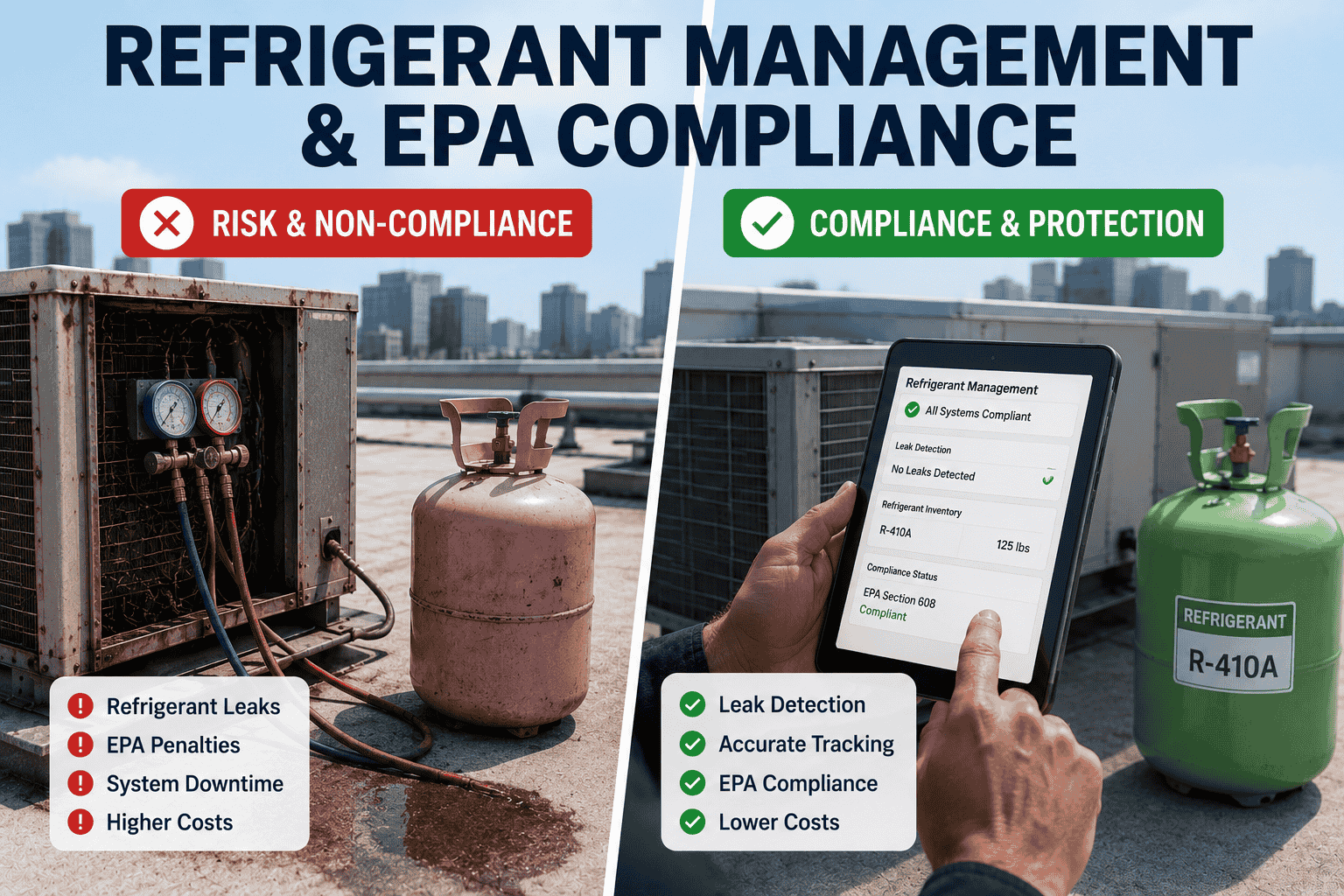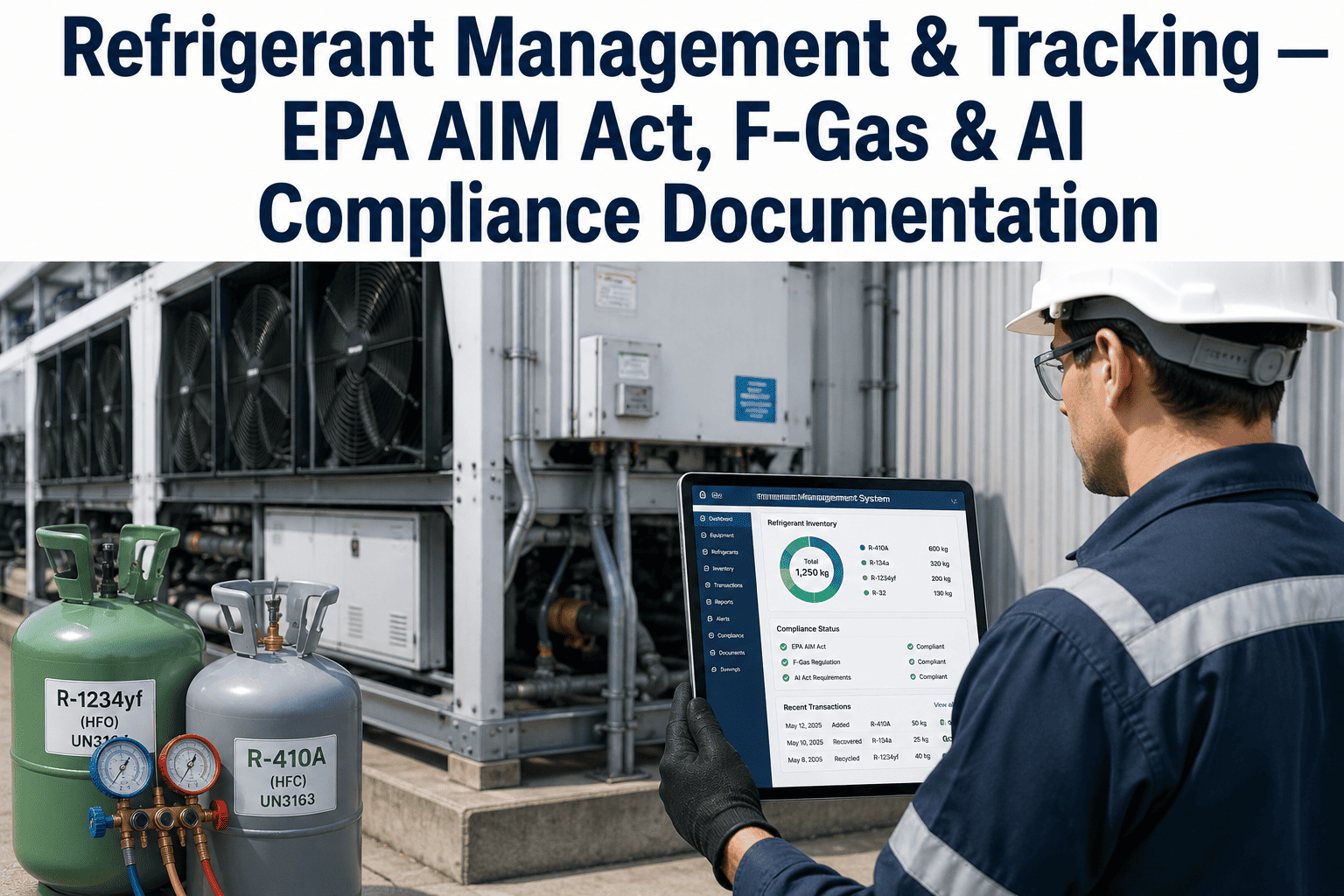
An EPA inspector asking for three years of refrigerant purchase, usage, and leak repair records is a routine request, and it is also the moment a lot of compliance programs discover their documentation lives across five different spreadsheets, a filing cabinet of technician service tickets, and whatever a previous facilities manager remembered to log before they left the company. Rebuilding that record under deadline pressure is exactly the scenario a structured tracking system exists to prevent, and compliance officers can see how that system gets built by choosing to book a demo with our team.
Refrigerant Compliance Is Not One Rule, It's a Growing Stack of Them
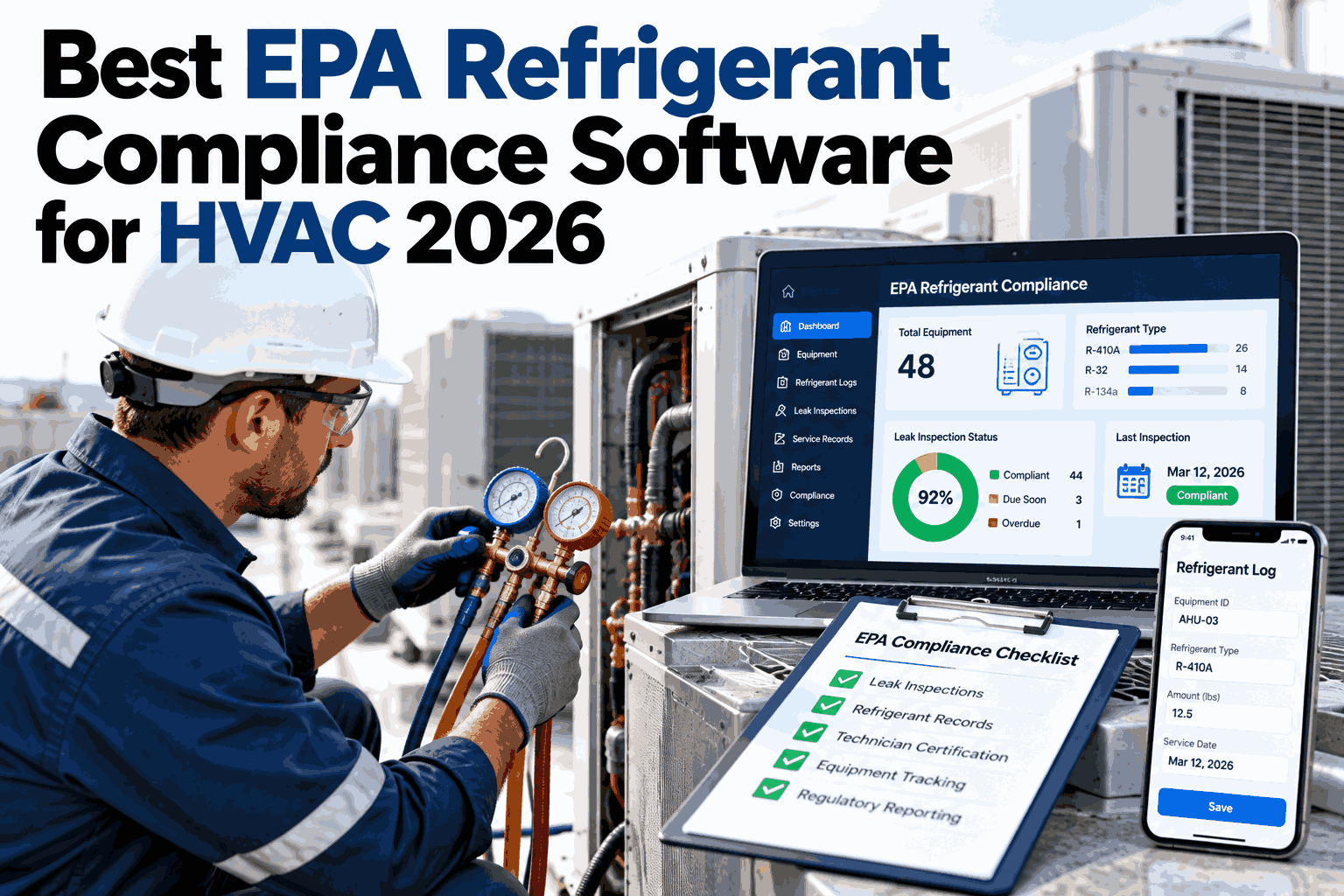
The EPA's AIM Act phase-down, Section 608 leak repair requirements, and the EU F-Gas Regulation each carry their own reporting thresholds, documentation formats, and deadlines, and the overlap between them changes as refrigerant charge sizes and jurisdictions shift. iFactory helps compliance teams automate the record-keeping these frameworks actually require, so the paperwork is ready before the inspector asks for it.
The Recordkeeping Burden Grows Faster Than Most Compliance Programs Adjust For
A single-site facility with a handful of rooftop units can often manage refrigerant recordkeeping through a well-maintained spreadsheet, and many compliance officers built exactly that system years ago when the regulatory burden was lighter and the equipment count was smaller. The problem is that neither of those conditions holds steady for long. Equipment counts grow through facility expansion, refrigerant types multiply as older systems get replaced piecemeal with newer low-GWP alternatives, and the AIM Act phase-down itself adds a layer of allowance tracking that a simple purchase log was never designed to handle.
Multi-site organizations feel this acutely, since a spreadsheet-based system that worked adequately for one facility becomes a coordination nightmare across a dozen, each with its own service technicians, its own local recordkeeping habits, and no single source of truth an EPA auditor or an internal compliance review can query with confidence. The failure mode is rarely a deliberate compliance violation, it is fragmented records that cannot be assembled quickly enough when they are needed, which itself carries real regulatory and reputational risk even when the underlying refrigerant handling was fully compliant.
Compliance officers who have been through an actual EPA records request describe the same pattern: the technical compliance was usually fine, but proving it inside the requested timeframe was the stressful part, because the proof was scattered across systems that were never designed to be queried together. Automated tracking exists specifically to close that gap between being compliant and being able to demonstrate it on demand.
Documentation Requirements Are More Granular Than Most Programs Assume
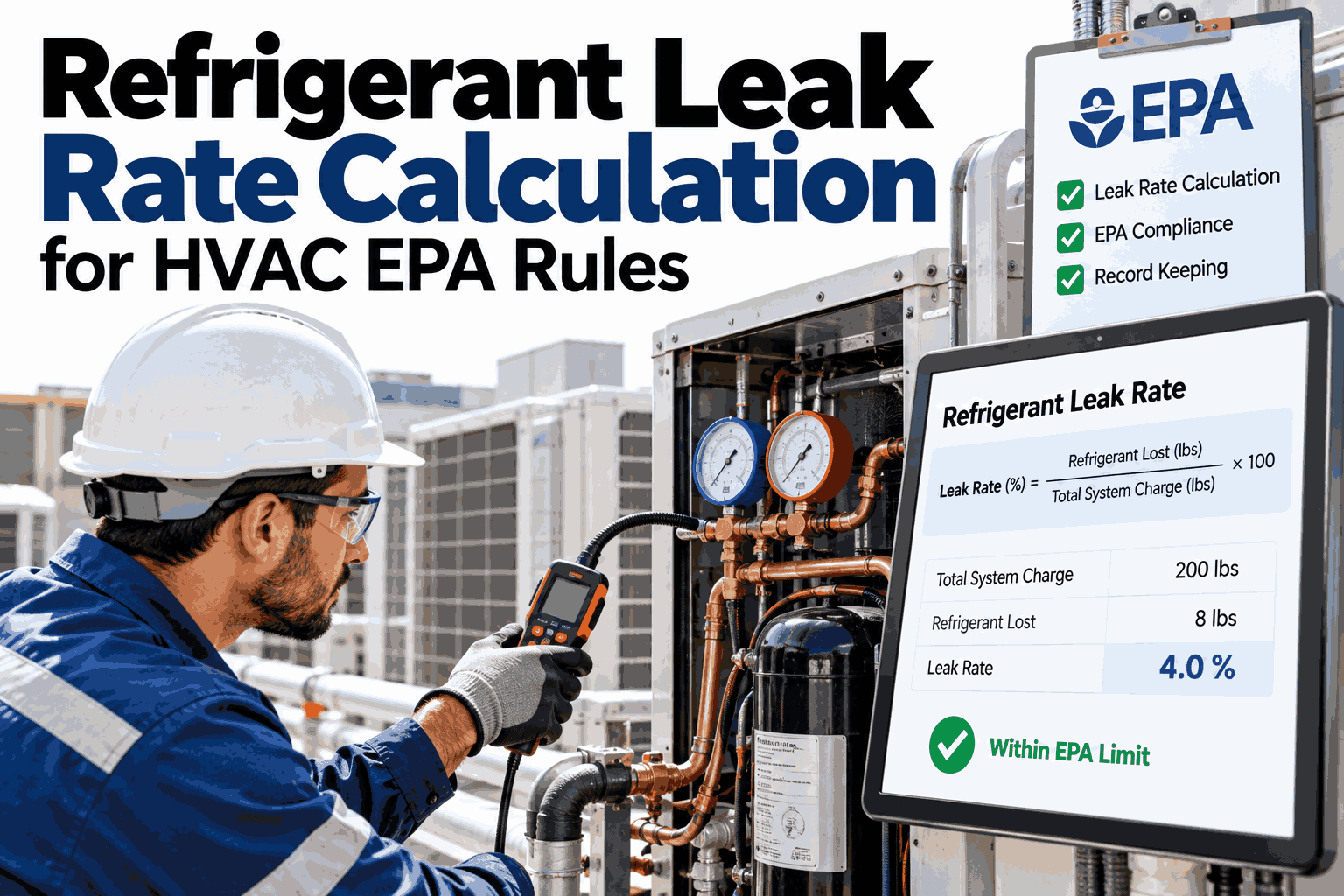
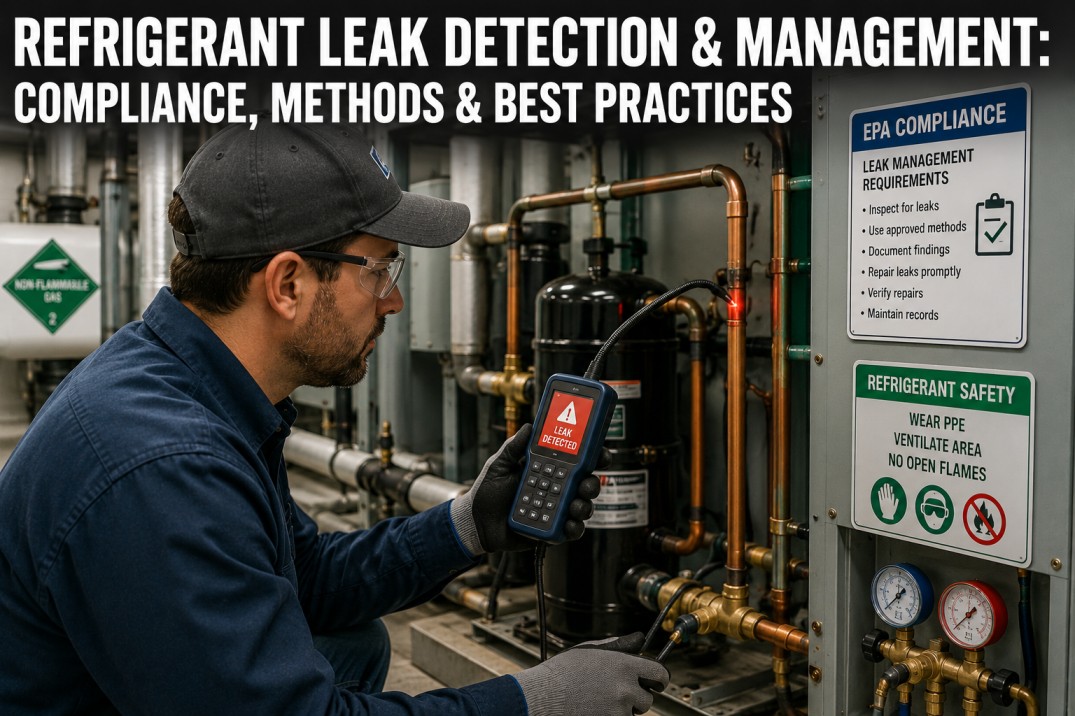
Section 608 and the AIM Act do not simply ask whether refrigerant was handled responsibly, they ask for specific, system-level documentation that many facilities are not structured to produce on demand. A compliant record needs to tie refrigerant purchase quantities to specific systems, calculate leak rates per system against the applicable charge-size threshold, document repair timelines against the regulatory clock that starts the moment a leak is identified, and confirm that every technician who touched that system held the correct certification level at the time of service.
Missing any single link in that chain, a purchase record that cannot be tied to a specific unit, a leak repair completed without a documented follow-up verification test, a technician certification that lapsed between service visits, creates an exposure that often only becomes visible during an actual audit, well after the gap could have been easily corrected. Structured tracking systems are valuable precisely because they surface these gaps continuously rather than leaving them to be discovered under audit pressure.
| Documentation Type | What It Must Show | Common Gap |
|---|---|---|
| Purchase and Usage Log | Refrigerant quantity tied to specific equipment and date | Bulk purchases not allocated back to individual systems |
| Leak Rate Calculation | Per-system leak rate against applicable charge threshold | Facility-wide averages used instead of per-system figures |
| Repair Timeline Record | Date of detection through completed repair and verification | No documented follow-up verification test after repair |
| Technician Certification | Valid certification level matched to service date | Certification status not checked against the actual service date |
See Where Your Current Records Would Hold Up to an Audit
iFactory reviews your existing refrigerant documentation against AIM Act and Section 608 requirements to identify gaps before a regulator finds them.
From Manual Entry to Automated Cross-Checking
The most immediate value AI brings to refrigerant compliance is not prediction, it is consistency, automatically cross-referencing every service ticket, purchase record, and technician certification against the specific regulatory thresholds that apply to that system, at the moment the record is created rather than months later during an audit preparation scramble. A leak rate calculation that would take a compliance officer several minutes to look up and compute manually, correctly, for a specific charge size and equipment type, happens automatically as service data is logged.
This also solves the certification verification problem that manual systems handle poorly. Confirming that a technician's certification was valid on the specific date of a specific service call, not just generally current, requires cross-referencing two different records that live in different systems in most facilities. An automated workflow performs this check at the point of service entry, flagging a mismatch immediately rather than leaving it to be discovered when a record is pulled for review.
Why Consolidated Reporting Matters More as a Facility Portfolio Grows
Compliance officers overseeing multiple facilities face a coordination challenge that single-site compliance teams rarely encounter: reconciling refrigerant tracking practices across sites that may have grown up with different local habits, different service vendors, and in the case of international operations, entirely different regulatory frameworks running in parallel. A facility in the EU tracking F-Gas obligations and a facility in the US tracking AIM Act obligations are not managing the same rules, but a compliance officer overseeing both needs a consolidated view that does not require learning two separate systems to get it.
Centralizing this tracking does more than simplify audit preparation, it surfaces portfolio-wide patterns that are invisible at the single-site level, a refrigerant type disproportionately driving leak events across multiple facilities, a specific service vendor whose documentation consistently has gaps, or a phase-down allowance constraint that is about to affect procurement across several sites simultaneously rather than just one. These are exactly the patterns a compliance officer needs to see early, and exactly the patterns that stay hidden in a system organized site by site rather than portfolio-wide.
Vendor management is a specific area where portfolio-wide visibility pays off quickly. A refrigerant service vendor operating across several sites in a facility portfolio will tend to bring the same documentation habits, good or bad, to every location they service, which means a documentation gap discovered at one site is a strong early signal worth checking for at every other site that vendor also services. Compliance teams working from a consolidated record can act on that signal immediately, while teams working from separate site-level records may not connect the pattern until the same gap has already recurred multiple times across the portfolio.
Framing Compliance Automation as Risk Reduction, Not Just Software Spend
Compliance officers making the case for automated refrigerant tracking internally often struggle with a familiar budgeting problem, the cost of the tooling is concrete and immediate while the cost of not having it is diffuse and uncertain until the moment it suddenly is not. Framing the investment purely around administrative time savings understates the real case, since the more significant exposure is the financial and reputational cost of a documented compliance gap discovered during an actual EPA enforcement action or an F-Gas audit, penalties that in aggregate frequently exceed the cost of a tracking system many times over.
A useful way to frame this internally is separating the recurring administrative burden, hours spent each month reconciling purchase records against service tickets by hand, from the tail risk of an undocumented compliance gap surfacing during an actual audit. The first is a real but bounded cost that finance teams can evaluate against a software budget in familiar terms. The second is harder to quantify precisely but is exactly the kind of low-probability, high-severity exposure that structured risk management processes are built to address proactively rather than reactively.
It also helps to point to the operational side benefit that often gets undersold in a purely compliance-focused pitch: the same refrigerant tracking discipline that satisfies AIM Act and Section 608 documentation requirements also surfaces genuinely useful maintenance intelligence, which systems are leaking most frequently, which refrigerant types are driving the highest replacement cost, and which service vendors have the cleanest documentation record. A compliance investment that also improves maintenance planning tends to find a much easier path through internal budget review than one framed purely as regulatory overhead.
Questions Compliance Officers Ask About Refrigerant Tracking
Be Ready Before the Records Request Arrives
iFactory automates refrigerant compliance documentation across every system, every site, and every applicable regulatory framework, so audit readiness stops being a scramble.