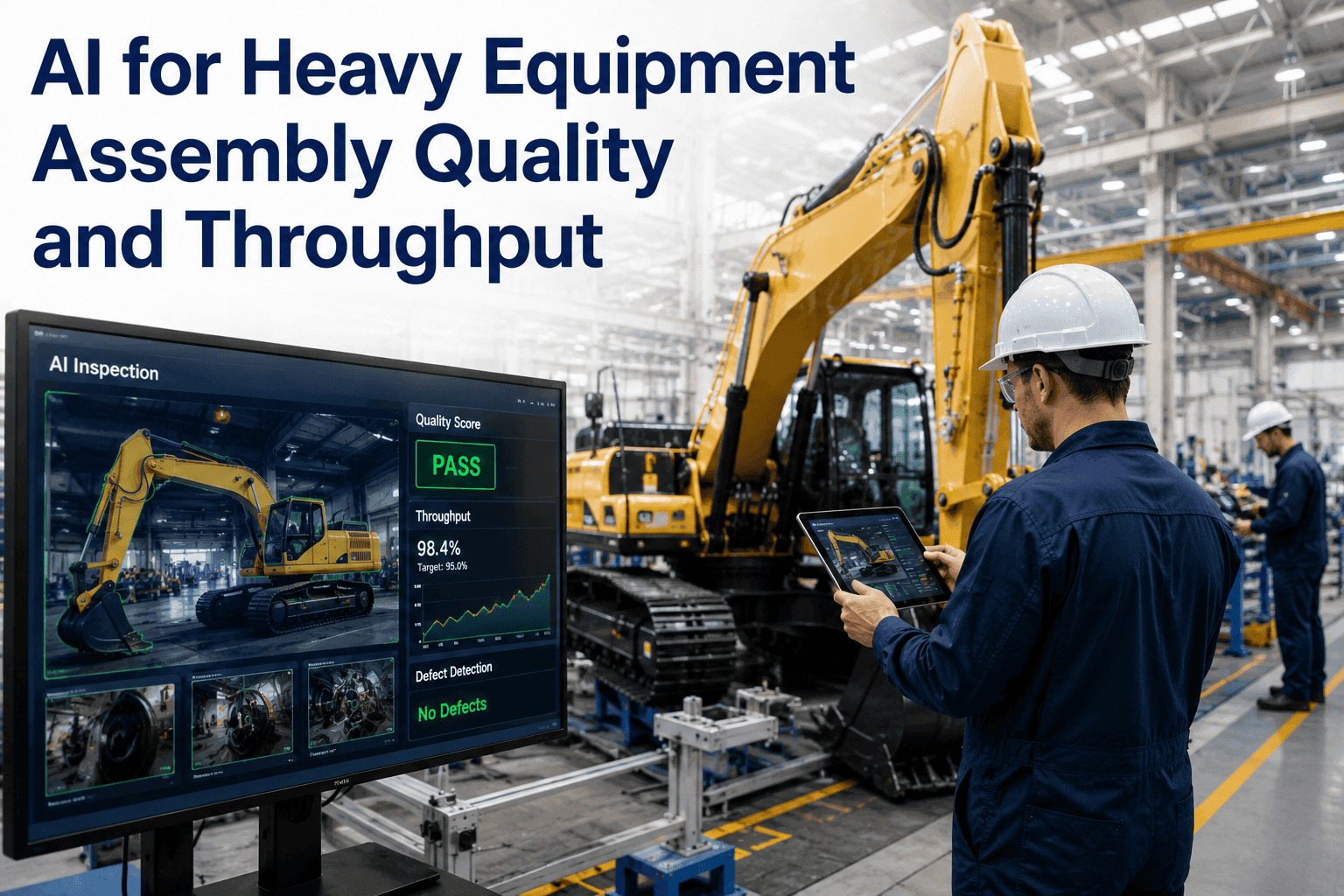
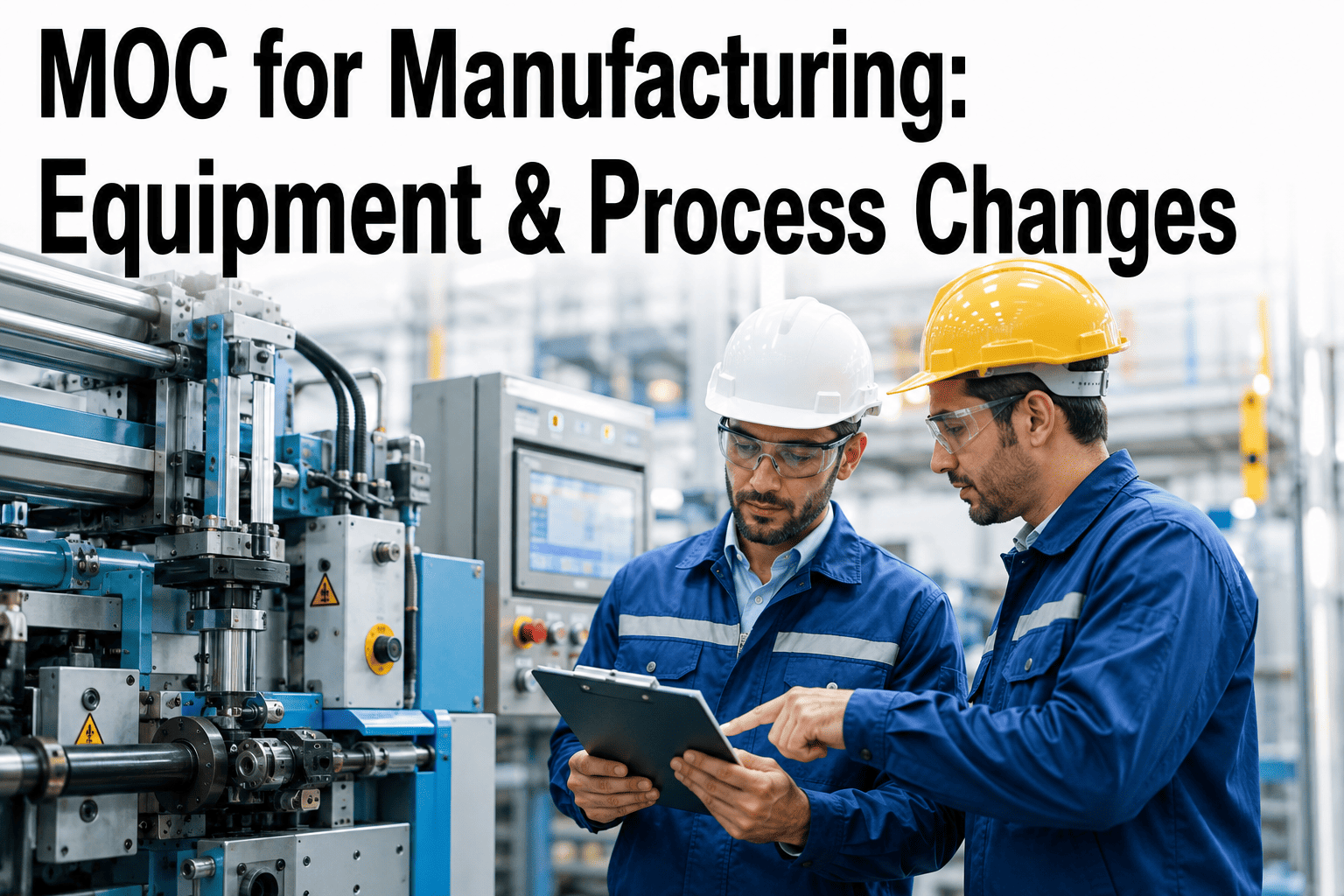
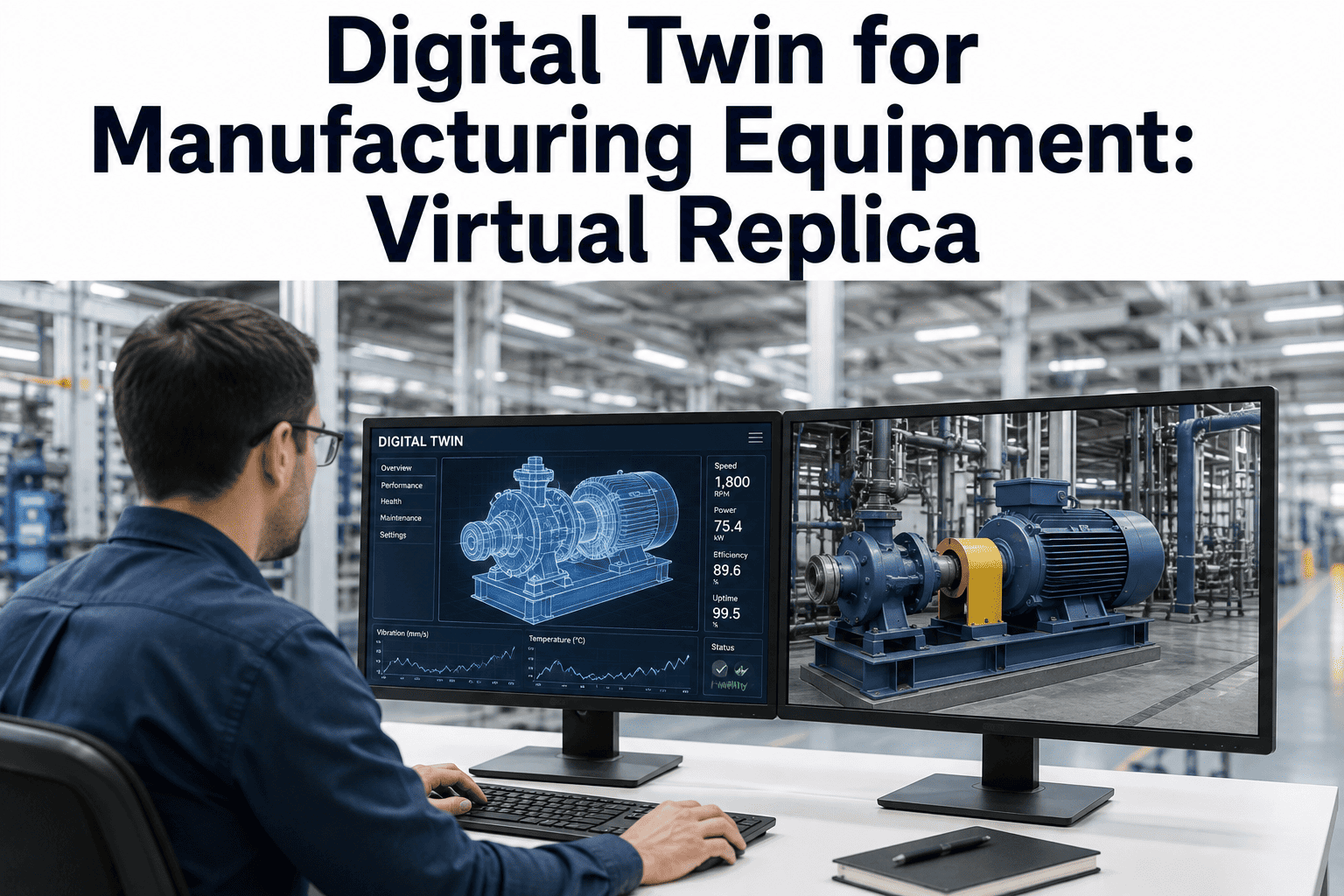
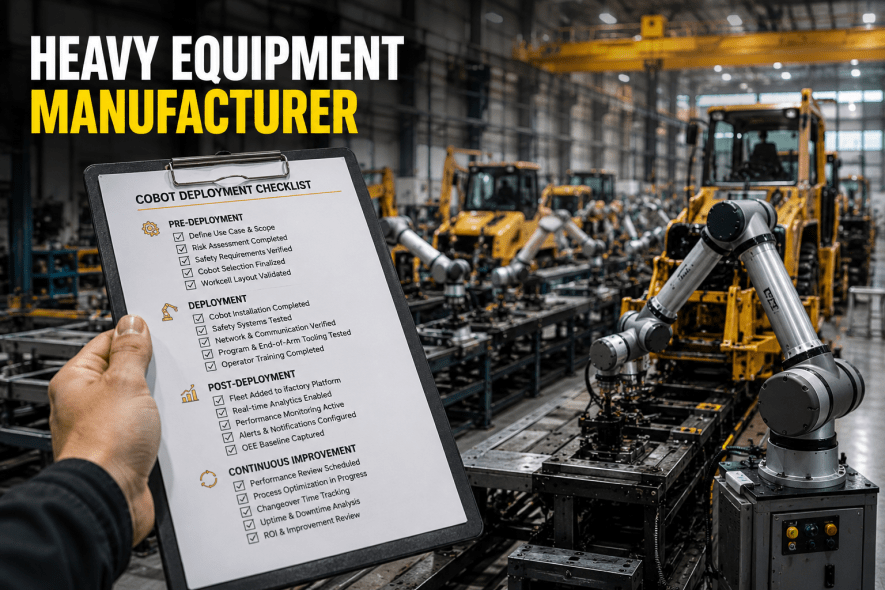
Heavy equipment assembly is a strange combination of scale and precision that most other manufacturing sectors never have to reconcile at once. You are torquing fasteners to exact specification on a component that weighs several tons, verifying weld integrity on a frame that will carry loads for twenty years, and doing it all at a pace that keeps a multi-million dollar line moving. A single missed torque mark or misrouted harness doesn't just create rework, it can surface as a warranty claim in the field years later, which is exactly the gap AI vision and torque verification are built to close, and you can book a demo to see it running on assembly stations like yours.
HEAVY EQUIPMENT PLANT MANAGER · AI ASSEMBLY VERIFICATION
Big Machines, Tight Tolerances — AI That Catches What the Line Speed Hides
iFactory's AI vision and torque verification platform checks part presence, fastener torque marks, weld quality, and harness routing at every heavy equipment assembly station, catching defects before they reach end-of-line testing.
WHY THIS SECTOR IS DIFFERENT
Heavy Equipment Assembly Breaks the Assumptions Most Vision Systems Are Built On
Vision systems designed for small electronics or automotive trim panels often struggle on a heavy equipment line, where part size, surface finish, and station layout look nothing like a controlled lab. Understanding why the sector is different is the first step toward deploying a system that actually holds up on the floor.
Massive Part Scale
Frames, booms, and chassis components can span several meters, requiring multi-camera coverage instead of a single fixed inspection point.
Raw Metal Surfaces
Unpainted steel, oil residue, and weld scale create visual noise that a model trained on clean parts will misread as defects.
Long Product Life
A defect that escapes assembly may not surface as a failure for years, making prevention far more valuable than catching it later.
High-Mix Configurations
Custom attachments and regional specification variants mean the model has to recognize dozens of valid configurations, not one standard build.
$400K-$2.1M
Average annual defect escape cost per line before AI vision inspection
100%
Of assembled units inspected at line speed instead of a manual sample rate
$350K-$1.8M
Typical annual savings per line once AI vision inspection is deployed
WHAT GETS VERIFIED
Four Checkpoints Where AI Vision Catches What Manual Inspection Misses
A heavy equipment assembly station typically has several distinct verification needs happening in sequence. Each one benefits from a different type of model, and iFactory's platform runs all four in parallel at the same station without slowing the line.
01
Fastener Torque Mark Verification
Confirms every critical fastener carries its torque witness mark, catching missed or under-torqued bolts on structural connections before the unit moves downstream.
02
Weld Seam Inspection
Detects incomplete fusion, spatter, and porosity on structural welds using models trained on your facility's own weld defect library rather than generic samples.
03
Harness and Hose Routing
Verifies wiring harnesses and hydraulic hoses follow the correct routing path and are properly clipped, preventing chafe-related failures that show up months after delivery.
04
Component Presence and Orientation
Confirms brackets, guards, and attachment points are present and correctly oriented across every configuration variant built on the line that day.
A Defect on a Machine That Runs for Twenty Years Costs More Than One That Runs for Two
iFactory's AI vision platform inspects torque marks, welds, harness routing, and component presence at every station on your heavy equipment line, at full speed and full volume. Book a demo to see it configured for your specific assembly process.
BEFORE AND AFTER
What Changes on the Floor Once Assembly Verification Runs on Every Unit
Manual end-of-line audits catch a sample of what leaves the line, not everything. The table below compares typical outcomes before and after AI vision is deployed across assembly stations on a heavy equipment line.
DEPLOYMENT PATH
How a Heavy Equipment Line Typically Rolls This Out
Plant managers rarely deploy AI vision across an entire line on day one. The staged approach below reflects how most heavy equipment assembly deployments actually progress from a single station to full-line coverage.
STAGE 1
Pilot Station Selection
One high-value or historically problematic station is chosen, models are trained on that station's specific defect history, and cameras are installed without disrupting the existing line flow.
Validation Against Manual Audit
The system runs in parallel with existing manual inspection for several weeks, and results are compared to confirm the model's accuracy on real production units.
STAGE 2
STAGE 3
Line Control Integration
Once validated, detection results connect directly to the line control system, automatically flagging or diverting units that fail verification without manual intervention.
STAGE 4
Expansion to Additional Stations
With the pilot proven, coverage expands station by station across the line, prioritizing the checkpoints with the highest historical defect escape cost first.
WHAT OTHER HEAVY VEHICLE BUILDERS ARE DOING
AI Inspection Is Already Standard Practice Across Heavy Vehicle Assembly
Heavy equipment plant managers evaluating AI vision for the first time are often surprised to learn how far ahead adjacent heavy vehicle sectors already are. These examples show where the technology is already proven on parts and processes similar to yours.
Cab and Frame Inspection
Heavy truck OEMs use AI to automate cab inspections and weld checks on high-volume lines, catching structural weld defects that manual sampling would miss between checks.
Chassis and Structural Welds
Vision systems detect weld defects, cracks, and misalignments on chassis and frame components that could compromise structural integrity if they reached the field undetected.
Suspension and Drivetrain
Suspension arms and drivetrain components are inspected for wear, corrosion, and faulty assembly before they leave the station, the same checkpoint model used for heavy equipment undercarriages.
Component Object Detection
Deep learning models deployed on edge cameras verify part presence, torque marks, and connector seating at each station, adapting to natural variation in lighting and part position instead of requiring fixed conditions.
THE ECONOMICS OF EARLY DETECTION
Why Catching a Defect at the Station Costs a Fraction of Catching It Later
The further a defect travels down the production process before it is caught, the more expensive it becomes to fix. This is especially true on heavy equipment, where end-of-line rework often means partial disassembly of a unit that already weighs several tons.
FREQUENTLY ASKED QUESTIONS
Questions Plant Managers Ask About AI Vision on Heavy Equipment Lines
Can the system handle unpainted steel and oily surfaces without false positives?
Yes, but only if the model is trained on images captured from your actual production floor rather than clean catalog samples, which is why iFactory's onboarding process includes collecting a representative set of images under your normal operating conditions including oil residue, dust, and variable lighting. A model trained only on lab conditions will consistently misread these surfaces as defects, so this step is treated as mandatory rather than optional.
Book a demo to see how the model performs against your own surface conditions.
How does the system handle so many different configuration variants on the same line?
The model is trained to recognize each valid configuration as a distinct pattern rather than expecting a single standard build, so a bracket that is correct on one attachment variant and absent on another is verified against the correct specification for that specific build. This requires more upfront training data across variants, but it means the system does not generate false rejects when the line switches between configurations mid-shift.
Do we need to slow down the line to get full inspection coverage?
No, the cameras and inference run at the same pace as the existing assembly cycle, since the entire purpose of moving inspection to AI vision is to achieve full coverage without adding time to the process the way a manual secondary inspection station would. Throughput validation is a required step before any station goes live in production to confirm zero added cycle time.
Contact our support team to review throughput requirements for your specific line speed.
What happens when the system flags a defect — does it stop the line automatically?
That depends entirely on how your team configures the response rules. Most plants start with the system flagging and logging the defect while a technician reviews it, and only move to automatic diversion or line stops for high-confidence, high-severity defect types once the model has proven reliable over a validation period. This staged trust-building approach avoids unnecessary line stoppages from early false positives.
How long does it take to see measurable defect escape reduction after deployment?
Most facilities see measurable improvement within the first month of a station going live, since the system inspects every unit rather than a sample from the first day it is validated for production use. The larger gains in root cause analysis and upstream process correction tend to build over the following quarter as defect pattern data accumulates across shifts and configurations.
Book a demo to discuss a realistic timeline for your specific station count.
See AI Vision Working on Parts the Size of Yours
iFactory's assembly verification platform is built for the scale, surface conditions, and configuration complexity of heavy equipment manufacturing. Book a demo to see it applied to your own frames, welds, and torque specifications.