Textile plants run tight margins. When a loom goes down mid-shift or a dyeing system loses temperature control, the cost isn't just one missed order — it's rework, overtime, customer penalties, and compressed delivery windows that ripple across every downstream operation. Yet most textile facilities still rely on reactive maintenance: fix it when it breaks, log it after the fact, and explain the variance at month-end. That approach worked when margins were wider and lead times were longer. It doesn't work now. This guide covers the maintenance requirements for the four core equipment families in textile manufacturing — looms, knitting machines, dyeing systems and finishing lines — along with the shift toward predictive, AI-driven maintenance programs that leading fabric and garment manufacturers are deploying in 2026.
From Reactive Repairs to Predictive Uptime: iFactory AI for Textile Equipment
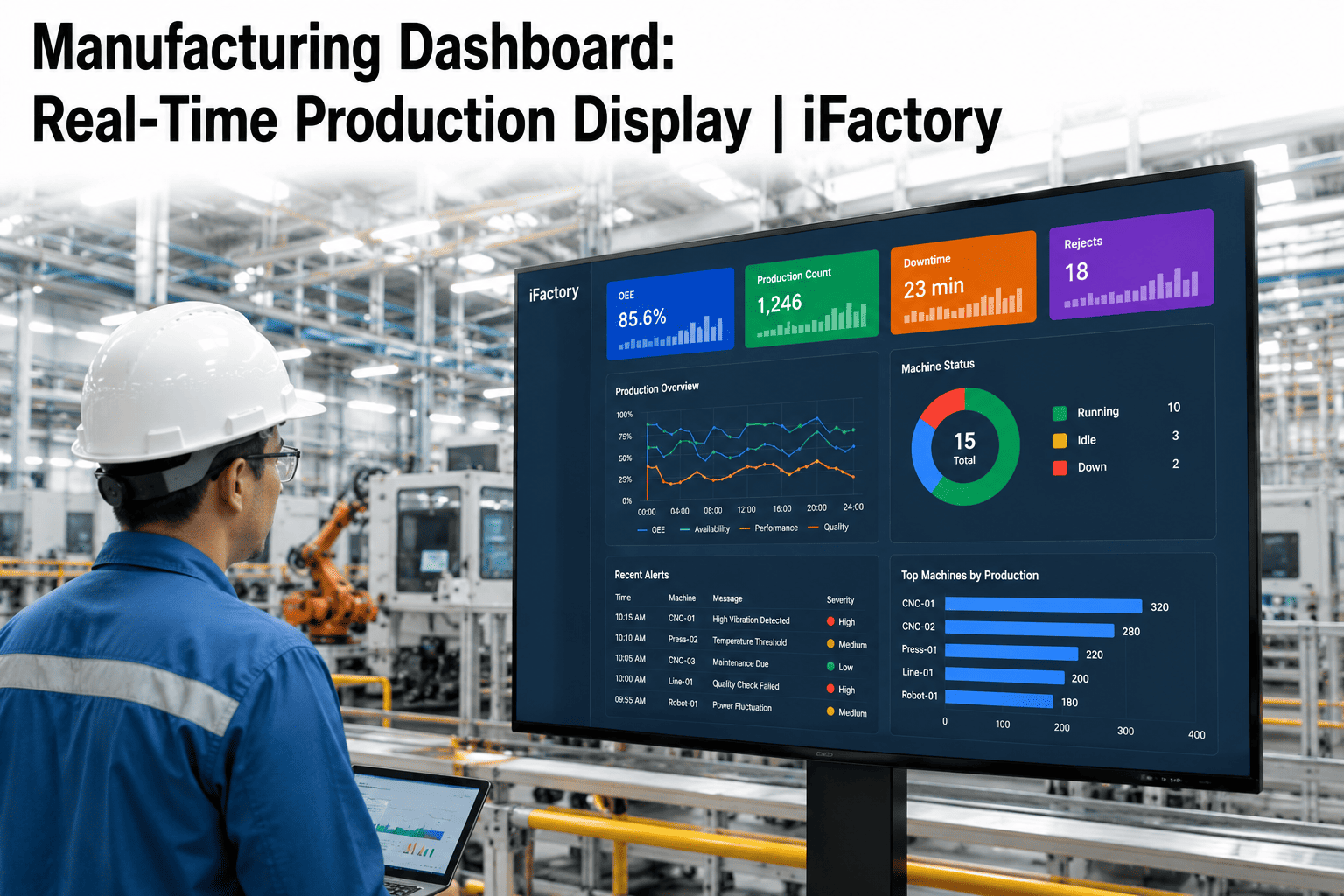
iFactory AI connects to your looms, knitting machines, dyeing systems, and finishing lines — delivering real-time equipment health, automated PM schedules, and predictive failure alerts without cloud dependency.
Why Textile Equipment Maintenance Is Uniquely Demanding
Textile manufacturing equipment operates at extreme speeds, under continuous vibration, and in environments loaded with fiber dust, humidity, and chemical exposure. A rapier loom cycles at 400–800 picks per minute. A high-speed circular knitting machine completes thousands of needle cycles per hour. Jet dyeing machines run pressurized, high-temperature chemical baths for hours at a time. Each of these conditions accelerates wear in ways that standard industrial maintenance intervals don't account for.
The consequence is a maintenance paradox: following the OEM schedule prevents some failures but still leaves facilities exposed to the condition-specific degradation that only real-time sensor data can detect. Mills that have moved to condition-based and predictive maintenance report 30–45% fewer emergency work orders within the first year — not because they do more maintenance, but because they do the right maintenance at the right time.
| Maintenance Approach | Trigger | Cost Profile | Downtime Risk | Suitable For |
|---|---|---|---|---|
| Reactive | Failure occurs | High (emergency labor + parts) | High | Non-critical ancillary equipment |
| Time-Based PM | Fixed interval (weekly/monthly) | Medium (over-maintenance risk) | Medium | Standard OEM compliance |
| Condition-Based | Sensor threshold exceeded | Lower (targeted intervention) | Low | Critical production machinery |
| Predictive (AI) | Failure probability model | Lowest (optimize parts + labor) | Very Low | High-speed looms, dyeing systems |
Loom Maintenance: Rapier, Air-Jet, and Water-Jet Systems
Weaving looms are the highest-value, highest-wear assets in most fabric manufacturing facilities. Rapier, air-jet, and water-jet looms each have distinct failure modes, but share a core maintenance logic: precision alignment, lubrication, and timing are everything. A misaligned reed, a worn rapier head, or a contaminated air filter doesn't just cause a breakdown — it causes defects that may not be caught until inspection, sending rework costs upstream.
Daily Checks
- Inspect and clean reed and heddle frames
- Check weft insertion system (rapier heads / air nozzles)
- Verify loom speed and picks-per-minute setting
- Drain water-jet filters and inspect nozzle pressure
- Remove fiber accumulation from drive belts
Weekly Tasks
- Lubricate rapier drive mechanism and guide rails
- Inspect shed geometry and heald frame timing
- Check and tension main drive belt
- Clean and test warp stop motion sensors
- Inspect loom frame for loose fasteners
Monthly Tasks
- Full lubrication of main cam box and dobby mechanism
- Bearing vibration check on main shaft
- Electrical connection inspection and torque check
- Replace air-jet filter elements
- Calibrate tension control and beam regulation systems
Annual Overhaul
- Full cam box disassembly and bearing replacement
- Reed replacement or precision cleaning
- Rapier head and band replacement (high-speed looms)
- Motor and gearbox inspection with wear measurement
- Complete electrical system audit
Predictive monitoring on looms focuses on vibration signatures from the main shaft and cam box, weft insertion consistency (measured in milliseconds), and warp tension deviations. iFactory AI ingests these signals from PLC and sensor feeds and flags anomalies — a rising vibration trend on the cam box bearing that will become a failure in 12–18 days is actionable; the same failure discovered on a Saturday night is a crisis.
Knitting Machine Maintenance: Circular and Flat-Bed Systems
Knitting machines are dense precision instruments — a single circular knitting machine may contain 3,000 or more individual needles, each subject to bending, breakage, or hook wear. The maintenance challenge is that needle failure rarely announces itself. A single bent latch needle produces a dropped stitch; by the time a fabric inspector catches the defect, dozens of meters of off-spec material may have been produced.
Needle System
Inspect needle hooks and latches every 500 operating hours. Replace needles as a section (not individually) to maintain consistent fabric quality. Track needle breakage rate as a KPI — rising breakage indicates cam track wear or incorrect yarn tension settings.
Cam Track & Carriage
Cam tracks guide needle movement and are subject to abrasive wear from fiber debris. Clean and inspect cam tracks weekly. Measure cam track clearance quarterly — deviations beyond OEM tolerance cause needle deflection and stitch irregularity. Lubricate with manufacturer-specified oil only.
Yarn Tension & Feed
Yarn tension variation is the leading cause of fabric defects in knitting operations. Calibrate yarn feeders weekly, inspect ceramic guides for groove wear monthly, and validate tension uniformity across all feeds before every new yarn lot. iFactory monitors feed motor current draw as a proxy for tension drift.
Motor & Drive
Circular knitting machines run at 15–35 RPM for the cylinder, but internal needle action multiplies mechanical stress. Inspect drive belt tension and sprocket condition monthly. Vibration monitoring on the main drive motor provides early warning of bearing degradation — typically 3–6 weeks before audible noise develops.
Lubrication Management
Over-lubrication contaminates yarn and fabric. Under-lubrication accelerates cam and needle wear. Establish machine-specific lubrication maps and use automated metered lubrication systems on high-speed machines. Log all lubrication events in your CMMS for traceability.
Takedown & Batching
Takedown roll pressure and batching tension affect fabric width and weight consistency. Inspect takedown roll surface for hardening or grooving quarterly. Calibrate takedown tension against fabric specification sheets whenever yarn lot or count changes.
Dyeing Equipment Maintenance: Jet, Jigger, and Continuous Systems
Dyeing equipment maintenance carries a dimension that mechanical maintenance alone cannot address: chemical compatibility. Pump seals, heat exchanger surfaces, vessel linings, and piping are continuously exposed to hot acidic or alkaline liquors, dispersing agents, and auxiliary chemicals. Corrosion and scale buildup are the primary failure modes — and both are invisible until a vessel inspection or an unexpected quality rejection reveals the extent of the damage.
| System Type | Critical Components | Primary Failure Mode | Monitoring Parameter | Maintenance Interval |
|---|---|---|---|---|
| Jet Dyeing Machine | Circulation pump, heat exchanger, nozzle system | Pump seal failure, nozzle blockage | Flow rate, temperature uniformity | Pump seals: 6 months; Full inspection: annual |
| Jigger | Roller bearings, fabric guide, heating elements | Uneven tension, heating element failure | Roller pressure, bath temperature | Bearings: quarterly; Elements: biannual |
| Continuous Pad-Steam | Padder rollers, steamer, squeeze rolls | Roller hardness variation, steam leaks | Nip pressure, steam temperature | Roller hardness: monthly; Steam traps: quarterly |
| Beam Dyeing | Beam perforations, circulation pump, vessel | Blocked perforations, vessel corrosion | Differential pressure, pH stability | Beam cleaning: after each batch; Vessel: annual |
Temperature uniformity is the single most critical parameter in dyeing equipment performance — a ±2°C deviation across a jet dyeing vessel is enough to cause visible shade variation in the finished fabric. iFactory AI monitors thermocouple arrays in real time and flags temperature gradient anomalies before a dye lot is committed. Combined with pH sensor integration and pump flow monitoring, the platform gives dye house managers the visibility to intervene before a batch failure, not after.
Finishing Line Maintenance: Stenter, Sanforizing, and Calendering
Finishing machinery determines the final physical properties of fabric — dimensional stability, hand feel, surface appearance, and shrinkage performance. Because finishing is the last step before inspection and shipping, equipment failures here compress into the tightest delivery windows and produce the most visible quality failures. Stenter frames, sanforizing machines, and calenders each carry specific maintenance requirements that align directly with output quality.
Stenter Frame
Pin chains and clip chains are subject to stretch and pin breakage. Inspect and replace damaged pins weekly — a missing pin causes a fabric edge tear. Burner nozzles require quarterly cleaning and flow calibration. Thermocouple array calibration monthly ensures width and temperature accuracy. Fan motor vibration monitoring prevents catastrophic bearing failure during production.
Sanforizing Machine
The rubber blanket is the most cost-sensitive component — a full blanket replacement can cost $80,000–$150,000. Monitor blanket hardness and thickness monthly using a Shore durometer. Steam cylinder surface must be inspected for pitting and scale quarterly. Felt blanket tension and moisture content require daily verification; off-spec moisture causes residual shrinkage failures in finished goods.
Calender
Calender bowls (cotton, nylon, or paper) compress gradually under load and require hardness verification monthly. Bowl run-out measurement detects eccentric wear before it produces surface glaze irregularity. Bearing temperature monitoring on calender bowl shafts is the most reliable early warning signal for impending failure — a 15°C rise above baseline typically precedes bearing failure by 7–14 days.
Digital Monitoring Integration
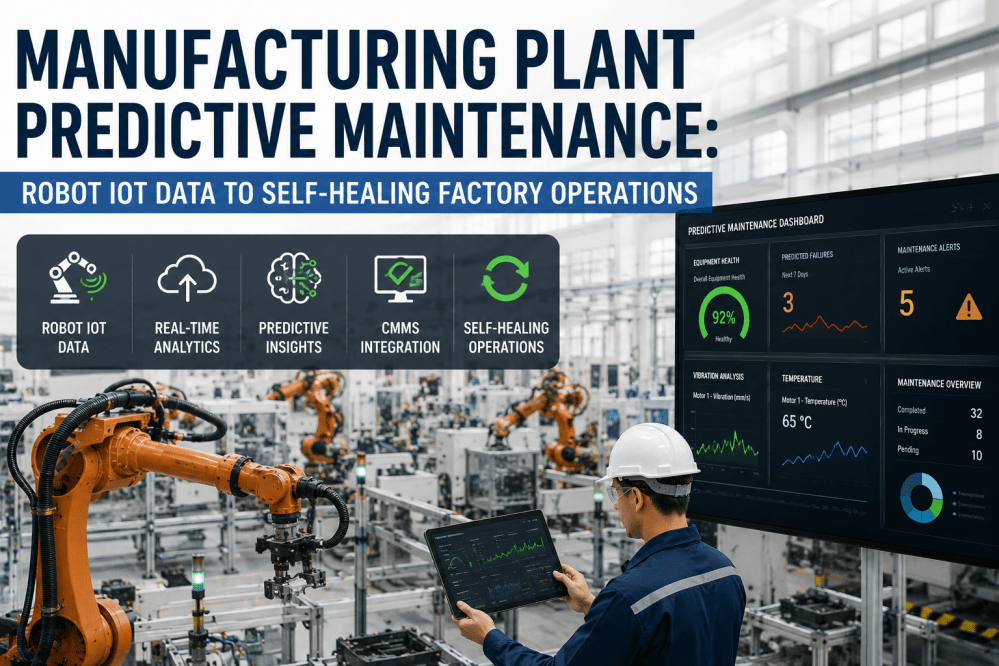
iFactory AI aggregates sensor data from all finishing line equipment — stenter zone temperatures, sanforizer blanket pressure, calender bowl bearing temperatures — into a unified dashboard. Anomaly detection algorithms identify developing failures 1–3 weeks in advance, allowing planned interventions during scheduled downtime rather than emergency stops during peak production.
Predictive Maintenance in Textile Manufacturing: From Sensor Data to Work Orders
The transition from time-based PM to predictive maintenance in textile plants is less about replacing maintenance staff and more about giving them better intelligence. Maintenance technicians in textile facilities already know which machines are problematic — but without data, "problematic" is a gut feeling. With sensor-driven monitoring, it becomes a trend line, a confidence interval, and a recommended intervention window.
Connect Sensors
iFactory integrates with existing PLC and SCADA infrastructure on your textile equipment. Vibration, temperature, pressure, and motor current sensors feed directly into the platform over the plant network. No cloud. No data leaves the floor.
Establish Baselines
The AI engine learns normal operating signatures for each machine — accounting for product type, speed setting, and seasonal ambient conditions. Baselines are typically established within 2–4 weeks of go-live.
Detect Anomalies
Deviations from baseline trigger ranked alerts with failure probability estimates and recommended intervention timelines. Maintenance planners receive actionable work orders — not raw sensor data — prioritized by production impact.
Close the Loop
Every completed work order feeds back into the model. Parts used, actual failure mode, and labor hours inform future predictions. Over 6–12 months, alert accuracy improves and false-positive rates drop below 8%.
iFactory AI has been deployed in textile facilities running rapier looms, high-speed circular knitting machines, and jet dyeing systems. The pilot is on-premise, live within 6–10 weeks, and delivers measurable downtime reduction before the first quarterly review. Book a 30-minute walkthrough to see how the platform maps to your equipment list.
Maintenance Performance Benchmarks for Textile Plants
These metrics reflect performance ranges observed in textile facilities that have implemented structured preventive and predictive maintenance programs, including iFactory AI deployments in fabric and garment manufacturing operations.
What Maintenance Engineers Say About Textile Equipment Programs
"The shift to condition-based maintenance on our rapier looms cut our emergency work orders by more than a third in the first six months. The data finally gave us something to show the production team when we needed a planned stop — not just 'the machine sounds different.'"
"Temperature uniformity in our jet machines was always a black box. Once we put sensors on every zone and monitored it in real time, we identified a heat exchanger that had been degrading for months. We replaced it during a planned weekend and avoided what would have been a catastrophic batch failure on a major order."
"Sanforizer blanket management used to be entirely experience-based — you changed it when it felt wrong. Hardness trending data changed that. We now predict blanket replacement 3–4 weeks out and schedule it with no production impact. We've extended blanket life by about 15% as a side effect of better monitoring."
Building a Reliable Textile Maintenance Program
Textile manufacturing maintenance is not one problem — it is four distinct equipment disciplines, each with its own failure modes, monitoring parameters, and intervention logic. Looms demand precision alignment and vibration monitoring. Knitting machines require needle and cam management at a granular level. Dyeing systems need chemical and thermal monitoring that goes beyond mechanical inspection. Finishing lines protect the quality of everything that comes before them.
The facilities pulling ahead on uptime and quality in 2026 are not the ones with the most maintenance staff — they are the ones with the best data. Predictive maintenance platforms like iFactory AI close the gap between what equipment is doing right now and what the maintenance schedule assumes it is doing. The result is fewer emergencies, better first-pass yields, and a maintenance cost structure that the finance team can actually work with.
The path from where most textile plants are today — largely reactive, partially scheduled — to a genuinely predictive program is a 6–12 month journey. The pilot phase is the proof of concept. Start with your highest-criticality equipment, measure the variance reduction, and build from there. The data already exists on your plant floor. The question is whether your systems are capturing it.
Ready to move your textile plant from reactive repairs to predictive uptime? iFactory AI pilots on-premise in 6–10 weeks with no cloud dependency. Book a Demo to see how the platform works on your equipment.
Textile Manufacturing Maintenance: Common Questions
Stop Losing Production Time to Preventable Equipment Failures.
iFactory AI delivers predictive maintenance for textile looms, knitting machines, dyeing systems, and finishing lines — on-premise, in weeks, with no cloud dependency. See real-time equipment health, automated PM scheduling, and failure forecasts built for textile production.