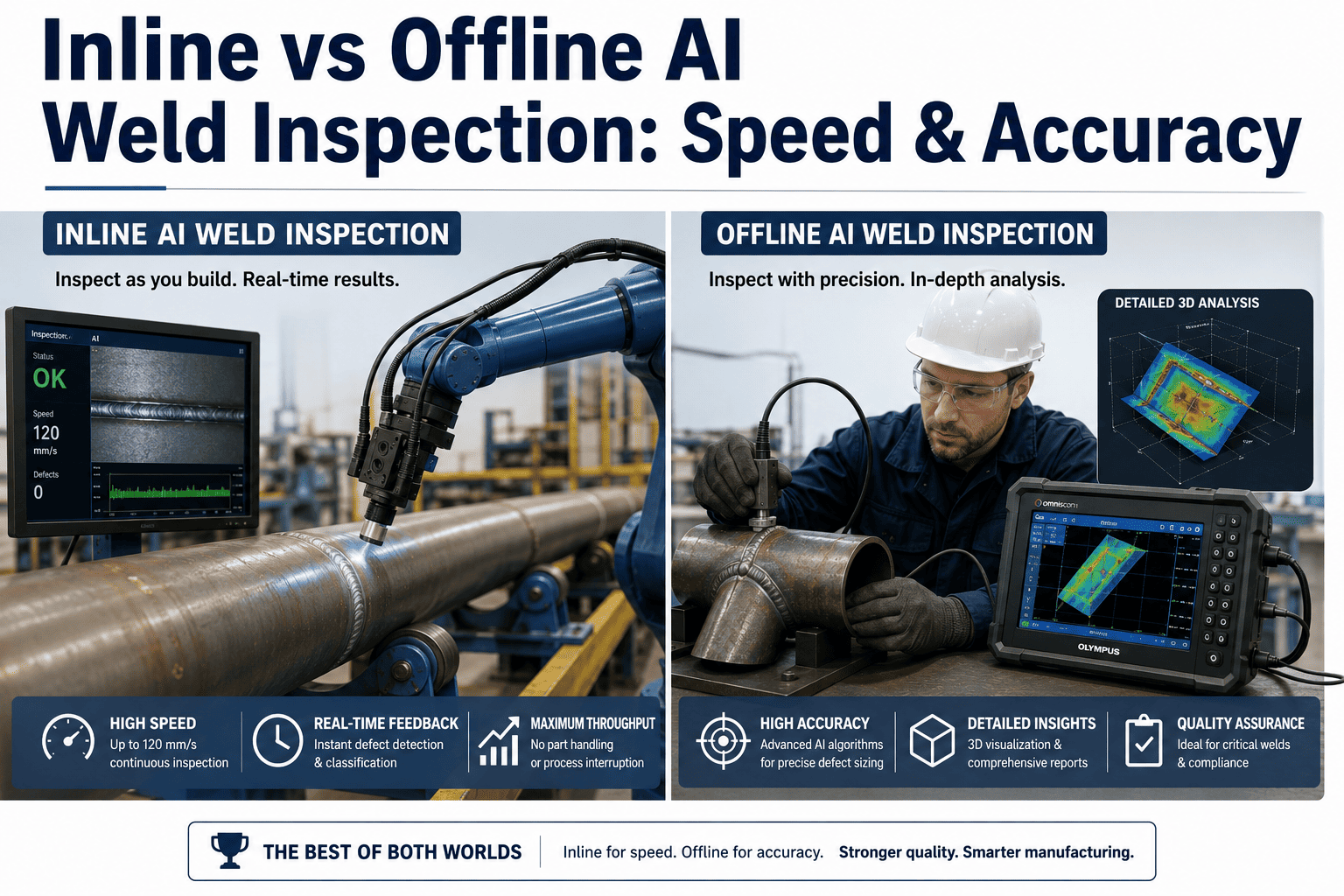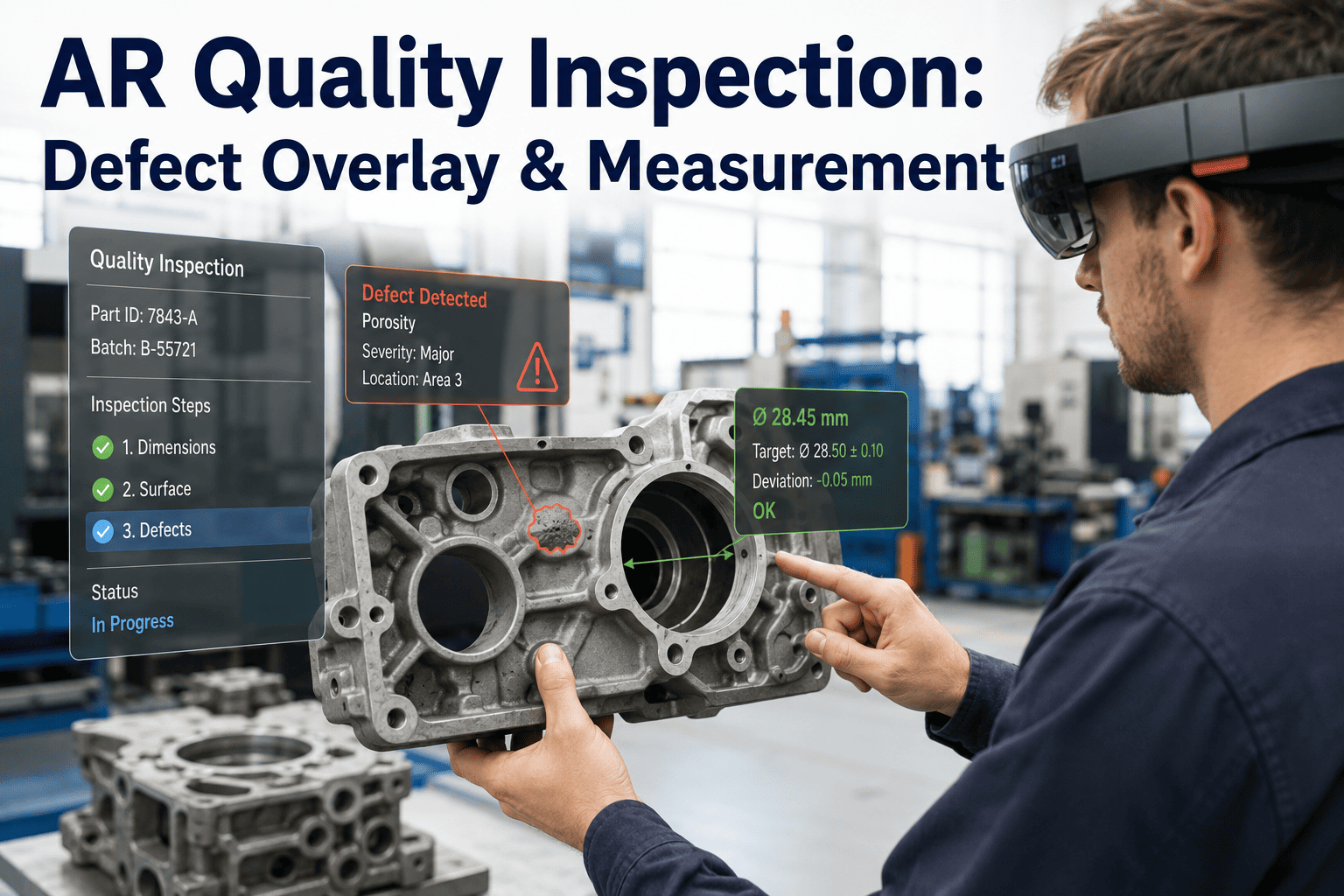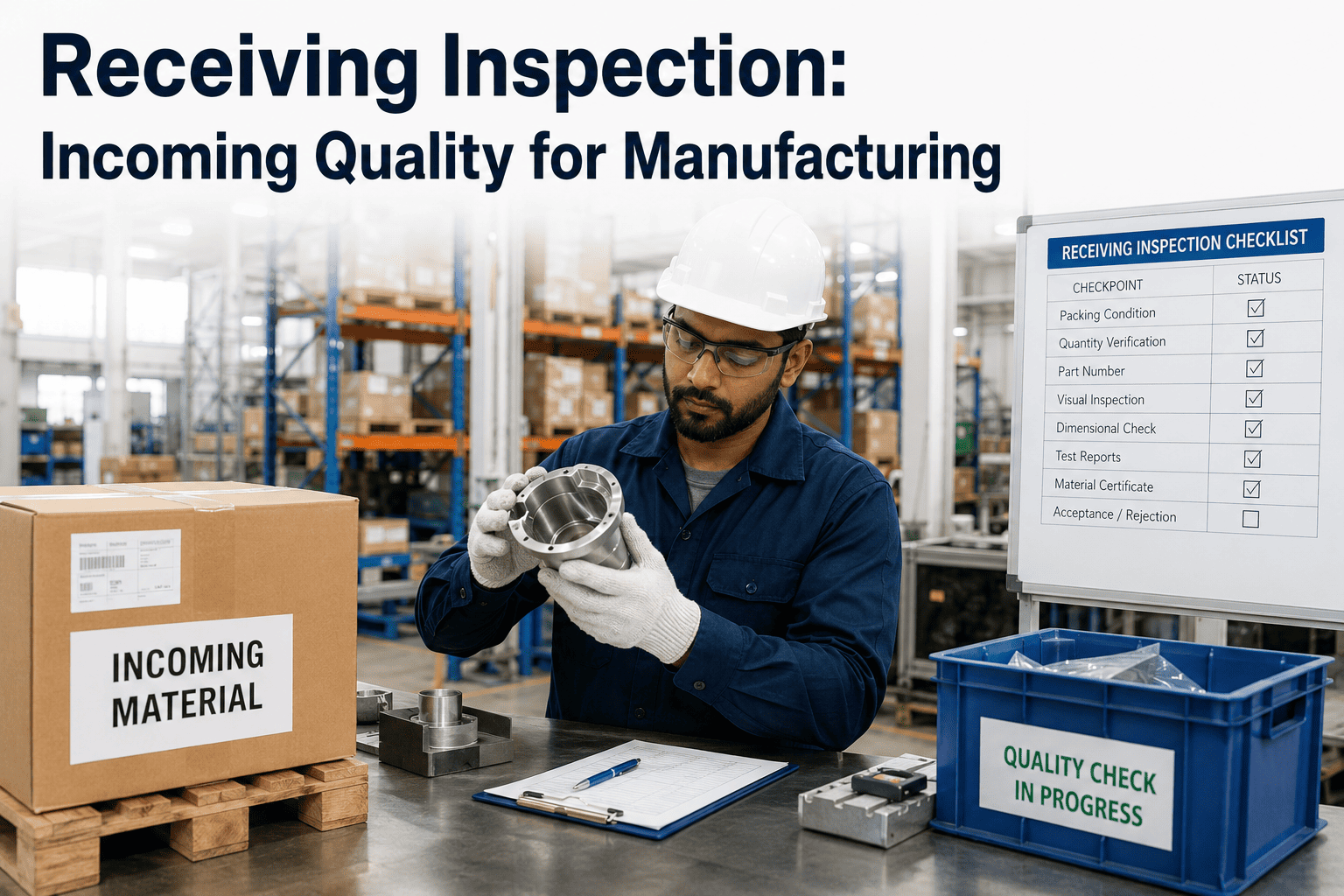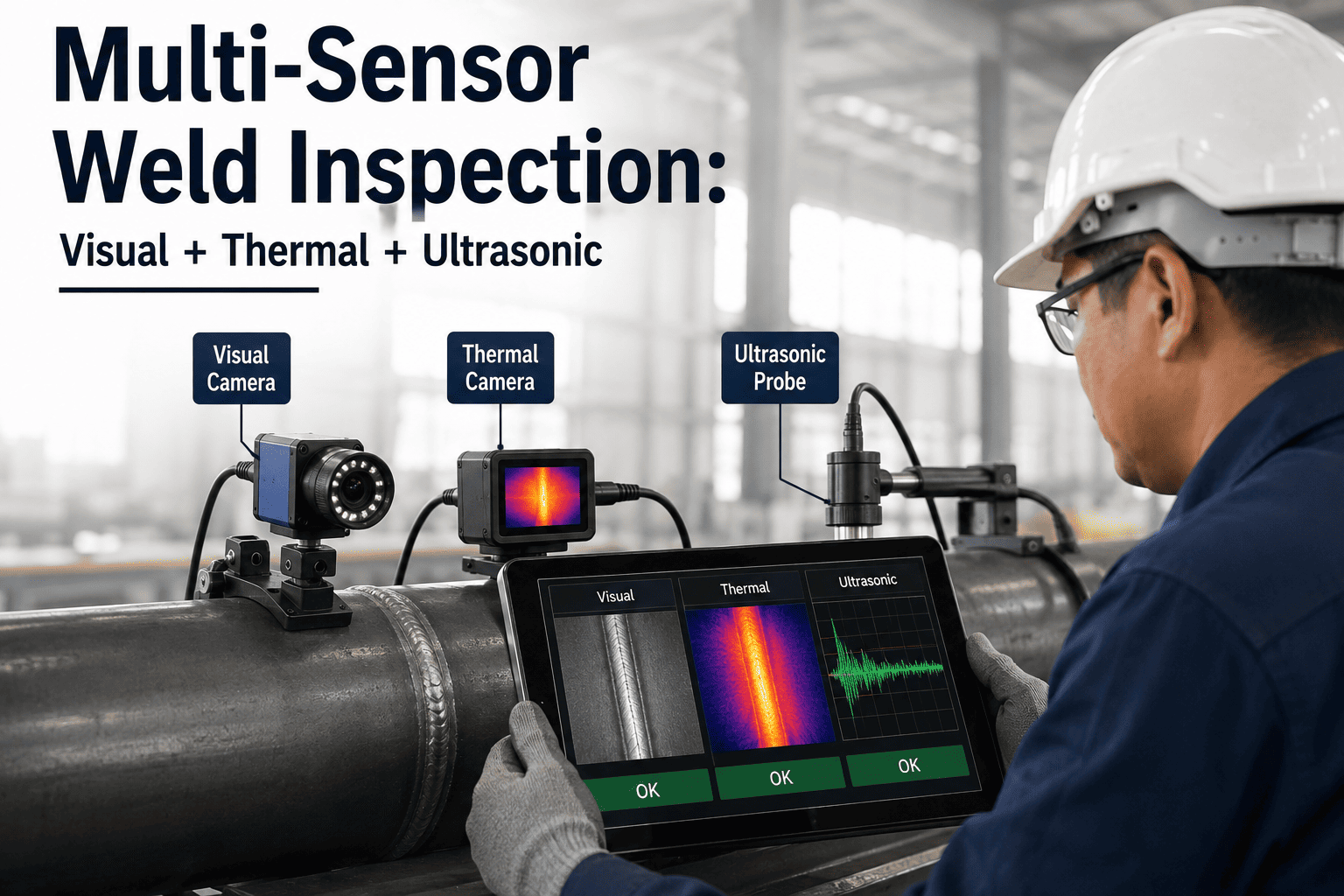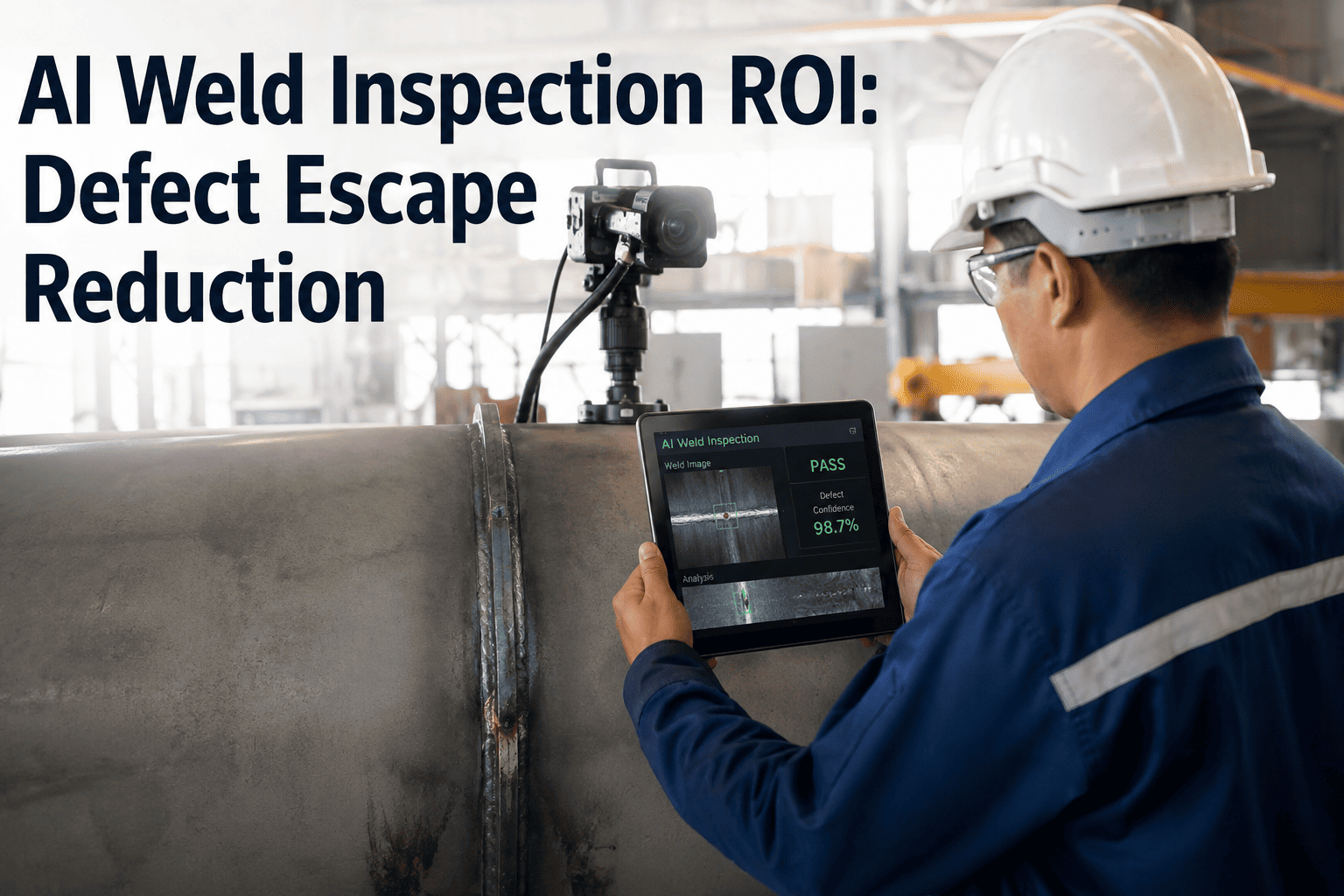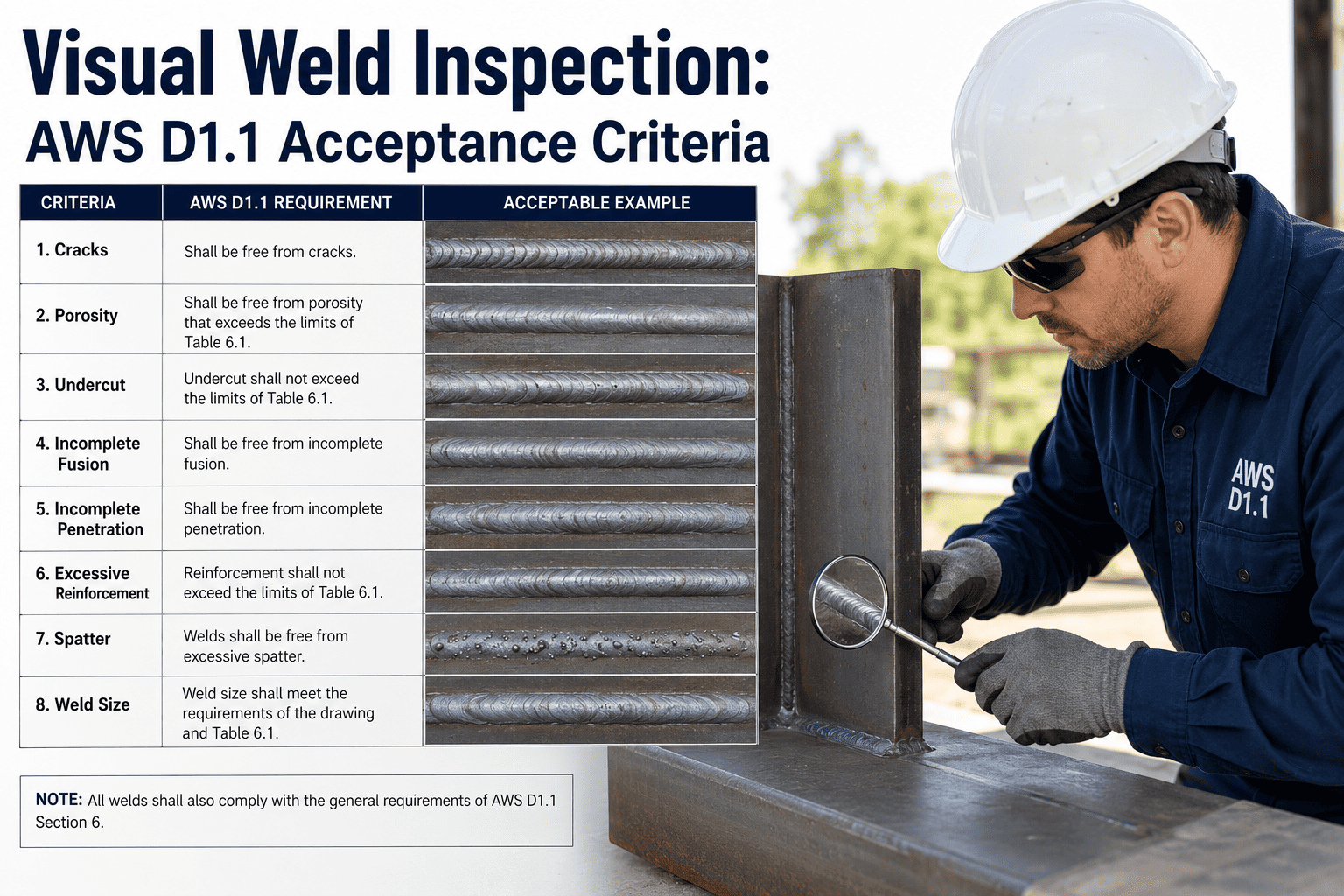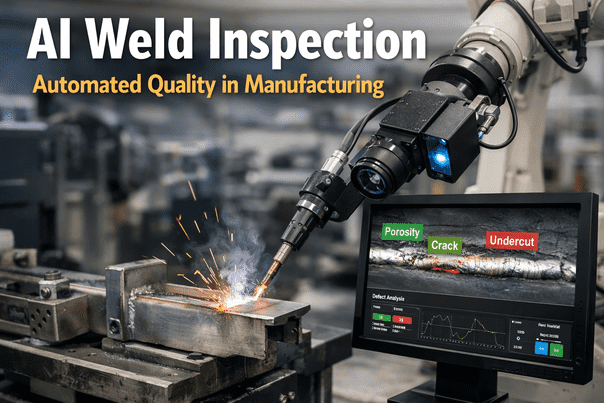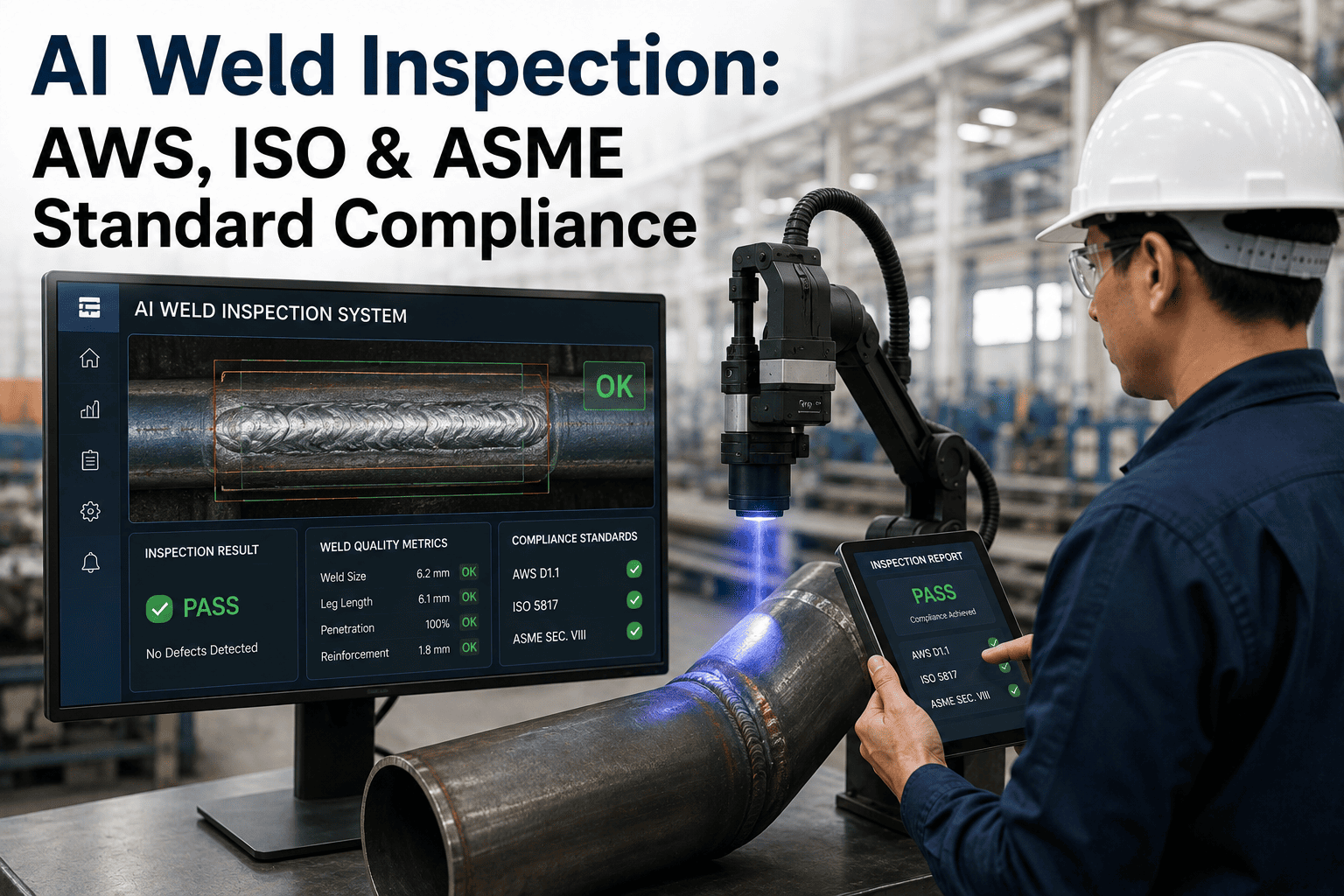
The question that stalls almost every AI weld inspection rollout is not whether the system can find defects — it usually can, and often faster than a human eye scanning the same joint. The question is whether a rejection or acceptance decision made by that system will actually hold up against AWS D1.1, ISO 5817, or ASME Section IX when a certified welding inspector, an auditor, or a client's engineer of record asks to see the basis for it. That single gap between detection and defensible compliance is what separates AI systems that get deployed at scale from AI systems that stay stuck in a pilot. Book a demo to see how iFactory's AI weld inspection maps every finding directly to the code your project runs on.
AI Weld Inspection And Code Compliance
An AI That Finds Defects Is Not The Same Thing As An AI That Is Code-Compliant
AWS D1.1, ISO 5817, and ASME Section IX were written for human inspectors following documented acceptance tables. Here is exactly what it takes for an AI weld inspection system to produce decisions those same codes — and the auditors who enforce them — will actually accept.
The Real Adoption Barrier
Why Quality Managers Hesitate Even When The AI Works
Most AI weld inspection pilots fail for a reason that has nothing to do with detection accuracy. The system correctly flags porosity, undercut, or lack of fusion at a rate that matches or beats manual visual inspection — and the project still stalls, because nobody on the quality team can answer a simple question: when this system says a weld is acceptable, which specific clause of which specific code is it applying, and can that decision be reproduced and defended six months later during a client audit? A defect classification without a code reference is an opinion. A defect classification tied to a specific AWS D1.1 table, a specific ISO 5817 quality level, or a specific ASME Section IX acceptance limit is a record. The gap between those two things is exactly what a compliance-first AI weld inspection deployment has to close before it can carry any real inspection authority on a project.
Know Your Governing Code
Three Standards, Three Different Philosophies
Structural Steel
AWS D1.1
Governs welded structural steel connections in buildings, bridges, and load-bearing structures. Acceptance criteria are built around specific discontinuity types — cracks, undercut, porosity, incomplete fusion — each with defined size and length limits tied to static or cyclic loading conditions.
Global Fabrication
ISO 5817
A horizontal standard used across industries rather than one product class, offering three quality levels — B, C, and D — that a contract or project specification selects based on how critical and fatigue-sensitive the joint is, from moderate-risk components up to safety-critical, high-liability welds.
Pressure Equipment
ASME Section IX
Focused on qualifying welding procedures and welder performance for pressure-retaining and critical systems, with acceptance limits for internal and surface defects that connect back to the fitness of the pressure boundary itself, not just the visible weld profile.
These three frameworks do not map cleanly onto one another. A weld that is acceptable under ISO 5817 Level C can be rejectable under a stricter contract specification, and a defect that AWS D1.1 evaluates against static loading limits may be judged differently under a code written around cyclic or pressure-boundary risk. This is precisely why the first requirement for any AI weld inspection system is knowing which governing code applies to the joint in front of it, before it makes any accept-or-reject call at all.
A Common Real-World Complication
One Facility, One Project, Multiple Governing Codes
Most fabrication operations do not run under a single code. A structural steel connection on a fabrication floor may fall under AWS D1.1, while a pressure piping run in the same facility, welded by the same crew in the same week, falls under ASME Section IX, and an export order for a European client invokes ISO 5817 through an EN 1090 execution class. A shop that treats weld inspection as one generic quality process, rather than a set of governing codes selected per joint type and per contract, is the shop most likely to apply the wrong acceptance table to the wrong weld — and the wrong acceptance table can mean either an unnecessary rejection and rework cycle, or worse, an acceptance that should never have been granted. An AI weld inspection system built for real fabrication environments has to carry this same discipline: the governing code is a property of the joint and the project, configured before inspection begins, not a single default applied uniformly across every weld the camera happens to see. This becomes especially important during procedure and welder qualification, where the WPS and PQR records referenced by ASME Section IX or AWS D1.1 already establish which variables and limits apply to a given joint — an AI system that ignores this qualification data and evaluates every weld against one generic threshold is discarding information the code itself requires to be tracked.
One Platform, Multiple Codes
iFactory Maps Every Weld Finding To Your Project's Governing Standard
Configure the applicable code per project, per joint type, or per client specification, and every AI-detected finding is automatically sentenced against the correct acceptance table — not a generic defect score.
How Compliance Actually Gets Built In
From Detected Discontinuity To Code-Referenced Decision
1
Discontinuity Detected And Measured
The vision or NDT-integrated system identifies a discontinuity — undercut depth, porosity diameter, crack length — and records its precise dimensions, not just a pass or fail impression.
2
Governing Code And Quality Level Applied
The measurement is checked against the acceptance table for the code configured on that project — AWS D1.1 for a structural connection, an ISO 5817 quality level for a fabrication contract, or ASME Section IX for a pressure boundary weld.
3
Clause-Level Reference Attached
The system's decision is stored with the specific clause or table row it applied — not a generic "defect found" tag — so the basis for acceptance or rejection can be traced back to an exact code reference at any point later.
4
Inspector Review For Borderline And Critical Calls
Findings near an acceptance threshold, or on safety-critical joints, are routed to a qualified inspector for confirmation rather than closed automatically, keeping a documented human decision in the loop where the code or project specification expects one.
The Question Everyone Asks First
Does AI Weld Inspection Replace The Certified Welding Inspector?
No, and any deployment that positions it that way is setting itself up for a compliance finding. Most governing codes require inspection decisions to be made or verified by a qualified individual — a Certified Welding Inspector under AWS, or an equivalently qualified examiner under ISO and ASME frameworks — and that requirement does not disappear because a camera or sensor system did the initial detection. What changes with AI weld inspection is not who holds inspection authority, but how much of the routine, repetitive scanning burden sits on the inspector before a decision reaches them. The system's real job is to catch the obvious accepts and the obvious rejects at machine speed and machine consistency, surface the genuinely ambiguous or high-consequence findings clearly, and leave the CWI or examiner to spend their qualified judgment where it actually matters instead of on every single weld pass. Positioned correctly, AI weld inspection is oversight amplification for the inspector, not a replacement for the inspector's signature on the record. This distinction also protects the fabricator commercially — a client, an engineer of record, or a third-party auditor evaluating your quality system wants to see a qualified human accountable for the acceptance decision, and a workflow that can produce that name, that timestamp, and that signature alongside the AI's supporting data is a workflow that survives scrutiny. One built to quietly remove the inspector from the loop, even with strong detection accuracy, is a workflow that eventually gets flagged.
What Auditors Actually Ask For
The Documentation Trail A Compliant AI System Has To Produce
Traceable Acceptance Basis
Every accept or reject decision needs a stored reference to the exact code, quality level, and clause applied, not a generic system confidence score with no code linkage.
Inspector Sign-Off Record
A documented log of which findings were reviewed by a qualified inspector, when, and what determination was made, satisfying the human-verification expectation most codes still carry.
System Qualification Evidence
Records showing the detection system itself was validated against known defect samples for the specific joint types and materials it is being used to inspect in production.
Version And Configuration History
A record of which acceptance criteria version, code edition, and system configuration was active at the time a specific weld was inspected, since codes and project specifications do get revised.
None of these four items is optional in practice, even though none of them is difficult on its own. What tends to break compliant deployments is treating them as an afterthought bolted onto a detection system that was originally designed only to flag defects, rather than building the code linkage, the sign-off log, the qualification evidence, and the version history into the system from the start. Retrofitting an audit trail onto a system that was never structured to carry one is far more expensive, and far less convincing to an auditor, than deploying a system where compliance documentation was part of the original design brief.
Manual Versus AI-Assisted
What Actually Changes For The Inspection Team
| Factor | Manual Visual Inspection Only | AI-Assisted, Code-Mapped Inspection |
|---|---|---|
| Coverage per weld | Sampled or full, dependent on inspector time | Every weld, consistently, at production speed |
| Basis for each decision | Inspector judgment against memorized criteria | Measured dimension against stored code clause |
| Consistency across shifts | Varies with individual inspector experience | Same acceptance table applied every time |
| Audit trail depth | Depends on how thoroughly reports are written | Every finding logged with code reference automatically |
| Inspector's role | Full manual scan of every weld | Focused review of flagged and borderline findings |
Where Deployments Go Wrong
Three Compliance Mistakes That Show Up Repeatedly
Treating Detection As Acceptance
A system that flags an anomaly is not the same as a system that has sentenced it against a code. Confidence scores and defect probabilities are useful signals, but they are not an acceptance decision until they are mapped to an actual clause.
One Acceptance Table For Every Weld
Applying a single default acceptance standard across a facility that actually runs multiple governing codes produces decisions that look consistent internally but will not survive a client or third-party audit of the specific joints involved.
No Path Back To A Qualified Human
Systems deployed without a clear, logged escalation path to a CWI or qualified examiner for borderline and critical findings tend to draw the sharpest audit findings, since the human-verification expectation is one of the most consistently enforced parts of these codes.
A Welding Inspector's View
The AI systems that actually make it past my sign-off are the ones that show their work — they tell me which clause of which code they applied and why, the same way I would write it up myself. The ones that just say "defect detected" without a code reference are the ones I end up re-inspecting from scratch anyway, which defeats the entire purpose of automating the scan. Once a system starts citing the same acceptance tables I use, it stops feeling like a black box and starts feeling like a second set of eyes that happens to never get tired on the night shift.
Priyanka Deshmukh
AWS Certified Welding Inspector · 12 years across structural steel and pressure equipment fabrication · Has led AI weld inspection validation for multiple fabrication shops
Compliance Questions
Frequently Asked Questions
Can an AI weld inspection system legally replace a Certified Welding Inspector's sign-off on a project?
Generally no. Most governing codes and project specifications require inspection acceptance decisions to be made or verified by a qualified individual, and that requirement is not satisfied by an automated system operating without human oversight, regardless of how accurate its detection is. The realistic and compliant model is AI handling continuous detection and initial sentencing, with a qualified inspector confirming flagged, borderline, or safety-critical findings. Book a demo to see how this oversight workflow is structured in practice.
How does an AI system know which acceptance criteria to apply when different welds on the same project fall under different codes?
This has to be configured at the project or joint level rather than assumed globally — a structural connection, a pressure-boundary weld, and a client specification calling for a specific ISO 5817 quality level all need their own mapped acceptance table. A well-built system lets your quality team assign the governing code per joint type or per project so every finding is automatically sentenced against the correct standard rather than a single default table.
What happens when an AI system and a human inspector disagree on whether a weld is acceptable?
A disagreement should be treated as a data point, not a system failure to hide. The finding, the AI's measured basis, and the inspector's determination should both be logged, since discrepancies are exactly what quality teams use to recalibrate detection thresholds and confirm the system continues to track the governing code accurately over time. Contact support to discuss how disagreement logging is handled in the iFactory workflow.
Do auditors and clients actually accept AI-generated inspection records during a project audit?
Acceptance depends heavily on whether the record shows a clear, traceable link between the finding, the governing code clause applied, and a qualified individual's verification where the code requires it. Records that show only a system output with no code reference or human sign-off trail tend to draw findings during audits, while records built around clause-level traceability and a documented review workflow have held up well in practice.
How is an AI weld inspection system validated before it can be trusted on a live production project?
Validation typically means running the system against a set of known defect samples — welds with confirmed discontinuities of documented type and size — for the specific joint configurations, materials, and thicknesses it will inspect in production, and comparing its calls against qualified inspector determinations before full reliance begins. This qualification evidence becomes part of the audit record itself. Book a demo to walk through a validation plan for your specific weld types.
Detection Without A Code Reference Is Just A Guess
Give Every Weld Finding A Defensible, Code-Mapped Record
iFactory's AI weld inspection ties every detected discontinuity to the exact AWS, ISO, or ASME clause that governs it, with inspector review built into the workflow — so your compliance record holds up the day an auditor asks to see it.