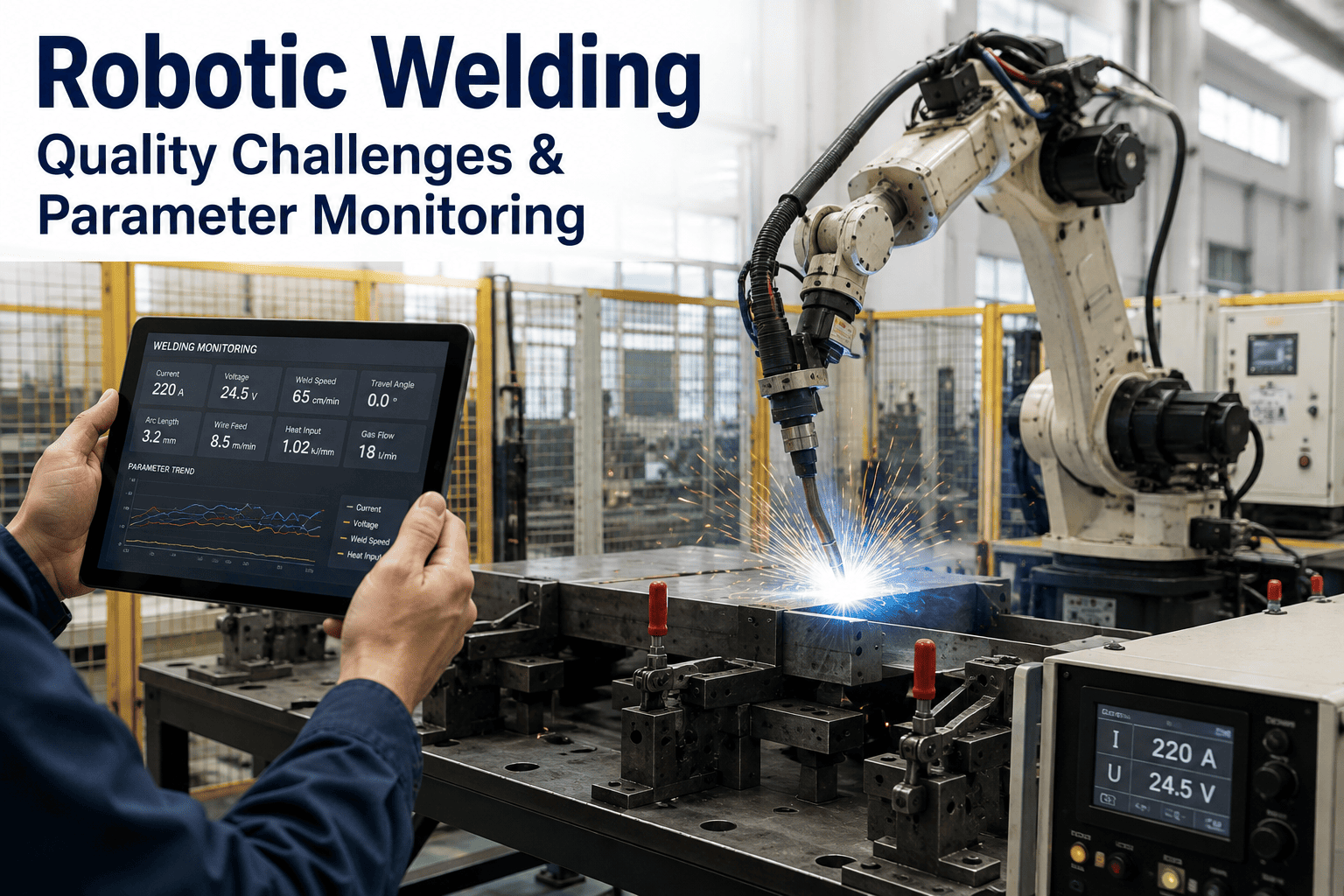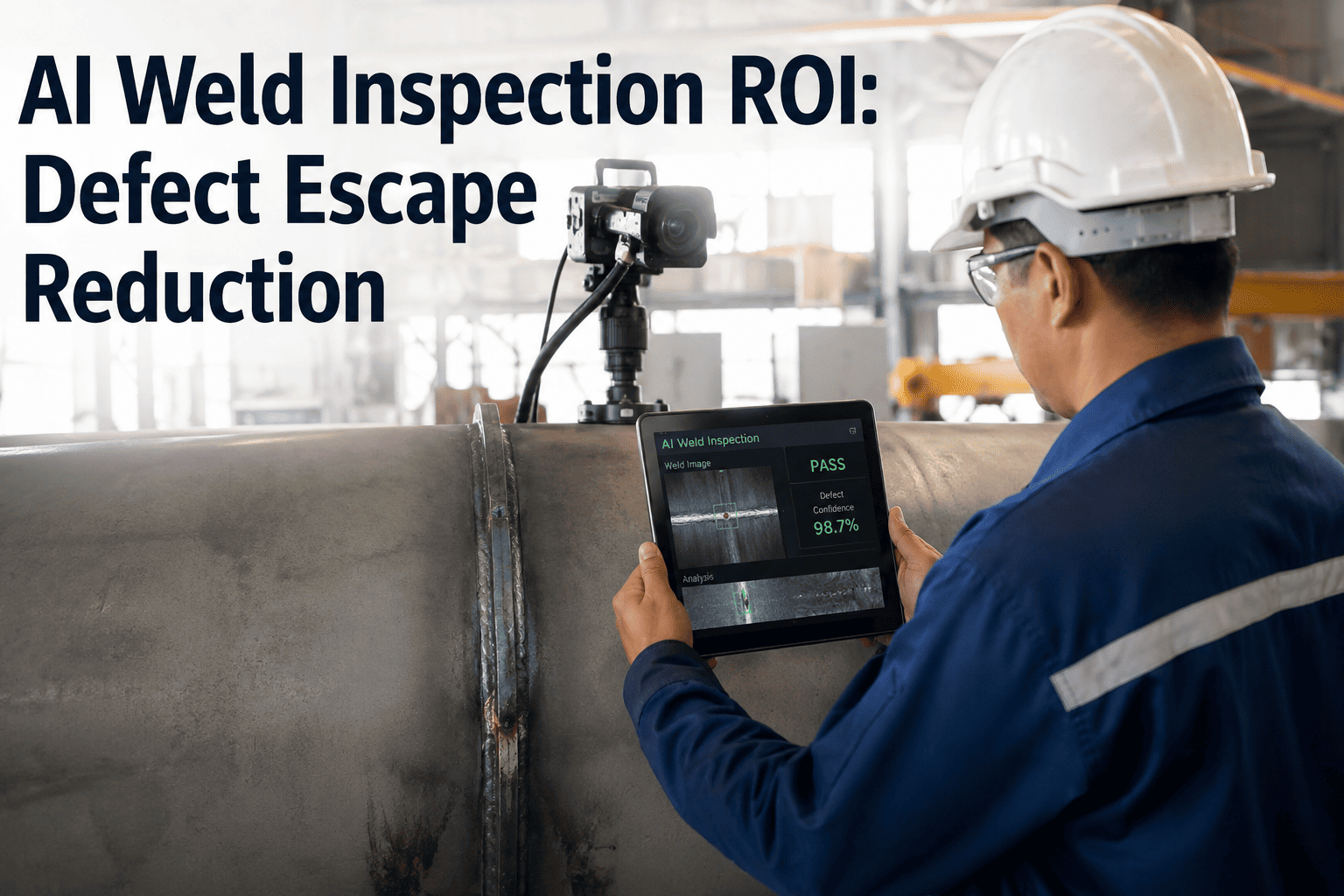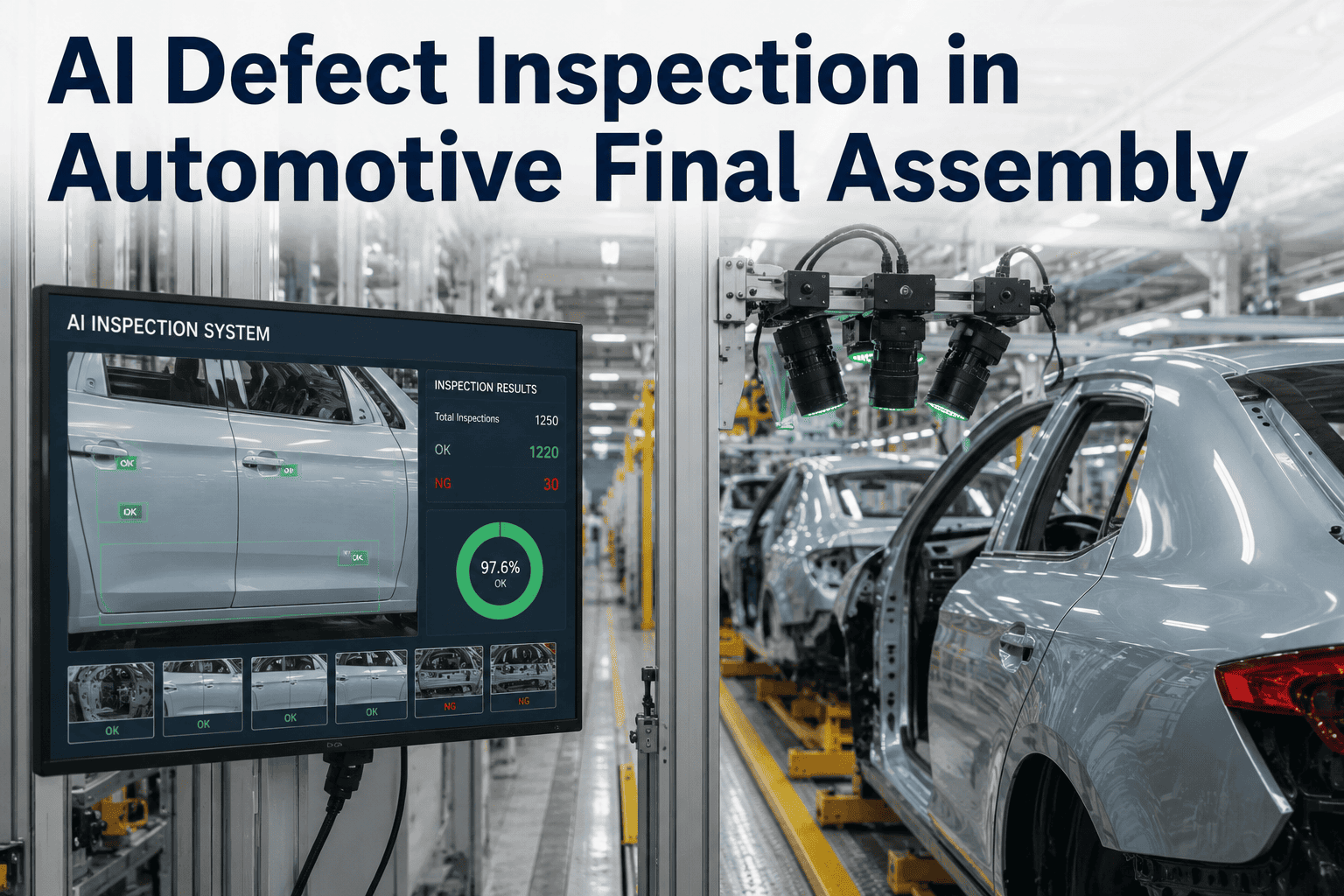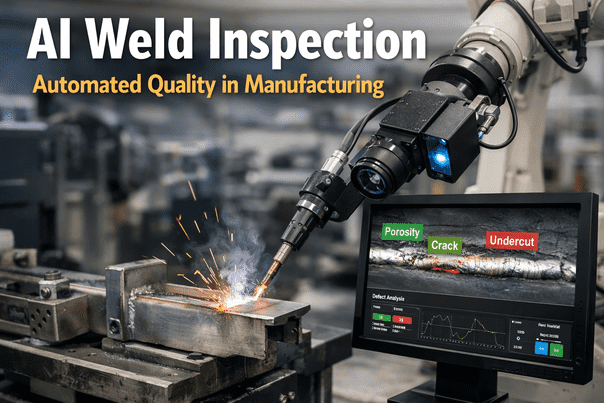
A modern automotive body shop lays down somewhere between 3,000 and 5,000 resistance spot welds on a single vehicle body, plus continuous seam welds at every structural joint, and every one of those welds has to hold up for the life of the vehicle. Manual inspection was never built to keep pace with that volume, so most body shops still rely on destructive teardown sampling of a small percentage of bodies, leaving the rest of production riding on process assumptions rather than verified quality. The tension every body shop manager lives with is that fixing this cannot come at the cost of line speed, since a body shop's entire job is to keep the line moving at takt time. Managers looking to close that quality gap without sacrificing throughput can book a demo to see how real-time AI weld monitoring runs inside the existing cycle time of a robotic welding cell.
Catch Every Weld Defect Without Slowing Down a Single Station
iFactory AI inspects spot welds and seam welds at full line speed, tracks electrode and fixture condition before they drift out of tolerance, and gives body shop managers one view of quality and throughput instead of two separate reports.
Why Weld Quality and Throughput Have Always Pulled Against Each Other
Every quality engineer in automotive manufacturing knows the one-ten-one-hundred rule instinctively, even if their shop has never measured it directly: a defect caught at the stamping press costs roughly a dollar to fix, the same defect discovered after paint costs on the order of ten dollars, and if it survives all the way to final assembly and customer delivery the cost can exceed a hundred dollars and keep climbing from there. Weld defects sit squarely in the middle of that curve. A missed spot weld or an undersized nugget rarely fails an inline visual check, so it travels downstream through paint and trim, and by the time it surfaces — often as a warranty claim years later — the cost has compounded far beyond what a same-station catch would have required.
Traditional sampling makes this worse by design rather than by neglect. Inspecting two to five percent of welds through destructive teardown testing means the vast majority of bodies leave the shop unverified, and the defect signatures that cause the most damage — gradual electrode cap wear, slow shielding gas drift, fixture creep of a fraction of a millimeter — are exactly the slow-moving trends that a periodic sample is least likely to catch before dozens of bodies have already moved on.
Where Weld Risk Concentrates Across a Typical Body Shop Line
Not every station carries the same weld risk or the same throughput sensitivity. Mapping both together is what tells a body shop manager where a monitoring investment pays back fastest.
Underbody Framing
High weld density on structural rails; misalignment here cascades into every station downstream.
High Weld DensitySide Frame Marriage
Robotic cells join side frames to the underbody at high speed, where fixture drift is hardest to spot visually.
Fixture-SensitiveBody Respot
Secondary welds reinforce the structure; electrode cap wear accumulates fastest at this high-cycle station.
Electrode Wear ZoneClosures & Doors
Lower weld count but tight cosmetic and crash-structure tolerance on visible panel edges.
Tolerance-CriticalFinal Weld Audit
Last point before paint; traditionally the only place manual sampling occurs today.
Legacy CheckpointThe Weld Defects That Quietly Cost Both Quality and Throughput
Porosity
Gas trapped in the weld pool during solidification, usually from shielding gas contamination or moisture, weakens the joint without any visible surface sign.
Undercut and Spatter
Excess heat or misaligned torch angle thins the base metal at the weld edge, reducing fatigue strength over the vehicle's service life.
Missing or Undersized Nugget
A spot weld that never reached proper nugget diameter looks identical to a good weld from the surface, and only reveals itself under load or during a destructive test.
Electrode Cap Drift
As electrode tips wear, contact resistance rises gradually, degrading dozens of welds in sequence before a fixed-interval dressing schedule would have caught it.
Defect Type, Root Cause, and Throughput Impact at a Glance
Each weld defect signature has a distinct root cause and a distinct effect on throughput once it is caught, which is why treating weld quality as a single pass or fail check misses the operational picture a body shop manager actually needs.
| Defect Type | Common Root Cause | AI Detection Signal | Throughput Impact if Missed |
|---|---|---|---|
| Porosity | Shielding gas contamination, moisture | Weld pool imaging, spectral analysis | Downstream rework, 3-5x cost |
| Undercut / Spatter | Excess heat, torch misalignment | Vision profile of weld bead geometry | Grinding and rework at next station |
| Missing Nugget | Insufficient weld current or time | Nugget diameter and indentation depth | Line stop if caught late, else field risk |
| Electrode Cap Drift | Progressive electrode tip wear | Contact resistance and current trend | Batch-level defect run if undetected |
| Fixture Creep | Tooling wear, loosened clamps | Weld position deviation tracking | Gradual quality drift across a shift |
What Changes When Every Weld Is Verified Instead of a Sample
What Body Shop Managers See After Moving to Full-Coverage Weld Monitoring
Body shop managers who have made this transition describe the same relief: no longer having to choose between holding the line and trusting the welds, because the inspection now happens inside the same cycle time the robots already run at.
Our respot station was our biggest blind spot for years. We dressed electrode tips on a fixed schedule because that is what the weld procedure called for, but we had no way to tell whether that schedule was actually right for how those tips were wearing in practice. We were either dressing early and losing cycle time we did not need to lose, or dressing late and running a string of marginal welds we would not find out about until a body failed destructive testing three stations later. Since we added AI monitoring of contact resistance and current trend at that station, dressing now happens when the data says it is needed, not on a fixed clock. Our weld escape rate at respot dropped sharply, and just as important, we picked up real cycle time back because we stopped dressing tips that still had useful life left in them.
AI Weld Quality and Throughput in Body Shops — Frequently Asked Questions
Why do body shops need to balance weld quality and throughput instead of optimizing one alone?
A body shop's core job is holding takt time across every station, which historically meant quality inspection had to be light enough not to slow the line, leaving most welds unverified. Optimizing only for throughput lets defects like porosity and undersized nuggets travel downstream where they cost three to five times more to fix, while optimizing only for quality through slower, more thorough manual inspection breaks the line's ability to hit production targets. Managers can book a demo to see how full-coverage inspection is designed to avoid that trade-off entirely.
How does AI weld inspection keep up with line speed without slowing the shop down?
AI vision and signal analysis systems are integrated directly into the robotic welding cell's existing cycle, capturing weld pool imaging, nugget geometry, and electrical signal data during the weld itself rather than as a separate downstream step that would add dwell time. Because the analysis runs on the same timescale as the weld, a station that already welds well under a second per joint does not need additional cycle time to also verify that joint. Teams can contact support to review integration requirements for a specific weld cell model.
What is the biggest hidden throughput cost from undetected weld defects?
The most expensive pattern is not a single bad weld — it is a slow drift, such as gradual electrode cap wear or fixture creep, that degrades dozens or hundreds of welds in sequence before a periodic sample happens to catch it. By the time that drift is traced back to its source, an entire batch of bodies may need rework, which is a far larger throughput hit than the few seconds continuous monitoring would ever add to a single weld cycle. Reach out to book a demo to see drift detection running against real weld signal data.
How does AI change electrode tip dressing schedules?
Most body shops dress electrode tips on a fixed calendar or cycle-count schedule because that is what the weld procedure specifies, which means tips are sometimes dressed too early, wasting cycle time, and sometimes too late, producing a run of marginal welds. AI monitoring of contact resistance and current trend lets a shop dress tips based on actual condition instead of a fixed interval, recovering cycle time on tips with useful life left while catching wear-related defects earlier on tips that degrade faster than expected. Contact support for guidance on condition-based dressing for a specific weld station.
How does iFactory AI integrate with existing robotic welding cells and MES systems?
iFactory AI connects to existing robotic welding controllers, weld monitoring hardware, and MES systems rather than requiring a separate standalone inspection line, logging every weld with defect classification, image evidence, and a timestamp tied to body serial number for IATF 16949 traceability. This matters for body shops running welding equipment from multiple vendors across different vintages of tooling, where quality data would otherwise sit in disconnected systems. Body shop managers can book a demo to see this integration mapped against their current welding cell controllers.
Give Your Body Shop One View of Weld Quality and Line Throughput Together
iFactory AI inspects every spot weld and seam weld at full line speed, tracks electrode and fixture condition before drift becomes a defect run, and connects straight into your existing MES for IATF 16949 traceability.