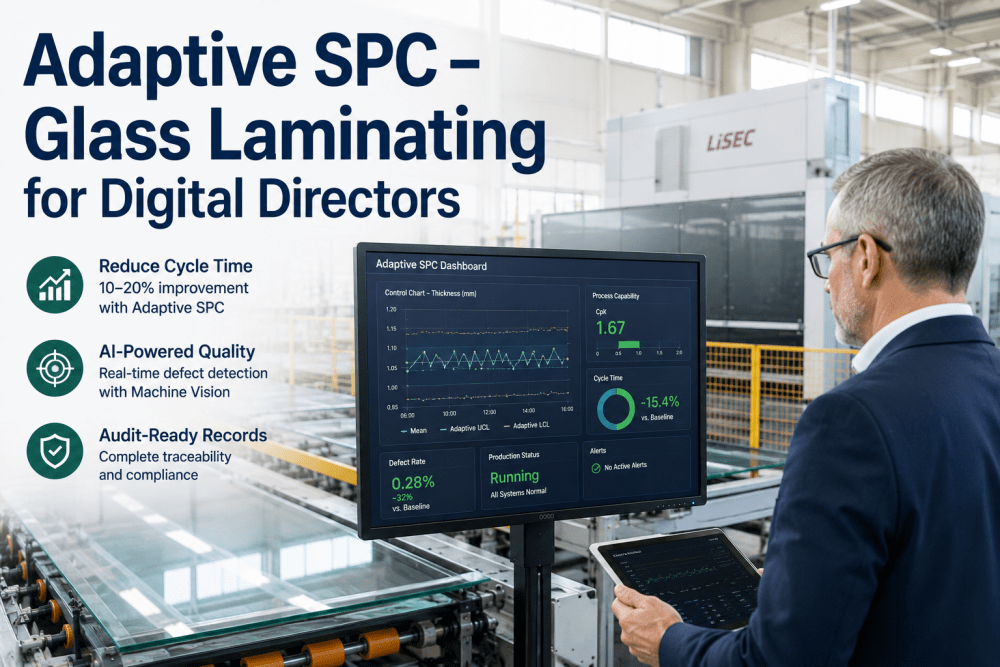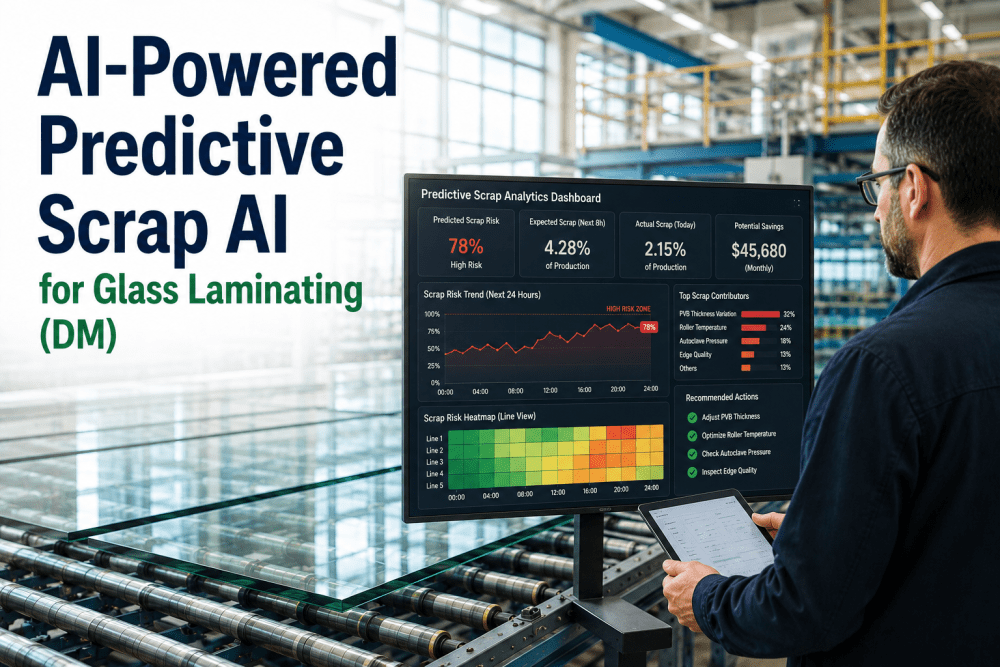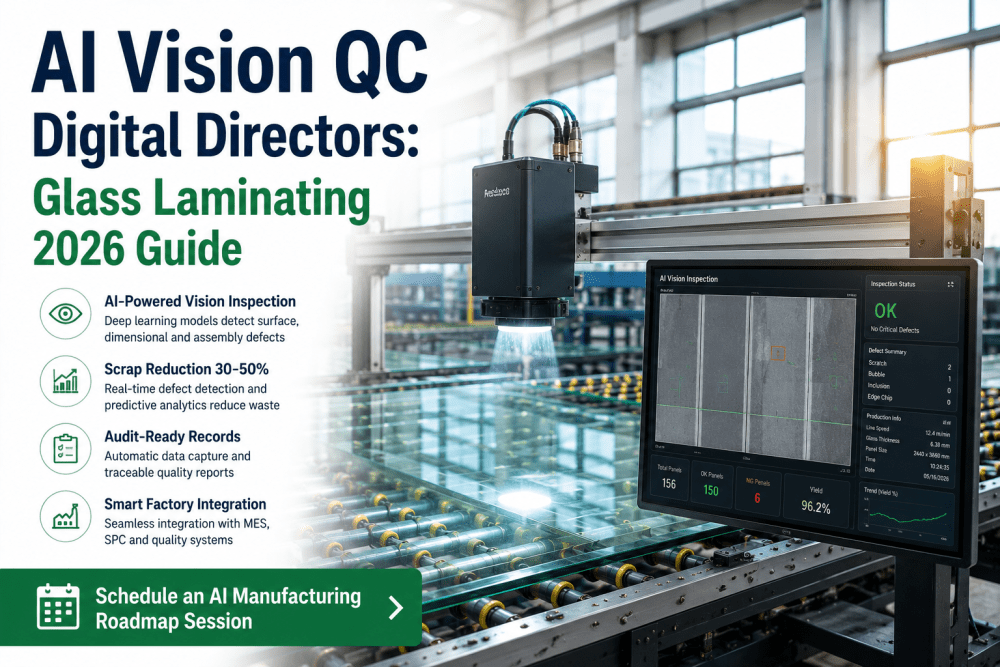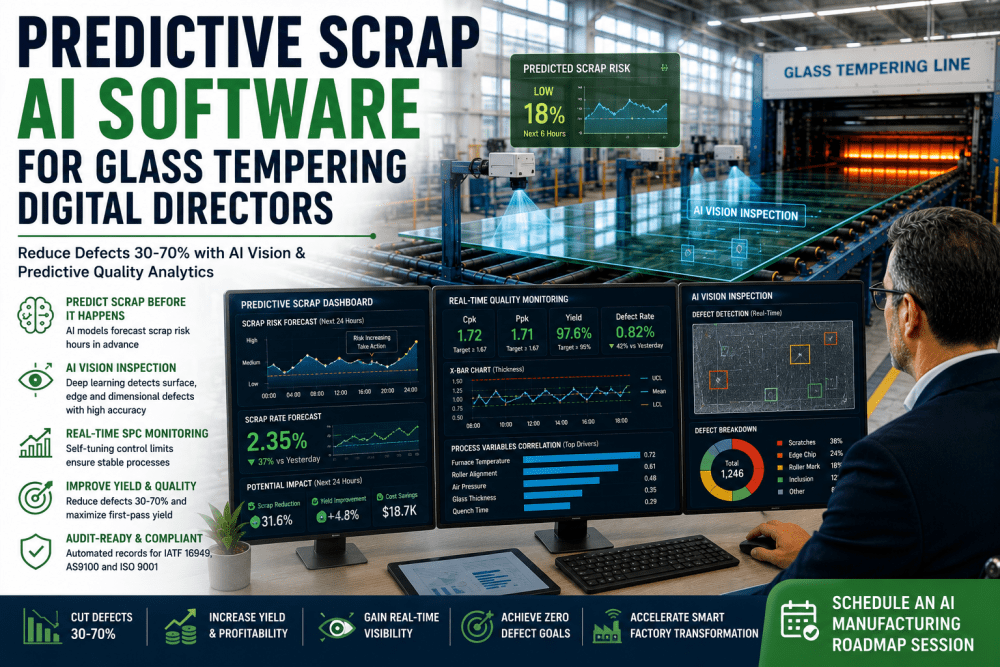
A digital manufacturing director reviews the monthly quality dashboard for six glass laminating lines. The data shows three lines with scrap rates above 5%, two where manual SPC adjustments consume 18 engineering hours per week, and one where control limits have not been recalculated in five months. Every line has SPC software installed. None of them are delivering the process stability or scrap reduction that the smart factory roadmap requires. The gap between having SPC and having an autonomous SPC system that actually controls the process is the difference between reacting to scrap and preventing it. Digital manufacturing directors evaluating their Industry 4.0 quality strategy Book a Demo to explore how iFactory deploys autonomous SPC across glass laminating operations.
What Is Autonomous SPC in Glass Laminating?
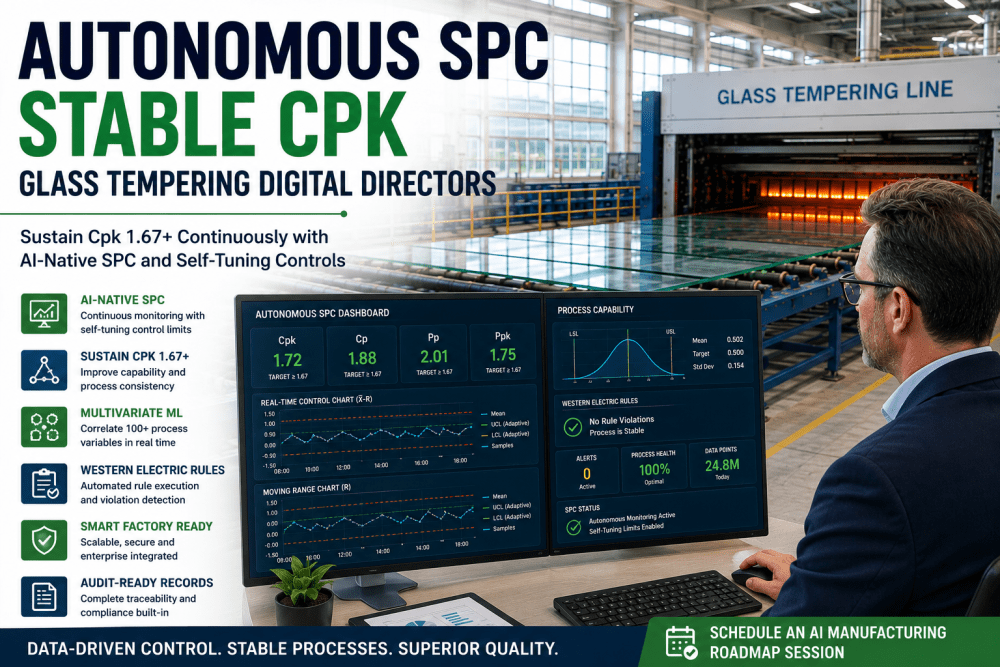
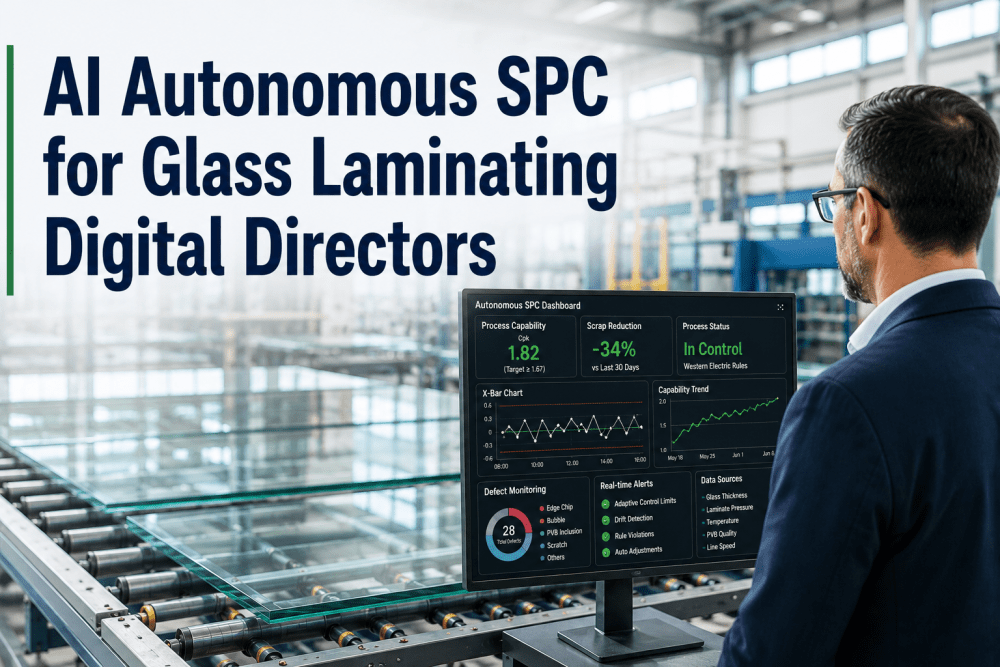
Autonomous SPC for glass laminating replaces traditional manual control chart management with AI-powered statistical process control that continuously monitors process variables, self-tunes control limits using machine learning, applies Western Electric and Nelson rules automatically, and generates corrective action recommendations without human intervention. Where conventional SPC requires engineers to manually recalculate UCL and LCL boundaries reduce scrap generation, detect process drift, and maintain stable quality performance across every production run. Digital manufacturing directors planning their smart factory quality architecture Book a Demo to review the autonomous SPC integration roadmap for laminating operations.
Static Limits, Dynamic Processes
Traditional SPC limits calculated quarterly cannot track autoclave drift, material lot variation, or seasonal humidity shifts. Autonomous SPC recalculates boundaries continuously, maintaining statistical relevance without engineer intervention.
Reactive vs. Preventive Quality
Manual SPC detects scrap after it occurs. Autonomous SPC applies predictive models that flag process drift 4–6 batches before non-conforming output, enabling corrective action before defects propagate.
Engineering Bottleneck
Each manual limit recalibration consumes 6–10 hours of engineering time. Facilities with 4+ lines and multiple recipes cannot sustain the recalibration cadence needed to keep control limits relevant.
How AI-Powered SPC Reduces Scrap Rates
The autonomous SPC platform deploys a four-stage architecture that transforms scrap management from reactive disposition to preventive control. Each stage builds on the previous one, creating a closed loop from data ingestion to automated corrective action. Digital manufacturing directors comparing autonomous approaches Book a Demo to examine the deployment architecture for their laminating facility.
Multivariate Data Ingestion
Platform ingests autoclave temperatures, interlayer pressure, conveyor speed, material lot IDs, and ambient conditions from PLCs via OPC-UA at 200ms resolution, synchronized per panel serial number for precise correlation.
Self-Tuning Model Training
Machine learning models trained on 24 months of production data learn the variable interactions that precede scrap events. Models detect multi-variable drift patterns that static SPC systems cannot capture.
Automated Rule Execution
Platform applies Western Electric and Nelson rules autonomously, classifying each out-of-signal event as common or special cause. Scrap-risk alerts are generated 4–6 batches before defects materialize.
Closed-Loop Corrective Action
CMMS work orders are created automatically with the detected rule violation, variable evidence, and recommended parameter adjustment. Scrap reduction is tracked per line, per recipe, and per shift.
Self-Tuning Control Charts for Smart Factories
The core innovation in autonomous SPC is the self-tuning control chart — a control limit engine that continuously recalibrates UCL and LCL boundaries using rolling-window statistics and Bayesian updating. This enables the platform to adapt to process changes without manual recalibration while maintaining the statistical integrity required for ISO and customer quality audits. The platform supports three configurable tuning modes depending on the process stability and scrap reduction objectives.
Fixed-Window Calculation — UCL/LCL boundaries are recalculated from the most recent 25–50 production batches. The window size is configurable per process. This mode tracks gradual shifts such as autoclave heater aging or seasonal humidity changes while maintaining stable sensitivity to genuine process variation.
Prior-Knowledge Updating — Uses Bayesian statistics to combine historical process capability data with recent observations. Limits tighten automatically when the process is stable and widen during known high-variance periods such as material lot changes and recipe transitions. This mode reduces false alarms by up to 72% versus static SPC.
Combined Methodology — Applies rolling-window limits by default and switches to Bayesian updating during recipe transitions, material changes, and maintenance restarts. This mode is recommended for facilities with high product mix variability where static limits produce excessive false alarms or missed signals.
Measurable Scrap Reduction and Process Improvement
Within 12 weeks of deploying autonomous SPC across four glass laminating lines, a Tier 1 architectural glass manufacturer documented measurable scrap reduction and process capability improvements validated through production data and quality audits.
| Performance Metric | Before Autonomous SPC | After Autonomous SPC | Improvement |
|---|---|---|---|
| Line Scrap Rate | 5.8% | 3.1% | 47% reduction |
| Engineering Hours on SPC | 18 hrs/week | 2.3 hrs/week | 87% reduction |
| Process Drift Detection | 8–12 batches | 3–5 batches | 2.4X faster |
| Cpk Average | 1.25 | 1.68 | +0.43 |
| First-Pass Yield | 84% | 92% | +8 points |
"We had invested in SPC software across all four laminating lines, but our scrap rates were still above 5% because the control limits were always out of date. Engineers were spending 18 hours a week recalculating limits manually. The autonomous SPC platform changed that completely - it self-tunes the control charts, applies the Western Electric rules automatically, and alerts us to drift three to five batches before scrap occurs. Our scrap dropped from 5.8% to 3.1% in 12 weeks, and our engineers are finally working on process improvement instead of manual SPC maintenance." — Director of Digital Manufacturing, Architectural Glass Manufacturer
Building an Autonomous Quality Architecture for Glass Laminating
Autonomous SPC represents a foundational capability for digital manufacturing directors building the smart factory quality stack. By replacing manual control chart management with AI-powered, self-tuning SPC that continuously monitors, detects, and corrects process variation, glass laminating facilities can achieve scrap reduction targets that are structurally out of reach with traditional systems. The platform's integration with existing CMMS, MES, and historian systems ensures that quality data flows seamlessly into broader manufacturing analytics and operational reporting. Digital manufacturing directors developing their Industry 4.0 quality strategy Book a Demo to discuss how iFactory's autonomous SPC platform supports their smart factory transformation goals.
Frequently Asked Questions
Traditional SPC software requires engineers to manually select control chart types, calculate limits, apply Western Electric or Nelson rules, and investigate out-of-control signals. Autonomous SPC automates all these functions: control limits self-tune using machine learning, rule violations are classified and prioritized automatically, and corrective actions are generated without manual analysis. The key difference is that autonomous SPC maintains control limit relevance continuously rather than degrading between manual recalculations.
Facilities with 3+ laminating lines and current scrap rates above 4% typically achieve 30–50% scrap reduction within 12 weeks of deployment. The primary drivers are earlier process drift detection (2.4X faster than static SPC), elimination of false alarm fatigue that causes operators to miss genuine signals, and automated corrective action that stops defect propagation before non-conforming output accumulates.
The platform connects to existing laminating line PLCs, autoclave controllers, and inspection systems via OPC-UA, Modbus TCP, and REST API. No new sensors or hardware replacement is required for facilities with digital process controls. The autonomous SPC engine runs on an edge appliance with optional cloud aggregation. iFactory provides IoT retrofitting packages for facilities with analog or manual data collection.
Platform deployment across laminating lines requires approximately 6–8 weeks including integration, model training, and operator training. Pre-trained models achieve approximately 88% classification accuracy at deployment. After 4 weeks of site-specific calibration, accuracy reaches 94%. Continuous learning improves accuracy to 97%+ within 12 weeks as the models absorb facility-specific process signatures and defect patterns.
Facilities with 3+ laminating lines and current scrap rates above 4% typically recover platform investment within 4–6 months. Primary ROI drivers include reduced material waste from faster drift detection, eliminated engineering hours spent on manual limit recalibration, improved first-pass yield, and reduced customer returns from sustained process capability. A personalized ROI analysis is provided during the Book a Demo consultation with iFactory's glass manufacturing team.