Compressed air is often called the fourth utility, and it is almost always the most expensive one per unit of usable energy delivered. A one-horsepower pneumatic tool can require seven or eight horsepower of electrical input to run it, because generating, drying, and distributing compressed air is inherently inefficient before a single leak is even considered. Once leaks, excess pressure, and inefficient compressor staging are added to that baseline inefficiency, 20 to 30 percent of total compressed air energy spend in a typical plant is pure waste that nobody is billing to a specific cause. The fixes are rarely capital-intensive. Book a demo to see how iFactory finds and prioritizes compressed air waste automatically.
Your Compressor Is Working Overtime to Fill Holes You Cannot Hear
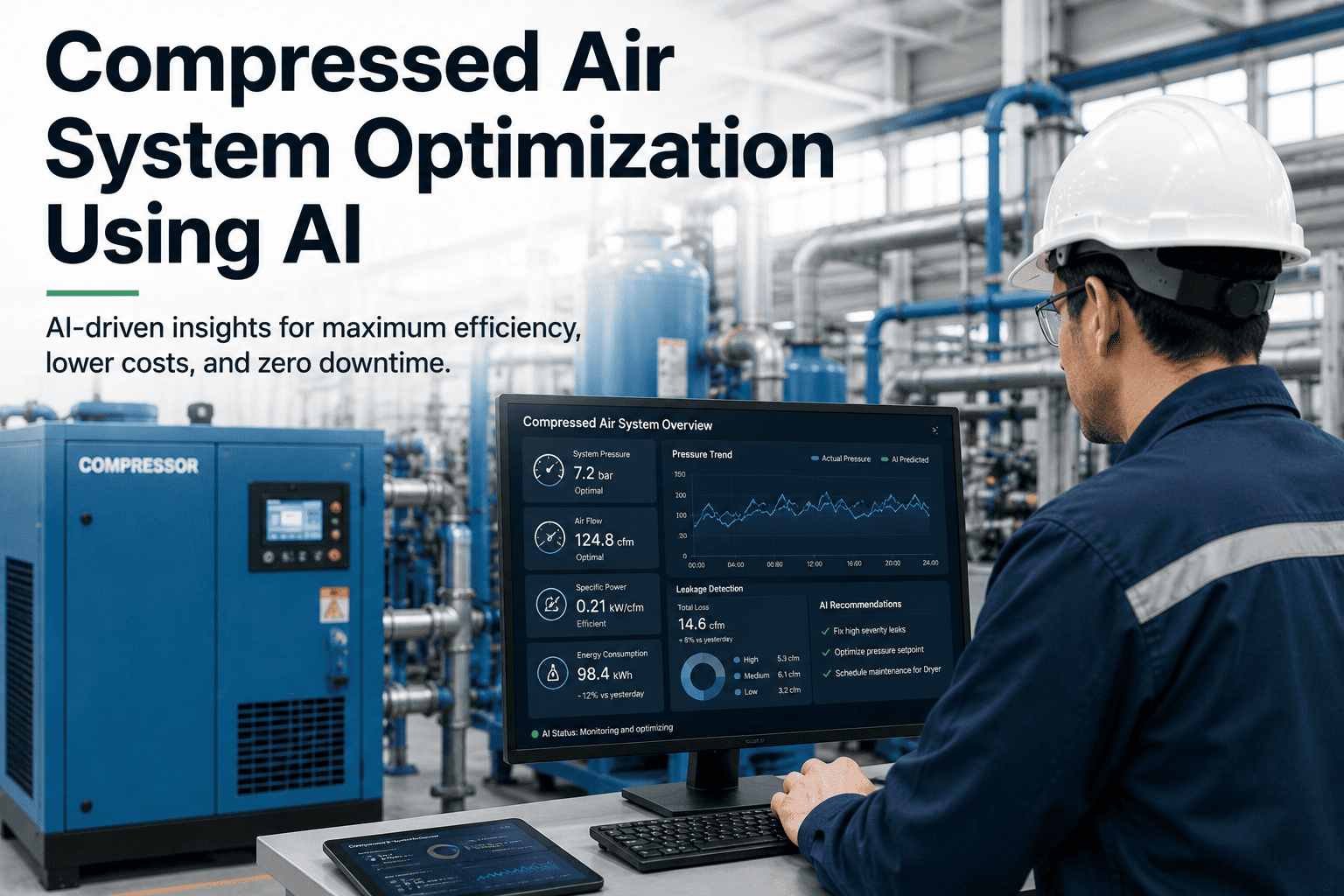
Leaks, excess header pressure, and compressors staged to fight each other instead of working together quietly inflate your electric bill every single hour the system runs. iFactory continuously monitors compressed air demand, pressure, and compressor loading to surface exactly where the waste is and what fixing it is worth.
Only About a Third of Compressed Air Energy Ever Reaches Productive Work
The chart below illustrates the typical breakdown of where compressed air electrical energy actually ends up in a plant that has never run a systematic optimization program. Productive end use, the pneumatic tools, cylinders, and process air the system was built for, is usually the minority of the total once every category of waste is added together.
Every category outside productive end use is addressable without replacing the compressor itself. Leaks and excess pressure alone typically account for the largest, fastest-payback share of the waste, which is exactly why they should be the first target in any optimization program rather than the last.
What a Single Leak Actually Costs You Over a Year
Leak size is deceptive. A hole too small to feel with your hand can still run up a bill in the thousands of dollars annually once you account for continuous operation. The figures below are illustrative estimates based on common industry reference assumptions of roughly 0.20 kW per CFM generated, continuous multi-shift operation, and typical industrial electricity rates, and are intended to show relative scale rather than an exact quote for your facility.
| Leak Opening Size | Approx. Air Lost | Approx. Annual Cost | Typical Repair Effort |
|---|---|---|---|
| 1/64 in (barely audible) | ~0.4 CFM | $150-350 | Minutes, low cost fitting |
| 1/16 in (soft hiss) | ~1.6 CFM | $500-900 | Minutes, low cost fitting |
| 1/8 in (clearly audible) | ~6.5 CFM | $2,000-3,500 | Under an hour, minor parts |
| 1/4 in (loud leak) | ~26 CFM | $8,000-14,000 | Priority repair, may need shutdown |
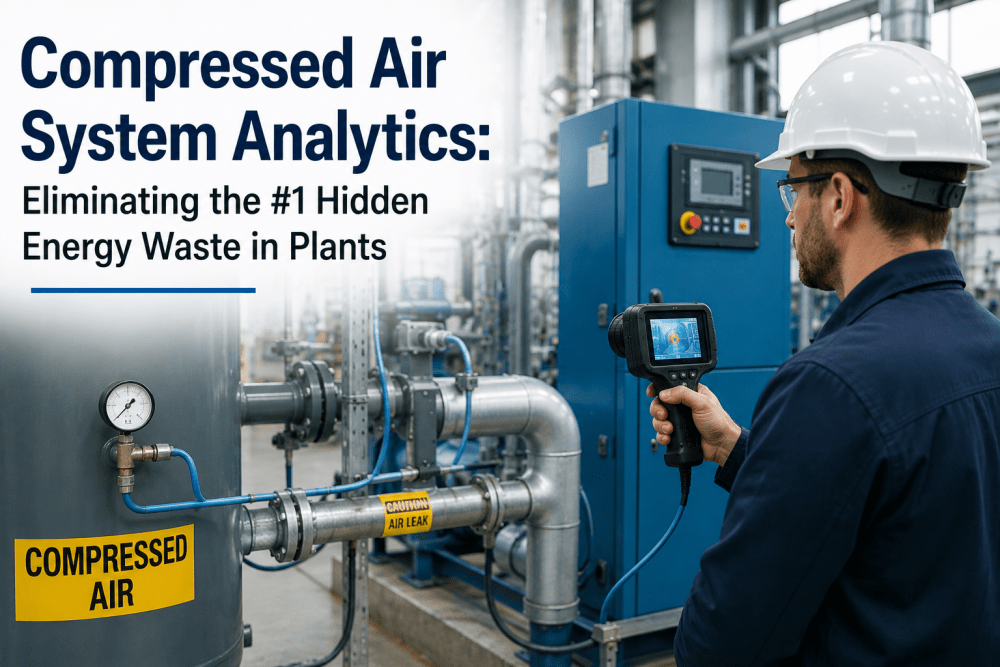
Most plants do not have a handful of large leaks, they have dozens of small ones scattered across fittings, hoses, and quick-disconnects that individually seem trivial but collectively add up to a meaningful line item. This is why a systematic ultrasonic survey consistently outperforms an informal walk-around, since the majority of total leak volume typically comes from leaks too quiet for the human ear to catch over normal plant noise.
Every Leak You Cannot Hear Is Still on Your Electric Bill
iFactory continuously tracks compressed air demand against generation, flagging abnormal consumption patterns that indicate new leaks days after they develop instead of months later at the next scheduled survey.
Pressure Reduction Is the Fastest Zero-Capital Win in Compressed Air
Most facilities operate their compressed air system at a pressure well above what any individual process point actually requires, carrying that margin as a safety buffer that was set years ago and never revisited. That margin is expensive, because compressor energy consumption scales directly with system pressure, and because leaks flow faster at higher pressure, compounding the waste in two directions at once.
Lowering system pressure without first confirming the true minimum requirement at every point of use risks starving a critical process, so pressure reduction should be implemented incrementally with monitoring in place to catch any process that struggles at the new setpoint before it becomes a production issue.
Compressor Sequencing and Staging Strategies That Stop Compressors From Fighting Each Other
In plants with multiple compressors, the biggest hidden inefficiency is often not any single machine but how the machines are coordinated. Compressors set to independent, uncoordinated pressure bands frequently end up working against each other, with one machine unloading while another is still ramping up to meet the same demand.
Demand-Side Management: Stop Paying to Compress Air You Never Needed
Supply-side fixes, leaks and pressure, get most of the attention, but demand-side waste, using compressed air for jobs it was never the right tool for, is just as expensive and frequently overlooked entirely during an audit focused only on the compressor room.
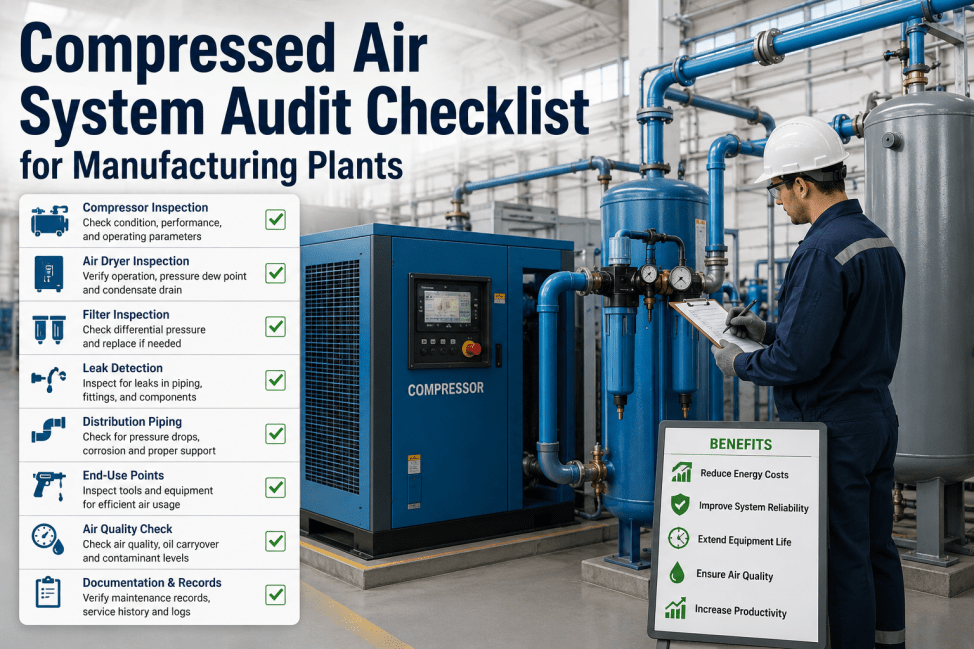
An Eight-Point Checklist for Running a Leak Survey That Actually Finds the Waste
A leak survey conducted without a structured process misses the majority of leaks, particularly the small, quiet ones that make up the bulk of total leak volume. The checklist below reflects the sequence that produces a comprehensive, repeatable survey rather than a partial walk-around.
Common Questions About Compressed Air Optimization
How much can a facility realistically save from a compressed air optimization program?
Facilities running a combined leak repair, pressure reduction, and compressor sequencing program typically achieve 20 to 30 percent reduction in compressed air energy consumption, with leak repair alone often delivering the largest single share of that total. The exact figure depends heavily on how long it has been since the system was last audited, since facilities with no prior leak management history consistently land at the higher end of the range because more waste has had time to accumulate. Book a demo to get a facility-specific savings estimate.
Is it safe to reduce system pressure without risking production problems?
Pressure reduction is safe when it is implemented incrementally and verified against the actual minimum pressure each point of use requires, rather than reduced blindly across the whole system at once. The recommended approach lowers pressure in small steps, monitors process performance at each new setpoint, and stops at the first sign that any application is struggling, which almost always occurs well before reaching the pressure level the system was originally set at. Continuous pressure and flow monitoring makes this process far safer because any process impact shows up immediately rather than being discovered days later on the production floor. Contact support for guidance on a safe pressure reduction plan.
How often should a compressed air leak survey be repeated after the initial repair campaign?
A quarterly or, at minimum, semi-annual survey cadence is recommended because new leaks develop continuously as fittings loosen, hoses age, and system modifications introduce new connection points. Facilities that treat leak repair as a one-time project typically see leak volume climb back toward its original level within one to two years, effectively giving back most of the savings the initial campaign captured. Continuous monitoring closes this gap by flagging abnormal air consumption as soon as it appears, allowing repairs to happen between formal surveys rather than waiting for the next scheduled inspection. Book a demo to see how continuous leak detection works.
When does it make sense to invest in a variable speed drive compressor instead of just fixing leaks and pressure?
A variable speed drive compressor becomes a strong investment once demand-side fixes like leak repair and pressure reduction have already been implemented and the facility still shows significant load variability that fixed-speed compressors handle inefficiently through load and unload cycling. Implementing leak repair and pressure reduction first is important because those fixes reduce the load a new compressor needs to be sized for, which can meaningfully lower the capital cost of the VSD investment itself. Facilities that install a VSD compressor before addressing leaks often end up sizing the new equipment around waste that should have been eliminated first. Contact support to evaluate whether a VSD investment fits your demand profile.
What is the difference between supply-side and demand-side compressed air waste, and which should be addressed first?
Supply-side waste occurs in generating and distributing compressed air, covering leaks, excess pressure, and inefficient compressor staging, while demand-side waste occurs at the point of use, covering misapplied uses like open blowing, oversized regulators, and applications that could run on an electric alternative instead. Supply-side fixes are generally addressed first because they typically offer the fastest payback and require no changes to production processes, while demand-side changes often require engineering review of specific applications and coordination with production staff. A complete optimization program eventually addresses both, since demand-side waste can represent a meaningful share of total consumption even after every leak is fixed. Book a demo to get a combined supply and demand-side assessment.
Stop Paying to Generate Air That Never Does a Day of Work
iFactory monitors your compressed air system continuously, catching new leaks within days, flagging pressure margin you can safely reclaim, and showing exactly how your compressors are staged against real demand, all converted into a dollar-ranked action plan.