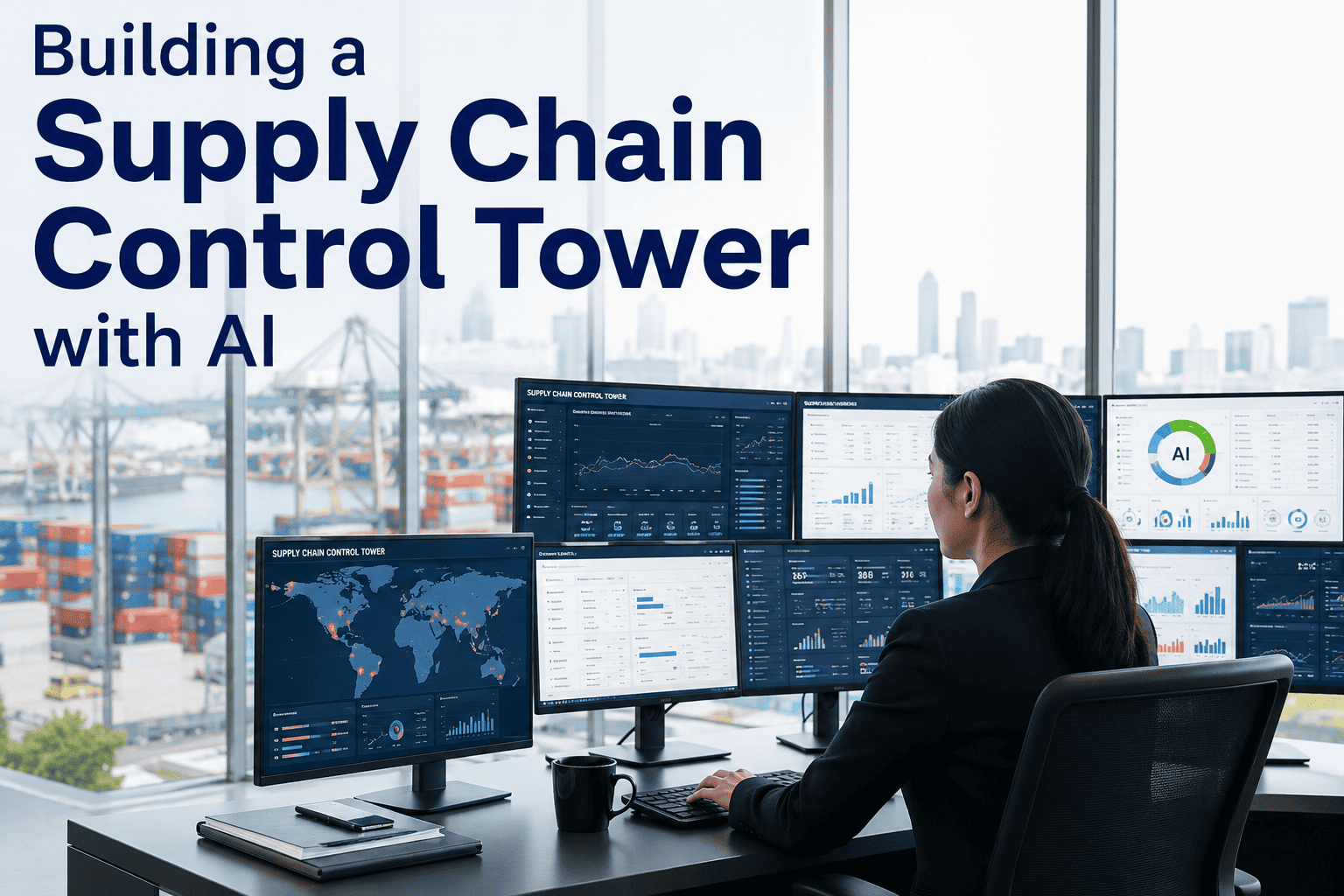
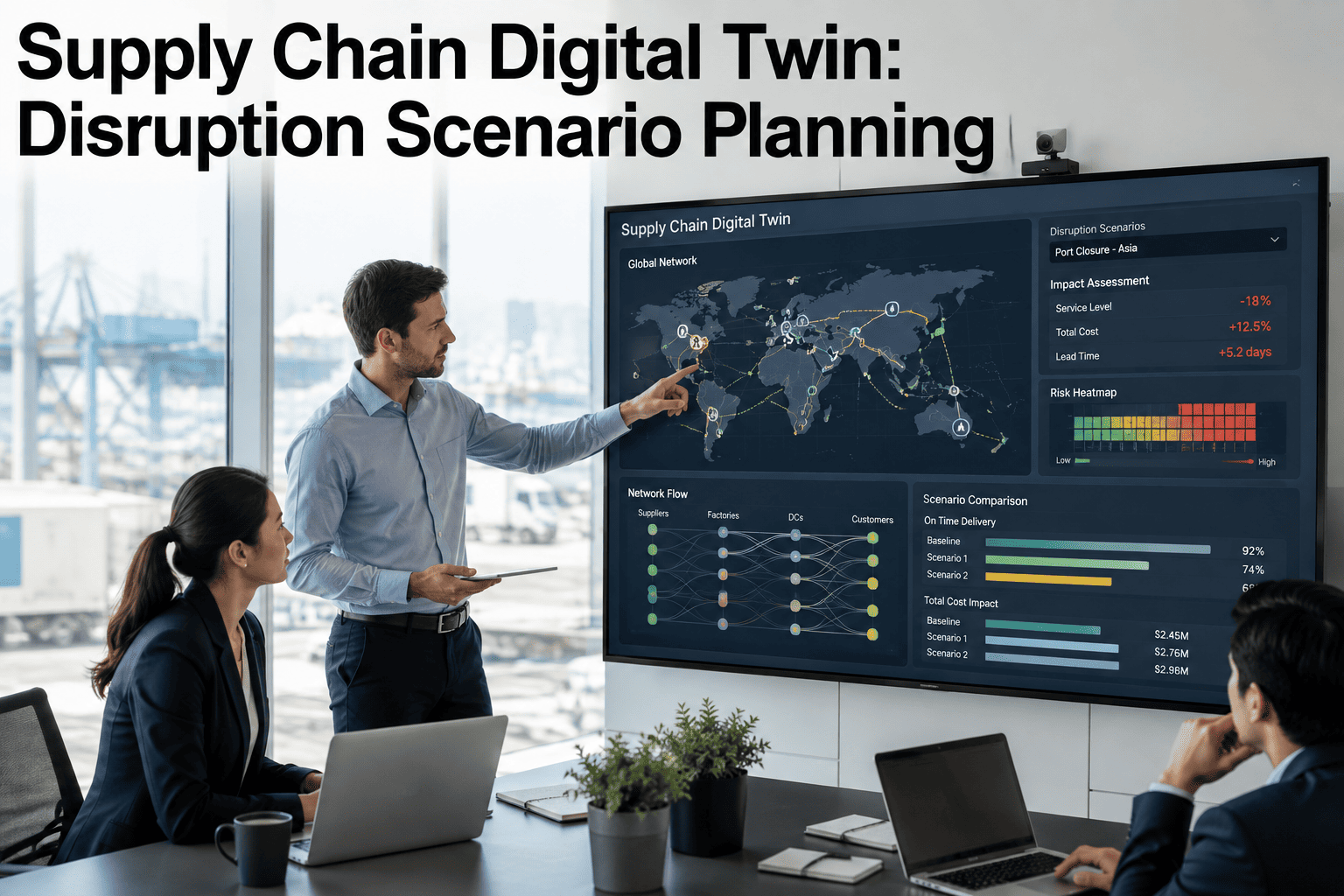
Most supply chain "control towers" are just expensive dashboards. They tell a supply chain lead that a shipment is late, that a supplier missed a ship date, or that safety stock has dropped below threshold, and then a human has to interpret the alert, decide what to do, and manually coordinate the fix across three or four systems. That gap between seeing a problem and acting on it is where late orders, expedite fees, and line-down events actually happen. A true AI control tower closes that gap by turning the alert itself into an action, and you can book a demo to see how iFactory's orchestration layer does this on real order and inventory data.
SUPPLY CHAIN LEAD · AI CONTROL TOWER · REAL-TIME ORCHESTRATION
A Wall of Screens Is Not a Control Tower — Decisions Are
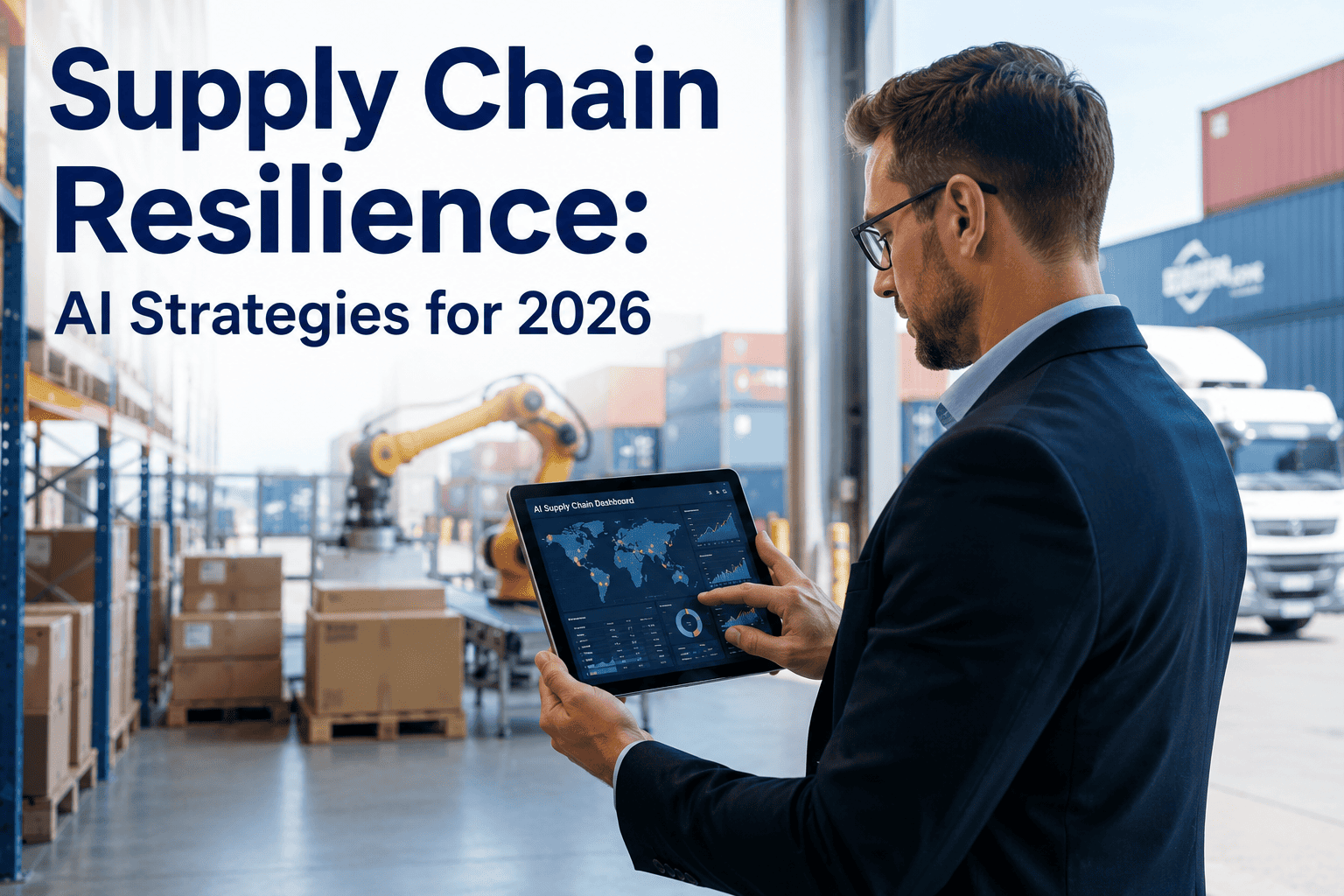
iFactory's AI control tower connects supplier, inventory, production, and logistics data into one layer that does not just flag exceptions but resolves the routine ones automatically and routes the rest to the right person with a recommended fix already attached.
DASHBOARD VS CONTROL TOWER
The Difference Between Watching a Problem and Ending One
Supply chain leaders often inherit a dashboard and call it a control tower, but the two behave completely differently the moment something goes wrong. The comparison below shows what actually happens during a supplier delay under each model, side by side.
PASSIVE DASHBOARD
Alert fires, no context on downstream impact
Planner manually checks three systems to confirm severity
Email or call to supplier initiated hours later
Alternate sourcing considered only after stockout risk is confirmed
Average resolution measured in days
AI CONTROL TOWER
Delay detected and cross-referenced against open orders instantly
Impacted production runs and customer commitments identified automatically
Alternate supplier or safety stock reallocation proposed within minutes
Low-risk substitutions executed automatically under pre-set rules
Average resolution measured in hours
30-50%
Faster exception resolution reported by manufacturers moving from dashboard to orchestration control towers
15-25%
Improvement in on-time delivery after AI-driven control tower adoption
70%+
Of supply chain leaders now piloting or running AI inside their visibility stack
35%
Potential reduction in carrying inventory levels once demand and supply signals are unified
HOW THE LAYER IS BUILT
Four Layers Turn Scattered Data Into a Single Decision Engine
An AI control tower is not one piece of software bolted onto your ERP. It is a stack of four layers, and skipping any one of them is why so many "control tower" projects stall out as expensive dashboards instead of decision engines.
01
Ingestion Layer
Pulls live data from ERP, MES, WMS, supplier portals, and carrier feeds into one normalized structure so the AI is reasoning over one version of the truth instead of five conflicting spreadsheets.
02
Detection Layer
Machine learning models trained on your historical lead times and demand patterns flag deviations the moment they occur, not after a manual report is run at end of shift.
03
Reasoning Layer
The system maps each exception against open orders, safety stock, alternate suppliers, and capacity to calculate the actual downstream cost of doing nothing versus acting now.
04
Orchestration Layer
Low-risk decisions execute automatically under rules your team defines, while higher-stakes calls route to a planner with the recommended action, the reasoning, and the cost impact already attached.
WHAT THE TOWER SEES
A Single Table That Shows Every Data Source Feeding the Decision
The quality of every recommendation an AI control tower makes depends entirely on the breadth of data it can see. The table below outlines the primary source systems and what each one contributes to the decision engine.
| Data Source |
What It Feeds |
Decision It Enables |
| ERP and Purchase Orders |
Open order status, supplier commitments, payment terms |
Which orders are at risk and by how many days |
| MES and Production Schedule |
Line schedules, material consumption rates, changeover windows |
Which production runs a delay actually threatens |
| WMS and Inventory |
Real-time stock levels across every location |
Whether reallocation can cover the gap without new orders |
| Carrier and Logistics Feeds |
Shipment location, transit time, port and customs status |
Realistic arrival time versus the promised date |
| Supplier Performance History |
On-time rate, quality escapes, historical delay patterns |
Which alternate supplier to trust for an emergency reroute |
Every Extra Hour an Exception Sits in an Inbox Is an Hour Closer to a Missed Ship Date
iFactory connects your ERP, MES, WMS, and supplier data into one orchestration layer that resolves routine exceptions automatically and hands your planners the ones that actually need judgment. Book a demo to see it running against your own order data.
REAL DECISIONS, NOT JUST ALERTS
Five Situations Where the Tower Acts Instead of Just Notifying You
The real test of an AI control tower is what happens in the ten minutes after a problem appears. These are five common scenarios and the action the system takes without waiting on a human to start the process.
Supplier Ships Late
System checks safety stock and alternate suppliers automatically, then either reallocates inventory or opens an emergency PO with the next-fastest qualified supplier.
Demand Spike Detected
Forecast model flags the spike against current inventory position and recommends a production schedule adjustment before a stockout actually occurs.
Port Congestion Reported
Inbound shipments affected are cross-referenced against production need dates, and lower-priority shipments are automatically re-routed to a secondary port.
Single-Source Risk Rises
System flags components with no qualified backup supplier and surfaces a prioritized list for sourcing review before the risk becomes a shortage.
Quality Escape Upstream
A defect flagged by a supplier's own inspection system automatically holds affected lots in your receiving inventory until quality clears the batch.
Capacity Constraint Forming
System detects a line running below planned output and recommends redistributing orders across other qualified lines before the backlog grows.
GETTING THERE
A Realistic Rollout Timeline for a Manufacturing Control Tower
Manufacturers who try to connect every data source and automate every decision in one phase tend to stall. A phased rollout gets value faster and builds the trust needed before the system is allowed to act autonomously on higher-stakes decisions.
WEEK 1-2
Connect ERP, MES, and WMS data feeds and establish the single normalized data layer the AI will reason over.
WEEK 3-4
Deploy detection models against historical data and validate exception alerts against what your planners would have caught manually.
WEEK 5-6
Turn on recommended actions in advisory mode, where the system suggests a fix but a planner still approves it before execution.
WEEK 7+
Graduate low-risk, high-confidence decision types to full automation while higher-stakes exceptions continue routing to planners for approval.
THE COST OF STAYING PASSIVE
What a Dashboard-Only Approach Is Actually Costing Your Team Every Quarter
Supply chain leaders rarely see the cost of inaction on a single line item, because it is spread across expedite fees, safety stock buffers, and overtime spent chasing down exceptions manually. Once those costs are added up, the case for orchestration over passive monitoring becomes much clearer.
15%
Typical reduction in logistics cost once AI-driven optimization replaces manual exception handling
65%
Improvement in service levels reported by manufacturers after adopting AI-driven visibility and response
15-17x
Documented return on investment from AI-driven dispatch and allocation agents within twelve months
1-4 mo
Typical pilot-to-production timeline for an AI orchestration agent once data feeds are connected
WHAT IT CONNECTS TO
iFactory's Control Tower Plugs Into the Systems You Already Run
A control tower that requires ripping out your existing ERP or WMS is a control tower nobody actually deploys. iFactory is built to sit on top of the systems already running your plant floor and back office, not replace them.
ERP Systems
Connects to major ERP platforms to pull purchase orders, supplier terms, and financial exposure data without duplicating your system of record.
MES and Line Control
Reads production schedules and material consumption directly from the shop floor so exception impact is calculated against real-time output, not a static plan.
WMS and Inventory Platforms
Pulls live stock positions across every warehouse and distribution point to evaluate reallocation options the moment a shortage risk appears.
Carrier and EDI Feeds
Ingests transportation and customs data through standard EDI and API connections so inbound delays are visible before they hit the dock.
Supplier Portals
Pulls supplier-reported commitments and quality data to keep the risk model current on every active vendor relationship.
Communication Tools
Routes escalations to the right planner through the messaging and email tools your team already checks, instead of a separate portal nobody logs into.
FREQUENTLY ASKED QUESTIONS
Questions Supply Chain Leaders Ask Before Adopting an AI Control Tower
How is this different from the supply chain visibility software we already have?
Most visibility platforms stop at showing you what happened, leaving your team to manually interpret the alert, check three other systems for context, and decide on a fix. An AI control tower adds a reasoning and orchestration layer on top of visibility so the same exception comes with a recommended action, the cost impact of each option, and in many cases an automatic resolution for routine cases.
Book a demo to see the difference on a live exception from your own operation.
Will the system make decisions without any human oversight at all?
No. Every manufacturer sets the boundaries for what the system is allowed to execute automatically versus what must route to a planner for approval. Most teams start with everything in advisory mode and gradually expand automation to low-risk, high-confidence decision types once the recommendations have proven reliable over several weeks of real production data.
What if our ERP or MES data is messy or inconsistent across plants?
Data quality is the single biggest variable in how fast a control tower delivers value, which is why the ingestion layer includes normalization and reconciliation before any model runs against it. iFactory's implementation team works through data quality gaps plant by plant rather than assuming a clean feed on day one.
Contact our support team to scope a data readiness assessment for your specific systems.
How long before we see measurable results after go-live?
Detection-layer value, meaning faster and more accurate exception alerts, typically shows up within the first two to four weeks once core data feeds are connected. Orchestration value, where routine decisions execute automatically, builds over the following one to two months as the system accumulates confidence on decision types specific to your supply base and product mix.
Does this replace our planners and supply chain analysts?
The goal is to remove the repetitive, low-judgment work of chasing down exceptions across five systems, not to remove the planners who understand supplier relationships and business context. Teams typically redirect the time freed up toward supplier development, network strategy, and the exceptions that genuinely need human judgment.
Book a demo to walk through how the workload shifts for your specific team structure.
Your Supply Chain Already Generates the Data — It Just Needs a Layer That Acts On It
iFactory's AI control tower unifies your ERP, MES, WMS, and supplier data into a single decision engine that resolves routine exceptions and escalates the rest with a recommendation attached. Book a demo to see it configured against your own supply network.