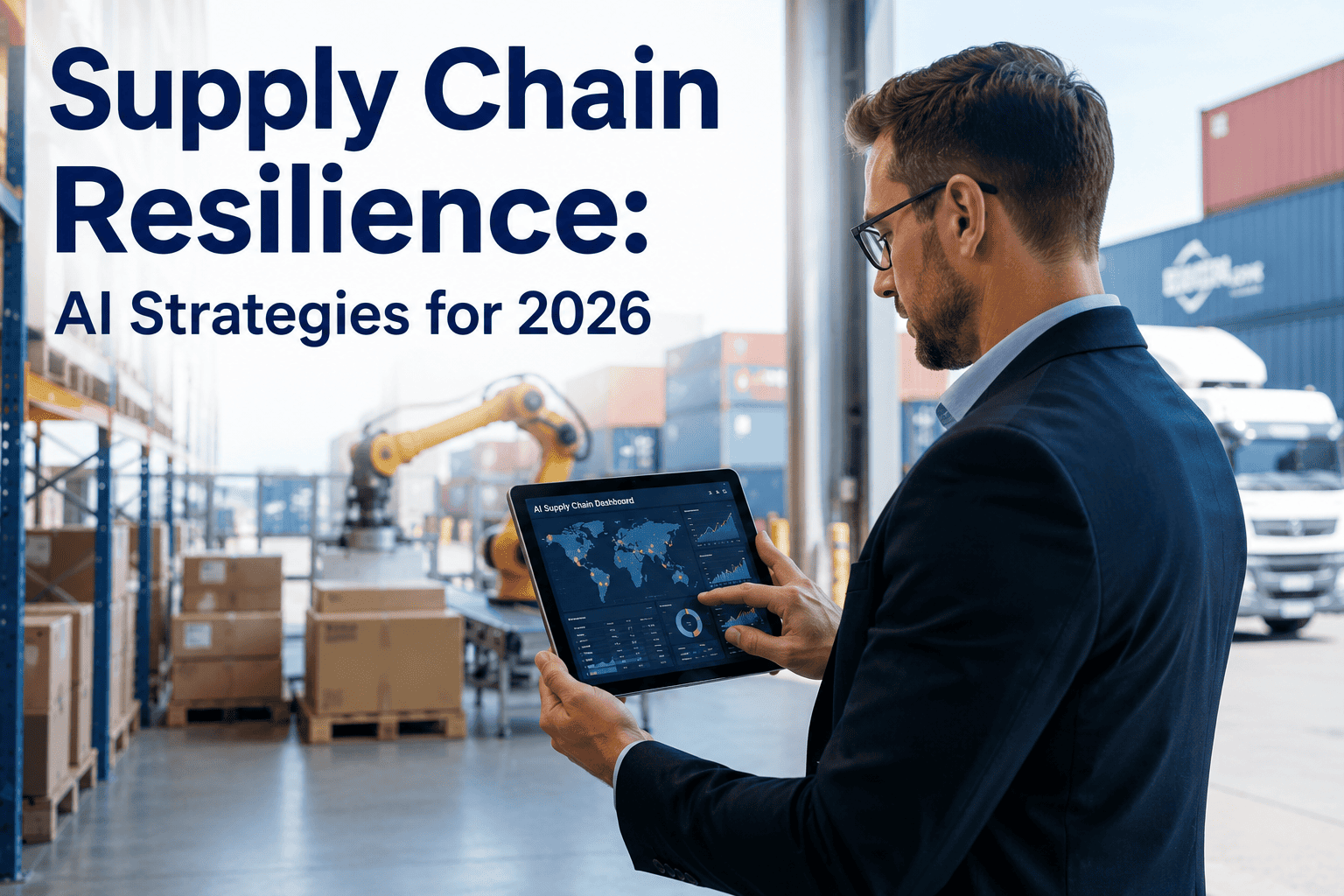
For a decade, supply chain strategy was built around one goal: efficiency. Lean inventory, single-source suppliers, just-in-time delivery. That playbook worked until it didn't, and 2026 has made resilience the priority that operations VPs are held accountable for instead of cost per unit alone. Threat levels from geopolitical fragmentation and tariff volatility are near record highs, and the manufacturers absorbing these shocks without losing margin are the ones running AI-driven scenario models instead of static contingency plans, something you can see for yourself if you book a demo of iFactory's resilience platform.
OPERATIONS VP · SUPPLY CHAIN RESILIENCE · 2026 STRATEGY
Efficiency Built the Modern Supply Chain — Resilience Is What Keeps It Standing
iFactory helps operations leaders model disruption scenarios, quantify exposure across the full supplier network, and automate the contingency actions that used to take a war room and three days to coordinate.
THE 2026 THREAT LANDSCAPE
Four Forces Are Compounding at the Same Time
What makes 2026 different from prior disruption cycles is not any single shock, it is that several structural pressures are hitting supply chains simultaneously, and each one narrows the margin for error the others leave behind.
Geopolitical Fragmentation
Export controls, local content requirements, and shifting trade alliances are being used strategically, raising the compliance burden on every cross-border shipment.
Tariff Volatility
Tariffs have moved from a periodic policy update to a constantly changing variable that has to be modeled continuously rather than reviewed quarterly.
Workforce Shortage
Retiring skilled workers are leaving hundreds of thousands of vacancies across manufacturing and logistics, straining the human capacity needed to manage disruption manually.
Component Scarcity
Semiconductor and memory demand from AI data centers is pulling supply away from commodity manufacturing, creating shortages in categories that used to be reliably available.
HOW RESILIENCE ACTUALLY WORKS
Resilience Is a Loop, Not a One-Time Plan
A resilience strategy that lives in a static document goes stale the moment conditions change. The loop below is how AI-driven resilience programs actually operate on an ongoing basis, continuously feeding new signals back into the plan.
STEP 1
Monitor External Signals
News, weather, trade policy changes, and supplier financial health are tracked continuously across the full supplier network, not just Tier 1.
STEP 2
Quantify Exposure
Each signal is mapped against your bill of materials to calculate financial exposure by component, supplier, and region.
STEP 3
Simulate Response Options
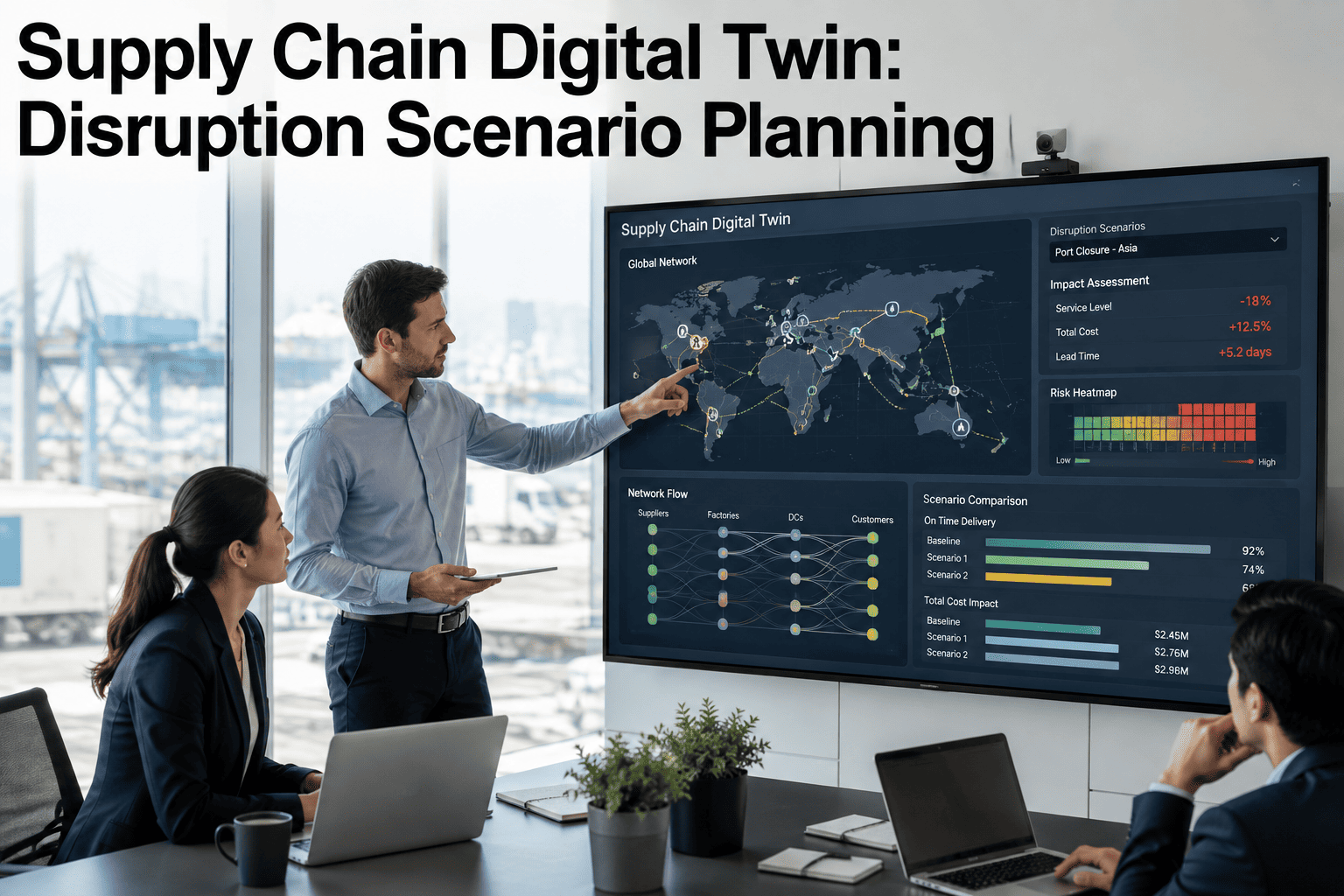
A digital twin of the supply network models the cost and speed tradeoff of each contingency option before anyone commits to one.
STEP 4
Execute the Contingency
Alternate suppliers are qualified, inventory reallocated, or routes adjusted, with low-risk actions triggered automatically.
STEP 5
Feed the Outcome Back
Results update the model so the next disruption is assessed against a supplier network that reflects reality, not last year's assumptions.
A Contingency Plan That Was Accurate Last Year May Already Be Wrong
iFactory continuously models your supplier exposure against live geopolitical, tariff, and logistics signals so your resilience strategy reflects current conditions, not a static document from your last planning cycle. Book a demo to see the model applied to your own network.
WHERE THE RISK ACTUALLY LIVES
Most Risk Assessments Stop at Tier 1 — Most Disruptions Do Not
Operations VPs often have strong visibility into direct suppliers and almost none into the suppliers behind them. The table below shows why that gap matters and what an n-tier model changes about how disruption actually gets caught.
FROM PILOT TO OPERATING MODEL
Companies Treating AI Resilience as Infrastructure Are Pulling Ahead
Industry surveys show a sharp shift in how manufacturers describe digital platforms for production, moving from optional infrastructure to something viewed as essential to competitiveness. The gap increasingly separates companies still running AI as isolated pilots from those that have made it the operating system for how decisions get made.
PILOT-STAGE APPROACH
AI applied to isolated functions like demand forecasting only
Contingency plans reviewed quarterly or annually
Risk visibility limited to direct suppliers
Response coordinated manually across teams
OPERATING MODEL APPROACH
AI embedded across planning, procurement, and logistics decisions
Exposure recalculated continuously as signals change
Risk visibility extends through Tier 2 and Tier 3 suppliers
Low-risk contingency actions execute automatically
BUILDING THE PROGRAM
Five Building Blocks of an AI-Driven Resilience Strategy
Manufacturers that have moved past the pilot stage generally built their resilience program around the same five components, sequenced to deliver protection before layering on more advanced automation.
1
Supplier diversification mapping that identifies single-source dependencies across every tier, not just the ones with visible contracts.
2
Continuous exposure scoring that recalculates financial risk by component as tariffs, weather, and geopolitical signals change.
3
Digital twin scenario simulation that tests the cost and speed of contingency options before a disruption forces a rushed decision.
4
Autonomous supplier qualification that can onboard and vet backup suppliers for lead time, cost, and compliance ahead of need.
5
Automated low-risk response execution that acts on pre-approved contingency rules without waiting for a war room to convene.
MEASURING WHAT MATTERS
How Operations VPs Are Justifying Resilience Spend to the Board
Resilience investment used to be a hard sell against a pure efficiency budget, but the numbers coming out of 2026 deployments are shifting that conversation. These are the metrics operations leaders are now bringing into capital planning discussions.
Digital Platform Confidence
Belief that digital platforms are essential to production has climbed from 86 percent to 97 percent of manufacturing leaders in just two years, reflecting a shift from optional to foundational infrastructure.
Exception Resolution Speed
Manufacturers running orchestration-driven resilience programs report resolving supply exceptions in 30 to 50 percent less time than teams relying on manual coordination.
Revenue Protection
Companies scaling AI across inventory, forecasting, and logistics report revenue increases of 5 percent or more within months, largely tied to avoided stockouts and disruption.
Safety Stock Efficiency
Unified demand and supply signals have allowed some manufacturers to reduce inventory levels by up to 35 percent without increasing stockout risk.
WHO IS ALREADY DOING THIS
Resilience Investment Is Already Underway Across Heavy Industry
This is not a theoretical shift. Large manufacturers across sectors are already deploying digital twin and physical AI technology specifically to build resilience into how their factories and supply networks respond to disruption.
1
Heavy equipment and industrial manufacturers are using physically accurate digital twins to optimize production layouts and absorb factory-level disruption without costly physical trial and error.
2
Automotive and EV producers are pairing agentic AI with real-time data to secure alternate capacity the moment a primary supplier shows signs of strain.
3
MedTech and regulated manufacturers are extending exposure monitoring deep into raw material tiers, where the majority of documented shortages actually originate.
FREQUENTLY ASKED QUESTIONS
Questions Operations Leaders Ask About Building Resilience
Doesn't building in more resilience just mean carrying more inventory and cost?
Not necessarily. The manufacturers seeing the strongest results are using AI to unify demand and supply signals so they can carry less overall inventory while still covering the risk that matters most, rather than blanket safety stock increases everywhere. Resilience built on better visibility and faster response tends to reduce total carrying cost even as it improves protection against disruption.
Book a demo to see how the tradeoff plays out against your own inventory data.
How far into our supplier network do we actually need visibility?
Most major disruptions in recent years originated at Tier 2 or Tier 3, in raw materials or sub-components that never appeared on a Tier 1 scorecard until the shortage was already affecting production. Extending exposure mapping at least to Tier 3 for critical components is the level most operations leaders now consider the minimum for genuine resilience rather than a nice-to-have.
What is the difference between a digital twin and the simulations we already run in planning software?
Traditional planning simulations typically model demand and capacity under fairly stable assumptions, while a supply chain digital twin continuously ingests live disruption signals and re-runs scenarios as conditions actually change. The result is a model that reflects today's tariff schedule, today's supplier health, and today's logistics conditions rather than a static plan built months earlier.
Contact our support team for a walkthrough of how the twin stays current.
How much of the response can realistically be automated versus needing a human decision?
Most manufacturers automate the lower-risk, higher-confidence decisions first, such as reallocating inventory between plants or triggering a pre-qualified backup supplier, while keeping higher-stakes decisions like relocating production or renegotiating a major contract with a human in the loop. The automated share tends to grow over time as the model proves reliable on more decision types.
Where should an operations VP start if the current program is mostly reactive?
Start with exposure mapping across your critical components before investing in automation, since you cannot prioritize a resilience budget without first knowing where the concentrated risk actually sits in your network. Most successful programs spend the first phase building that visibility layer before layering on simulation and automated response.
Book a demo to scope a starting point for your specific supply base.
Resilience Is Not a Document — It Is a System That Keeps Working When Conditions Change
iFactory gives operations leaders continuous exposure scoring, digital twin simulation, and automated contingency execution built on your own supplier network. Book a demo to see the full resilience loop in action.