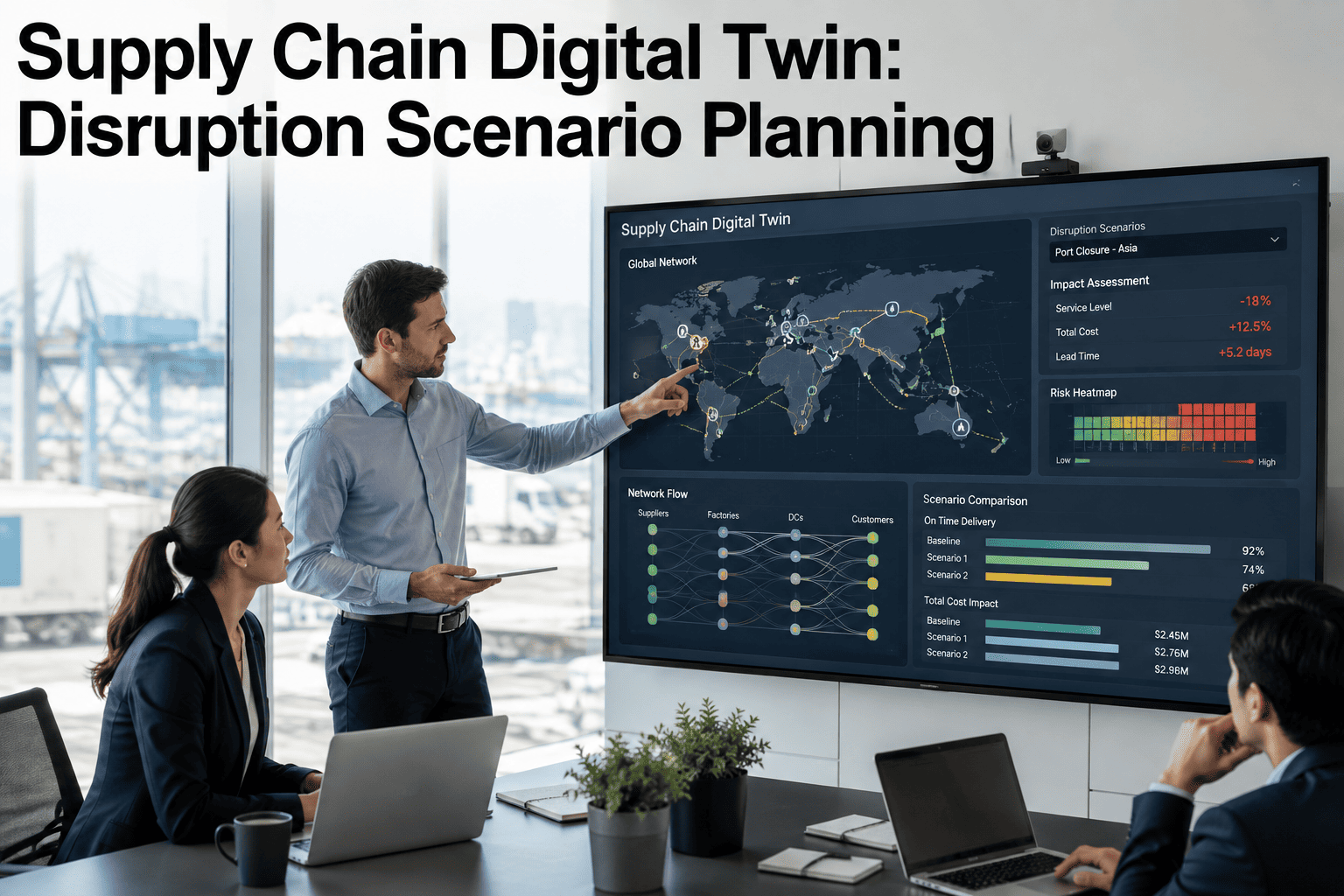
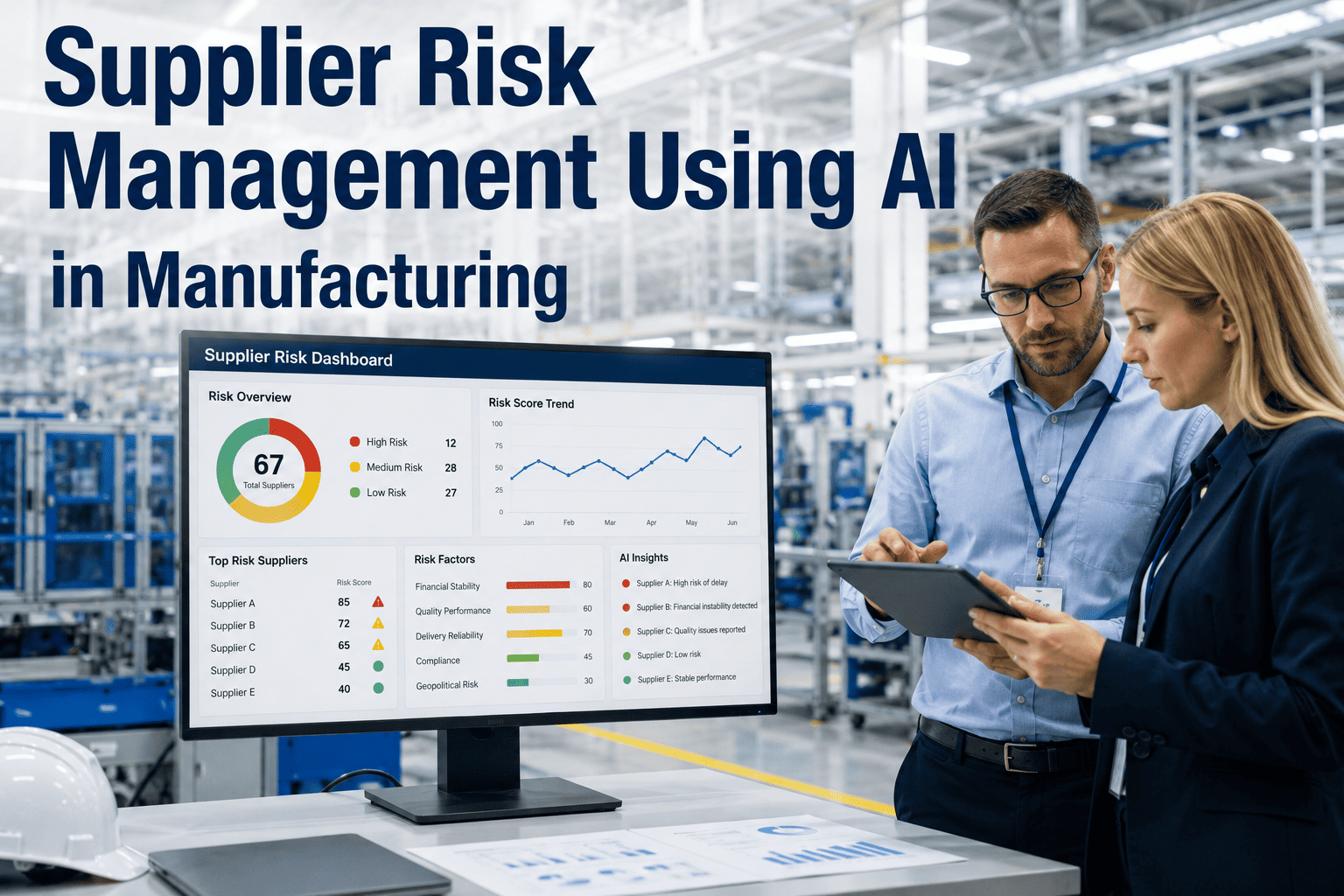
A single supplier going dark for two weeks can cost a plant more in expedited freight, missed shipments, and idle lines than a full year of properly sized safety stock would have. Most manufacturers only discover how concentrated their supply risk really is after a disruption has already forced a scramble — a sole-source component stuck at a port, a critical supplier's plant flooded, a raw material tied to one region that just changed its export rules overnight. Supply chain risk management replaces that after-the-fact scramble with a standing discipline: score every supplier and material on how likely they are to fail and how badly that failure would hurt production, then build the dual-sourcing, safety stock, and contingency plans before the disruption happens instead of during it. Building that discipline into daily operations, rather than a binder nobody opens, is exactly what the iFactory platform is designed to support.
One Supplier. One Port. One Bad Week. That's All It Takes to Stop a Line.
Supply chain risk doesn't announce itself in advance. Score it, rank it, and build a response plan before the disruption hits — not while the line is already down.
What a Supply Risk Assessment Actually Scores
A supplier list with delivery percentages next to each name is not a risk assessment — it tells you who's been reliable, not who's exposed. A real assessment scores four separate dimensions for every critical supplier and material, and it's usually the dimension teams skip that causes the worst surprises.
Likelihood
How probable a disruption is for this specific supplier or lane — financial health, single-region concentration, natural disaster exposure, and historical on-time performance combined.
Impact
What happens to production if the disruption occurs — one idle line, a full plant shutdown, or a customer penalty, depending entirely on how the component feeds into the build.
Time-to-Impact
How many days of buffer exist before a supplier failure actually stops production — current inventory on hand divided by daily consumption, the number most risk registers never calculate.
Detectability
How early a warning sign would actually reach the plant — a financial covenant breach, a customs delay, a weather event — versus finding out only when the truck doesn't show up.
Supply Risk Category Reference
Most disruptions trace back to one of five recurring risk categories, and each one throws off different warning signs long before the actual failure occurs — if someone is watching for them.
| Risk Category | Common Warning Signs | Typical Mitigation |
|---|---|---|
| Single-Source Dependency | One supplier covers 100% of volume for a critical component with no qualified alternate | Qualify a second source, even at a small allocation, to keep the alternate active |
| Geographic Concentration | Multiple critical suppliers clustered in one region exposed to the same weather or political event | Diversify sourcing regions or hold regional buffer stock for the exposed lane |
| Financial Instability | Extended payment terms requests, delayed shipments, or public credit rating downgrades | Monitor financial health signals and pre-qualify a backup before the supplier fails outright |
| Logistics and Transportation | Recurring port congestion, single-carrier dependency, or a lane with no alternate routing | Build alternate routing and carrier options into the plan before the primary lane is blocked |
| Quality and Compliance | Rising defect rates, missed certifications, or regulatory changes affecting a material source | Tighten incoming inspection and maintain a qualified backup that already meets specification |
Four Mitigation Strategies, Ranked by Speed to Protect
Not every high-risk supplier needs the same response. The right mitigation depends on how fast protection is needed and how much it costs to carry, and most resilient supply chains use all four in combination rather than picking just one.
Safety Stock
Extra inventory sized to cover demand variability during a supplier's lead time — the quickest buffer to stand up, but the most expensive to carry long-term across a wide component list.
Dual-Sourcing
Qualifying a second supplier for a critical component, even at a minority allocation, so a full switch doesn't require starting a qualification process from zero during a live disruption.
Regional Diversification
Spreading sourcing across regions so a single weather event, port closure, or political disruption can't take out every supplier for a critical component at once.
Contract and Financial Terms
Volume commitments, priority-allocation clauses, and financial monitoring covenants that give early warning and negotiating leverage before a supplier relationship actually breaks down.
Reactive Firefighting Versus Proactive Resilience
Building the Risk Management Framework: Five Steps
Map the supplier tiers
Identify not just direct suppliers but the sub-tier sources feeding them, since a disruption two tiers upstream is invisible until it reaches your dock.
Score likelihood and impact
Rate every critical supplier and material against the four scoring dimensions, anchored to real financial, geographic, and performance data rather than general impression.
Set risk thresholds and safety stock levels
Calculate safety stock against demand variability and supplier lead time for every item above the risk threshold, rather than applying one blanket buffer across the entire catalog.
Qualify dual sources for critical items
Prioritize qualification work on the highest-risk, highest-impact components first, rather than spreading the effort evenly across a list that includes low-risk commodity parts.
Build and test contingency playbooks
Document the specific response for each high-risk scenario — who reallocates inventory, who contacts the backup supplier, who approves premium freight — and run a tabletop test before a real disruption forces the first attempt.
Safety Stock Set by Formula, Not by Habit
iFactory calculates safety stock against actual demand variability and supplier lead time for every critical item, so buffers protect the parts that need it instead of tying up cash across the board.
A Composite Scenario: What an Unassessed Single Source Cost
A mid-size electronics contract manufacturer sourced a specialized connector from a single overseas supplier, a component that had never missed a delivery in three years and was never flagged in any formal risk review because its historical performance looked clean. When a regional flooding event shut the supplier's only production facility for six weeks, the manufacturer discovered it had nine days of inventory on hand and no qualified alternate source for a part that fed into four separate product lines.
The scramble that followed included emergency air freight once an alternate source was finally located, a partial redesign to accept a substitute connector on two of the four product lines, and three weeks of reduced output before the substitute qualification was complete. A post-incident review found the component had never been scored above "low risk" specifically because its on-time delivery history was excellent — the assessment had measured past reliability instead of concentration risk, and a single flawless supplier with no backup was, in hindsight, one of the highest-risk items in the entire catalog.
| Metric | Before the Disruption | During the Disruption | After Mitigation Was Rebuilt |
|---|---|---|---|
| Days of Supply | 9 days | 0 days by week two | 34 days across two qualified sources |
| Qualified Sources | 1 | 1, unavailable | 2, plus one substitute design |
| Premium Freight Spend | None | Significant, one-time expedite cost | None, standard freight resumed |
| Production Recovery Time | Not applicable | 3 weeks reduced output | Not applicable, buffer absorbs future gaps |
Keeping Risk Visibility Current
A risk assessment scored once a year and filed away drifts out of date the moment a supplier's financial position, a shipping lane, or a regulatory environment changes. Resilient supply chains treat the risk register as a live input revisited on a defined cadence, not a project completed ahead of a single audit.
Quarterly Supplier Review
Re-score every critical supplier's likelihood and impact on a fixed schedule, checking financial health signals and delivery trends rather than relying on the prior year's rating.
Real-Time Disruption Triggers
Outside the quarterly cycle, re-check exposure immediately when a weather event, port closure, or credit downgrade affects a supplier or region on the risk register.
New Supplier Onboarding Screen
Score every new supplier against the same four dimensions before the first purchase order, rather than only discovering concentration risk after volume has already ramped up.
Common Mistakes That Undermine Supply Risk Programs
Scoring Reliability Instead of Concentration
A supplier with a perfect delivery record can still be the highest-risk item on the register if it's the only qualified source with no backup in place.
Applying One Safety Stock Rule to Every Item
A blanket buffer across the entire catalog ties up cash on low-risk commodity parts while leaving genuinely critical, hard-to-replace components under-protected.
Qualifying a Backup Supplier Only on Paper
An alternate source that's never actually shipped production volume isn't a real backup — the first live order during a crisis is the wrong time to discover a qualification gap.
No Tested Contingency Playbook
A risk register without a documented, tested response plan for its highest-scored items turns every disruption into an improvised, ad hoc scramble.
Frequently Asked Questions
How do we calculate safety stock for a high-risk component?
Safety stock is typically calculated from demand variability, supplier lead time, and a target service level, rather than a flat number of days applied across every item. Components scored high risk because of single-source dependency or long lead times generally warrant a larger buffer than low-risk commodity parts with several qualified sources. Visit support for guidance on setting safety stock formulas for your specific supplier base.
Is dual-sourcing always worth the added cost of qualifying a second supplier?
Not for every component — dual-sourcing makes the most sense for items scored high on both likelihood and impact, where a single failure would meaningfully disrupt production. For low-risk, easily substituted commodity parts, the qualification cost of a second source often outweighs the protection it provides, which is exactly why the risk score should drive the sourcing decision rather than a blanket policy.
How often should a supply chain risk assessment be updated?
Treat it as a living register rather than an annual project — a practical minimum is a quarterly review of every critical supplier's likelihood and impact score, plus an immediate re-check whenever a disruption signal appears for a supplier or region already on the list. Book a demo to see how continuous monitoring keeps a risk register current between formal reviews.
What's the difference between a risk assessment and a contingency plan?
A risk assessment identifies and scores what could go wrong; a contingency plan documents exactly what happens if it does — who reallocates inventory, who contacts the backup supplier, and who approves any premium freight or substitute material. A risk register without a tested contingency plan behind its highest-scored items still leaves a team improvising during an actual disruption.
Can a supplier with a perfect delivery history still be high risk?
Yes, and it's one of the most common blind spots in an informal risk review — a supplier that has never missed a shipment can still be the single point of failure for a critical component if no qualified backup exists. Concentration risk and past reliability are separate measurements, and scoring only the second one systematically understates exposure. Contact support for help building a scoring model that captures both.
Stop Finding Out About Supply Risk From a Missed Shipment
iFactory connects supplier performance, inventory position, and disruption signals in one place, so your team sees exposure building before it turns into a stopped line — and can act on it with a plan that's already been tested.