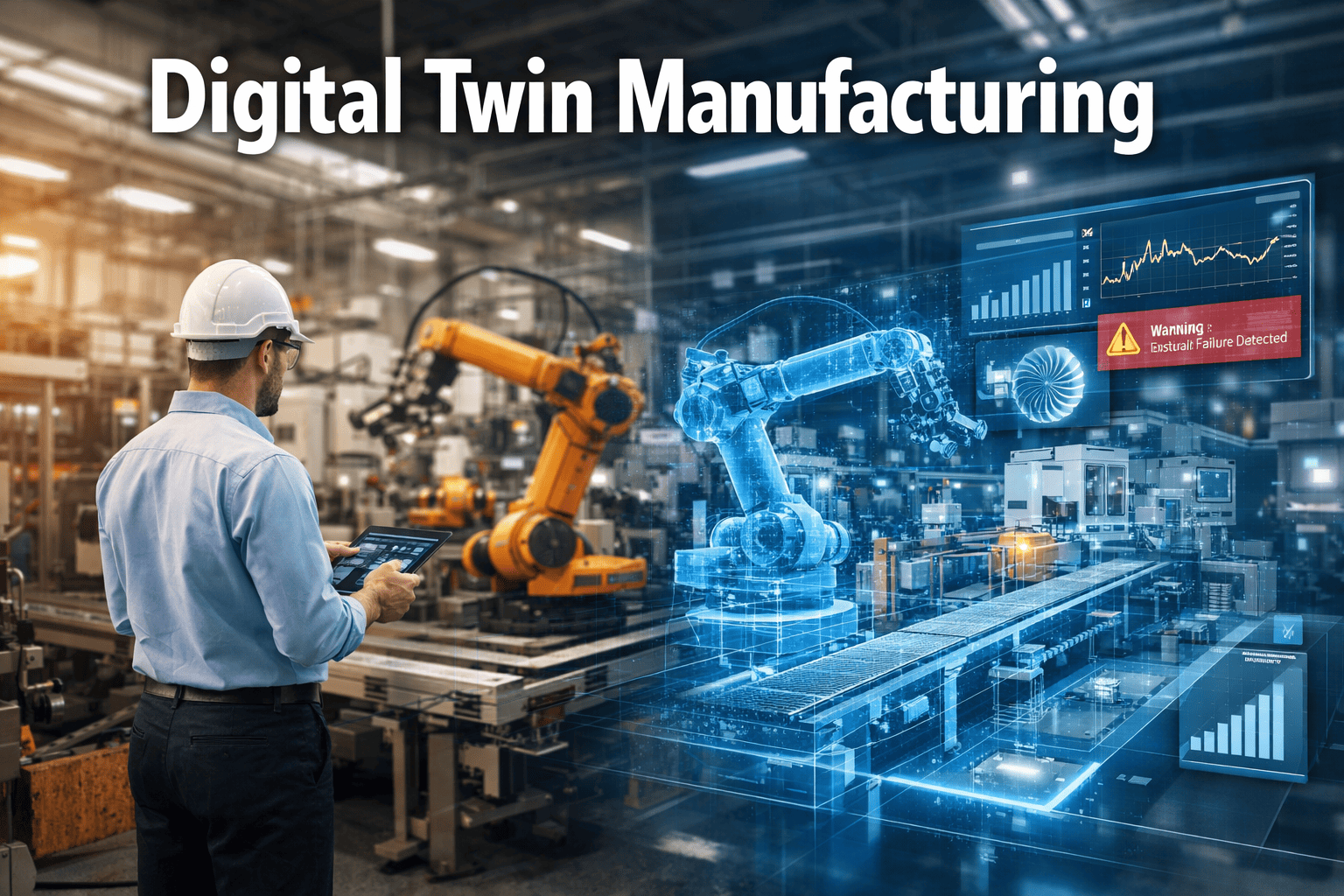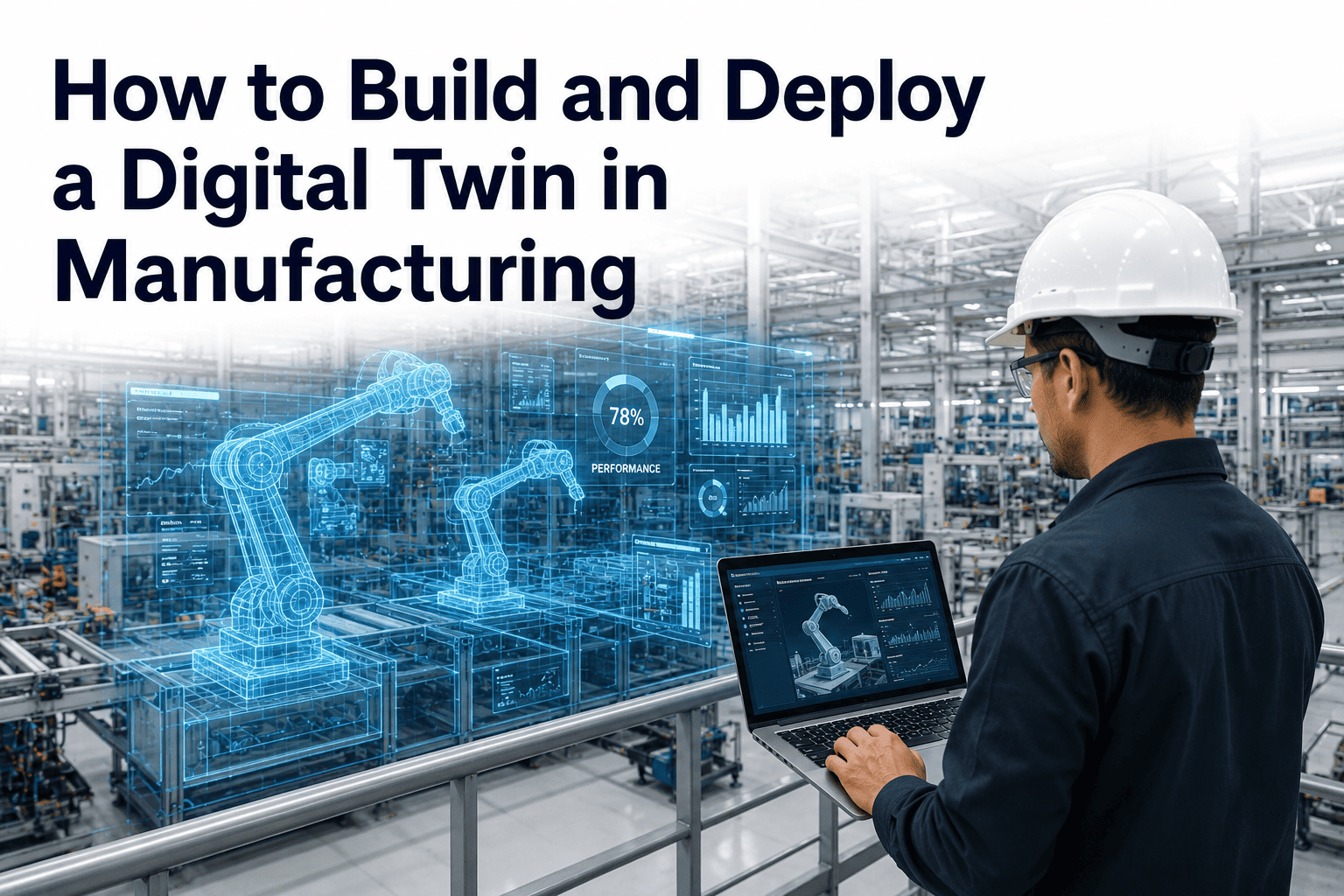
Digital twins promise a mirror of reality—a virtual replica that predicts, optimizes, and transforms manufacturing. Yet across thousands of plants, the gap between promise and production remains vast. Too many initiatives stall at proof-of-concept, drowning in data lakes without actionable insights. For the manufacturing IT architect, the challenge is not technology but architecture: how to construct a digital twin that delivers measurable ROI within 12 months, not years. This guide cuts through the hype, offering a pragmatic, step-by-step blueprint grounded in real-world deployments. From sensor selection to AI model integration, we cover the critical decisions that separate successful twins from failed experiments. Whether you are upgrading a legacy line or building a greenfield smart factory, the principles here ensure your digital twin becomes a profit center, not a cost sink. Book a Demo to accelerate your journey.
Ready to Build Your Digital Twin?
Deploy a twin that pays back in 12 months. Start your pilot today.
Why Most Digital Twins Fail—and How to Succeed
The manufacturing sector has witnessed a surge in digital twin initiatives, yet Gartner reports that over 60% of these projects never scale beyond pilot. The root causes are not technical but architectural: lack of clear KPIs, over-engineered models, and poor integration with existing OT systems. A successful digital twin must be built with a 'payback-first' mindset, where every data point serves a specific operational decision. For instance, a tier-one automotive supplier reduced unplanned downtime by 40% by focusing their twin on just three critical machines—not the entire line. This targeted approach, combined with edge computing for real-time analytics, ensures the twin delivers value within months. The key is to start small, measure obsessively, and expand only when ROI is proven. Avoid the trap of 'digital twin for everything'—instead, identify the top three pain points in your plant and build your twin around them.
Define Clear KPIs
Align twin metrics with financial outcomes: OEE, MTBF, energy cost per unit. Avoid vanity metrics.
Start with One Line
Pilot on a single, high-impact production line. Prove value before scaling to the entire plant.
Integrate OT/IT
Bridge PLCs, SCADA, and MES with cloud analytics. Use open standards like OPC UA and MQTT.
Leverage Edge AI
Process data at the edge for sub-second decisions. Reduce latency and bandwidth costs.
12-Month Digital Twin Deployment Timeline
Months 1-2: Discovery & KPI Definition
Map production processes, identify data sources, and define measurable success criteria. Engage stakeholders from operations, maintenance, and finance to ensure alignment.
Months 3-4: Pilot Architecture & Sensor Deployment
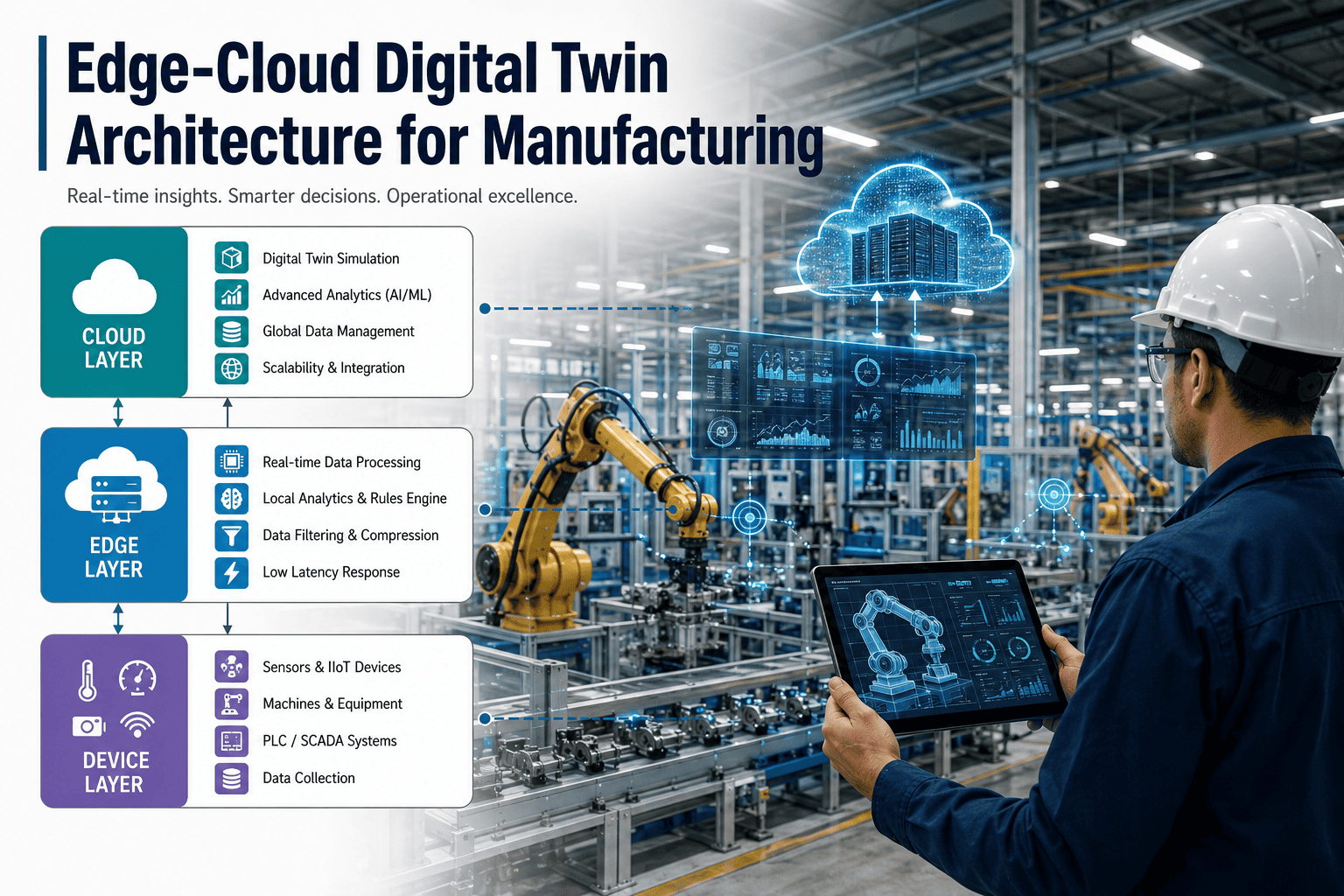
Install IIoT sensors on critical assets, set up edge gateways, and establish data pipelines. Use a reference architecture that supports scalability.
Months 5-8: Model Development & Validation
Build AI models for predictive maintenance and process optimization. Validate against historical data and refine with live feedback loops.
Months 9-12: Scale & ROI Measurement
Expand twin to additional lines, integrate with ERP, and track ROI against baseline. Adjust models based on real-world performance.
Digital Twin Architecture Components
| Component | Function | Technology |
|---|---|---|
| IIoT Sensors | Capture real-time machine data | Vibration, temperature, current |
| Edge Gateway | Preprocess data locally | Raspberry Pi, NVIDIA Jetson |
| Data Lake | Store historical and streaming data | Azure Data Lake, AWS S3 |
| AI Engine | Run predictive models | TensorFlow, PyTorch |
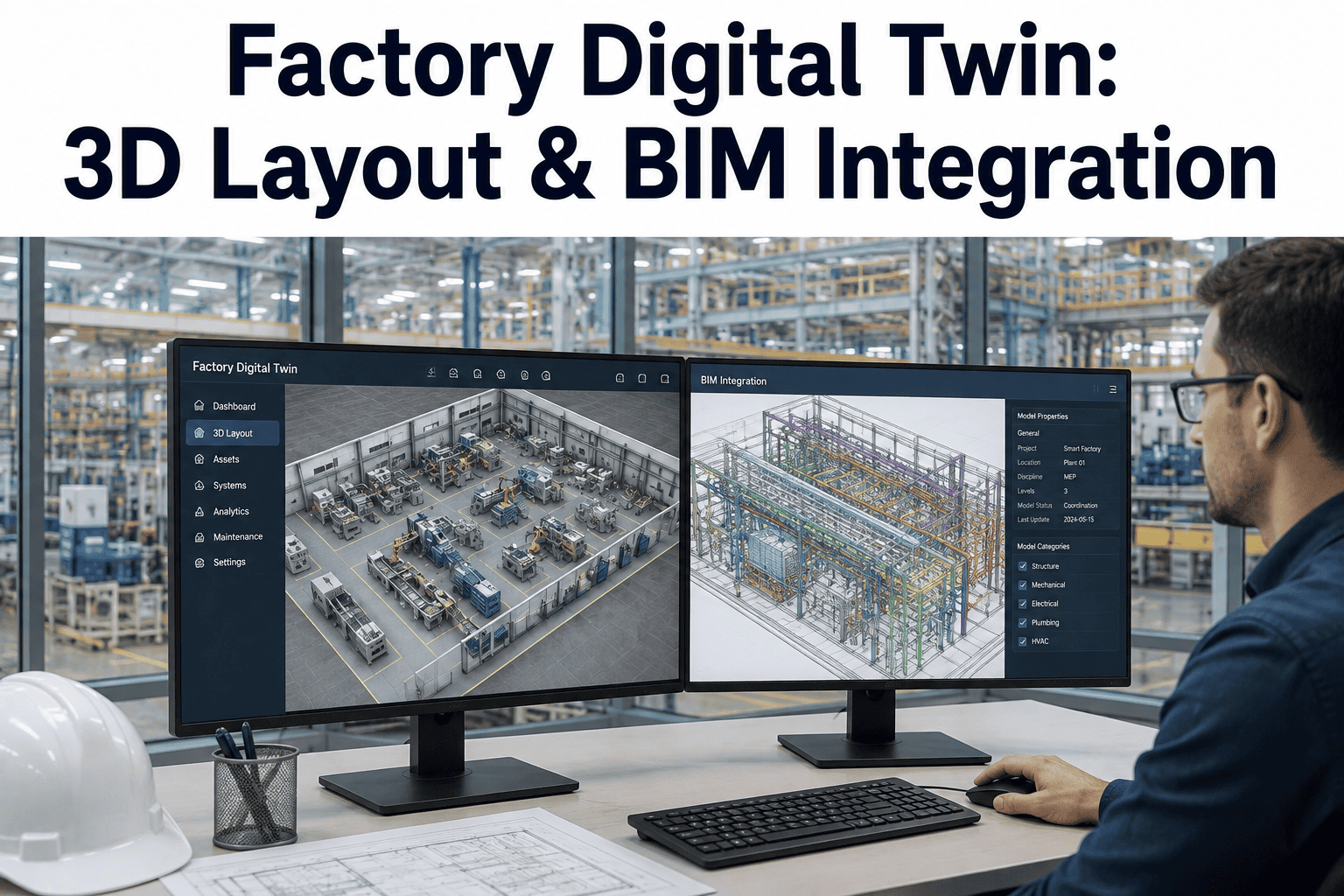
| Visualization Layer | Display twin in 3D/2D | Unity, Three.js |
| Integration Bus | Connect to MES/ERP | Kafka, MQTT |
Key Milestone Progress Indicators
Accelerate Your Digital Twin Deployment
Proven architecture and AI models ready for your plant. Get started in weeks.
Real-World Use Case: Automotive Supplier Cuts Downtime by 40%
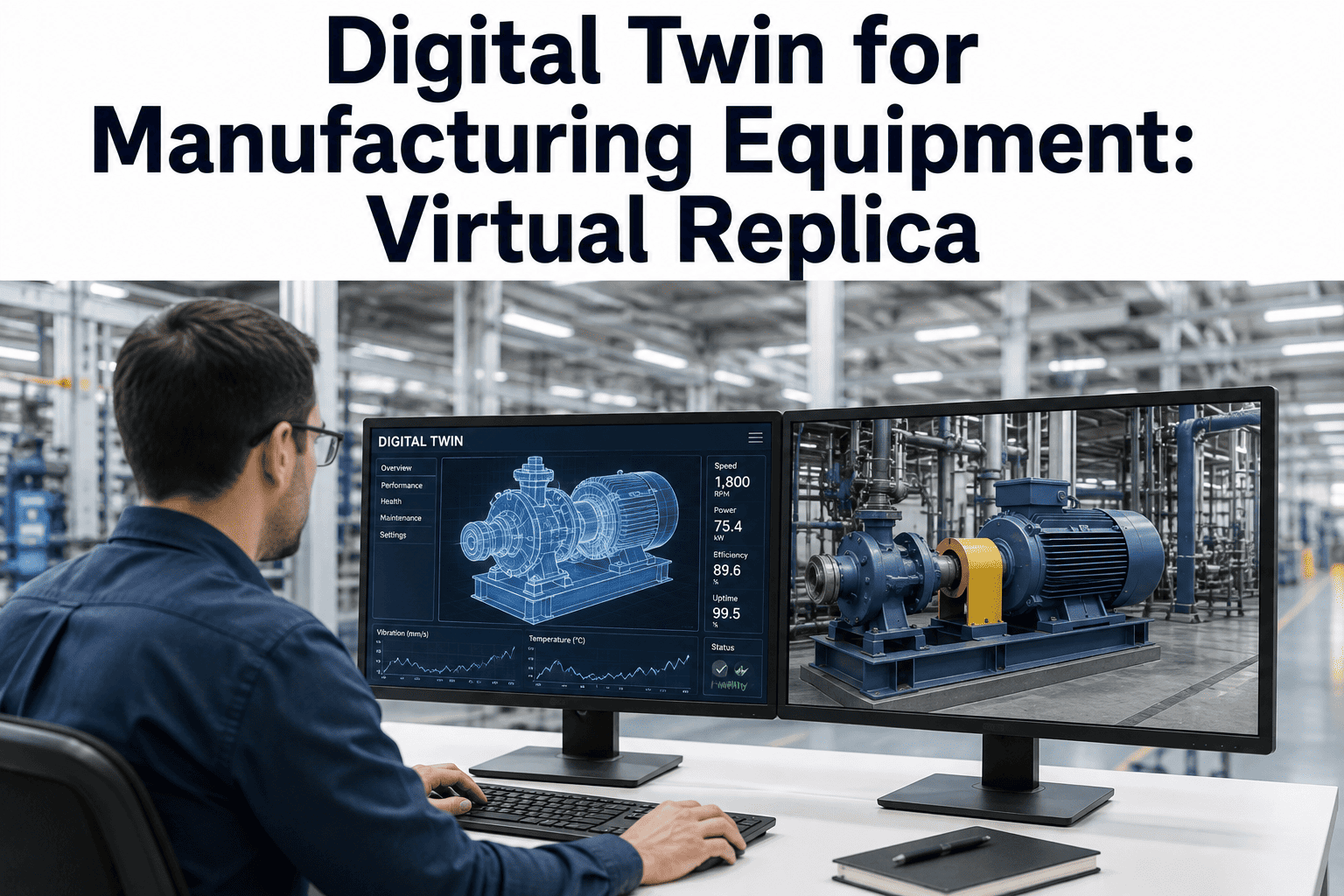
A global automotive parts manufacturer faced chronic downtime on a critical machining line. They deployed a digital twin focused on spindle health, integrating vibration sensors with an AI model trained on failure patterns. Within six months, the twin predicted 90% of failures 72 hours in advance, enabling just-in-time maintenance. The result: unplanned downtime dropped 40%, saving $2.3M annually. The twin paid back its $500K investment in 2.6 months. This case illustrates the power of targeted, outcome-driven digital twin design. The architecture used edge processing to reduce cloud costs and a simple 3D visualization that operators could interpret without training. The key takeaway: start with a high-value, narrow scope, and expand once ROI is proven.
Overcoming Common Digital Twin Roadblocks
Implementing a digital twin faces several hurdles: data silos, legacy equipment, and organizational resistance. Data silos can be bridged using an integration bus like Kafka or MQTT, which standardizes data from diverse sources. Legacy equipment often lacks digital outputs; retrofit with low-cost IIoT sensors that communicate via wireless protocols. Organizational resistance is best addressed by demonstrating quick wins—a pilot that reduces downtime on a single machine can win over skeptics. Another challenge is model drift: AI models degrade over time. Implement continuous retraining pipelines using fresh data. Finally, avoid over-customization; use modular, reusable components that can be adapted to different lines. A pragmatic approach that balances technical rigor with business pragmatism is essential for long-term success.
Data Silos
Use middleware to unify OT and IT data streams. Standardize on OPC UA and MQTT.
Legacy Equipment
Retrofit with wireless IIoT sensors. No need to replace existing machinery.
Model Drift
Set up automated retraining pipelines. Monitor model performance continuously.
Organizational Resistance
Start with a high-impact pilot. Show tangible results to build buy-in.
Future-Proofing Your Digital Twin for 2026 and Beyond
The digital twin landscape is evolving rapidly. By 2026, expect AI models to be self-optimizing, with edge devices capable of running complex simulations locally. The integration of digital twins with digital thread and PLM will enable end-to-end product lifecycle visibility. For manufacturing IT architects, building a flexible, standards-based architecture today is critical. Invest in open APIs, containerized microservices, and cloud-agnostic platforms. This ensures your twin can adapt to new technologies without a complete overhaul. Also, consider incorporating generative AI for scenario simulation—what-if analyses that optimize production in real time. The companies that start now with a pragmatic, ROI-focused approach will be the ones leading the Industry 4.0 revolution.
Cost-Benefit Analysis of Digital Twin Investment
A typical digital twin pilot for a single production line costs between $200K and $500K, including sensors, edge hardware, software licenses, and integration services. The benefits, however, can be substantial: a 10-20% reduction in downtime, 5-10% improvement in OEE, and 15-30% lower maintenance costs. For a mid-sized plant with $100M in annual output, these improvements translate to $5M-$20M in additional revenue and cost savings. The payback period is typically 6-12 months when focused on high-impact assets. To maximize ROI, prioritize assets with the highest failure costs and longest repair times. Use a phased approach: prove value on one line, then scale. This minimizes risk and ensures each phase is self-funding.
Digital Twin ROI by Industry
| Industry | Average Downtime Reduction | Payback Period |
|---|---|---|
| Automotive | 40% | 6 months |
| Electronics | 35% | 8 months |
| Pharmaceuticals | 30% | 10 months |
| Food & Beverage | 25% | 12 months |
| Heavy Machinery | 45% | 5 months |
Checklist: Is Your Plant Ready for a Digital Twin?
Before embarking on a digital twin project, assess your readiness with this checklist. First, do you have reliable data from at least 80% of your critical assets? If not, plan a sensor retrofit. Second, is your network infrastructure capable of handling real-time data streams? Edge computing can help if bandwidth is limited. Third, do you have a clear business case with defined KPIs? Without this, the project will lack direction. Fourth, do you have cross-functional support from operations, IT, and finance? Alignment is critical. Fifth, do you have a plan for model maintenance and scalability? If you answer 'yes' to at least four of these, you are ready to proceed. If not, address the gaps first to ensure a smooth deployment.
Selecting the Right Digital Twin Platform
Choosing the right platform is crucial. Look for a platform that offers pre-built connectors for common PLCs and SCADA systems, supports open standards, and provides built-in AI/ML capabilities. Scalability is key: the platform should allow you to start with a single line and expand to an entire plant without re-architecture. Also, evaluate the visualization capabilities—3D rendering is useful but not essential; a simple 2D dashboard with real-time KPIs often suffices. Consider total cost of ownership, including licensing, integration, and ongoing support. iFactory’s platform, for example, is designed for manufacturing IT architects, offering a modular, pay-as-you-grow model that aligns with your ROI timeline. Learn more about our platform.
Integration with Existing MES and ERP Systems
Your digital twin should not operate in isolation. Integration with MES and ERP systems enables closed-loop optimization: the twin’s predictions can trigger work orders in the CMMS, adjust production schedules in the MES, and update inventory levels in the ERP. This requires a robust integration layer, typically using APIs or message brokers like Kafka. Ensure your twin platform supports standard data models such as ISA-95 or MESA. For example, when a twin predicts a machine failure, it can automatically create a maintenance task in the CMMS and alert the production planner to reroute jobs. This level of integration maximizes the twin’s value and ensures that insights lead to actions.
Security and Governance for Digital Twins
Digital twins introduce new security risks, as they connect OT and IT domains. Implement role-based access control, encrypt data in transit and at rest, and regularly audit access logs. Use network segmentation to isolate twin components from critical control systems. Also, establish data governance policies: define who owns the twin data, how long it is retained, and how it can be used. Compliance with regulations like GDPR or CMMC may apply, especially in defense or pharmaceutical sectors. A well-governed twin builds trust and ensures long-term viability. Contact our security team for best practices.
Frequently Asked Questions
What is the minimum investment needed for a digital twin pilot?
A basic pilot for a single machine can start at $50,000, covering sensors, edge hardware, and software setup. For a full production line, expect $200,000 to $500,000. The key is to focus on high-value assets to ensure quick payback. Book a Demo to discuss your specific needs and get a tailored cost estimate.
How long does it typically take to deploy a digital twin?
A phased deployment can achieve initial results in 3-4 months for a pilot line. Full-scale rollout across a plant may take 9-12 months. The timeline depends on data availability, asset complexity, and integration requirements. Our approach ensures you see value within the first quarter. Get support to accelerate your timeline.
Can digital twins work with legacy equipment?
Yes, legacy equipment can be retrofitted with wireless IIoT sensors that monitor vibration, temperature, and current. These sensors are non-invasive and cost-effective. This allows you to create a digital twin without replacing existing machinery. Book a Demo to see how we handle legacy integration.
What are the key metrics to track for digital twin ROI?
Track OEE improvement, downtime reduction, maintenance cost savings, and energy efficiency gains. These directly impact the bottom line. Also monitor model accuracy and user adoption to ensure the twin is being used effectively. Contact us for a detailed ROI calculator.
How do you ensure data quality for digital twins?
Data quality starts with proper sensor calibration and validation rules at the edge. Use data cleansing algorithms to remove outliers and fill gaps. Implement data lineage tracking to trace any issues back to the source. Regular audits and automated anomaly detection maintain high data quality. Book a Demo to learn about our data quality framework.
Start Your Digital Twin Journey Today
Proven architecture, AI models, and support to deliver ROI in 12 months. Let's build your twin.