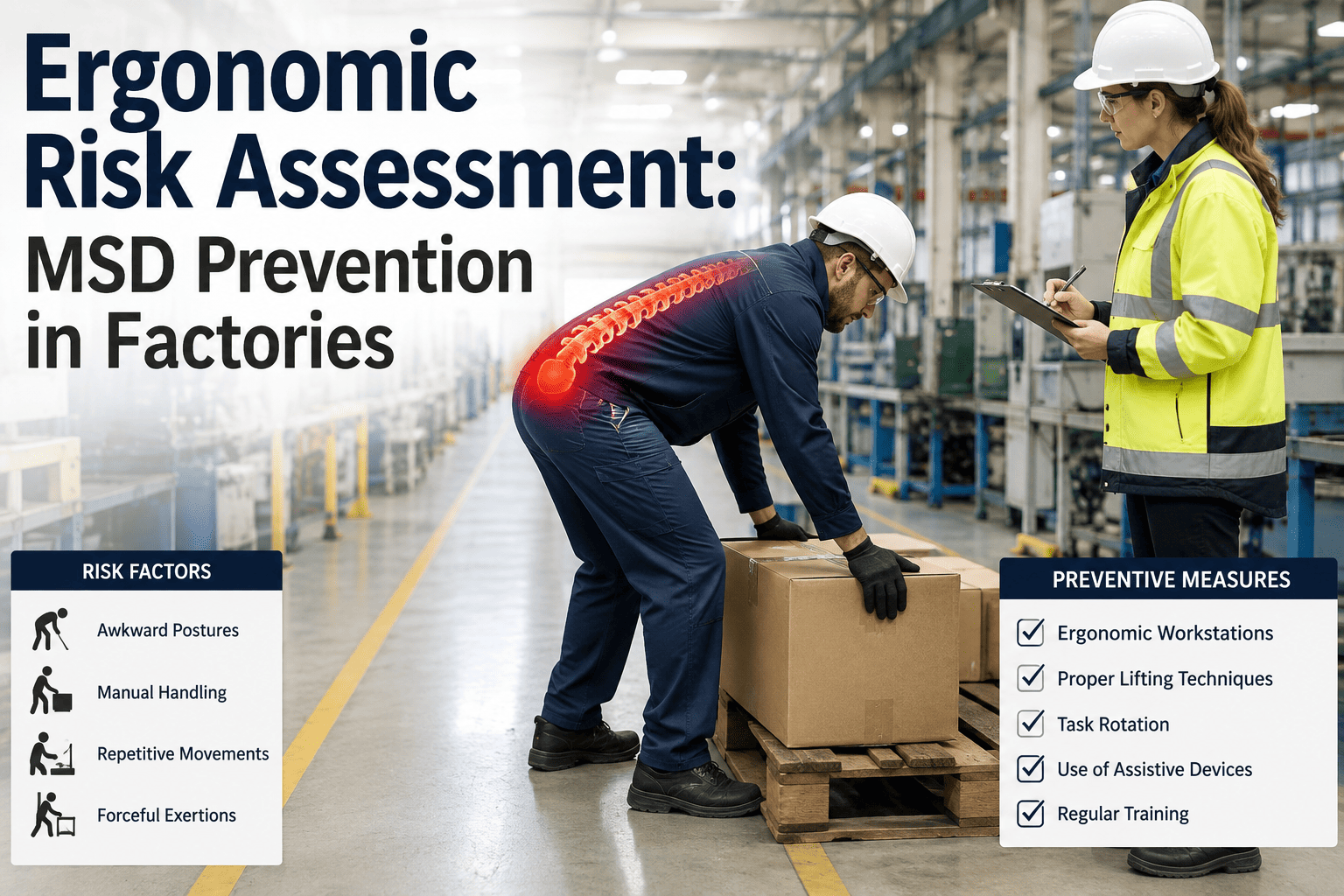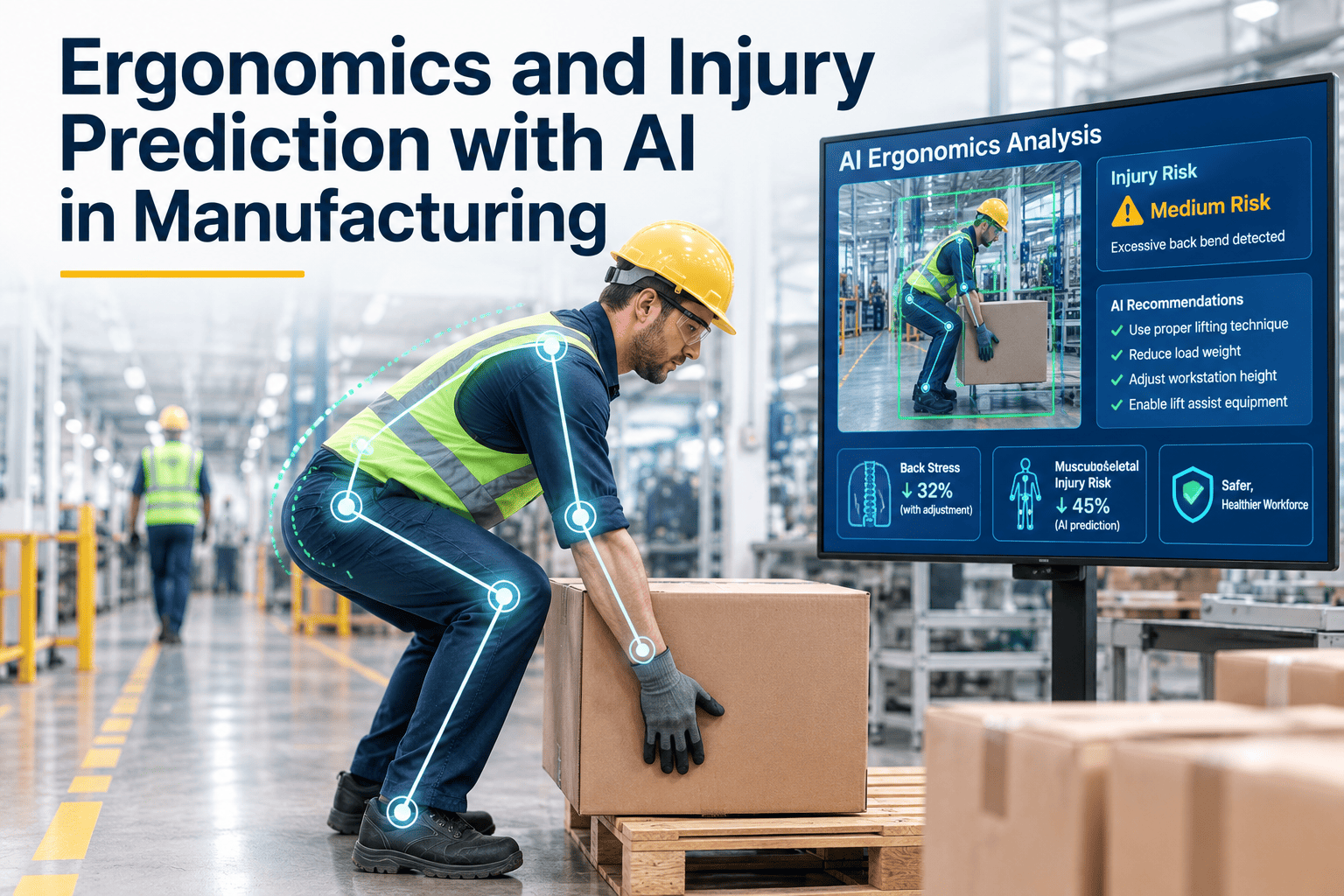
Ask most plant safety leads which injury category costs them the most lost-time days each year, and the answer is rarely the dramatic one people picture. It is musculoskeletal disorders — strains, sprains, and repetitive-motion injuries accumulated over months of awkward reaching, twisting, and lifting rather than a single sudden event. These injuries build quietly, station by station, shift by shift, until a back gives out on what looks like an ordinary Tuesday. Because there is no single triggering incident, they are also the hardest category to prevent using traditional safety tools, which is why more EHS teams are turning to Book a Demo to see how AI-based posture analysis catches risk before it becomes an injury.
See Injury Risk Before It Becomes an Injury Report
iFactory's AI posture analysis scores repetitive motion, reach, and load risk at every station, flagging patterns days or weeks before they typically surface as a claim.
Why MSDs Are the Hardest Injuries to Prevent
Musculoskeletal disorders consistently rank among the top causes of lost-time days across manufacturing, warehousing, and assembly environments, ahead of many more visible hazard categories. They are also uniquely difficult to manage because they develop cumulatively. A single awkward reach is harmless. The same reach repeated four hundred times a shift, for months, is a different story entirely — and traditional incident reporting only captures the moment the cumulative damage finally announces itself as a claim.
Standard ergonomics assessments rely on periodic observation: an ergonomist visits a station, watches a handful of cycles, and scores posture using a checklist. That snapshot approach has the same fundamental limitation as a manual safety audit — it captures a small slice of behavior at a single point in time, and workers often unconsciously adjust their posture when they know they're being observed.
Turning Camera Feeds Into Objective Posture Scores
AI ergonomics analysis uses computer vision to track joint angles, reach distances, and repetition frequency directly from existing camera feeds, converting motion into a quantified risk score rather than a subjective checklist entry. Because it runs continuously rather than during a scheduled visit, it captures the full range of how a task is actually performed across an entire shift, including the fatigue-driven posture drift that tends to show up hours into a run.
Motion Capture
Camera feeds track joint positions and movement patterns for each operator at a station across the full shift.
Biomechanical Scoring
Established ergonomic risk models convert posture and repetition data into a numeric risk score per task and per body region.
Trend Detection
Scores are tracked over time to catch gradual drift, such as posture degrading as fatigue builds later in a shift.
Design or Coaching Fix
High-risk stations get flagged for a workstation redesign, tooling change, or targeted coaching before an injury occurs.
How Plants Typically Roll Out Continuous Scoring
A full-facility ergonomics assessment is a large undertaking, so most plants start narrower, usually with the stations already flagged by the highest volume of minor complaints or the highest task repetition count. That gives the clearest early signal and the fastest path to a visible, defensible result before expanding scope to the rest of the facility.
Early weeks focus on calibrating the scoring model against the specific tasks and camera angles at each pilot station, since posture scoring accuracy depends on clean visibility of the joints being tracked. Once the pilot stations demonstrate reliable, actionable scores, extending coverage to additional lines typically moves faster because the calibration process itself becomes more efficient with each additional station added.
Select Pilot Stations
Start with stations already flagged by complaint history or high repetition counts for the clearest early signal.
Calibrate the Model
Tune detection to the specific camera angles and task types at each pilot station before trusting the scores.
Validate Findings
Cross-check early risk scores against ergonomist observation to confirm the model is reading tasks correctly.
Expand Coverage
Extend scoring to additional lines once the pilot demonstrates reliable, actionable results.
Get a Risk Score for Your Highest-Volume Stations
A pilot assessment scores your busiest stations against established ergonomic risk models, showing exactly where cumulative strain is building.
The Body Regions That Carry the Most Cumulative Load
Not every joint carries equal risk in a manufacturing setting. Certain combinations of task type and body region show up disproportionately across MSD claims, and AI scoring is particularly good at catching these because it tracks the specific joint angles and repetition counts that traditional observation tends to underweight.
These patterns also compound across a career rather than resetting each shift. An operator who has spent years on a station with a moderate but consistent risk score often carries more cumulative strain than one who briefly worked a higher-risk station for a few weeks. That distinction matters for prioritization, since a station that looks only moderately risky in a single snapshot can still deserve attention if it has been running that way for a long time with the same crew rotating through it.
Shoulders
Overhead reaching and sustained arm elevation during assembly or overhead installation tasks concentrate load in the rotator cuff over time.
Lower Back
Repeated bending and lifting, especially combined with twisting, remains one of the most consistent drivers of lost-time MSD claims.
Wrists and Hands
High-frequency, low-force repetitive motion at assembly and packing stations builds cumulative strain that often goes unnoticed until symptoms appear.
Neck
Sustained downward or sideways head positioning during inspection or fine assembly work is an underrated but common contributor to chronic strain.
What Plants Actually Do With a Risk Score
A risk score only matters if it changes something. The plants seeing real reductions in MSD-related lost-time days use scores to prioritize a short list of interventions rather than trying to fix every station at once, focusing first on the combination of high frequency and high individual risk score.
| Risk Score Range | Typical Finding | Common Response |
|---|---|---|
| Low | Posture within accepted thresholds | Routine monitoring, no action needed |
| Moderate | Occasional awkward reach or angle | Targeted coaching, minor tooling adjustment |
| Elevated | Consistent repetitive strain pattern | Workstation redesign or task rotation |
| High | Combined high frequency and high strain | Priority redesign, mechanical assist evaluation |
What a Preventable MSD Actually Costs a Plant
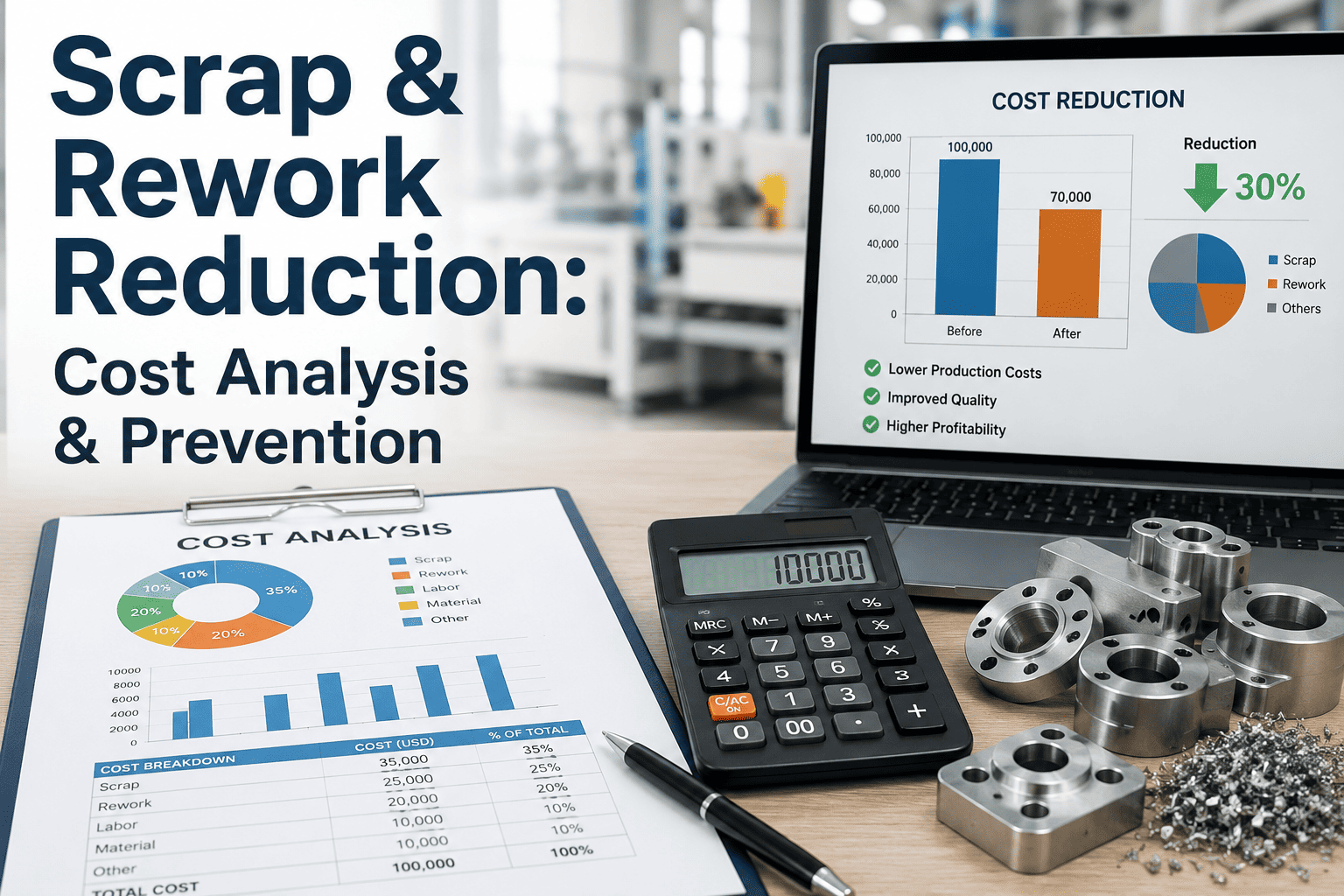
The direct cost of a musculoskeletal claim, medical treatment, lost-time days, and sometimes a modified-duty period, is only part of the picture. The indirect cost includes the time spent covering the injured operator's station, the productivity dip while a temporary or newly trained replacement gets up to speed, and the ripple effect on team morale when a colleague is sidelined by something that, in hindsight, had been building for months. Because MSDs develop cumulatively, they are also unusually preventable relative to sudden-onset injuries, provided the early signal is actually caught.
This is where continuous scoring earns its value. A single workstation redesign informed by a clear risk score protects every operator who ever works that station, not just the one whose claim eventually prompted a look. That makes ergonomics one of the rare safety investments where the fix, once made, keeps paying off indefinitely rather than needing to be repeated per incident.
Direct Medical Cost
Treatment, lost-time days, and modified duty periods tied to a confirmed MSD claim.
Coverage Cost
Overtime or temporary labor needed to cover the injured operator's station during recovery.
Ramp-Up Cost
Productivity dip while a replacement or returning operator gets back to full speed on the task.
One-Time Fix, Lasting Protection
A station redesign informed by a risk score protects every future operator on that station, not just one.
AI Ergonomics and Injury Prediction — Common Questions
Does this replace our certified ergonomist or industrial hygienist?
No, it is designed to extend their reach rather than replace their judgment. Continuous scoring surfaces which stations deserve a closer look, so the ergonomist's limited time gets spent on the highest-risk areas instead of spread thin across a full facility walk. The final redesign and intervention decisions still benefit from professional review, particularly for complex cases.
What ergonomic risk models does the scoring use?
Scoring is built on established, widely recognized biomechanical risk assessment frameworks used in industrial ergonomics, adapted to run from continuous video rather than manual timed observation. This keeps the scoring methodology consistent with what an ergonomist would already recognize, just applied at far greater scale and frequency than manual assessment allows.
Can this predict which specific workers are at risk of injury?
The system is built to score tasks and stations rather than make individual medical predictions about a specific worker's injury likelihood, which is both a methodological and a privacy consideration. Station-level and task-level scoring still delivers most of the prevention value, since redesigning a high-risk task protects every worker who performs it, not just one. Teams with specific questions about scope can reach the iFactory Support team directly.
How long before we see a meaningful risk score for a station?
Camera-based scoring can produce initial risk data within days of setup, though a fully reliable score benefits from capturing a few weeks of shift variation, including fatigue-driven drift late in longer runs. Most plants treat the first month as a calibration period before acting on the highest-confidence findings.
Does this work for tasks that vary a lot, or only fixed repetitive stations?
It works best on tasks with enough repetition to establish a meaningful pattern, which covers most assembly, packing, and material handling stations. Highly variable tasks can still be scored, but the confidence of the risk assessment improves as more repetitions are captured. Teams can Book a Demo to see how scoring handles a task profile similar to their own.
Catch Cumulative Strain Before It Becomes a Claim
See how continuous posture scoring identifies your highest-risk stations and turns that data into a prioritized redesign plan.