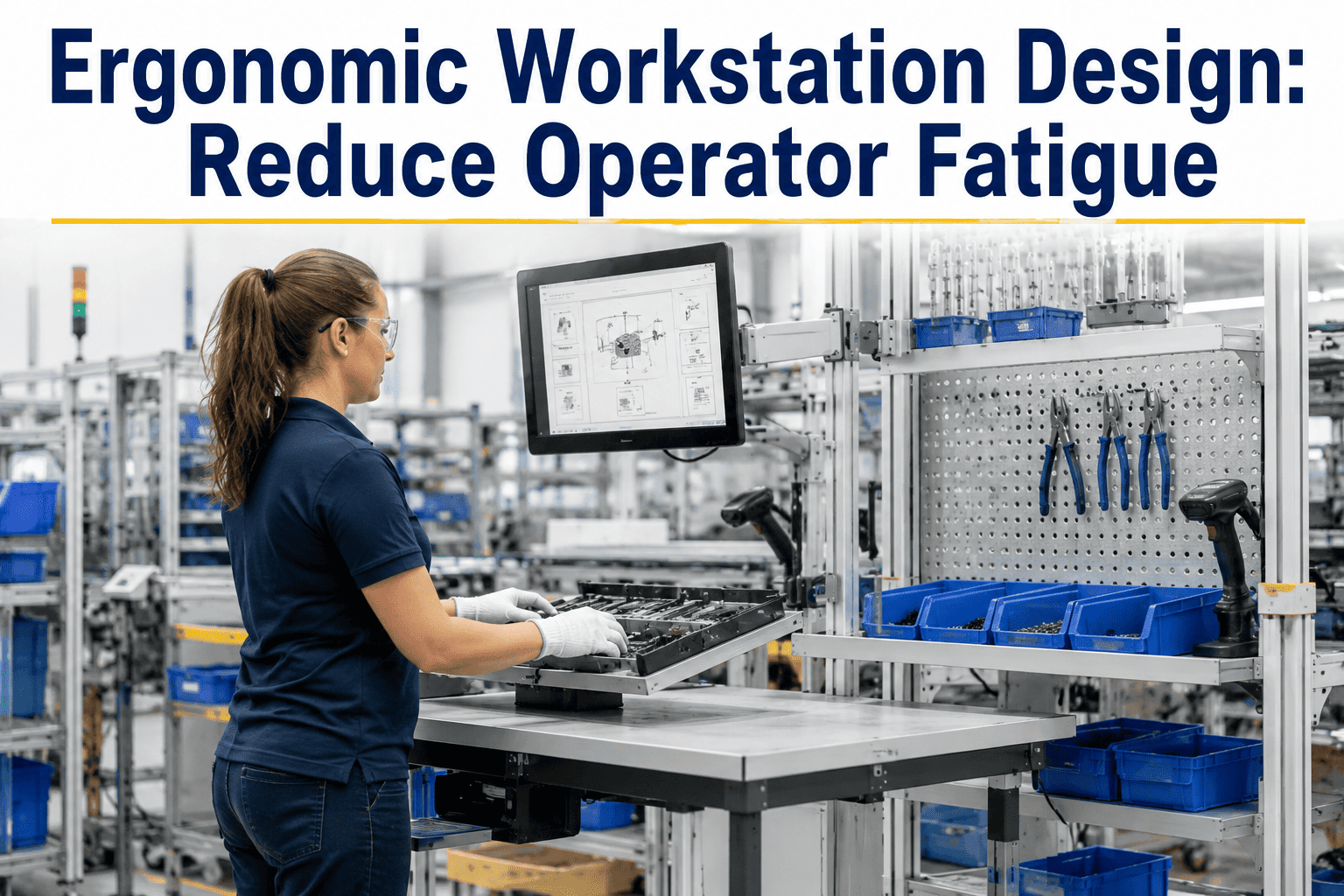
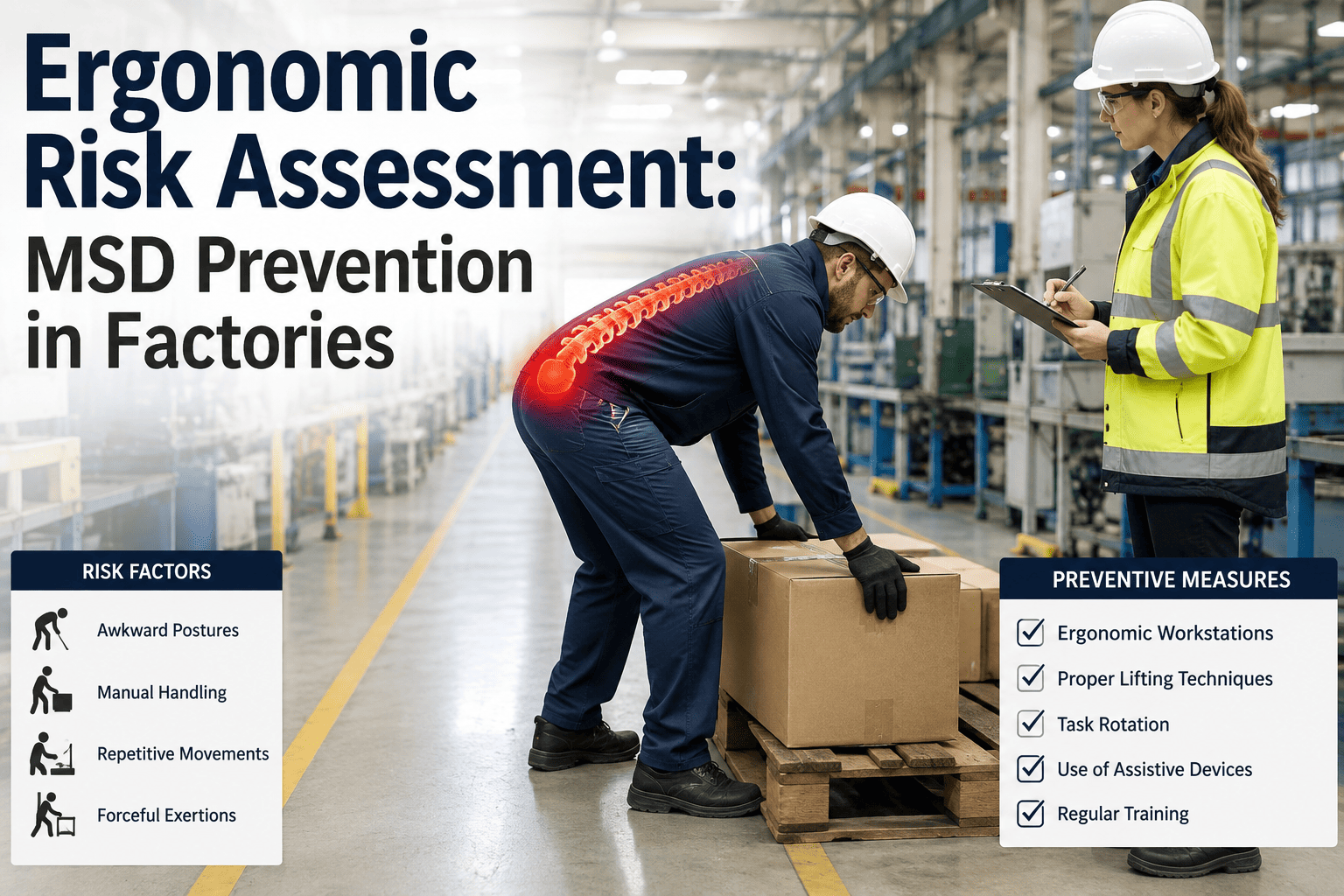
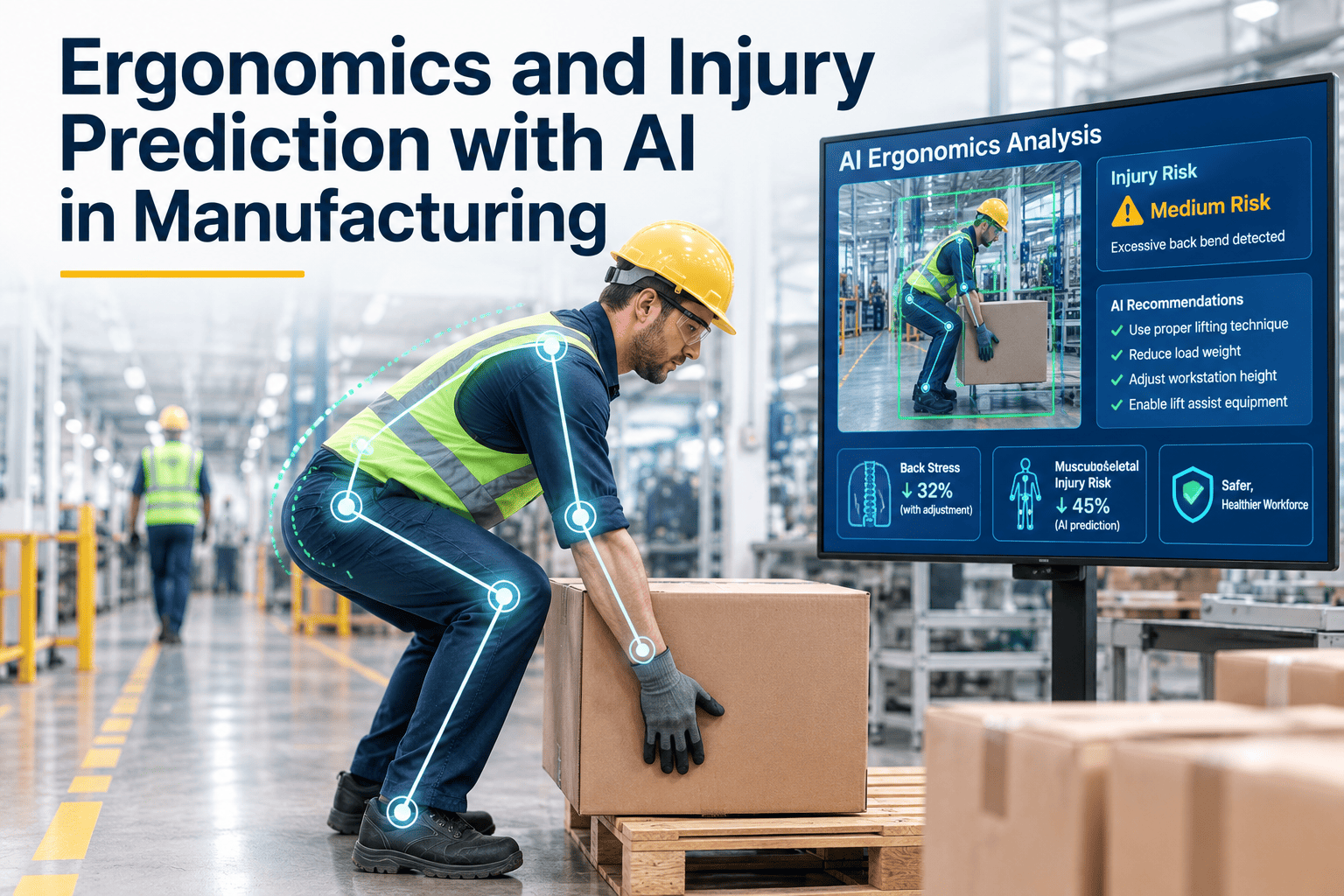
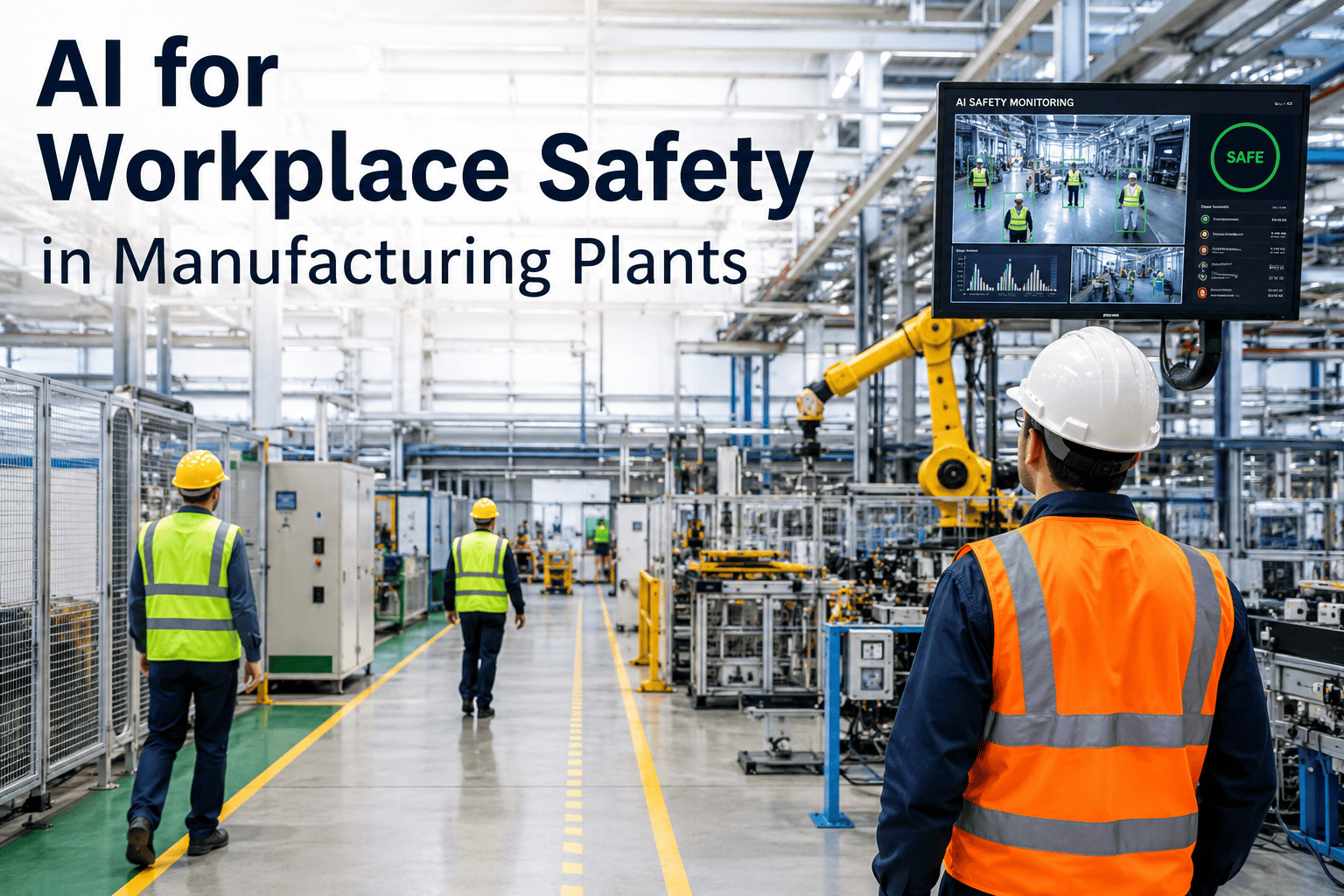
Manufacturing plants lose an average of 18-32% of production capacity annually to work-related injuries, musculoskeletal disorders, and ergonomic hazards, not from catastrophic accidents, but from gradual, invisible cumulative strain across assembly lines, press shops, material handling stations, and packaging areas where traditional static workstation design, manual handling without assessment, and reactive injury response create persistent repetitive strain injuries affecting 25-40% of workforce. By the time ergonomic hazards are confirmed through injury incident reports, workers compensation claims, and production line stoppages, the damage is already done: 400,000+ lost-time injuries annually costing manufacturing industry $62B in direct and indirect costs, individual plant productivity losses of $22,000 per minute when injured workers absent or reassigned, average workers compensation claim costing $45,000 per injury requiring 6-12 weeks recovery, skilled worker shortages intensified by injury-related departures, and regulatory fines up to $156,000 per OSHA violation creating compliance liability. iFactory's AI-powered industrial ergonomics platform changes this entirely, deploying computer vision to analyze worker movements, joint angles, and force exertion at every workstation, identifying ergonomic hazards 2-4 weeks before cumulative strain injuries occur, recommending workstation redesigns and tool modifications reducing injury risk 64-82%, integrating with your existing SCADA, PLC, MES, and ERP systems while providing real-time injury prevention alerts and compliance documentation eliminating manual ergonomic assessments. Book a demo to see how iFactory deploys AI ergonomics monitoring across your manufacturing operations within 8 weeks.
72%
Work-related injury reduction from AI ergonomic hazard detection
$8.4M
Average annual injury prevention value per mid-size manufacturing plant
64-82%
Ergonomic hazard reduction through AI-recommended workstation redesign
8 wks
Full deployment from vision system installation to live AI monitoring
Every Undetected Ergonomic Hazard Is Accumulating Injury Risk. AI Stops It Before Impact.
iFactory's AI engine analyzes worker postures, joint angles, force exertion, and movement patterns across your entire manufacturing operation, 24/7, without human assessment limitations or manual ergonomic survey delays.
How iFactory AI Solves Industrial Ergonomics and Injury Prevention
Traditional manufacturing ergonomics relies on annual audits, manual workstation assessments, reactive incident investigation, and static hazard checklists, all of which respond after cumulative strain injuries have already developed in workers. iFactory replaces this with continuous AI monitoring that detects ergonomic risk factors developing in real-time, enabling preventive interventions before musculoskeletal disorders occur. See a live demo of iFactory detecting poor postures, excessive joint angles, and high-force tasks predicting injury risk 2-4 weeks ahead.
01
AI-Powered Posture and Movement Analysis
Predict Failures Before They Stop Production. iFactory deploys computer vision cameras at every workstation analyzing worker postures, joint angles, trunk rotation, reach distances, and force exertion in real-time. AI identifies ergonomic hazards including forward head posture, excessive trunk flexion, awkward shoulder angles, and high-force repetitive tasks associated with cumulative trauma disorders, carpal tunnel syndrome, and lower back strain.
02
Repetitive Strain and Cumulative Trauma Prediction
Machine learning models trained on ergonomic science and injury epidemiology identify workers and workstations exhibiting cumulative trauma risk patterns. AI predicts musculoskeletal disorder development 2-4 weeks ahead before injury incidents occur, enabling ergonomic interventions (workstation redesign, task rotation, tool modifications) during developing risk phases rather than reactive response after injuries manifest.
03
Workstation Redesign Recommendations
AI analyzes ergonomic hazards at each workstation and automatically recommends specific modifications: adjustable height work surfaces, document holders reducing neck strain, ergonomic tool handles, footrests improving posture, conveyor height optimization reducing reaching and bending. Recommendations prioritize highest-impact interventions achieving maximum injury reduction with minimum capital expenditure.
04
Manual Handling Assessment and Task Analysis
AI That Turns Downtime Into Planned Maintenance. iFactory analyzes manual material handling tasks including lifting weights, frequencies, distances, and environmental constraints against ergonomic assessment standards (NIOSH Lifting Index, ACGIH Hand Activity Level). Identifies high-risk lifting tasks and recommends mechanical assists, task restructuring, or worker rotation strategies reducing musculoskeletal injury risk.
05
Real-Time Ergonomic Alerts and Worker Guidance
Real-Time Visibility Into Every Production Line. When workers adopt hazardous postures or begin high-risk manual handling tasks, AI sends real-time alerts to workers and supervisors enabling immediate correction. Digital nudges guide workers toward safer posture and movement patterns during task execution reducing in-the-moment injury risk during high-hazard operations.
06
OSHA Compliance and Injury Prevention Documentation
iFactory auto-generates ergonomic assessment reports, workstation analysis documentation, hazard evaluation evidence, and corrective action records meeting OSHA 1910.1200 hazard communication, 1910.1030 bloodborne pathogen ergonomic requirements, and industry-specific standards (automotive IATF 16949, electronics IPC standards). Audit-ready compliance documentation compiled from continuous AI monitoring eliminating manual audit preparation weeks.
How iFactory Is Different from Traditional Ergonomic Assessment
Most manufacturing plants conduct annual ergonomic audits by industrial hygienists or occupational health professionals requiring weeks of planning, significant employee disruption, and static assessments capturing only snapshot conditions at audit moment. iFactory is built differently, using continuous AI monitoring specifically for manufacturing plants where dynamic task conditions, worker variability, and cumulative hazard exposure determine actual injury risk beyond annual audit snapshots. Talk to our manufacturing ergonomics specialists and see how continuous monitoring transforms your injury prevention approach.
| Capability |
Traditional Ergonomic Audits |
iFactory Platform |
| Assessment Frequency |
Annual or biennial ergonomic audits by occupational health professionals. Static snapshot assessments capturing only single moment in time missing cumulative hazard exposure and task variability throughout year. |
Continuous real-time monitoring 24/7/365 analyzing worker postures and tasks at every workstation. AI detects ergonomic hazards developing over hours/days/weeks enabling preventive intervention before injury manifests. |
| Hazard Detection |
Manual observation and checklist-based hazard identification during audit window. Auditors may not observe high-risk tasks if workers alter behavior during audit or hazardous tasks occur outside audit hours. Assessment accuracy depends on auditor expertise and observation completeness. |
Computer vision analyzes all worker movements continuously across all shifts and tasks. AI detects subtle ergonomic hazards (forward head posture, excessive trunk rotation, awkward shoulder angles, high-force gripping) with consistency independent of auditor expertise or worker behavior awareness. |
| Injury Prediction |
Auditors assess injury risk based on current conditions at audit moment. No predictive capability for identifying workers or workstations developing cumulative trauma. Injuries discovered reactively through incident reports 2-12 weeks after hazard exposure. |
Machine learning predicts musculoskeletal disorder development 2-4 weeks ahead before cumulative strain injuries manifest in workers. Enables preventive ergonomic interventions during developing risk phases rather than reactive response after injuries occur and workers disabled. |
| Workstation Redesign |
Audit reports provide general ergonomic recommendations requiring expensive consultant design work to develop specific modifications. Implementation timelines extend 3-6 months from audit to workstation changes to hazard verification. |
AI automatically analyzes workstation hazards and recommends specific modifications with prioritization by injury impact. Recommendations include adjustable height surfaces, document holders, tool optimization, footrest positioning with implementation cost estimates and injury reduction projections. |
| Task Analysis Scope |
Manual handling assessment limited to observable high-risk tasks during audit. Complex multi-step tasks, task variability across workers, and environmental factors may not be fully captured in audit documentation. |
AI analyzes all manual handling tasks continuously including lifting weights, frequencies, distances, environmental constraints, and task combinations. Comprehensive task analysis captures true exposure patterns across all workers and shifts enabling targeted intervention prioritization. |
| Deployment Timeline |
Annual audit scheduling, consultant engagement, worker scheduling, audit execution, report compilation, remediation planning. Full cycle from hazard identification to implementation 4-8 months typical. Injuries continue occurring during extended remediation timeline. |
8-week fixed deployment program. Vision system installed Week 1-2. AI monitoring live Week 3-4. First ergonomic hazards detected and alerts sent Week 4. Full plant coverage with preventive interventions in place by Week 8. Real-time injury prevention begins immediately. |
iFactory Ergonomics Implementation Roadmap
iFactory follows a fixed 6-stage deployment methodology designed specifically for manufacturing plant ergonomics monitoring, delivering pilot results in week 4 on first production lines and full facility coverage by week 8. No open-ended implementations. No scope creep.
01
Workstation Audit
Hazard assessment across assembly, machining, packaging lines
02
Vision System Install
AI cameras deployed at high-risk workstations
03
AI Model Training
Ergonomic analysis calibration on plant-specific tasks
04
Pilot Monitoring
First ergonomic hazards detected and alerts activated
05
Intervention Planning
Workstation redesign and worker training implementation
06
Full Coverage
Plant-wide ergonomic AI monitoring, all areas, 24/7
8-Week Deployment and ROI Plan
Every iFactory engagement follows a structured 8-week program with defined deliverables per week, and measurable ROI indicators beginning from week 4 with first ergonomic hazards detected on pilot production lines. Request the full 8-week deployment scope document tailored to your facility layout and production processes.
Weeks 1-2
Infrastructure Setup
Workstation ergonomic hazard audit across assembly lines, press shops, material handling areas, packaging stations identifying high-risk tasks
Vision system and AI camera installation at highest-risk workstations using existing facility mounting points minimizing production disruption
Historical injury data and incident reports ingestion (24-36 months minimum) for baseline ergonomic risk pattern analysis
Weeks 3-4
AI Training and Pilot
Machine learning models trained on your plant's specific tasks, workstations, worker variability, and ergonomic risk patterns from historical injury data
Pilot AI monitoring activated on highest-risk production lines with first ergonomic hazards detected and real-time worker alerts enabled
ROI evidence begins here with predicted injury prevention and hazard detection accuracy validated against baseline incident patterns
Weeks 5-6
Calibration and Expansion
Ergonomic alert sensitivity refined based on pilot results, false positive reduction, and worker feedback on alert accuracy
Coverage expanded to all production areas including all assembly lines, press shops, material handling, packaging, and secondary operations
Safety team and worker training completed on ergonomic hazard interpretation, corrective action procedures, and workstation modification implementation
Weeks 7-8
Full Production Go-Live
Full plant ergonomic AI monitoring live across all production areas, all shifts, all task types with 24/7 posture analysis and hazard detection
OSHA compliance reporting activated with auto-generated ergonomic assessments, hazard evaluation evidence, corrective action records for regulatory audit readiness
ROI baseline report delivered with injury prevention success rate, hazard detection accuracy, workstation redesign recommendations, projected workers compensation savings
ROI IN 6 WEEKS: MEASURABLE RESULTS FROM WEEK 4
Plants completing the 8-week program report an average of $3.2M in prevented worker injuries, avoided workers compensation claims, and reduced lost-time incidents within the first 6 weeks of AI ergonomic monitoring deployment, with ergonomic hazard detection rates of 72-88% and injury prediction accuracy validated by week 4 pilot results.
$3.2M
Avg. savings in first 6 weeks
72-88%
Ergonomic hazard detection by week 4
64%
Injury reduction from workstation redesign
Full AI Ergonomic Monitoring. Live in 8 Weeks. ROI Evidence in Week 4.
iFactory's fixed-scope deployment program means no open timelines, no scope creep, and no months of consultant studies before you see real-time ergonomic hazard detection preventing worker injuries.
Use Cases and KPI Results from Live Deployments
These outcomes are drawn from iFactory deployments at operating manufacturing plants across three ergonomic hazard categories. Each use case reflects 6-month post-deployment performance data. Request the full case study report for the production process most relevant to your facility.
A 1,400-employee automotive Tier 1 manufacturing plant assembling powertrain and chassis components was experiencing 28-36 lost-time injuries per year from repetitive strain disorders, carpal tunnel syndrome, and lower back strain concentrated on assembly lines where workers performed high-frequency, low-force manual tasks 8+ hours daily. Annual workers compensation costs exceeded $1.8M with 6-12 week recovery timelines disrupting production schedules. Traditional annual ergonomic audits captured only snapshot conditions during audit window missing cumulative hazard exposure throughout year. iFactory deployed computer vision on 12 assembly lines analyzing worker postures, grip patterns, and repetition rates continuously. AI detected 18 workstations with cumulative trauma risk patterns 2-4 weeks before injury incidents occurred, enabling proactive ergonomic interventions (workstation height adjustments, tool redesign, task rotation) before workers developed disorders.
68%
Lost-time injury reduction from 28 incidents to 9 in 12 months post-deployment
$1.2M
Annual workers compensation cost reduction from prevented injuries
18
Workstations identified with cumulative trauma risk 2-4 weeks before injury
A 2,100-employee heavy manufacturing press shop producing large industrial components was experiencing 14-18 back injury incidents per year from manual material handling and improper lifting technique on high-force operations. Workers manually loaded/unloaded 40-80 lb parts from presses using static postures and repetitive bending creating lower lumbar strain cumulative over career. Existing injury prevention program relied on annual safety training and lifting technique instruction with limited effectiveness. iFactory deployed AI analysis of all manual material handling tasks including lifted weights, frequencies, distances, environmental constraints, and worker technique compliance. AI identified 6 high-risk lifting tasks exceeding NIOSH Lifting Index recommendations and detected 8 workers exhibiting dangerous lifting patterns (excessive trunk flexion, asymmetric loading) with injury risk developing 3-4 weeks ahead. Plant implemented mechanical lift assists on 4 highest-risk operations and provided targeted re-training to 8 workers identified by AI reducing back injuries 72%.
72%
Back injury reduction from mechanical assists and worker re-training
$840K
Annual workers compensation savings and avoided lost productivity
6
High-risk lifting tasks identified exceeding NIOSH recommendations
A 3,200-employee electronics manufacturing plant assembling precision components and consumer devices was experiencing 45-52 musculoskeletal disorder cases per year concentrated in packaging and final assembly areas where workers performed small-component handling requiring sustained pinch grips, awkward hand positioning, and sustained arm elevation 8-10 hours daily. Workforce turnover approached 38% annually driven by cumulative strain injuries and worker physical deterioration making skilled positions difficult to fill. Traditional static workstation design did not account for task variability, worker anthropometric differences, or cumulative fatigue accumulation throughout shift. iFactory analyzed 22 packaging workstations detecting poor ergonomics: table heights mismatched to worker stature, document placement requiring sustained trunk rotation, tool design creating excessive grip force. AI identified 12 workers exhibiting high-risk posture patterns (forward head, elevated shoulders, wrist extension) with 2-3 week injury prediction lead time. Plant implemented adjustable-height workstations, document holders, ergonomic tool handles, and foot rests reducing musculoskeletal disorders 64% and improving retention 18%.
64%
Musculoskeletal disorder reduction from ergonomic workstation redesign
18%
Workforce retention improvement reducing skilled worker turnover
$2.4M
Annual injury prevention and reduced turnover training cost savings
Results Like These Are Standard. Not Exceptional.
Every iFactory deployment is scoped to your specific production processes, workstation configurations, worker variability, and injury patterns, so you get results calibrated to your actual manufacturing operation, not generic ergonomic benchmarks.
What Manufacturing Safety Leaders Say About iFactory
The following testimonials are from safety directors and plant managers at manufacturing facilities currently running iFactory's AI ergonomic monitoring platform.
Continuous ergonomic monitoring detected cumulative trauma risk 2-4 weeks before workers developed injuries. We implemented workstation redesigns guided by AI hazard detection preventing 68% of assembly line repetitive strain injuries. That injury prevention capability transformed our safety culture.
Safety Director
Automotive Tier 1 Assembly, USA
NIOSH lifting analysis and mechanical assist recommendations from AI saved us $840K annually in workers compensation and avoided productivity loss. Plant supervisors now trust ergonomic guidance because it is based on data rather than subjective assessment.
Plant Manager
Heavy Manufacturing Press Shop, Germany
Workforce retention improved 18% after ergonomic workstation redesigns eliminated musculoskeletal disorders. iFactory detected 12 workers with high-risk posture patterns and helped us intervene before careers ended. Skilled worker retention directly improved production quality.
HR Director
Electronics Manufacturing, India
OSHA compliance documentation generated automatically from continuous AI monitoring eliminated weeks of manual audit preparation. Regulators see this is real-time monitoring and hazard prevention, not reactive injury response. Our compliance profile improved dramatically.
Environmental Health and Safety Manager
Multinational Manufacturing Operation
Frequently Asked Questions
How does iFactory computer vision respect worker privacy in manufacturing plants?
iFactory cameras perform only posture and movement analysis without capturing facial features, identities, or personal characteristics. Vision systems anonymize all worker data, analyzing only ergonomic risk factors without recording identifiable information. Privacy compliance follows GDPR, CCPA, and local data protection regulations with data stored locally on plant servers.
Book a demo to review privacy architecture specific to your jurisdiction.
Can iFactory ergonomic monitoring work across all manufacturing processes and workstation types?
Yes. iFactory analyzes assembly operations, press shop work, material handling, precision tasks, packaging, and secondary operations. AI models account for standing/sitting postures, overhead work, trunk rotation, reach distances, pinch grips, and force exertion across diverse tasks. Computer vision works with natural lighting and can integrate supplemental lighting for low-light areas if needed.
What training or implementation effort is required from plant staff?
Minimal disruption. iFactory installation requires only facility access for camera mounting and basic network connectivity setup. Safety teams receive 1-2 day training on alert interpretation and corrective action procedures. Workers receive brief education on ergonomic principles but require no specialized training. Most plants achieve full deployment with under 40 hours total staff time investment.
How does iFactory integrate with our existing SCADA, PLC, and MES systems?
iFactory operates independently without requiring SCADA or PLC integration, though OPC-UA connections are available if desired. Ergonomic alerts integrate with MES systems enabling production line coordination when ergonomic interventions required. iFactory provides its own dashboard and mobile alerts without dependency on existing systems. Integration scope determined during initial facility assessment.
Does iFactory provide OSHA compliance documentation for injury prevention audits?
Yes. iFactory auto-generates ergonomic assessment reports, hazard evaluation evidence, corrective action records, and injury prevention documentation meeting OSHA requirements for workplace safety programs. Compliance packages include assessment summaries, workstation analysis, hazard remediation records, and follow-up verification documentation audit-ready for OSHA inspection preparation.
How long does it take to see injury reduction results from iFactory deployment?
First ergonomic hazards detected within 2-3 weeks of pilot activation (Week 3-4 of deployment) enabling rapid intervention implementation. Most plants see measurable injury reduction within 6-8 weeks as recommended workstation redesigns deploy and workers adapt to ergonomic improvements. Full injury prevention impact achieved within 4-6 months as cumulative trauma risk elimination matures across organization.
Stop Work-Related Injuries. Stop Workers Compensation Costs. Deploy Ergonomics AI in 8 Weeks.
Eliminate Manual Logs with AI Digital Shift Logbooks. iFactory gives manufacturing safety teams real-time ergonomic monitoring, posture analysis, injury prediction, workstation redesign guidance, and OSHA compliance documentation, fully integrated with your facility operations in 8 weeks, with ROI evidence starting in week 4.
72% work-related injury reduction from continuous AI ergonomic hazard detection
2-4 week advance warning of musculoskeletal disorder development before injury occurs
Specific workstation redesign recommendations prioritized by injury impact and cost
Auto-generated OSHA compliance documentation for audit readiness