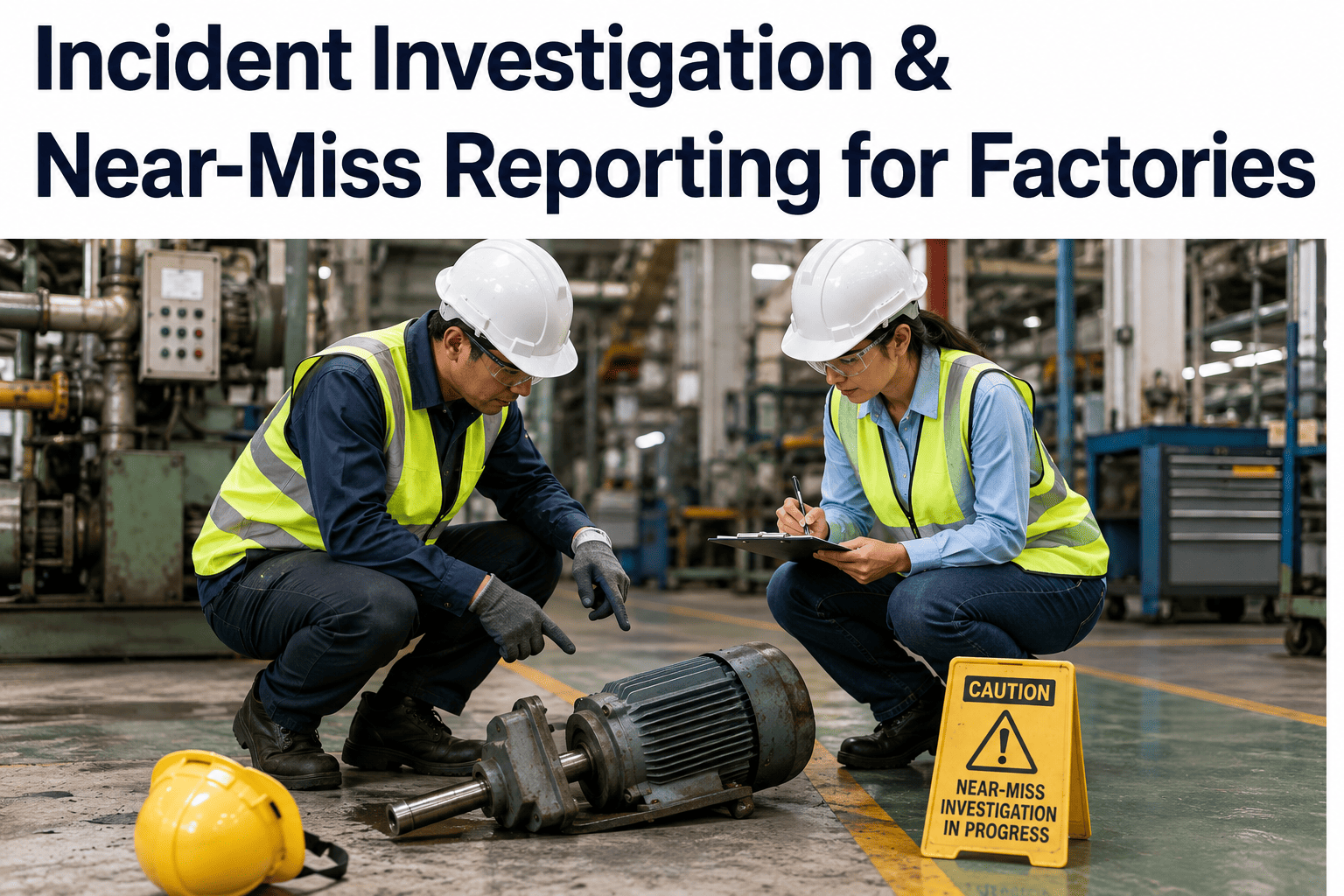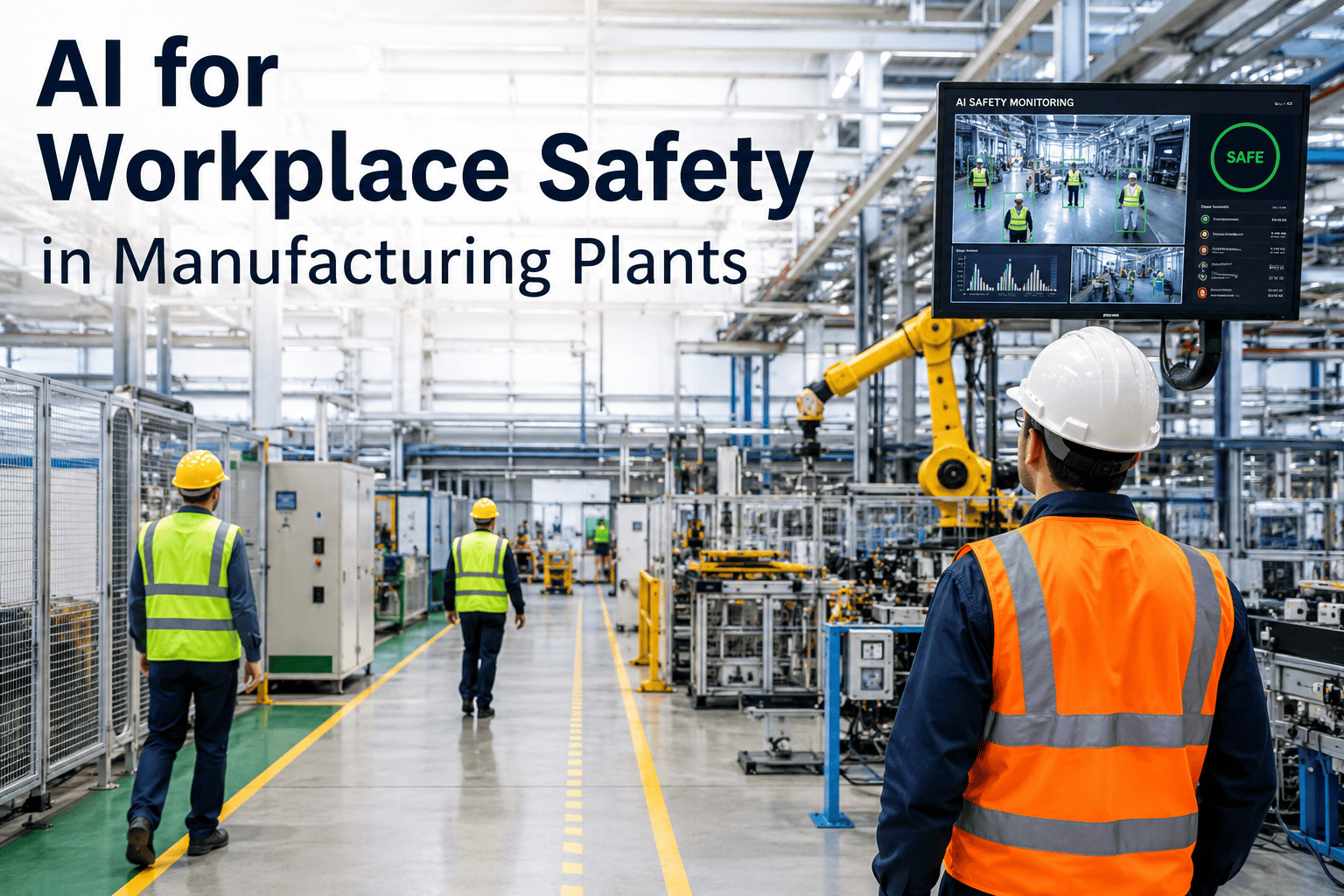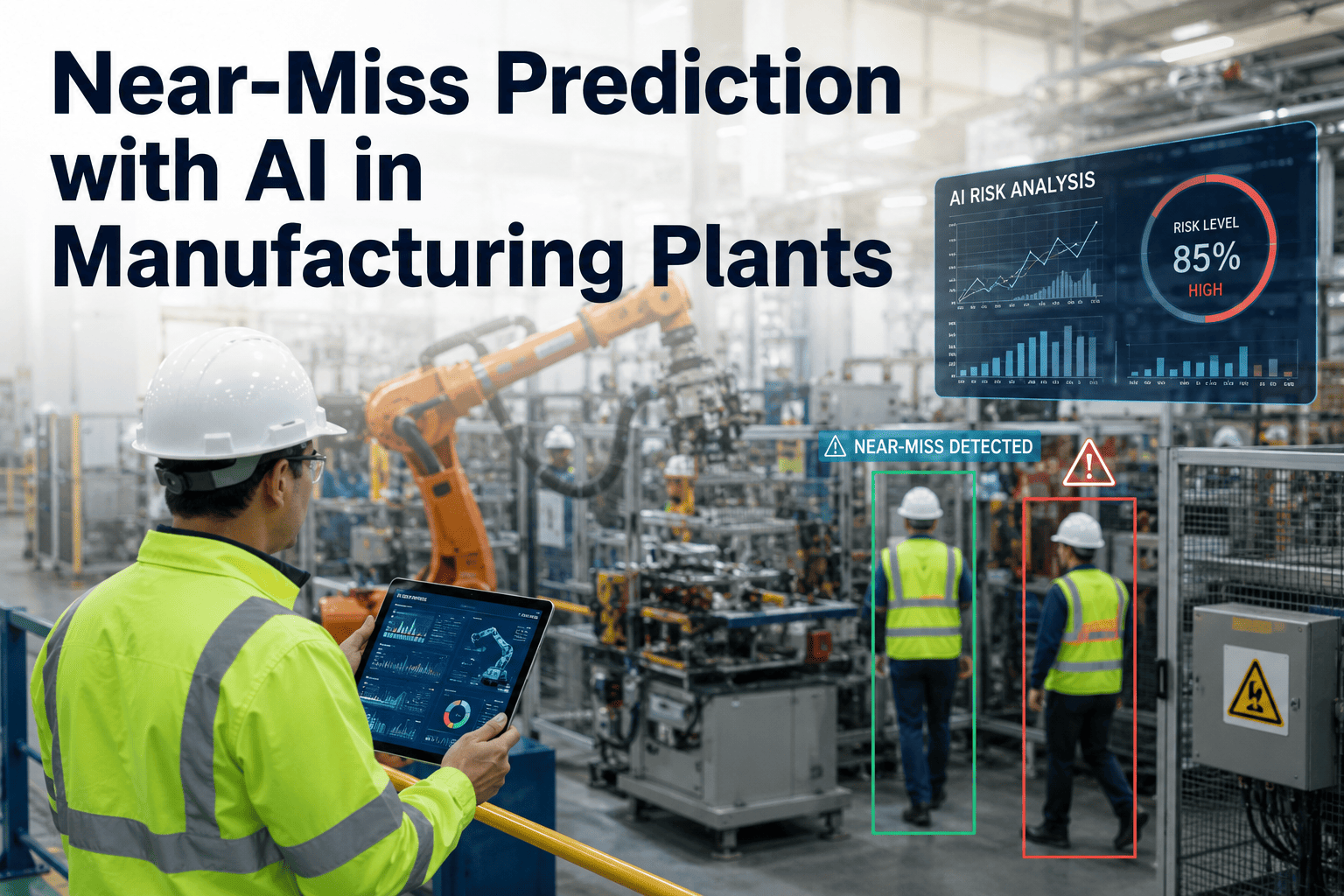
In manufacturing, near-misses are often dismissed as minor events, yet they hold the key to preventing serious incidents. Traditional safety programs rely on lagging indicators like injury rates, which only reveal failures after they occur. However, leading indicators such as near-misses provide proactive insights into potential hazards before harm happens. Unfortunately, most plants lack the tools to analyze near-miss data effectively, leaving critical patterns hidden. Artificial intelligence (AI) changes this by automatically detecting subtle trends and correlations in near-miss reports, equipment logs, and environmental sensors. This allows safety teams to identify high-risk zones, recurring unsafe behaviors, and equipment anomalies days or even weeks before an incident. By shifting from reactive to predictive safety, manufacturers can reduce injuries, lower costs, and foster a culture of continuous improvement. Book a Demo to see how iFactory transforms your near-miss data into actionable foresight.
Stop Reacting, Start Predicting
Unlock the power of near-miss intelligence to prevent incidents before they happen. Transform your safety culture today.
How AI Predicts Near-Misses
Data Aggregation
AI ingests data from multiple sources: near-miss reports, maintenance logs, IoT sensors, and worker feedback. This creates a unified safety dataset that captures both human observations and machine-generated signals.
Pattern Recognition
Machine learning algorithms identify hidden correlations, such as increased near-misses after shift changes or in specific weather conditions. The system learns what normal looks like and flags deviations.
Risk Scoring
Each near-miss is assigned a risk score based on historical outcomes, frequency, and severity potential. High-risk events are automatically escalated to safety managers for immediate investigation.
Predictive Alerts
When patterns indicate a rising probability of an incident, the system sends alerts with recommended actions. This gives teams weeks of lead time to implement preventive measures.
Real-World Impact of AI Near-Miss Analytics
Automotive Plant
Reduced lost-time injuries by 60% in 6 months by analyzing near-miss patterns around robotic workcells. AI identified a recurring unsafe behavior during maintenance lockouts, leading to revised procedures.
Chemical Facility
Detected a 3x increase in near-misses near a storage tank, predicting a potential leak. Preventive maintenance was performed, avoiding a hazardous spill and saving $500K in potential cleanup costs.
Food Processing
AI flagged near-misses related to slippery floors during night shifts. Adjustments to cleaning schedules and floor mat placement reduced slip incidents by 75% within three months.
Key Metrics from AI-Driven Near-Miss Programs
Turn Near-Misses into Your Safest Asset
Empower your safety team with AI-driven foresight. Predict, prevent, and protect with iFactory.
Near-Miss Categories & AI Detection Capabilities
| Category | Example | AI Detection Method | Prediction Lead Time |
|---|---|---|---|
| Slip, Trip, Fall | Wet floor near packing area | Sensor + report pattern analysis | 7-14 days |
| Equipment Near-Miss | Conveyor jam almost caught operator | IoT vibration + historical report | 5-10 days |
| Chemical Exposure | Fume leak during batch process | Air quality sensor + near-miss trend | 3-7 days |
| Human Error | Wrong valve opened during shift change | Behavioral pattern + report frequency | 10-21 days |
| Fire Hazard | Spontaneous combustion near dryer | Thermal imaging + near-miss history | 14-28 days |
Why Traditional Near-Miss Programs Fail
Low Reporting Rates
Workers fear blame or see near-misses as trivial. AI encourages anonymous reporting and automatically captures data from sensors, bypassing human reluctance.
Data Overload
Safety teams drown in spreadsheets. AI prioritizes high-risk near-misses, reducing analysis time by 80% and enabling focus on what matters.
Lack of Correlation
Humans miss complex patterns across shifts, zones, and equipment. AI finds hidden relationships, like near-misses spiking after maintenance work.
Reactive Culture
Without prediction, safety is always behind. AI shifts the paradigm to proactive prevention, reducing incidents and building a resilient workforce.
Checklist: Preparing for AI Near-Miss Prediction
- Establish a centralized near-miss reporting system (digital forms, mobile app)
- Integrate IoT sensors on critical equipment and environmental monitors
- Define risk categories and severity levels for near-miss events
- Train safety team on interpreting AI-generated risk scores
- Set up automated alert workflows for high-risk patterns
- Create a feedback loop to validate AI predictions with ground truth
- Review and update AI models quarterly with new near-miss data
Frequently Asked Questions
What types of data does AI use to predict near-misses?
AI combines structured and unstructured data: near-miss reports (text, categories), equipment sensor readings (vibration, temperature, pressure), environmental sensors (humidity, gas levels), maintenance logs, shift schedules, and even weather data. By fusing these sources, the system identifies multi-factor patterns that humans cannot see. For example, a specific combination of high humidity, a recent maintenance activity, and a particular shift pattern might correlate with increased near-misses. This comprehensive approach ensures no predictive signal is missed. Learn more about data integration by booking a demo with iFactory. Book a Demo to see how we unify your safety data.
How accurate is AI near-miss prediction in real plants?
Accuracy depends on data quality and volume. In well-implemented systems, AI can predict 70-85% of serious incidents weeks in advance, based on near-miss patterns. False positives are minimized by continuous model training and feedback loops. For instance, a leading automotive plant achieved 82% precision in predicting line stoppages due to safety issues. The key is to start with a pilot area, validate predictions, and expand. iFactory's AI models are pre-trained on manufacturing data and adapt to your plant within weeks. Support is available to help you set up and tune your prediction engine.
Will AI replace my safety team?
No, AI augments your safety team by handling data analysis and pattern detection, freeing humans to focus on investigation, training, and corrective actions. The technology acts as a force multiplier, enabling a small team to monitor thousands of data points. Safety directors report that AI reduces time spent on data entry by 60% and increases time for proactive interventions. The human judgment remains critical for interpreting alerts and implementing solutions. Book a Demo to see how iFactory empowers your safety professionals, not replaces them.
What is the ROI of implementing AI near-miss prediction?
ROI comes from multiple streams: reduced workers' compensation claims (average 45% decrease), lower equipment downtime (30% reduction), fewer production stoppages, and improved regulatory compliance. One chemical plant reported a full payback in 8 months after avoiding a major spill. Additionally, insurance premiums often decrease with demonstrable leading indicator programs. The intangible benefits include improved worker morale and safety culture. Support can provide a customized ROI calculator for your facility.
How quickly can we deploy AI near-miss prediction?
Deployment typically takes 4-6 weeks for a pilot plant, including data integration, model training, and team training. iFactory offers a phased approach: start with one production line or area, validate the model, then scale. The platform is cloud-based, so no heavy IT infrastructure is needed. Most safety teams see actionable insights within the first month. Book a Demo to discuss a deployment timeline tailored to your plant.
Predict Incidents Before They Happen
Join leading manufacturers who use iFactory AI to turn near-misses into safety victories. Your plant deserves proactive protection.