A new hire on a stamping line does not become a fully productive operator on day one, or even in week one. Most plants report six to twelve months before a new operator reaches the output and quality level of a tenured worker, and every week inside that gap carries real cost in scrap, rework, and near-miss incidents. Classroom manuals and shadow-the-veteran training were built for a slower labor market, one where operators stayed for decades and turnover was rare. That market is gone. Plants now hire, train, and often retrain the same role multiple times a year, which is why Book a Demo has become the starting point for teams rethinking how training actually works.
Turn Months of Onboarding Into Weeks
iFactory combines VR simulation, AR-guided work instructions, and AI skill scoring to get new operators to full productivity faster and safer.
Why Traditional Training Cannot Keep Pace With Turnover
Manufacturing turnover has stayed stubbornly high across most regions since the pandemic reshaped the labor market, and many plants now onboard a meaningful share of their workforce every single year. Traditional training was never designed for that cadence. It relies on pulling a veteran operator off the line to shadow-train a newcomer, which reduces the veteran's own output while the new hire learns mostly by watching rather than doing. Mistakes made during those first weeks on live equipment are not hypothetical either; they show up as scrapped material, damaged tooling, and in the worst cases, injuries.
The deeper problem is that classroom and shadow training cannot simulate failure safely. A new operator cannot practice recovering from a jam, a misfeed, or an out-of-tolerance part on a real machine without risking the machine, the part, or themselves. That means the first time they encounter those situations is often the first time it actually happens on the job, under real production pressure.
There is also a cultural cost to shadow training that rarely gets discussed openly. Veteran operators asked to train newcomers are usually doing it on top of their own workload, with no formal instructional preparation and little incentive to slow down and explain the reasoning behind a step rather than just demonstrate it. That produces trainers who are technically skilled but not necessarily good teachers, and new hires who can mimic a procedure without fully understanding why it exists, which becomes a problem the first time real conditions deviate from what they were shown.
How VR, AR, and AI Work Together
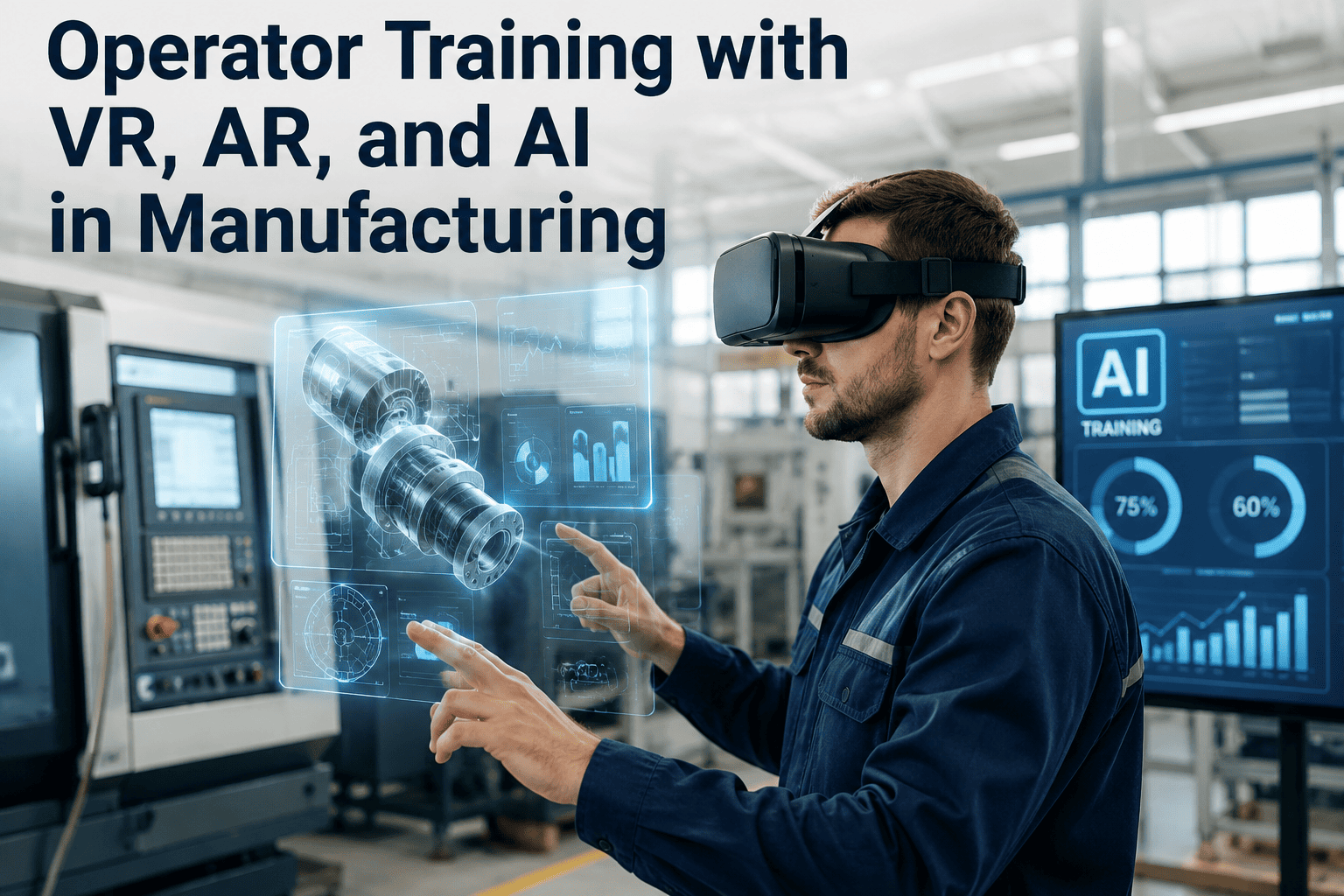
These three technologies solve different parts of the same problem, and the plants seeing the biggest gains use them as one connected training pipeline rather than three separate tools.
Virtual Reality for Repetition Without Risk
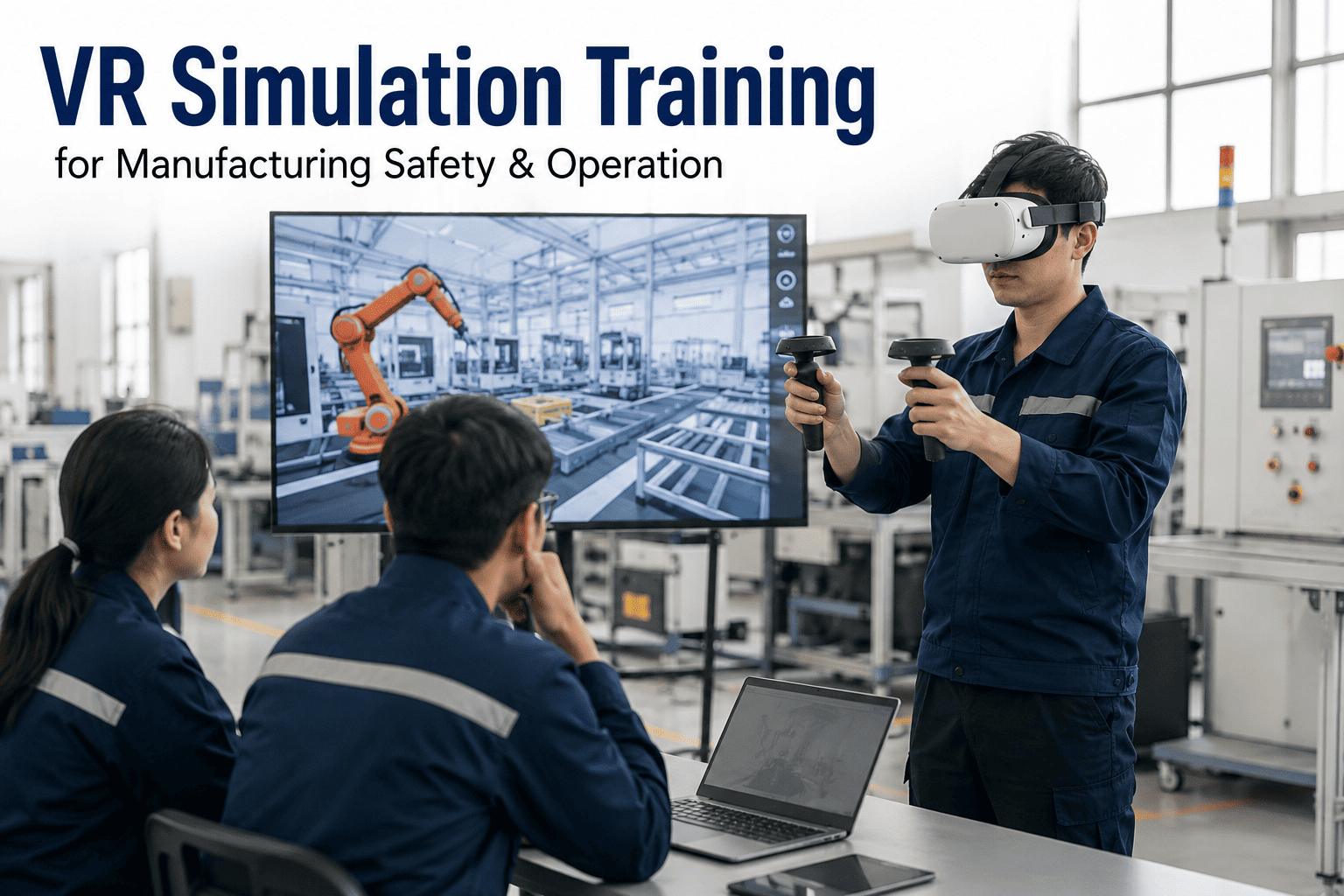
New operators put on a headset and practice full machine cycles, changeovers, and fault recovery on a virtual replica of the actual equipment, repeating scenarios as many times as needed with zero risk to product, tooling, or themselves.
Augmented Reality for On-the-Job Guidance
Once on the physical line, AR overlays step-by-step instructions directly onto the machine through a headset or tablet, showing exactly where to look, what to check, and what the correct state looks like before moving to the next step.
AI for Objective Skill Scoring
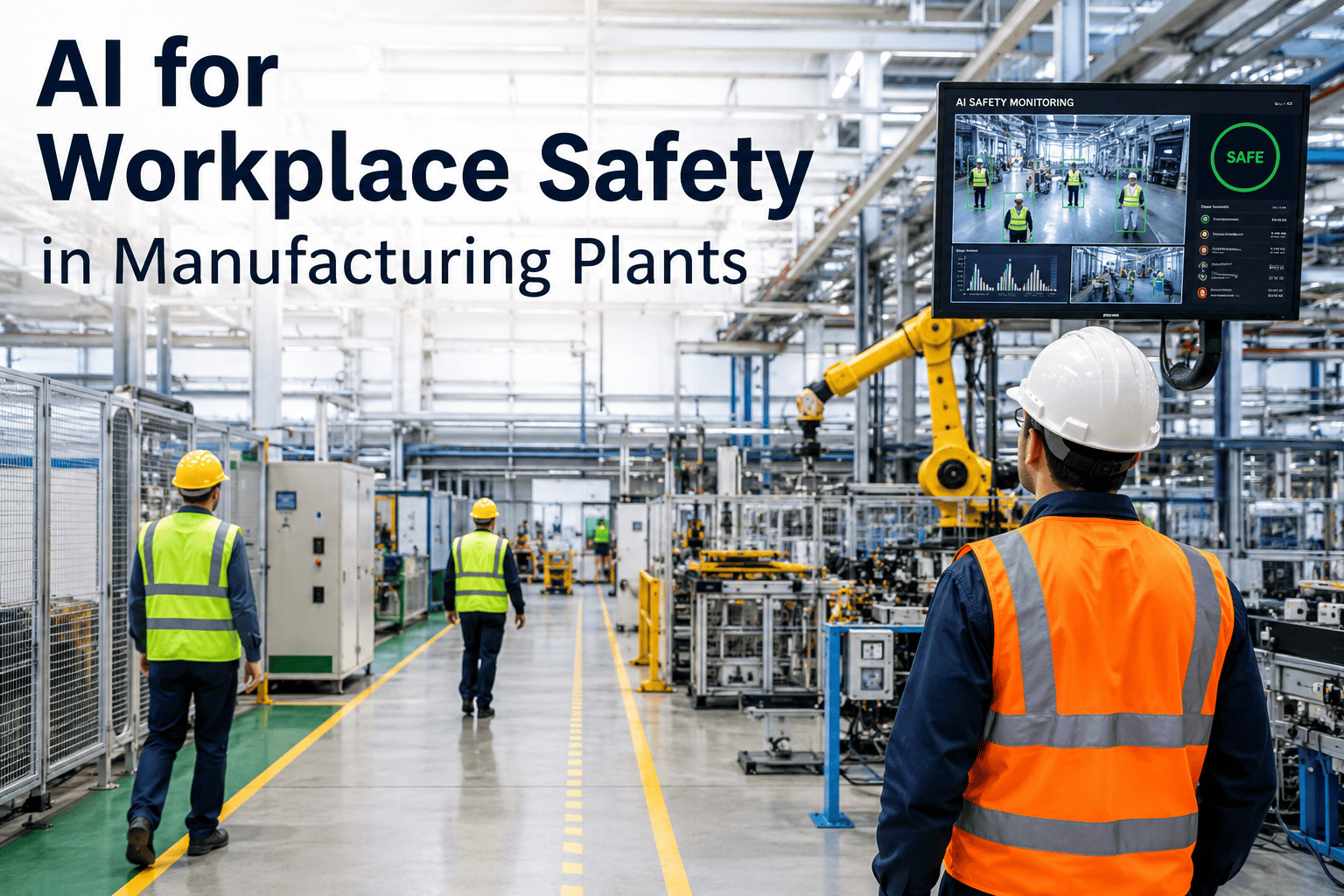
AI tracks every simulated and guided session, scoring speed, accuracy, and error recovery against a competency baseline so supervisors know exactly when an operator is ready to run independently, instead of relying on a gut-feel sign-off.
First-Year Incidents Drop When Practice Happens Before Production
A large share of recordable incidents involving new operators happen within the first ninety days on a role, concentrated around unfamiliar failure modes: a jam cleared the wrong way, a guard bypassed under pressure, a lockout step skipped because it was never practiced under realistic conditions. VR training lets operators experience those exact failure modes repeatedly in a setting where a mistake produces a lesson instead of an injury report.
How a Rollout Typically Progresses
Plants rarely deploy immersive training across every role on day one, and they shouldn't. The programs that stick tend to start with a single high-turnover or high-risk role, prove out the training loop end to end, and only then expand scenario by scenario to additional stations and shifts. That staged approach keeps the initial investment small while still delivering a visible, measurable result the rest of the organization can see and buy into.
The first phase usually focuses on building an accurate VR replica of the target station, mapping the AR-guided sequence for the physical task, and setting competency thresholds with input from your most experienced operators and trainers. That last step matters more than it might seem: the AI scoring system is only as good as the benchmark it's measured against, and involving veteran operators in setting that benchmark tends to produce far better buy-in from the floor than a threshold imposed from outside.
Phase One: Pilot Role
Build the VR scenario and AR guide set for a single high-priority role, validate against real trainer judgment before going live.
Phase Two: Measured Rollout
Track competency scores and time-to-productivity for the pilot cohort against historical baselines to confirm the expected gains.
Phase Three: Expansion
Extend the scenario library to additional roles and shifts using lessons learned from the pilot to speed up each new build.
See the Training Loop From Headset to Shop Floor
A live walkthrough shows a full VR-to-AR-to-AI training cycle on a role similar to your own line, including how competency scores flow into your existing training records.
Competency Scoring Replaces the Sign-Off Sheet
Most plants still qualify new operators using a paper or spreadsheet checklist that a trainer signs after a subjective judgment call. That approach is inconsistent between trainers, hard to audit, and leaves no record of how an operator actually performed, only that someone approved them. AI-driven training platforms replace that with a running competency score built from every VR repetition and every AR-guided task, covering cycle time, error rate, and recovery speed against role-specific benchmarks.
| Metric Tracked | Traditional Sign-Off | AI Competency Scoring |
|---|---|---|
| Basis for readiness decision | Trainer judgment | Objective performance data |
| Consistency across trainers | Varies widely | Standardized benchmarks |
| Record of skill gaps | Rarely documented | Logged per operator, per task |
| Retraining trigger | After an incident | Before performance drifts |
| Audit trail | Paper checklist | Digital history per role |
Roles Where Immersive Training Pays Off Fastest
Not every role needs a headset, but roles with high-consequence failure modes, complex changeovers, or steep manual dexterity requirements see the fastest return on immersive training investment.
CNC and Machining Operators
Practicing setup, tool changes, and out-of-tolerance recovery in VR before touching a live spindle reduces scrapped stock during the learning curve.
Assembly and Line Operators
AR-guided torque sequences and part orientation checks cut first-pass defect rates during the first weeks on a new assembly station.
Press and Stamping Operators
Jam clearing and die change procedures carry real injury risk; rehearsing them in VR builds muscle memory without the exposure.
Maintenance Technicians
AR walkthroughs of unfamiliar equipment shorten diagnostic time on machines a technician has never personally serviced before.
What a Slow Ramp Actually Costs a Plant
The cost of slow onboarding rarely shows up as a single line item, which is part of why it stays underpriced in most budget conversations. It shows up instead as elevated scrap during the first weeks on a station, as overtime paid to cover the output a new operator has not yet reached, and as the opportunity cost of a veteran operator spending hours shadow-training instead of running their own station at full rate. Add those together across every new hire in a year, and the total is usually far larger than the cost of the training technology itself.
There is also a retention dimension that is easy to overlook. Operators who feel under-prepared in their first weeks are more likely to leave within the first year, which restarts the entire onboarding cost cycle with a replacement hire. Structured, confidence-building training does double duty: it shortens the ramp and it reduces the odds that the ramp has to happen twice for the same open position.
Operator Training With VR, AR, and AI — Common Questions
Do operators need prior experience with VR headsets to use this kind of training?
No prior experience is expected or required. Onboarding for the headset itself typically takes under fifteen minutes, and the training scenarios are built around the same controls and gestures operators already use on the physical equipment. Most first-time users complete their first full simulation within the same session. Teams curious about the learning curve for their specific workforce can Book a Demo to see a live session.
How closely does the VR simulation match our actual equipment?
Simulations are built from the specific machine models, control layouts, and failure modes present on your line rather than a generic template, so the controls, panel layout, and fault sequences match what operators will actually encounter. This is what allows the muscle memory built in VR to transfer directly to the physical machine rather than requiring relearning once training moves to the floor.
Does AR-guided work replace the need for a supervisor during onboarding?
AR guidance reduces how much direct supervision a new operator needs for routine steps, but it does not remove the supervisor from the loop entirely, particularly for judgment calls outside the guided sequence. Most plants use it to free up supervisors from repeating the same basic instructions and instead focus their attention on higher-risk moments and exception handling.
How is the AI competency score calculated?
The score combines cycle time, error rate, and fault-recovery speed measured across VR repetitions and AR-guided live tasks, benchmarked against role-specific thresholds set with your operations team. It updates as the operator progresses, giving supervisors a running view rather than a single pass or fail moment, and the underlying data is available for review through iFactory Support.
How long does it take to stand up a training program for a new role?
Building a VR scenario and AR guide set for a new role typically takes two to four weeks, covering equipment modeling, procedure mapping, and a validation pass with an experienced operator on your team. Standard roles with common equipment types can move faster using existing scenario libraries as a starting point.
Get New Operators to Full Speed in Weeks, Not Months
See how a connected VR, AR, and AI training pipeline shortens onboarding and reduces first-year incidents on a role like yours.