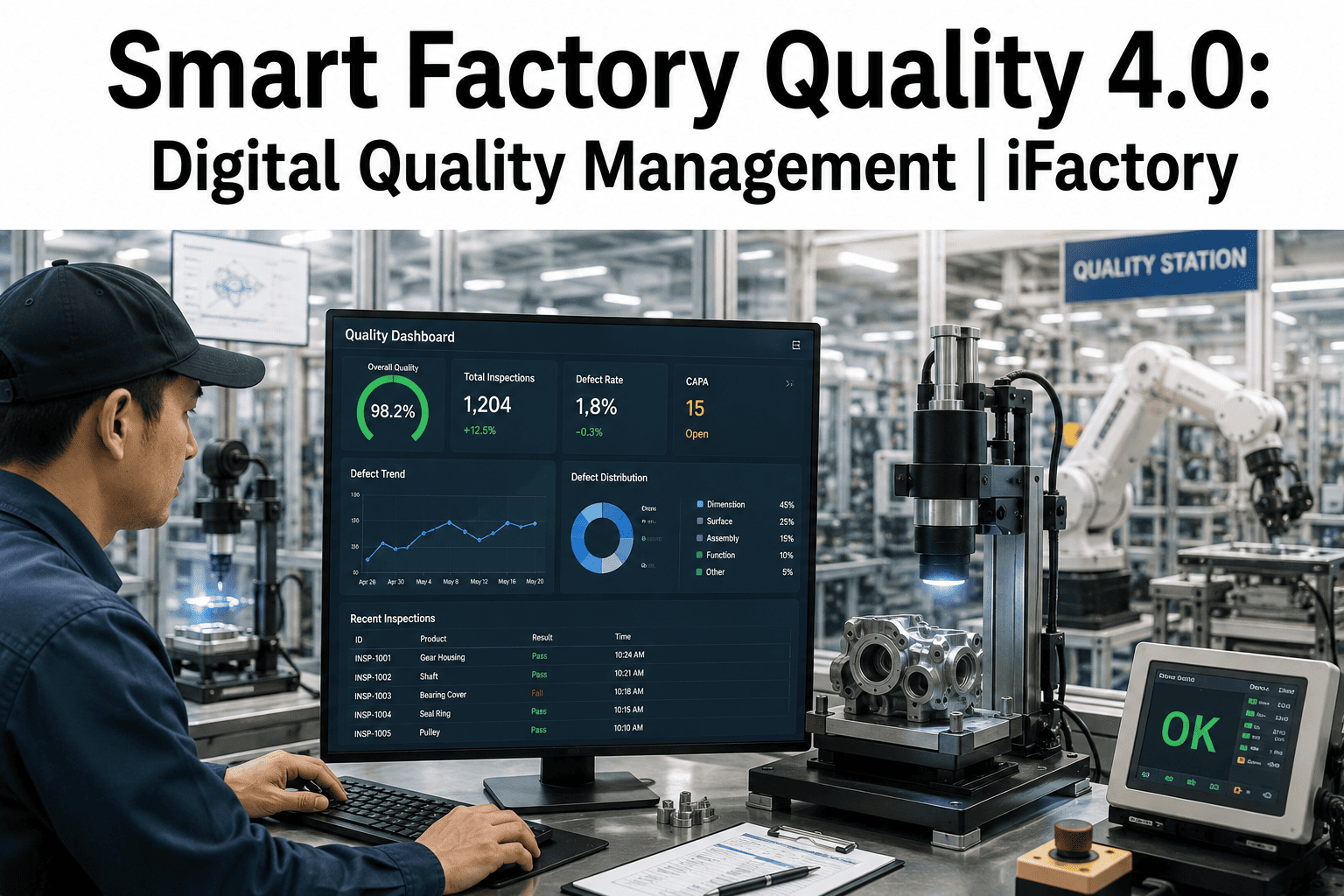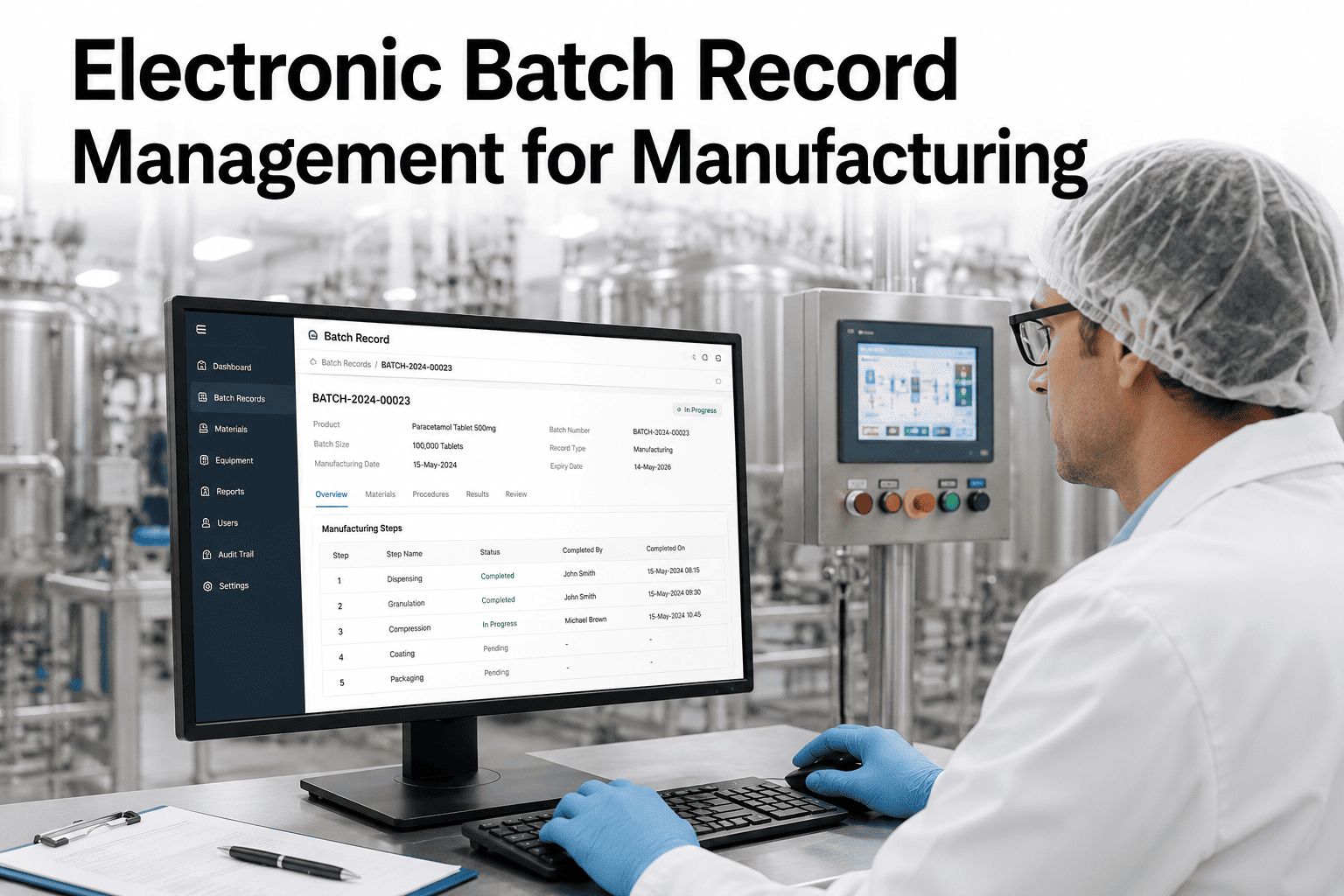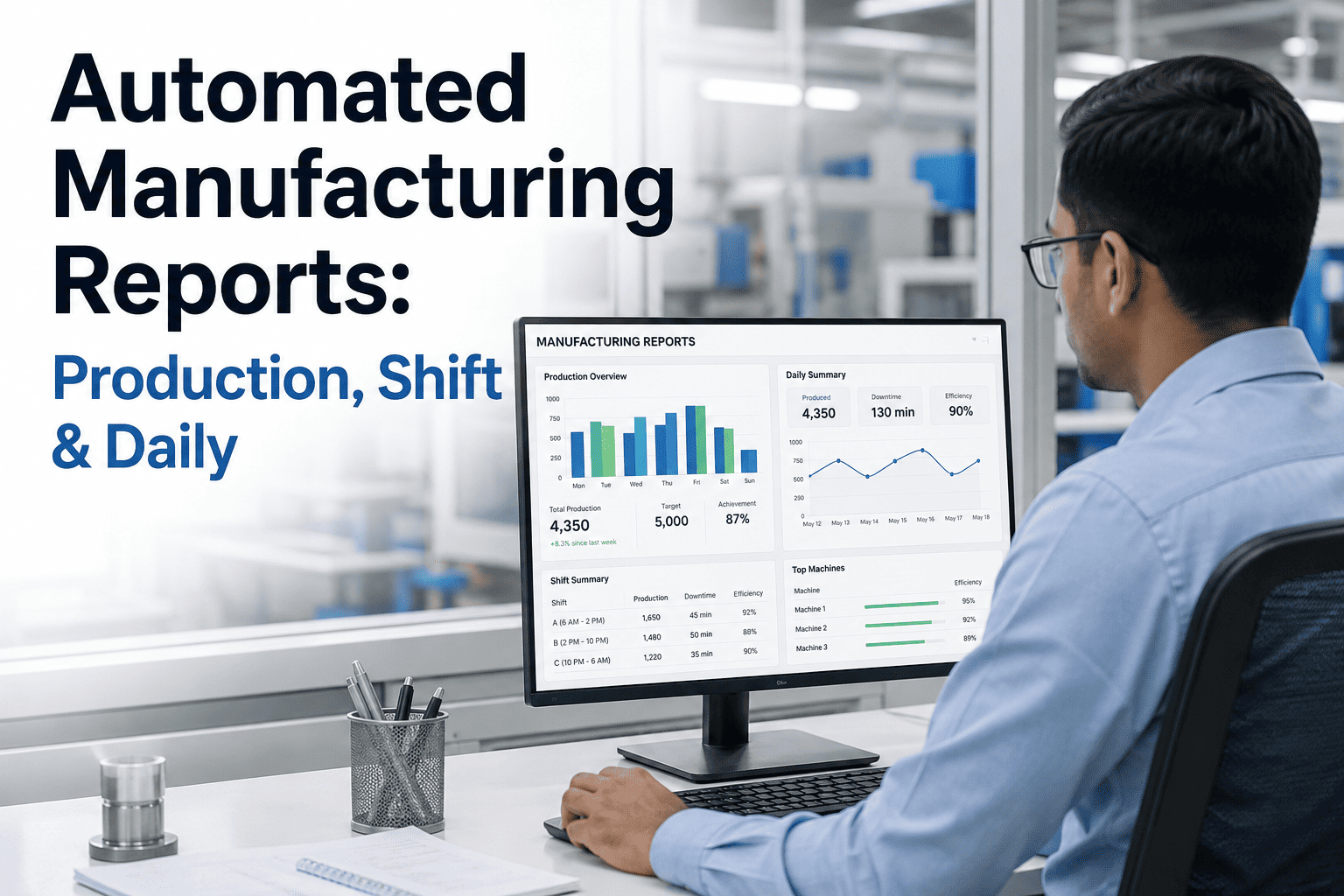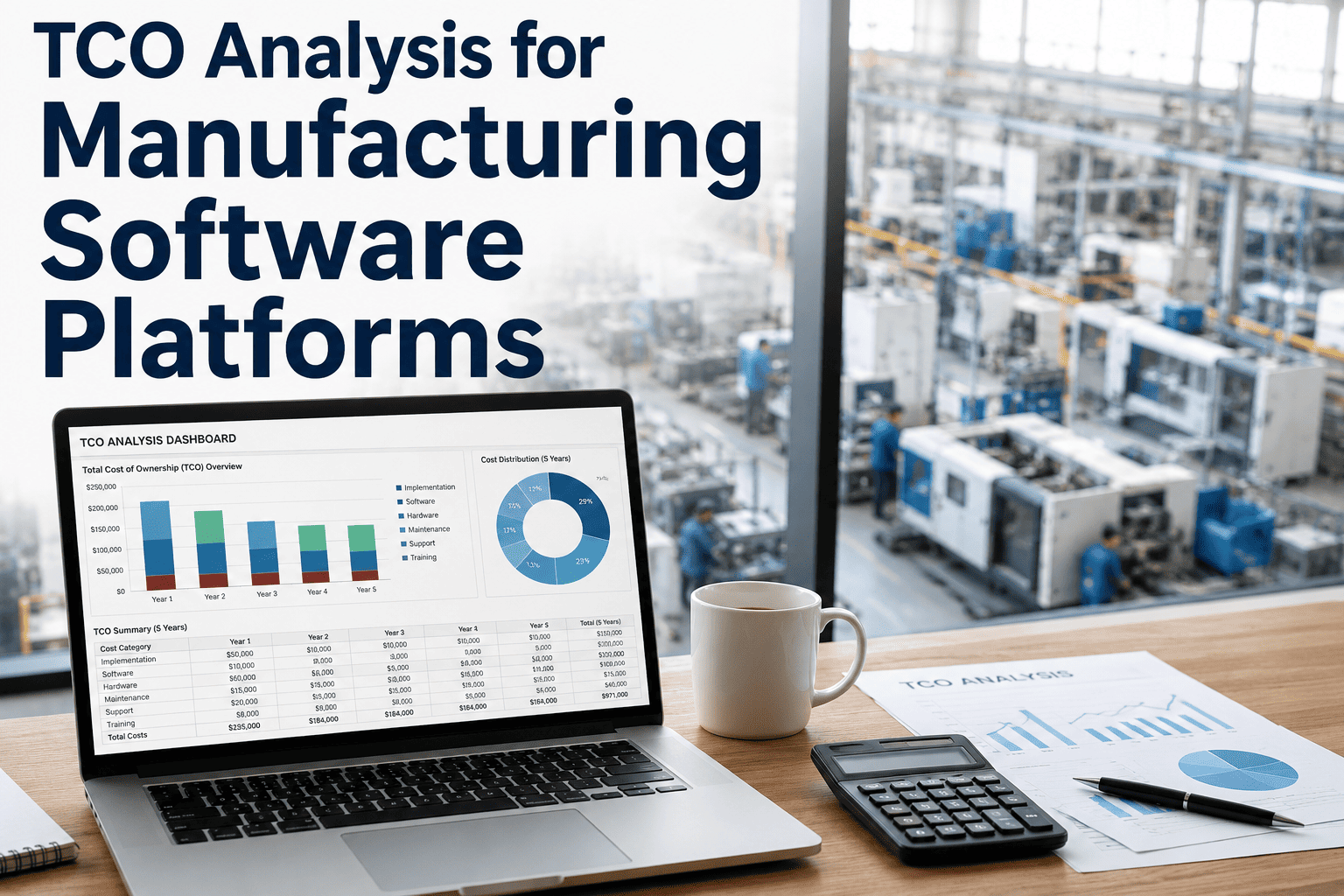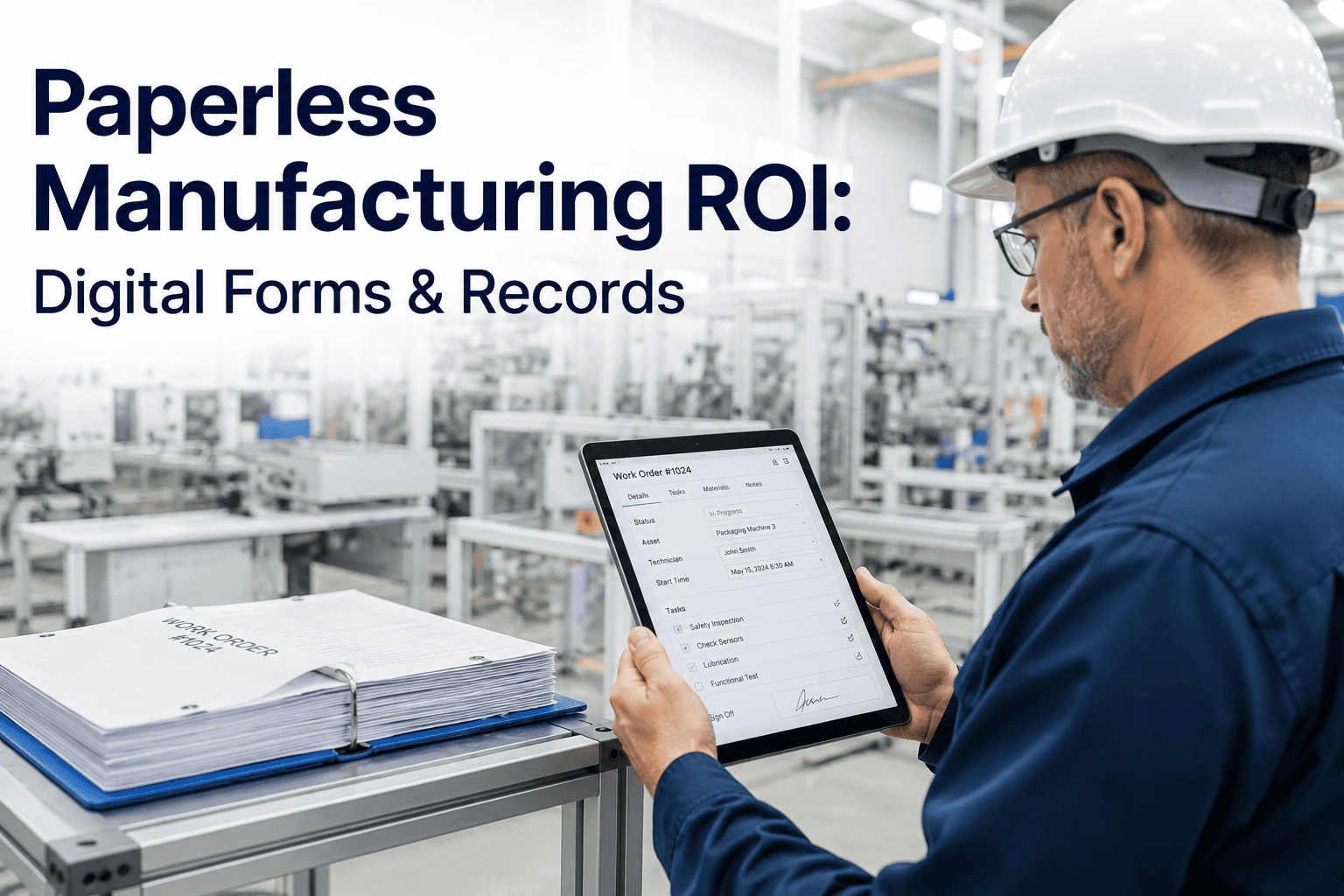
Walk any plant floor and you will still find clipboards hanging off machine guards, three-ring binders stacked next to a quality station, and a shift log that gets photographed on someone's phone before it disappears into a filing cabinet nobody reopens. Paper feels free because nobody invoices a plant for it, but the real cost is buried in the hours spent filling it out, filing it, searching for it during an audit, and re-keying it into a spreadsheet so anyone can actually use the data. iFactory's digital forms and records platform replaces that paper trail with structured data that's usable the moment it's captured.
The real cost of paper isn't the paper
Digital forms, electronic records, and automated reporting eliminate the hours spent writing, filing, searching for, and re-keying paper data, typically saving a mid-size plant $100,000 to $400,000 a year once every operator touchpoint is counted.
Paper costs show up in five places nobody tracks together
No single department owns the cost of paper, which is precisely why it survives budget reviews year after year. Quality owns the checksheets, maintenance owns the work order pads, operations owns the shift logs, and each of them absorbs a small, invisible tax in labor hours that never gets added up into one number a plant manager would actually act on. Once you do add it up, the case for going digital usually makes itself.
- Operator fills form by hand, legibility varies
- Form walked to a supervisor or filing cabinet
- Data re-keyed into a spreadsheet, if at all
- Errors caught days later, if caught at all
- Audit prep means searching binders manually
- Operator completes structured form on a tablet
- Data lands in the system the instant it's submitted
- No re-keying, no transcription error
- Missing fields and out-of-range values flagged live
- Audit prep is a searchable report, generated in minutes
Four categories that account for most of the savings
Data Entry Labor
Someone, somewhere, is re-typing a paper form into a spreadsheet or system of record. That labor disappears entirely when the form is digital from the first entry.
Search & Retrieval
Pulling a specific work order or inspection record from a filing cabinet or shared drive can take twenty minutes. A search bar returns it in seconds.
Error Correction
Illegible handwriting, missed fields, and transcription mistakes all require someone to chase down the original operator days later to clarify what happened.
Audit & Compliance Prep
Preparing a binder of records for a customer or regulatory audit can consume days of a quality manager's time that a digital report generates in minutes.
Most plants underestimate their paper cost by half because nobody adds up the search, re-entry, and correction time separately. Book a demo and we'll help you calculate your actual number.
What a digitization rollout actually looks like
Form audit and prioritization
Every active paper form gets catalogued and ranked by volume and error rate, so the first forms digitized are the ones generating the most hidden labor cost.
Digital form build and field testing
Top-priority forms are rebuilt as structured digital forms with validation rules, then tested with real operators on the actual floor conditions they'll use.
Parallel run
Operators use the digital form alongside the paper original for a short window, confirming data quality before paper is retired entirely.
Paper retirement and reporting go-live
Automated reports replace manual roll-ups, and the next batch of forms enters the queue for digitization.
The savings that don't show up in a labor calculation
Labor hours are the easiest savings to put a dollar figure on, but they're not the only ones that matter. Digital records also close the gap between when a problem happens and when someone with authority to fix it finds out about it. A paper shift log describing a recurring machine fault might not get read by a maintenance planner for two or three days; a digital form can route that same observation to the right person's queue within minutes, shrinking the time between symptom and response.
There's also a compliance dimension that's easy to underweight until an audit is already underway. Regulated industries and quality-conscious customers increasingly expect traceable, timestamped records rather than handwritten ones, and plants that can produce that documentation on demand tend to move through supplier audits and certification renewals with far less friction than those still relying on paper archives.
What plants report after going paperless
Why forms are the right entry point for digitization
Digital forms are one of the lowest-risk digital transformation pilots because they don't touch a physical process at all, they only change how information about that process gets captured. There's no new equipment on the plant floor and no process change for operators beyond swapping a clipboard for a tablet, which means adoption resistance tends to be lower than for pilots that change how a machine actually runs.
It's also a fast way to build organizational trust in digital tools ahead of larger initiatives. A maintenance team that sees its own work order backlog shrink because digital forms eliminated a re-entry step becomes a much easier audience for the next conversation about predictive maintenance or AI vision inspection, because they've already experienced a digital tool making their day genuinely easier.
Not all paper is equally expensive
A shift handoff log filled out once per shift carries a very different cost profile than a quality checksheet completed forty times a day, and treating both the same in a digitization plan wastes early momentum on low-impact forms. Ranking every active paper form by how often it's completed, how many people touch it before it's filed, and how often someone has to search for it later gives a much clearer priority order than digitizing whatever form happens to be easiest to convert first.
Quality Checksheets
High frequency, high error cost, and directly tied to customer complaints when a defect traces back to a missed check.
Work Order Forms
Constantly searched for by maintenance planners, and frequently re-keyed into a CMMS after the fact.
Shift Handoff Logs
Lower frequency but high consequence when a critical observation doesn't make it to the next shift in time.
Safety & Compliance Forms
Often the first thing an auditor asks for, and the most damaging to have missing or incomplete.
The rollout succeeds or stalls on the floor, not in the office
A digital form that operations leadership loves but operators quietly avoid filling out accurately delivers none of the promised savings, it just moves the same data quality problem from paper to a tablet. The plants that see the fastest adoption involve operators in the form design itself, asking which fields are actually useful versus which exist only because "we've always collected that," and trimming forms down rather than digitizing every field from the paper version by default.
Rollout timing matters as much as design. Introducing a new digital form during a high-pressure production period, right before a model changeover or a peak season, almost guarantees resistance regardless of how well the form itself is built. Scheduling the parallel run and go-live during a comparatively quiet production window gives operators room to ask questions and build confidence before the form becomes the only record of their work.
Paperless manufacturing, explained plainly
Find out what your paper is really costing you
iFactory helps plants calculate their true paper cost across labor, search time, and audit prep, then shows a clear path to eliminating it.