Most maintenance strategies are built on assumption rather than analysis — time-based intervals set by manufacturer defaults, preventive tasks copied from the last plant someone worked at, and a general sense that more maintenance is always safer than less. Reliability Centered Maintenance replaces that guesswork with a structured question: for each specific failure mode on each specific asset, what is the right maintenance task, if any task is justified at all. The answer is often surprising — some components genuinely need no scheduled maintenance, while others need a fundamentally different task than what the current program assigns. Reliability engineers building a defensible maintenance strategy can Book a Demo to see how iFactory supports RCM analysis with real equipment failure data.
The Problem With Maintenance Programs Built on Tradition
Ask most maintenance departments why a particular preventive task runs every 30 days, and the honest answer is often "that's what it's always been." Original equipment manufacturer recommendations, inherited from a previous plant configuration, get applied uniformly regardless of actual operating conditions or failure history. The result is a maintenance program that is simultaneously over-maintaining low-risk components — burning labor hours and introducing maintenance-induced failures through unnecessary intervention — and under-maintaining genuinely critical failure modes that don't fit neatly into a generic time-based schedule. RCM exists specifically to correct this mismatch by forcing every task to justify itself against the actual failure mode it addresses.
The RCM Decision Logic: Seven Questions Every Analysis Must Answer
RCM is built around a structured sequence of questions applied to every significant failure mode of every asset function, rather than a general review of maintenance practices. The logic forces the analysis team to work from function outward — what the asset is supposed to do, how it can fail to do that, what causes each failure, and what the consequence of each failure actually is — before ever discussing what maintenance task might apply. Skipping straight to task selection without this functional grounding is the most common way RCM implementations drift back into the same tradition-based thinking the methodology was designed to replace.
Failure Consequence Categories: Why Consequence Drives Everything
The single most important branching decision in RCM is the failure consequence category, because it determines how aggressively a task needs to be pursued and, in some cases, whether a task is mandatory regardless of cost. A failure mode with safety consequences may justify a task that would never be economically defensible for a purely operational failure. Sorting every failure mode into the correct consequence category before evaluating tasks keeps the analysis honest and prevents low-consequence failures from consuming the same level of scrutiny and resources as safety-critical ones.
Safety and Environmental Consequences
The failure could injure or kill someone, or breach an environmental regulation. Tasks addressing these failures are mandatory if technically feasible, regardless of cost, since risk reduction takes priority over economic optimization.
Operational Consequences
The failure affects production output, product quality, or operating cost, but carries no safety or environmental risk. Task selection here is driven by cost-effectiveness — the task must cost less than the failure it prevents over time.
Non-Operational Consequences
The failure has no direct impact on safety or production, only the cost of repair itself. These failure modes are the most likely candidates for a run-to-failure default strategy once proactive task options are evaluated and rejected.
Hidden Failure Consequences
The failure is not evident to the operating crew during normal duties — typically a protective device that has already failed silently. These require scheduled failure-finding tasks specifically because nobody would otherwise notice until a demand event exposes the failure.
Task Selection: Matching the Maintenance Task to the Failure Pattern
Once a failure mode's consequence category is established, RCM evaluates specific task types against technical feasibility and cost-effectiveness rather than defaulting to a single maintenance philosophy. A failure mode that shows a clear, detectable degradation pattern before functional failure is a strong candidate for condition-based monitoring. A failure mode with a well-understood age-reliability relationship may justify a scheduled restoration or replacement. And a failure mode with no detectable warning and no predictable age pattern may have no technically feasible proactive task at all — a conclusion many traditional maintenance programs never reach because they assume some task must exist.
Technical feasibility is evaluated before cost, and the order matters. A task is only worth costing out if it can actually reduce the probability of failure, restore the component's original condition, or detect the onset of failure with enough warning to act — proving feasibility first prevents the analysis from wasting time pricing out tasks that would not solve the reliability problem even if the budget existed. Only after a task clears the feasibility bar does the discussion turn to whether its cost is justified by the consequence it prevents, which is where operational and non-operational failure modes diverge sharply from safety and hidden-failure modes in how the decision gets made.
| Task Type | When Technically Feasible | Example |
|---|---|---|
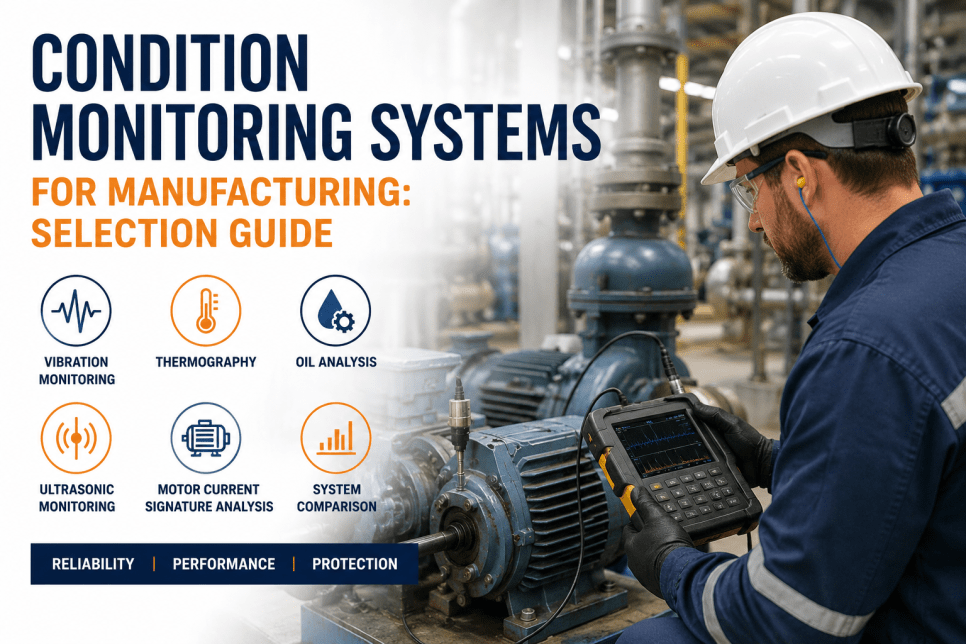
| Condition-Based (Predictive) | Detectable degradation pattern exists before failure | Vibration monitoring on rotating equipment bearings |
| Scheduled Restoration | Clear age-reliability relationship, restoration is effective | Periodic overhaul of a gearbox at defined running hours |
| Scheduled Discard | Component has a known, consistent useful life | Replacing filters or seals at fixed intervals |
| Failure-Finding | Failure is hidden, protective function must be verified | Testing a pressure relief valve on a defined schedule |
| Run-to-Failure (Default) | No proactive task is feasible or cost-effective | Low-cost, low-consequence component replacement on failure |
FMEA: The Analytical Engine Behind RCM
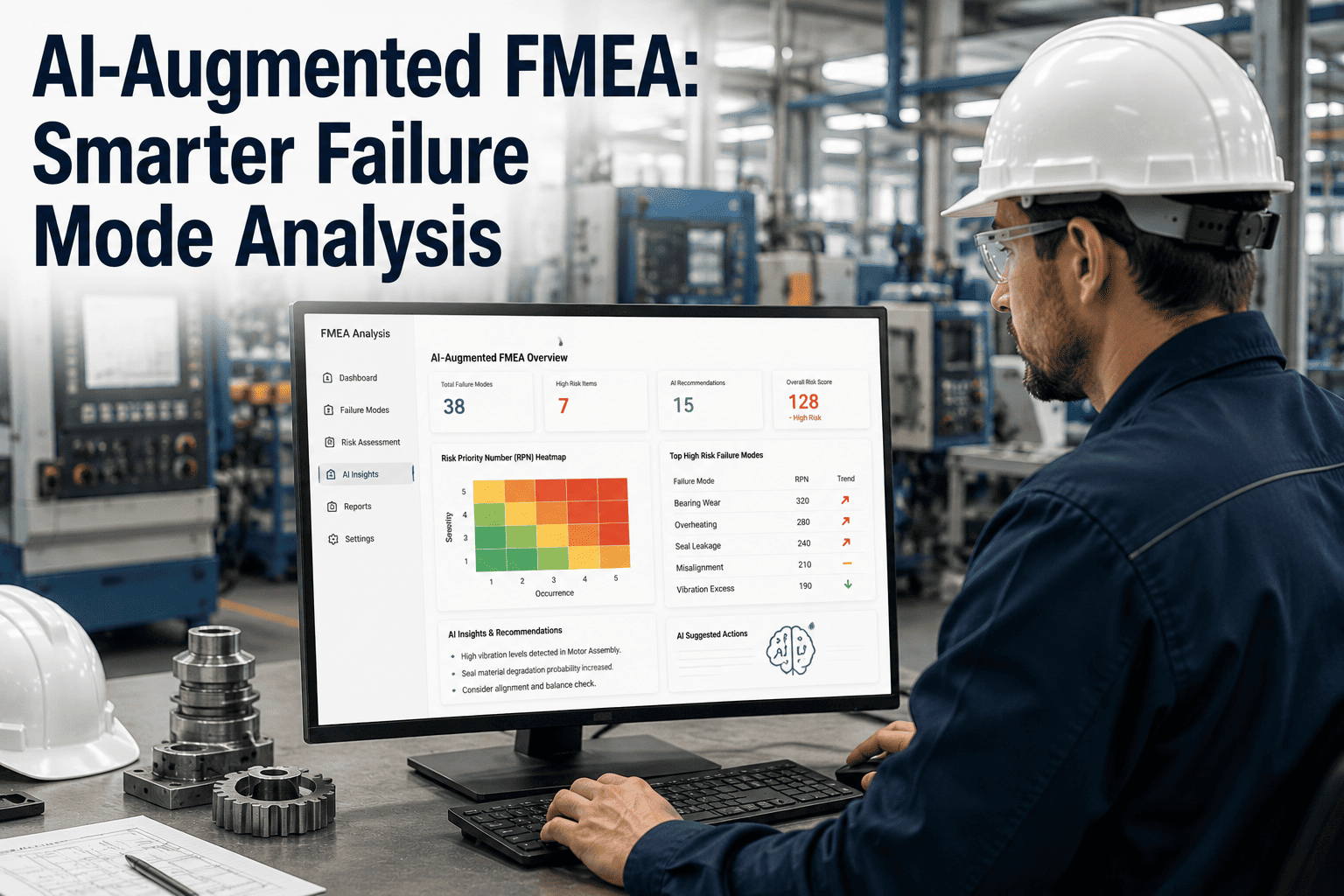
Failure Modes and Effects Analysis is the structured worksheet that carries an RCM analysis through questions three, four, and five — systematically identifying failure modes, their effects, and their severity for every function of an asset. A well-executed FMEA does not rely on a single engineer's memory of past failures; it draws on work order history, operator knowledge, OEM documentation, and near-miss records to build a comprehensive failure mode list, then scores each mode for severity, occurrence likelihood, and detectability to prioritize which failure modes deserve the deepest task-selection scrutiny. The quality of this input data determines the quality of the entire downstream analysis, which is why plants with clean, structured work order history consistently produce more defensible FMEA results than plants relying primarily on institutional memory and anecdote.
Severity
How serious is the consequence if this failure mode occurs — ranging from minor inconvenience to safety incident or major production loss.
Occurrence
How likely is this failure mode to happen, based on historical frequency, component design, and operating environment stress factors.
Detectability
How likely is it that existing controls or monitoring would catch this failure mode before it produces its full consequence.
The product of these three scores, often called a risk priority number, ranks failure modes for attention but should never be treated as the sole basis for task selection — a high safety severity score demands action regardless of how the combined number ranks against other failure modes. FMEA provides the structured evidence base; the RCM decision logic still governs how that evidence translates into an actual maintenance task.
Common Pitfalls That Undermine RCM Implementation
RCM's structure is precisely what makes it effective, and it is also what makes it easy to implement badly — a team that skips steps or treats the seven questions as a formality rather than a genuine analytical discipline ends up with a document that looks like RCM but functions like the tradition-based program it was meant to replace. Recognizing the common failure patterns in RCM implementation is as important as understanding the methodology itself, since most plants that abandon RCM do so not because the framework failed but because the execution drifted from its core discipline.
Jumping Straight to Task Selection
Teams under time pressure often skip the functional failure and consequence analysis and go directly to proposing maintenance tasks based on intuition, which reintroduces the exact bias RCM was designed to eliminate. The discipline of working through each question in sequence is what produces defensible, evidence-based conclusions rather than a documented version of existing assumptions.
Treating Consequence Categories as Optional
Skipping the consequence classification step and moving straight to cost-effectiveness discussions can result in safety-critical failure modes being evaluated on the same economic basis as low-consequence ones, undermining the entire risk-based logic that makes RCM different from a purely cost-driven maintenance review.
Analysis Without Implementation Follow-Through
A completed RCM analysis that never translates into updated CMMS preventive maintenance schedules delivers no operational value regardless of how rigorous the underlying analysis was. The task selection output must be converted into actual scheduled work orders, condition monitoring routes, and failure-finding inspections to realize any benefit.
Treating the Analysis as a One-Time Project
Equipment modifications, changing operating conditions, and accumulating failure history all change the correct answers to RCM's questions over time. Plants that file the analysis away after the initial workshop and never revisit it lose the ability to refine task selection as better evidence becomes available.
The Financial Case for RCM: Where the Savings Actually Come From
RCM's cost benefit is often misunderstood as simply "doing less maintenance," which undersells the actual mechanism. The savings come from three distinct sources operating simultaneously: eliminating tasks that provide no measurable reliability benefit, replacing inefficient tasks with more effective alternatives, and reducing maintenance-induced failures caused by unnecessary intervention on equipment that didn't need it. A gearbox opened for inspection on an arbitrary time-based schedule, for example, carries real risk of introducing contamination or reassembly errors that a condition-based monitoring approach — checking oil analysis and vibration trends without physically disturbing the component — avoids entirely while often catching degradation earlier. The same logic applies broadly across rotating and static equipment alike: any task that requires opening, disassembling, or otherwise disturbing a component carries an inherent risk that a well-designed condition-based or failure-finding alternative simply does not.
These three sources compound over time as the analysis matures and gets applied across a broader portion of the asset base, which is why the strongest financial results from RCM programs typically appear two to three years into implementation rather than in the first few months. Plants expecting an immediate dramatic cost reduction from a single analysis cycle often underestimate the value while plants that sustain the discipline across their critical asset population see the full compounding benefit, particularly as the accumulated failure history from earlier analysis cycles feeds back into refining task selection on assets analyzed years earlier.
Running an RCM Analysis: Facilitation and Team Structure
RCM analysis is a facilitated group process, not a document one engineer produces alone at a desk. The strength of the methodology comes from combining perspectives that no single role holds completely — operators who understand how the equipment actually behaves day to day, maintenance technicians who know the real failure history beyond what got documented, and engineers who understand the design intent and physical failure mechanisms. A facilitator trained in the seven-question logic keeps the group from skipping steps or drifting into task selection before failure modes and consequences are properly established. Sessions typically run two to four hours at a time, since the level of detailed discussion required for each failure mode is difficult to sustain productively beyond that window without participant fatigue degrading the quality of input and analytical rigor.
Facilitator
Guides the group through the structured question sequence, keeps discussion disciplined, and ensures conclusions are documented with the reasoning behind them for future audit and review.
Operations Representative
Provides insight into how the asset actually runs, what symptoms precede problems, and what operational consequences a given failure realistically produces on the floor.
Maintenance Technician
Brings hands-on failure history and practical knowledge of what repair work actually involves, which grounds task feasibility discussions in real-world constraints.
Reliability Engineer
Contributes technical understanding of failure mechanisms, statistical failure patterns, and how proposed tasks compare against condition monitoring and predictive maintenance capability.
Frequently Asked Questions: Reliability Centered Maintenance
How long does a full RCM analysis take for a typical production line?
A rigorous RCM analysis on a moderately complex production line, covering all critical assets and their significant failure modes, typically takes several weeks of facilitated sessions rather than a single workshop, since the seven-question logic applied thoroughly to dozens of failure modes per asset requires sustained group time. Many facilities use a streamlined variant for lower-criticality assets and reserve the full classical RCM process for the highest-consequence equipment, balancing analytical rigor against the practical time investment available. Teams scoping an RCM rollout can Book a Demo to discuss a phased analysis approach.
Do we need to run RCM on every asset in the plant?
Full classical RCM is resource-intensive enough that most plants apply it selectively, prioritizing assets by criticality — safety risk, production impact, and repair cost — rather than attempting comprehensive coverage on day one. Lower-criticality assets often benefit more from a lighter-weight streamlined RCM process or simple failure history review, reserving the full seven-question rigor for the equipment where getting the maintenance strategy wrong carries the highest consequence.
How does RCM handle equipment with limited failure history data?
New or recently modified equipment without extensive plant-specific failure history relies more heavily on OEM failure mode documentation, industry failure databases, and engineering judgment about the physical failure mechanisms involved, while flagging these failure modes for closer monitoring once the asset accumulates operating history. As condition monitoring and work order data build up over the equipment's operating life, the RCM analysis should be revisited and refined using actual plant-specific evidence rather than remaining static on initial assumptions. Contact iFactory Support for guidance on building failure history for newer assets.
What is the difference between RCM and a standard preventive maintenance program?
Standard preventive maintenance programs typically apply uniform time-based tasks derived from manufacturer defaults or general best practice, without formally analyzing whether each task actually addresses the specific failure modes present in that asset's operating context. RCM instead requires every task to be justified against a documented failure mode, consequence, and technical feasibility analysis, which frequently produces a maintenance program with fewer overall tasks but higher confidence that the tasks remaining are the ones that actually matter for reliability and safety, backed by a clear audit trail explaining why.
How often should an RCM analysis be revisited once completed?
RCM analyses should be treated as living documents rather than one-time projects, revisited whenever a significant equipment modification occurs, when new failure modes emerge that weren't anticipated in the original analysis, or on a defined periodic review cycle — commonly every two to three years for critical assets — to incorporate accumulated failure history and condition monitoring data that may justify changing a task selection made with less evidence originally.