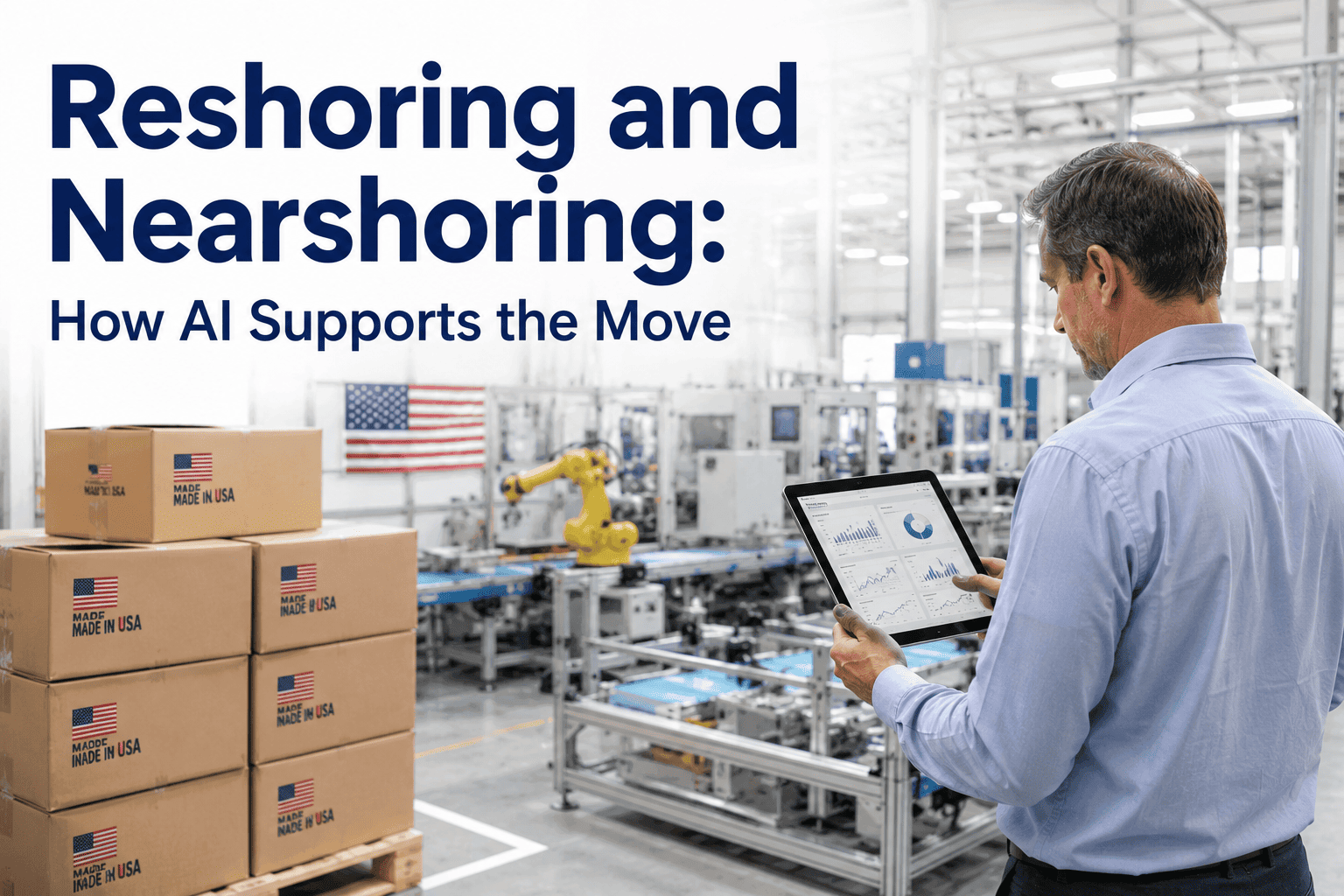
Reshoring and nearshoring decisions used to come down to a single number on a supplier quote. That number is almost never the real cost. Duties, freight volatility, inventory carrying cost, quality escapes, and the labor differential between regions all move independently, and a plant manager who compares unit price alone is comparing the wrong thing. The manufacturers making confident location decisions in 2026 are the ones modeling full landed cost scenarios before committing capital, and you can book a demo to see how iFactory builds that model from your own production and logistics data.
PLANT MANAGER · RESHORING & NEARSHORING · AI-DRIVEN COST MODELING
Bringing Production Closer to Home Only Works If the Math Actually Works
iFactory helps manufacturing teams model total landed cost across reshoring, nearshoring, and offshore scenarios using real production data, so the location decision is based on evidence instead of a headline about tariffs.
WHY THE QUESTION CHANGED
It Is No Longer "Should We Reshore" — It Is "Which Products Go Where"
Federal investment commitments, tariff pressure on imported components, and Mexico overtaking China as a top trading partner have made location strategy a live conversation on nearly every plant floor. But treating it as an all-or-nothing decision misses the point. The smarter approach breaks the bill of materials into categories and assigns each one to the location model that actually fits its cost and risk profile.
Reshore Candidates
High-value, low-labor-content parts where tariff exposure and IP risk outweigh the labor cost differential.
Nearshore Candidates
Mid-complexity assemblies that need short lead times and frequent engineering changes but still benefit from lower labor cost.
Stay-Offshore Candidates
High-volume, labor-intensive components where the established supplier ecosystem still delivers the lowest total cost.
THE REAL COST STACK
Unit Price Is One Line in a Much Longer Cost Equation
The single biggest mistake plant managers make in location decisions is anchoring on the factory quote and stopping there. The breakdown below shows the layers that sit on top of unit price and are routinely left out of a first-pass comparison.
Inventory Carrying Cost
16%
Quality & Rework Cost
14%
REGION COMPARISON
How Three Common Location Strategies Compare on the Factors That Matter
Every location model has a strength and a tradeoff, and the right answer depends on what your product actually needs. This table lines up the three most common strategies side by side across the criteria plant managers weigh most.
A Location Decision Made on Unit Price Alone Is a Decision Made on Incomplete Data
iFactory's cost modeling pulls your actual freight, quality, and inventory data into a single comparison across reshoring, nearshoring, and offshore scenarios. Book a demo to see the model built around your own bill of materials.
WHERE AI FITS
Four Ways AI Changes the Economics of Moving Production Closer to Home
Reshoring and nearshoring have always carried a labor cost premium. What has changed in 2026 is that AI-driven efficiency gains are large enough to offset that premium in many production environments, which is why the two trends are converging into a single strategy rather than competing ones.
1
Offsetting the Labor Premium
Automated inspection, predictive maintenance, and AI-assisted scheduling reduce the headcount needed per unit of output, narrowing the gap that made offshore labor attractive in the first place.
2
Faster Time to Stable Output
AI-assisted quality systems help a new facility reach production-grade defect rates faster than a purely manual ramp-up, shortening the painful early months of a relocation.
3
Real-Time Landed Cost Tracking
Continuous monitoring of freight rates, tariff changes, and inventory carrying cost keeps the location decision current instead of based on a static analysis from a year earlier.
4
Emissions and Compliance Reporting
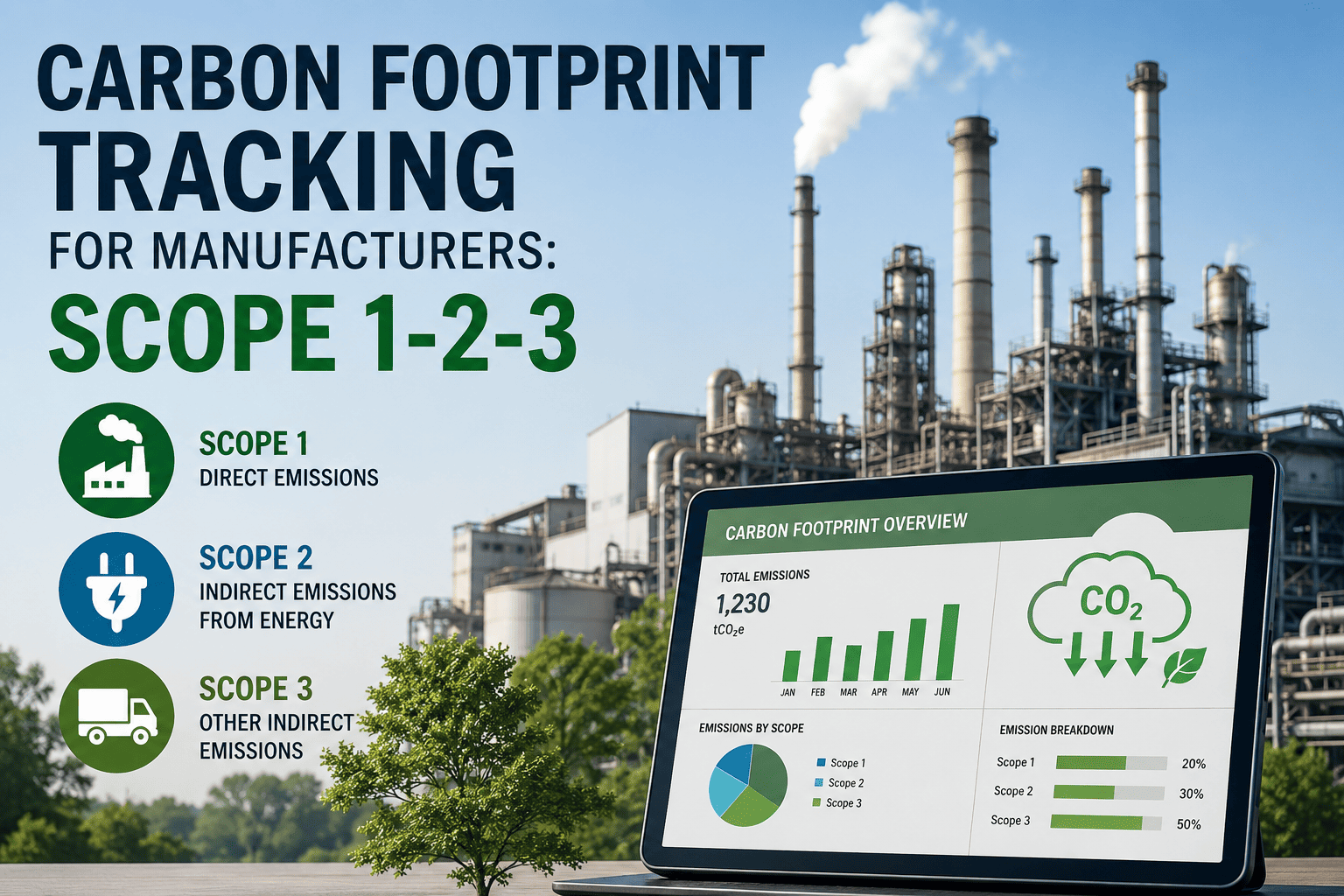
Shorter, more transparent supply chains are easier to monitor for sustainability regulation, and AI-generated reporting reduces the manual burden of proving compliance.
FOUR VARIABLES TO ASSESS
What to Evaluate Before Committing Capital to a Location Move
A relocation decision is expensive to reverse, so it deserves a structured evaluation rather than a reaction to a tariff headline. These four variables consistently determine whether a reshoring or nearshoring move pays off within a reasonable timeframe.
01
Does your product's cost structure benefit meaningfully from the labor differential, or is labor a small fraction of total cost?
02
How exposed is your current supply chain to transpacific disruption, tariff volatility, and single-source dependency?
03
Which geographic cluster actually has the workforce and supplier ecosystem your specific sector needs to succeed?
04
Does a shelter or partnership model fit your risk tolerance better than standing up a fully standalone facility?
SECTOR BY SECTOR
The Right Location Strategy Changes Depending on What You Build
A location decision that makes sense for a commodity part rarely makes sense for a regulated or IP-sensitive product. The categories below reflect how the calculus shifts across the sectors plant managers most often ask about.
Regulated Products
Medical devices and similar categories face tariffs of 10 to 25 percent or higher plus tightening inspection requirements, making domestic or nearshore facilities easier to audit and faster to resolve quality events at.
High-Complexity Electronics
Custom PCB assembly and injection molding often still favor established Asian hubs, where tooling costs run 30 to 50 percent lower due to the depth of the supplier ecosystem.
Semiconductor and Chip-Adjacent
Multi-billion dollar reshoring commitments are already underway in this category, driven by national security policy as much as pure cost economics.
THE HIDDEN MARGIN TRAP
Where Sourcing Agents and Middlemen Quietly Erode the Savings
Even a well-modeled location decision can lose money in execution if the sourcing relationship itself is structured against you. These are the most common ways margin disappears between the factory quote and what actually lands on your books.
A
Traditional sourcing agents often build in markups on top of the factory price that never appear as a separate line item on your invoice.
B
Quality failures caught after shipment carry rework and expedited replacement costs that rarely get traced back to the original sourcing decision.
C
Currency and tariff shifts between quote and delivery date can silently erase a landed cost advantage that looked solid at signing.
D
Without on-site oversight, intellectual property and process control can quietly slip, creating a reputational cost that never shows up in a cost model at all.
FREQUENTLY ASKED QUESTIONS
Questions Plant Managers Ask Before Moving Production
Is nearshoring always cheaper than staying offshore once you count everything?
Not always, and that is exactly why unit price comparisons are misleading on their own. Nearshoring wins for many manufacturers once freight time, tariff exposure, and inventory carrying cost are included, but it can lose on tooling and component ecosystem depth for highly specialized products. A full landed cost model is the only reliable way to know which side of that line your specific product falls on.
Book a demo to run the comparison against your own components.
How long does it typically take to see a return on a nearshoring move?
Timelines vary widely by sector and facility type, but shelter arrangements in established nearshoring hubs can compress startup timelines to a matter of months rather than years, which shortens the payback period considerably compared to standing up a standalone plant. The specific number depends heavily on tooling requirements, workforce availability, and how much of the process needs to be requalified.
Do we have to move an entire product line, or can we split it across locations?
Splitting a bill of materials across reshore, nearshore, and offshore locations based on each component's own cost and risk profile is increasingly the standard approach rather than an all-or-nothing move. This lets a manufacturer capture the tariff and lead-time benefits where they matter most while keeping the deepest, most cost-effective supplier relationships intact where they still make sense.
Contact our support team to talk through a phased approach for your product mix.
How does AI actually reduce the labor cost premium of nearshoring?
AI reduces the number of labor hours required per unit through automated inspection that replaces manual quality checks, predictive maintenance that reduces unplanned downtime and rework, and scheduling optimization that improves throughput without adding headcount. Across documented deployments, these efficiency gains have been large enough to offset a meaningful portion of the regional labor cost differential.
What is the biggest risk teams underestimate when relocating production?
Requalification time for quality and regulatory approval is the risk most frequently underestimated, especially in regulated sectors where a new facility cannot ship product until inspections and certifications are complete. Building that timeline into the financial model from the start, rather than treating it as a formality, prevents the most common source of relocation cost overruns.
Book a demo to see how iFactory models requalification timelines alongside cost.
Model the Move Before You Make It
iFactory turns your freight, quality, and production data into a single total landed cost comparison across reshoring, nearshoring, and offshore scenarios, so your next location decision is backed by evidence. Book a demo to see it built around your own bill of materials.