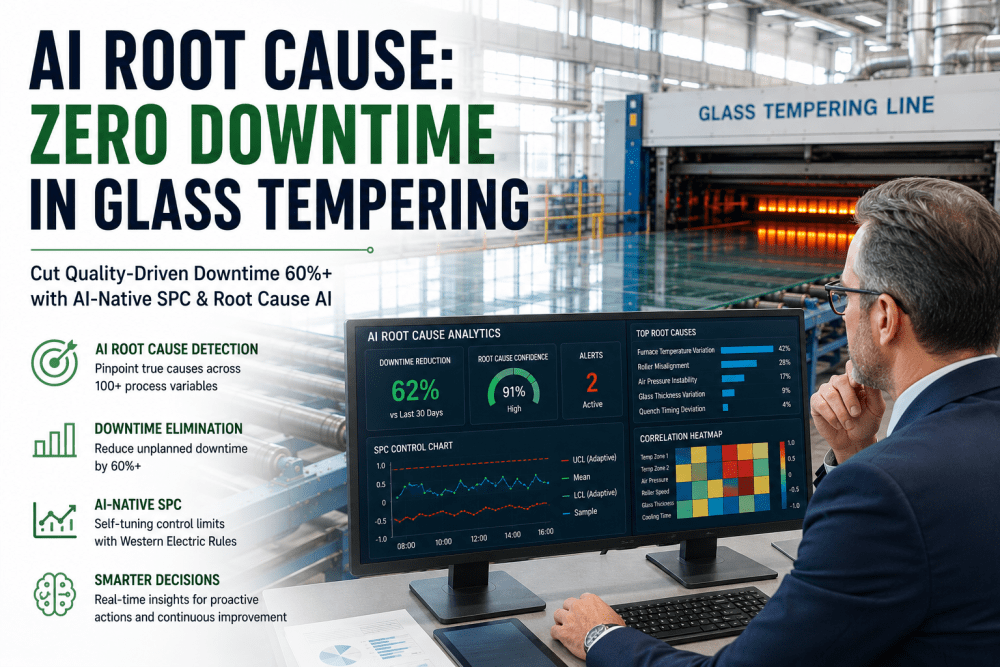
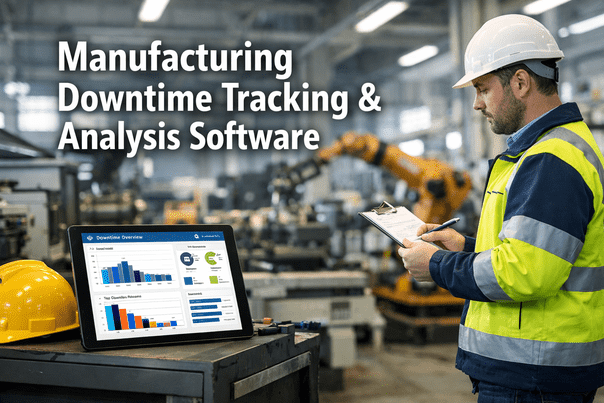
In the high-stakes environment of modern manufacturing, every minute of unplanned downtime erodes profitability, delays shipments, and strains customer relationships. Traditional root cause analysis (RCA) relies on manual data collection, tribal knowledge, and time-consuming 5-why sessions that can stretch for weeks or even months. By the time a root cause is identified, production has already suffered, and the same failure mode often recurs because corrective actions were based on incomplete evidence. AI-driven root cause analysis transforms this paradigm entirely. By ingesting vast streams of historical downtime data, sensor logs, maintenance records, and operator notes, machine learning models can detect hidden patterns, rank probable causes, and deliver actionable insights in minutes instead of months. This is not incremental improvement; it is a fundamental shift in how factories achieve operational excellence. For continuous improvement managers and plant leaders, adopting AI-driven RCA is no longer optional; it is a competitive necessity. The technology exists today to accelerate root cause identification, reduce mean time to repair (MTTR), and drive sustainable OEE gains across every production line.
Accelerate Root Cause Discovery Across Your Factory
Uncover hidden failure patterns in minutes. Deploy AI-driven RCA to slash downtime and boost OEE across all production lines.
Why Traditional RCA Fails Modern Manufacturing
Conventional root cause analysis methods, including fishbone diagrams, 5-whys, and failure mode and effects analysis (FMEA), were designed for simpler production environments with limited data. Today's smart factories generate terabytes of time-series data from thousands of sensors, PLCs, and IIoT devices every day. Manual analysis cannot keep pace. Human analysts are limited by cognitive biases, incomplete data access, and the sheer volume of variables. Moreover, traditional RCA is reactive; it begins after a failure has already caused significant production loss. The result is a vicious cycle of extended downtime, superficial corrective actions, and repeated failures. AI-driven RCA overcomes these limitations by continuously learning from historical and real-time data, identifying subtle correlations that humans would miss, and prioritizing causes based on statistical significance rather than intuition. This shift from reactive to predictive root cause analysis is the cornerstone of Industry 4.0 maintenance excellence.
Automated Data Aggregation
AI RCA ingests data from historians, CMMS, SCADA, and IoT platforms automatically, eliminating manual data collection and ensuring a complete, unbiased dataset for analysis.
Pattern Recognition at Scale
Machine learning algorithms detect complex, non-linear relationships between process parameters and failure events, revealing root causes that would remain hidden in traditional analysis.
Real-Time Cause Ranking
Instead of a single root cause, AI RCA provides a prioritized list of probable causes with confidence scores, enabling teams to focus on the highest-impact corrective actions first.
Continuous Learning Loop
Each corrective action outcome feeds back into the model, improving future root cause predictions and creating a self-optimizing system that becomes smarter over time.
How AI Transforms the 5-Why Methodology
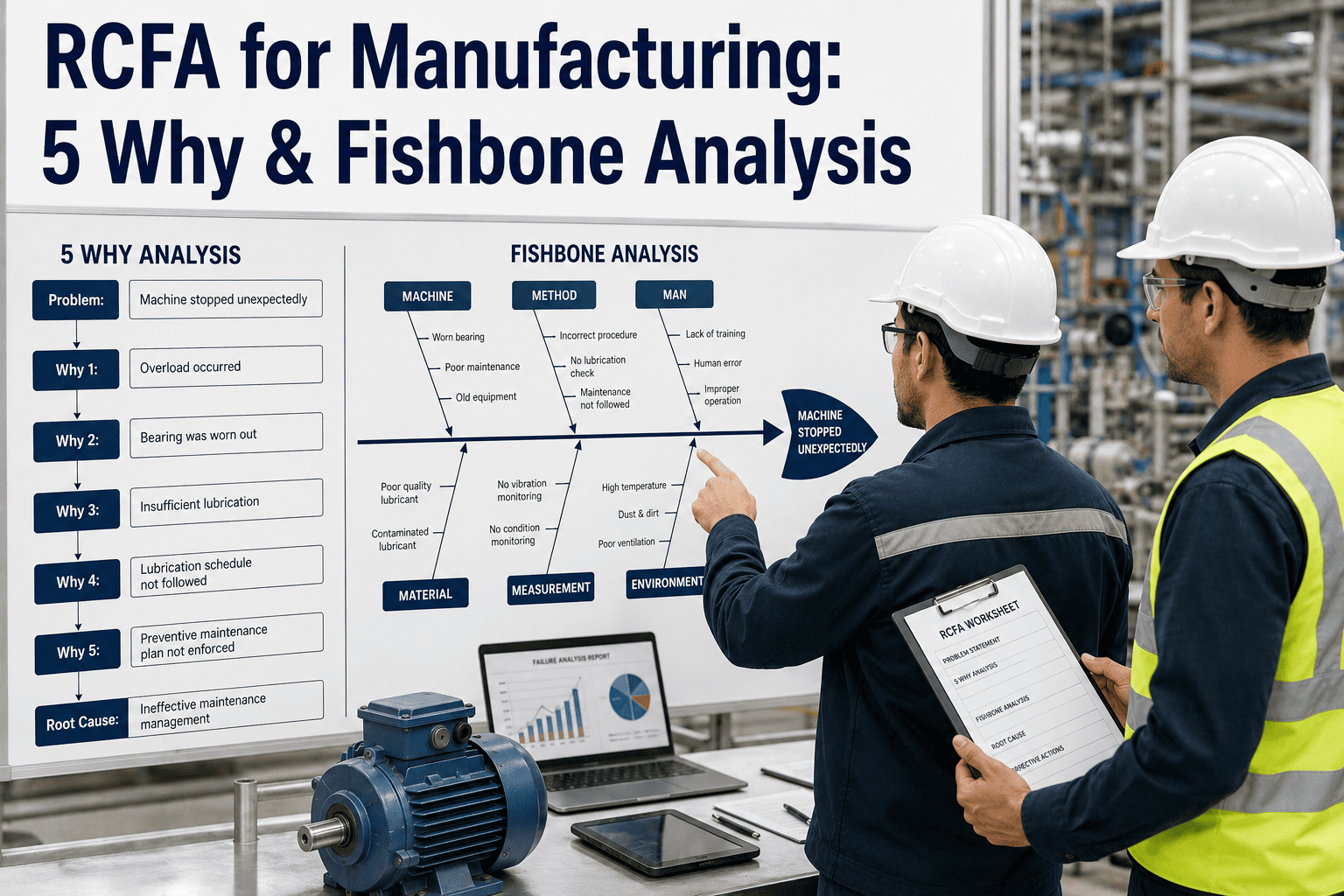
The classic 5-why technique is valuable for its simplicity, but it suffers from subjectivity and limited scope. Two different operators may arrive at entirely different root causes for the same failure. AI augments this process by providing data-driven evidence at each 'why' level. For example, if a machine stops due to an over-temperature alarm, the first 'why' might be 'coolant pump failed.' The AI model can immediately analyze thousands of prior pump failures, correlating them with coolant flow rates, ambient temperature, pump age, and maintenance history. It might reveal that the true root cause is not the pump itself, but a recurring electrical surge during shift changes that damages pump controllers. The AI then surfaces this pattern, guiding the 5-why team toward a systemic root cause that would otherwise require weeks of investigation. This fusion of human expertise with machine intelligence creates a robust, repeatable RCA process that scales across all production lines and shifts.
Implementation Roadmap for AI-Driven RCA
Data Infrastructure Audit
Assess existing data sources, quality, and accessibility. Identify gaps in sensor coverage, data historians, and integration points. Ensure data is time-stamped and aligned with production events.
Model Training & Validation
Use historical downtime data to train initial RCA models. Validate predictions against known root causes from past incidents. Fine-tune algorithms to reduce false positives and improve confidence scoring.
Workflow Integration
Embed AI RCA into existing CMMS and maintenance workflows. Configure automated alerts when a new failure occurs, with instant cause ranking and recommended corrective actions.
Continuous Improvement Cycle
Establish a feedback loop where maintenance teams confirm or reject AI-generated root causes. Use this feedback to retrain models monthly, steadily improving accuracy and coverage.
Unlock the Power of Predictive Root Cause Analysis
Stop chasing symptoms. Start solving systemic problems. Deploy AI-driven RCA to transform your downtime data into a strategic asset.
Traditional RCA vs. AI-Driven RCA
| Criteria | Traditional RCA | AI-Driven RCA |
|---|---|---|
| Time to Identify Root Cause | 2-6 weeks | 15-30 minutes |
| Data Sources Considered | 3-5 (limited to manual logs) | 50+ (sensors, historians, CMMS, IoT) |
| Accuracy of Cause Ranking | Subjective, varies by analyst | Statistical confidence scoring, repeatable |
| Ability to Detect Complex Patterns | Low (human bias, limited variables) | High (non-linear, multivariate correlations) |
| Scalability Across Lines | Low (requires dedicated analyst per line) | High (one model covers entire factory) |
| Continuous Improvement Feedback | Manual, slow, inconsistent | Automated, real-time, self-optimizing |
The Economics of Faster Root Cause Analysis
Every day of delayed root cause identification translates into tangible financial loss. Consider a typical automotive plant with 200 machines, each experiencing an average of 3 hours of unplanned downtime per month. At a burdened cost of $10,000 per hour, the monthly loss is $6 million. Traditional RCA might identify the root cause for only 40% of these failures, leaving the rest to recur. AI-driven RCA, by contrast, can identify root causes for 85% of failures within 30 minutes, enabling maintenance teams to implement permanent corrective actions immediately. The result is a 50% reduction in recurring failures, saving the plant $3 million per month. Furthermore, the accelerated RCA cycle reduces mean time to repair (MTTR) by 30%, as teams no longer waste time on guesswork. The return on investment for an AI RCA platform is typically realized within 3-6 months, making it one of the highest-ROI Industry 4.0 initiatives available today.
Pareto Analysis Automation
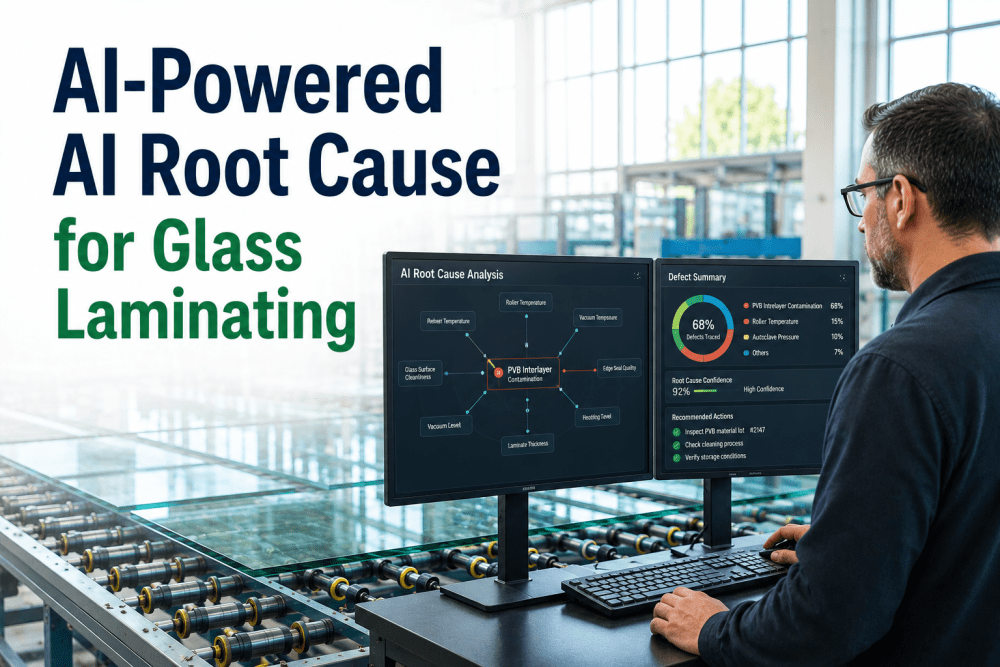
AI RCA automatically generates Pareto charts of failure causes, updated in real time, allowing teams to focus on the vital few causes that drive the majority of downtime.
Cross-Line Anomaly Detection
By analyzing data across multiple production lines, AI can identify systemic root causes that affect the entire factory, such as a common raw material defect or environmental condition.
Predictive Failure Prevention
Advanced models can predict impending failures before they occur, providing a root cause hypothesis proactively and enabling preemptive maintenance actions.
Overcoming Implementation Challenges
While the benefits of AI-driven RCA are compelling, implementation requires careful planning. Common challenges include data quality issues, lack of historical failure labels, and resistance from maintenance teams accustomed to traditional methods. To overcome these, start with a targeted pilot on a single production line with high downtime frequency. Cleanse and label historical data with input from experienced operators and engineers. Use explainable AI techniques to make model recommendations transparent, building trust with maintenance staff. Provide training that emphasizes how AI augments, rather than replaces, human expertise. Finally, establish clear metrics for success, such as reduction in MTTR, increase in first-time fix rate, and percentage of failures with identified root causes. With a phased approach and strong change management, AI-driven RCA can become a core competency of the maintenance organization.
Frequently Asked Questions
How does AI-driven RCA handle data from legacy machines without IIoT sensors?
AI-driven RCA platforms are designed to integrate with diverse data sources, including legacy equipment. For machines without IIoT sensors, the system can ingest data from existing historians, PLC logs, manual operator entries, and CMMS records. Additionally, retrofittable edge devices can be installed to capture vibration, temperature, and current data from older machines. The AI model can still identify meaningful patterns from limited data, and as more sensors are added, the accuracy improves. Book a demo to see how we integrate with your existing infrastructure.
What is the typical accuracy of AI-generated root cause predictions?
Accuracy depends on the quality and quantity of historical data, but typical implementations achieve 80-90% top-3 accuracy, meaning the true root cause is among the top three predictions from the AI model. This is a dramatic improvement over manual analysis, where the correct root cause is often missed entirely. The model's confidence score helps teams prioritize which causes to investigate first. Over time, as the model learns from corrective action outcomes, accuracy continues to improve. Contact support to learn more about our validation methodology.
How long does it take to deploy AI-driven RCA in an existing factory?
A typical deployment takes 8-12 weeks from project kickoff to full production use. The timeline includes data infrastructure audit (2 weeks), model training and validation (4 weeks), workflow integration (3 weeks), and user training (1 week). Factors that can accelerate deployment include availability of clean, labeled historical data and strong IT/OT integration capabilities. Our team provides dedicated support throughout the process to ensure a smooth transition. Book a demo to discuss your specific timeline and requirements.
Does AI-driven RCA replace the need for human root cause analysts?
No, AI-driven RCA is designed to augment, not replace, human expertise. The AI handles the heavy lifting of data aggregation, pattern detection, and cause ranking, freeing human analysts to focus on investigation, validation, and implementing corrective actions. The best results come from a human-in-the-loop approach where the AI provides recommendations, and experienced engineers confirm or refine them. This collaboration leverages the strengths of both machine speed and human judgment, leading to more robust and sustainable solutions. Contact support for more details on our human-in-the-loop framework.
What types of manufacturing failures can AI-driven RCA analyze?
AI-driven RCA is applicable to virtually any type of manufacturing failure, including mechanical breakdowns, electrical faults, process deviations, quality defects, and software/PLC errors. The system is particularly effective for complex, intermittent failures that involve multiple interacting variables, such as temperature, humidity, material batch, and operator shift. It can also analyze near-miss events and minor stops, which are often ignored but collectively represent significant OEE loss. The more diverse the failure data, the more powerful the AI model becomes. Book a demo to see a live analysis of your own failure data.
Transform Your Factory's Root Cause Analysis Today
Move from weeks of guesswork to minutes of data-driven certainty. Implement AI-driven RCA and achieve a step-change in operational efficiency.
.png)