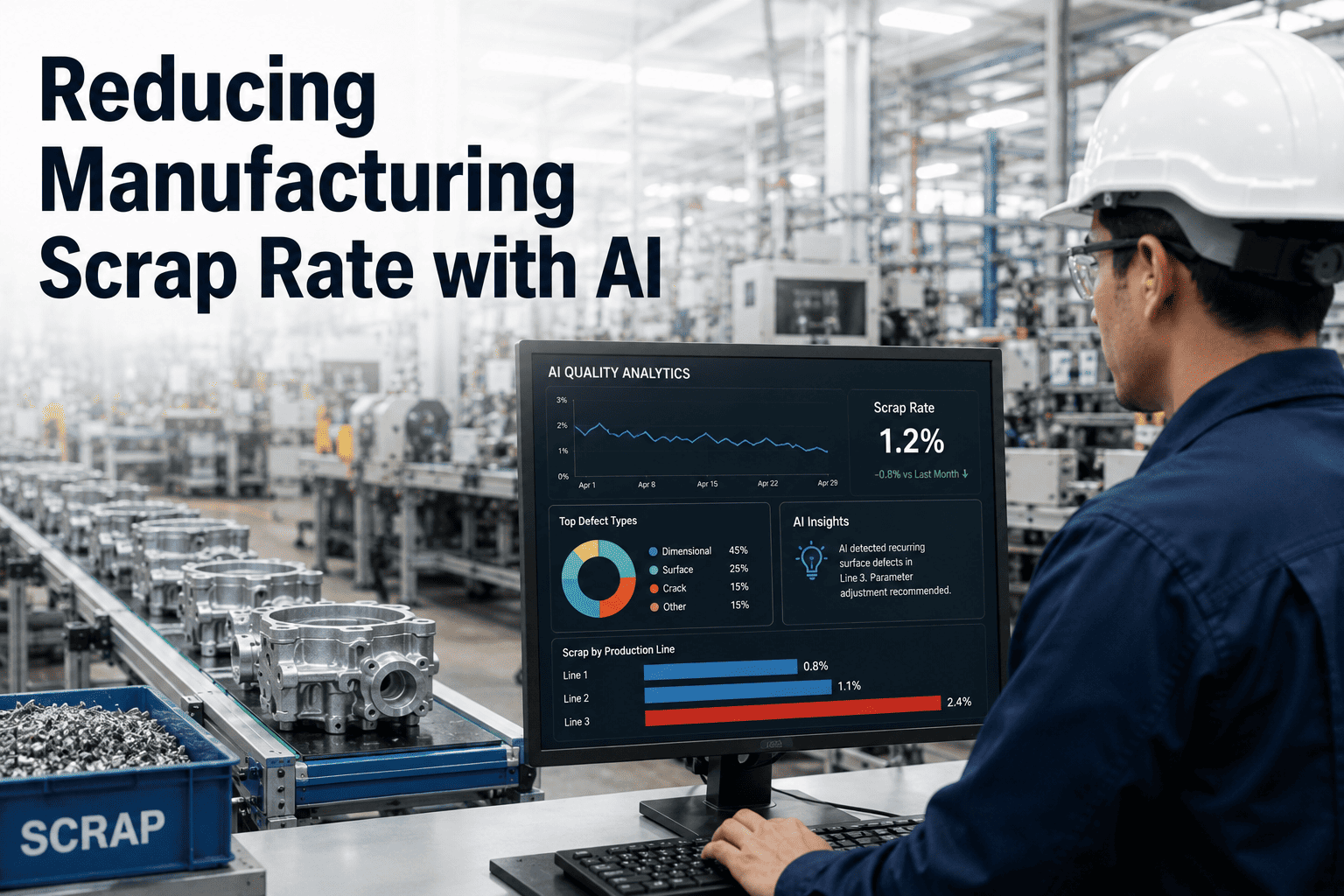
In the relentless pursuit of operational excellence, manufacturing leaders are increasingly recognizing that scrap is not merely a cost of production, but a direct erosion of margin that has already been paid for in raw materials, energy, and labor. Industry 4.0 technologies, particularly artificial intelligence, are now providing an unprecedented ability to move beyond reactive scrap counting to proactive, predictive defect prevention. By analyzing thousands of upstream parameters in real time, AI models can identify the subtle, often non-linear relationships between process variables and quality outcomes, enabling operators to dial in optimal settings before defects occur. This shift from detection to prediction represents a fundamental change in quality management philosophy, turning scrap from an accepted loss into a controllable variable. For those ready to lead their facilities into this new paradigm, Book a Demo to explore how iFactory can transform your scrap profile.
Stop Losing Margin to Scrap
AI identifies root causes and prescribes corrective actions before defects happen. Reclaim your hidden profit.
The Hidden Cost of Scrap: Beyond Material Loss
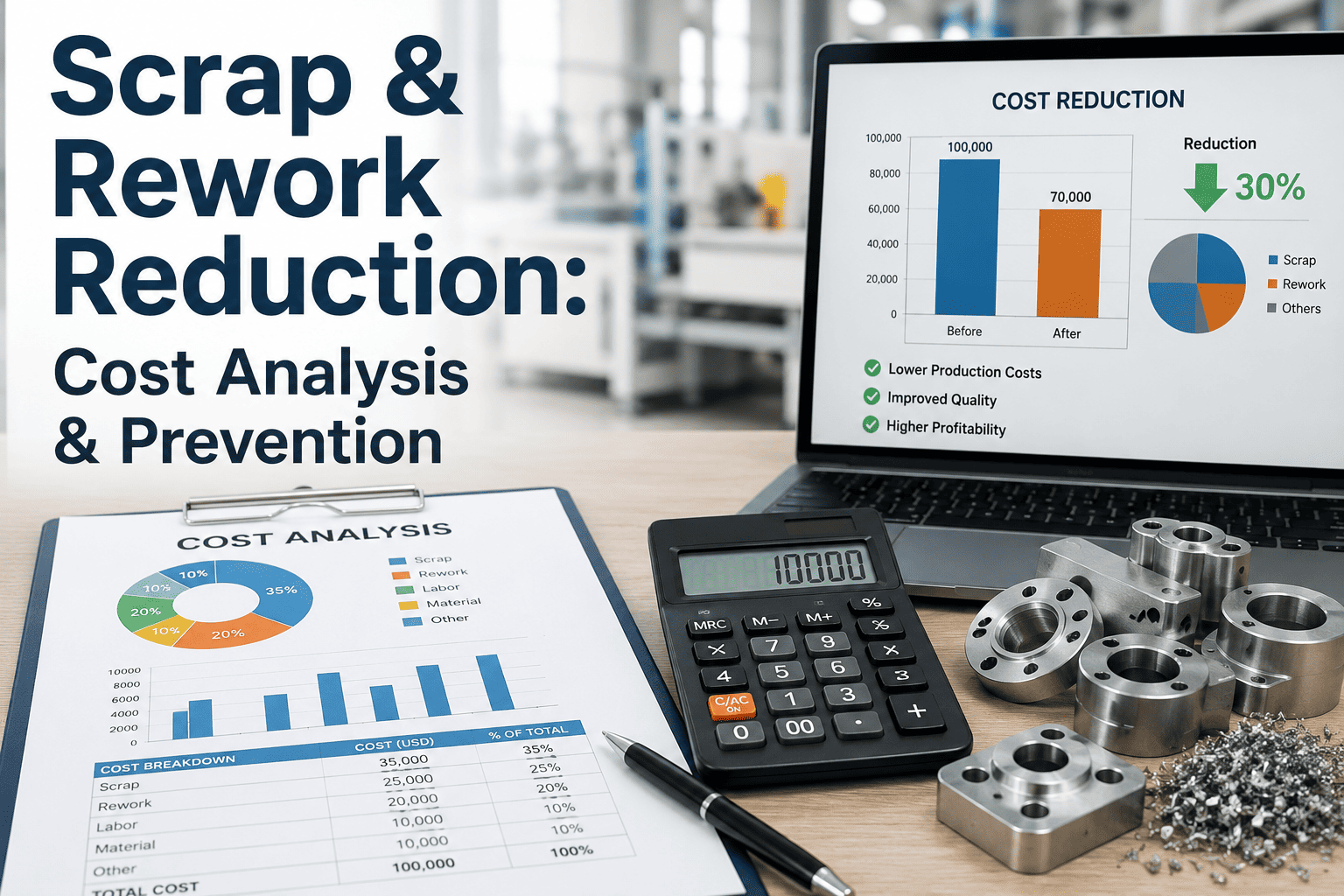
Traditional accounting treats scrap as a linear cost: material plus labor. But the true impact is far more complex. Every defective unit consumes machine time, energy, and operator attention that could have been used for good production. It increases lead times, disrupts downstream processes, and often requires costly rework or customer concessions. In high-mix, low-volume environments, scrap can silently erode margins by 5-15% without triggering alarm. AI scrap analytics uncovers these hidden costs by correlating defect data with production schedules, machine states, and material batches, providing a holistic view of scrap's true financial footprint.
Beyond direct costs, scrap damages brand reputation and customer trust. In industries like automotive or medical devices, a single defective batch can lead to recalls, liability, and lost contracts. The psychological cost on the shop floor is also significant: operators become accustomed to a certain scrap rate, accepting it as inevitable. AI disrupts this acceptance by proving that defects are not random but caused by identifiable, controllable factors. This knowledge empowers teams to take ownership of quality in a way that traditional SPC charts never could.
Root Cause Identification
AI models analyze hundreds of process parameters simultaneously to pinpoint the exact variables driving scrap. Unlike manual analysis, AI can detect complex interactions and non-linear dependencies that human experts miss. This enables targeted corrective actions rather than shotgun adjustments.
Real-Time Prediction
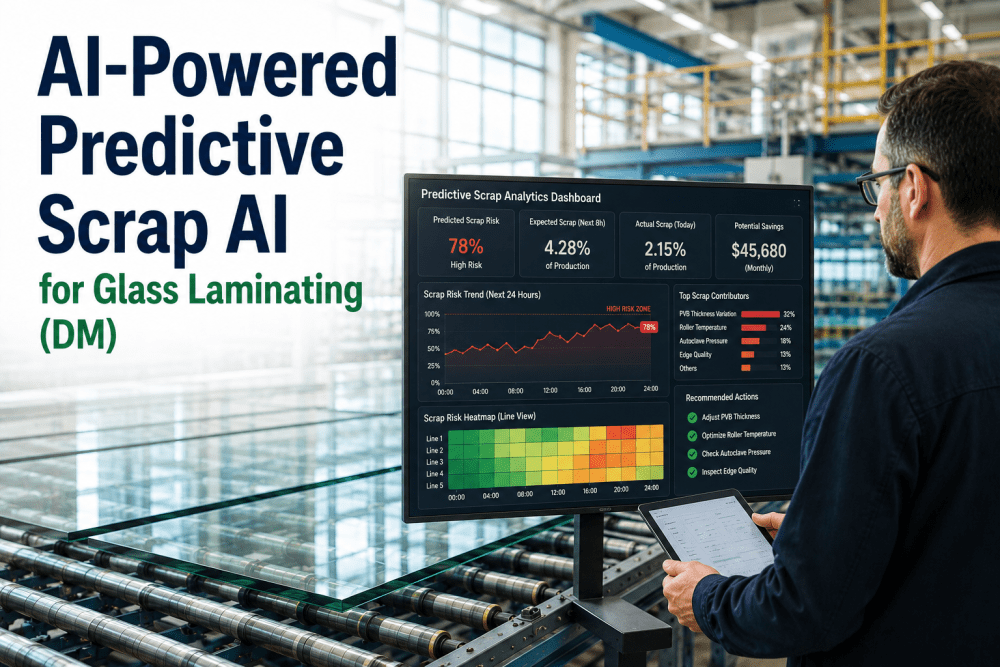
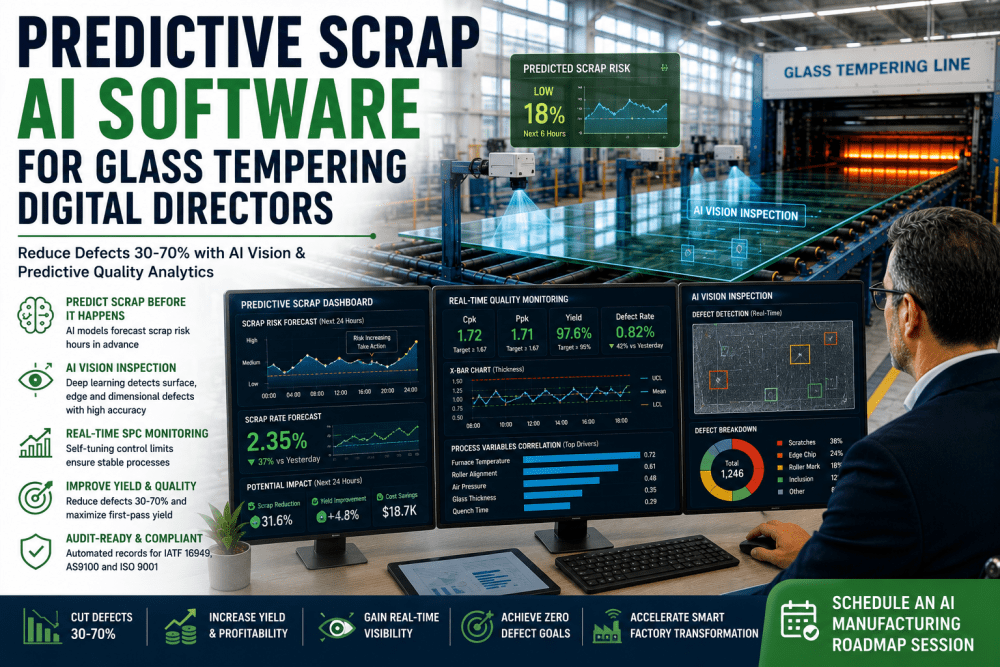
By monitoring sensor data, material properties, and environmental conditions in real time, AI predicts defect probability before the part is even complete. Operators receive alerts with recommended parameter adjustments, preventing scrap at the moment of decision.
Process Optimization
AI doesn't just predict; it prescribes. Using reinforcement learning and simulation, the system recommends optimal machine settings for each product run, dynamically adapting to changing conditions. This closes the loop between data and action, continuously improving yield.
Roadmap to Zero Scrap: A Phased Implementation
Data Aggregation & Baseline
Connect all quality, process, and machine data sources into a unified data lake. Establish baseline scrap rates by product, shift, and machine. This phase typically takes 4-6 weeks and reveals immediate low-hanging fruit.
Model Training & Validation
Train supervised and unsupervised AI models on historical defect data. Validate predictions against known outcomes. Achieve >80% accuracy before moving to live deployment. This phase requires close collaboration between data scientists and process engineers.
Real-Time Deployment
Deploy models to the edge or cloud for real-time scoring. Integrate alerts into operator dashboards and MES systems. Begin with one pilot line, then scale. Typical time to production: 8-12 weeks.
Continuous Improvement Loop
Implement feedback mechanisms where operators confirm or reject AI recommendations. Use this data to retrain models monthly, improving accuracy and adaptability. Target: 50% scrap reduction within 6 months.
Scrap Drivers by Industry: A Comparative Analysis
| Industry | Primary Scrap Drivers | AI Intervention | Typical Reduction |
|---|---|---|---|
| Automotive | Tool wear, material variation, temperature drift | Predictive tool change, adaptive process control | 30-45% |
| Electronics | Solder defects, component misalignment, contamination | Vision AI + parameter optimization | 40-60% |
| Pharmaceutical | Blend uniformity, moisture content, tablet weight | NIR spectroscopy + ML models | 25-35% |
| Metal Fabrication | Cutting speed, coolant flow, material hardness | Real-time sensor fusion | 20-40% |
Transform Your Scrap Data into Profit
iFactory's AI platform delivers measurable scrap reduction in weeks, not years. See the difference for yourself.
Why Traditional SPC Falls Short
Statistical Process Control (SPC) has been the backbone of quality management for decades. However, SPC is fundamentally a univariate tool: it monitors one parameter at a time. In modern manufacturing, defects are rarely caused by a single factor. They emerge from complex interactions between machine settings, material properties, environmental conditions, and operator actions. SPC charts can flag an out-of-control condition, but they cannot diagnose the root cause or prescribe a corrective action. AI fills this gap by modeling multivariate relationships and learning from historical patterns.
Moreover, SPC relies on fixed control limits that assume process stability. In high-mix environments, each product run may have different optimal parameters, rendering static limits ineffective. AI models adapt dynamically, learning new patterns with each production change. This adaptability is critical for industries like aerospace or medical devices, where product specifications change frequently. AI also enables predictive capability: rather than detecting a defect after it has occurred, AI can forecast the likelihood of a defect before the process drifts out of spec.
Key Metrics for Scrap Reduction Success
Frequently Asked Questions
How does AI reduce scrap rate in manufacturing?
AI reduces scrap by analyzing vast amounts of production data to identify the root causes of defects before they occur. Machine learning models are trained on historical data to recognize patterns that lead to defects, such as specific combinations of temperature, pressure, and material properties. Once deployed, these models monitor real-time sensor data and alert operators when conditions drift into a high-risk zone. The system can also recommend precise parameter adjustments to bring the process back into optimal range. This proactive approach prevents defects from happening, rather than detecting them after the fact. For a deeper understanding of how this applies to your specific processes, Book a Demo with our team.
What is the typical ROI for AI scrap reduction?
Our clients typically see a 3x return on investment within the first year of deployment. This ROI is driven by direct material savings, reduced rework labor, increased machine utilization, and improved throughput. For a mid-sized plant producing 10 million units annually with a 2% scrap rate, a 50% reduction in scrap can save over $1 million per year in material costs alone. Additional savings come from reduced energy consumption, less waste disposal, and higher customer satisfaction. The exact ROI depends on your current scrap rate, product value, and process complexity. To calculate the potential savings for your facility, book a personalized assessment.
How long does it take to implement AI scrap reduction?
Implementation typically takes 12 to 16 weeks from kickoff to production deployment. The timeline depends on data availability, process complexity, and the number of production lines. Phase 1 (data aggregation) usually takes 4-6 weeks, during which we connect to your existing PLCs, sensors, and quality systems. Phase 2 (model training) takes another 4-6 weeks, as data scientists work with your process engineers to validate models. Phase 3 (deployment) can be as quick as 2-4 weeks for a pilot line. We recommend starting with one high-value line to demonstrate value before scaling. Throughout the process, our team provides training and support to ensure smooth adoption. Contact our support team for a detailed implementation roadmap.
What data is needed for AI scrap analysis?
AI scrap analysis requires historical data on defects (scrap rate, defect type, location, time) and corresponding process data (machine settings, sensor readings, material batch IDs, environmental conditions). The more granular the data, the better the model performance. Ideal data includes time-series sensor data at 1-second intervals or faster, along with quality inspection results. If you have SPC charts, CMM data, or vision inspection logs, those are highly valuable. Data from MES, ERP, and SCADA systems can also be integrated. Our platform is designed to work with fragmented or incomplete data; we use advanced imputation techniques to handle gaps. For a data readiness assessment, Book a Demo and we will evaluate your data landscape.
Can AI scrap reduction work in high-mix, low-volume production?
Absolutely. In fact, high-mix environments benefit disproportionately from AI because traditional SPC struggles with frequent changeovers. AI models can learn separate patterns for each product variant and automatically adapt when a new product is introduced. The system uses transfer learning to leverage data from similar products, reducing the amount of data needed for new variants. This flexibility allows you to achieve scrap reduction even when production runs are short. Many of our clients in electronics and aerospace, where product mix changes daily, have seen 40-60% scrap reduction. To see how this works in your specific environment, Book a Demo with one of our industry specialists.
Ready to Eliminate Scrap from Your Factory?
Join industry leaders who have transformed their quality processes with AI. Your journey to zero scrap starts today.