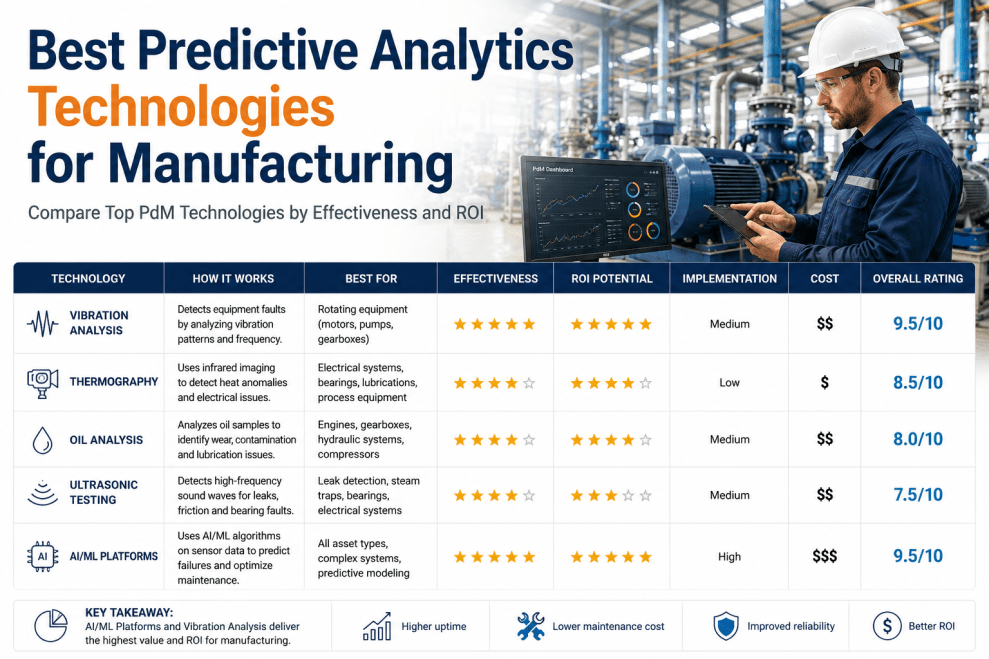
A semiconductor fabrication facility producing 40,000 wafer starts per month across 200+ process steps faced a critical vulnerability: invisible defect modes propagating through multi-step photolithography and etch sequences that could compromise an entire production lot before any quality checkpoint detected the deviation. Each wafer carried over $2,000 in accumulated value by the time it reached electrical test — meaning a single undetected process drift could destroy $1M+ in work-in-progress inventory before operators became aware of the problem. By deploying iFactory's AI-driven predictive analytics and AI vision inspection platform, the fab achieved 99.7% inline defect detection accuracy, reduced process deviation events by 45%, and prevented an estimated $15 million in potential annual losses from yield excursions and equipment-related scrap.
01 / The Facility
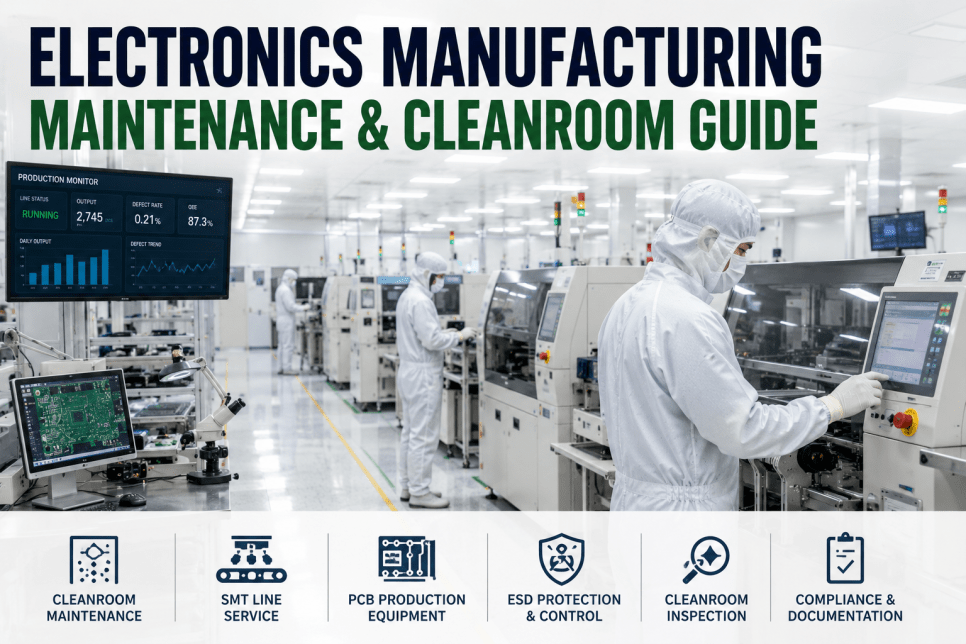
A 200mm and 300mm mixed-node semiconductor fab producing 40,000 wafer starts per month across power management, RF, and mixed-signal process technologies. The facility operates 24/7 with Class 1 cleanroom standards across 120,000 square feet of fabrication space, supporting 200+ discrete process steps from epitaxial deposition through final electrical test.
02 / The Challenge
In semiconductor manufacturing, defect modes that propagate undetected through multiple process steps represent the highest-risk failure scenario. A particle from a CMP slurry residue issue at oxide polish step 4 may not manifest as an electrical failure until metalization layer deposition completes 40 steps later — by which point the entire lot of 25 wafers ($50,000+ in accumulated value) is compromised. The facility's reliance on end-of-line electrical test as the primary quality gate meant that defect root causes were typically identified hours or days after the damage occurred, making lot-level scrap events a recurring operational cost rather than an exceptional occurrence.
- End-of-line electrical test the only comprehensive quality gate; defect root causes identified 4-8 hours after occurrence
- Single excursion event destroys 25 wafers × $2,000+ accumulated value = $50,000+ per lot, with multiple lots typically affected
- Average 6 major excursion events per year at $340,000 average impact = $2M+ in annual scrap from undetected defect propagation alone
- Defect signatures isolated to individual process tools with no correlation across the process flow
- Identifying whether a particle defect originated at deposition, CMP, or etch required hours of manual data cross-referencing
- Root cause analysis cycle time averaged 6-9 days per excursion, delaying corrective action implementation
- SEM review tool operators manually classified 400+ defect images per shift, with classification accuracy of 78-85%
- Manual review cycle added 3-4 hours of latency between defect detection and disposition decision
- Operator-dependent classification introduced inconsistency in pareto analysis and yield learning
- Process tools operated without real-time health monitoring; drift in critical parameters detected only through SPC chart review or end-of-line yield signal
- Etch chamber wall condition, deposition rate uniformity, and CMP pad wear tracked via calendar-based PM rather than condition-based indicators
- 45% of excursion events traced to equipment condition drift that could have been detected 24-72 hours earlier with predictive analytics
03 / The Solution
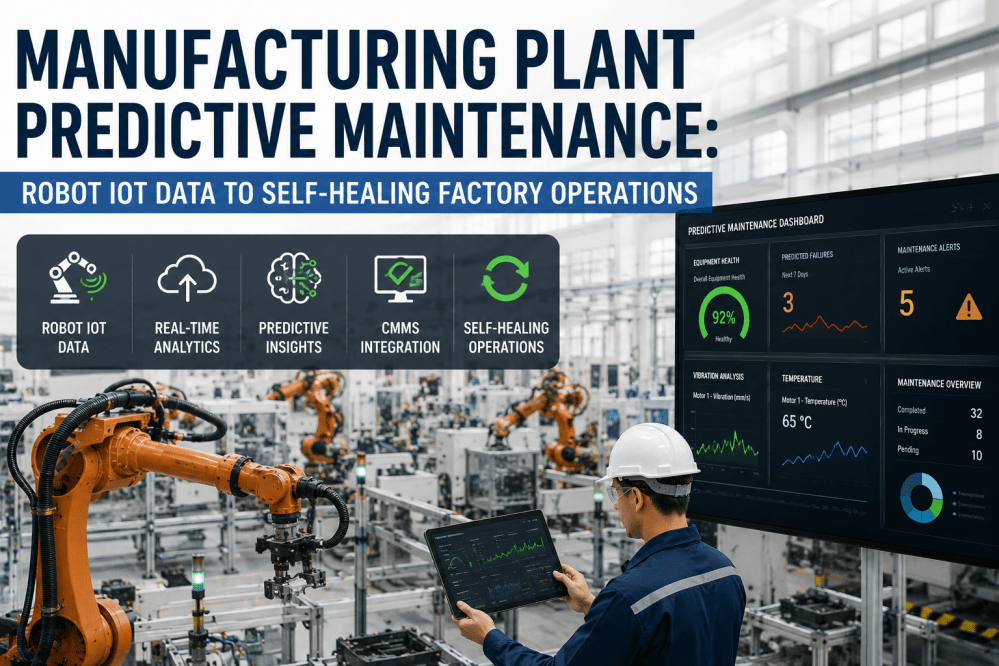
iFactory deployed its AI-driven predictive analytics and AI vision inspection platform across the fab's critical process zones — photolithography, etch, deposition, CMP, and metrology. The platform ingested real-time tool data, inline inspection images, and process control parameters through a unified on-prem architecture, establishing AI baselines for defect signatures, equipment health, and process window performance within the first 14 days of deployment.
iFactory AI vision models were trained on the fab's historical defect library spanning 18 months of production. The models achieved 99.7% classification accuracy within 30 days of deployment, eliminating the manual SEM review bottleneck and reducing defect detection latency from 4+ hours to under 2 seconds per inspected field.
The predictive equipment health analytics module was identified as the highest-ROI component within the first month of deployment. During the pilot phase, the AI model detected an etch chamber wall condition drift on a Lam 2300 etcher 36 hours before it would have caused a particle excursion — enabling a preventive chamber clean during a scheduled maintenance window and avoiding an estimated $420,000 in potential scrap from the affected lot sequence.
04 / Implementation
iFactory was deployed across the fab in a phased approach over 8 weeks, with zero impact on production schedules. The implementation followed a structured rollout designed to establish confidence through early, measurable wins while building toward full fab coverage.
Full audit of process tools, inspection points, and data infrastructure. Historical defect library (18 months) ingested for AI vision model training. Tool parameter baselines established for 800+ process tools. First AI vision models deployed on two critical photolithography inspection points by Day 12.
AI vision models activated across all 12 critical inspection points in photolithography, etch, and CMP. Predictive equipment health monitoring live on 200 highest-criticality tools. First automated defect propagation alert generated on Day 25 — detecting a CMP residue signature that would have affected 3 lots downstream.
Predictive health monitoring expanded to all 800+ process tools. AI vision coverage extended to deposition and final metalization layers. Cross-tool correlation engine activated, reducing root cause analysis cycle from 6-9 days to 2-4 hours. Automated yield reporting dashboards deployed for engineering and operations leadership.
05 / Results
The deployment of iFactory's AI-driven predictive analytics and AI vision inspection platform produced measurable improvements across yield, equipment reliability, and operational efficiency within the first two quarters. Inline defect detection accuracy reached 99.7%. Process deviation events declined by 45%. And the $15 million in prevented losses delivered a platform ROI that the fab director confirmed within six months of full deployment.
| Metric | Before iFactory | After iFactory | Change |
|---|---|---|---|
| Inline defect detection accuracy | 78-85% (manual SEM) | 99.7% (AI vision) | +17 percentage points |
| Defect detection latency | 4+ hours per field | < 2 seconds per field | 99.9% faster detection |
| Process deviation events per quarter | 38 avg | 21 avg | 45% reduction |
| Root cause analysis cycle time | 6-9 days | 2-4 hours | 96% faster RCA |
| Equipment drift detection lead time | Post-yield impact | 24-72 hours pre-failure | Predictive detection window |
| Yield excursion events per year | 6 major events | 1 minor event | 83% reduction |
| Annual scrap from defect propagation | ~$2M+ | ~$280K | 86% reduction |
| Total annual losses prevented | — | $15,000,000 | Net prevented loss |
| Platform deployment timeline | N/A | 8 weeks | Full fab live in 8 weeks |
06 / Expert Analysis
Four factors drove the comprehensiveness of this fab's transformation from reactive, end-of-line quality control to AI-driven inline prediction and prevention.
The transition from manual SEM review to AI-powered inline classification was the single highest-impact change. Compressing defect detection latency from 4+ hours to under 2 seconds eliminated the window during which defective wafers accumulated downstream value. The 99.7% classification accuracy also produced a more reliable defect pareto, enabling engineering to focus on the true highest-yield-impact defect modes rather than operator-dependent classifications.
The 24-72 hour predictive window for equipment parameter drift was the critical capability that shifted the maintenance model. Rather than discovering chamber condition issues through yield excursions at electrical test, the fab's engineering team received prioritized alerts with the specific tool, parameter, and corrective action required — enabling intervention during scheduled maintenance windows and eliminating the root cause of 45% of prior excursion events.
Before iFactory, identifying whether a particle defect originated at CMP step 4 or etch step 7 required manual cross-referencing of tool logs, inspection reports, and process history — consuming 6-9 days per excursion. The AI-driven correlation engine reduced this to 2-4 hours by automatically tracing defect signatures back through the process flow and identifying the specific tool and step where the defect mode was introduced.
The fab's prior analytics environment consisted of disconnected SPC charts, inspection reports, and yield databases. iFactory's unified on-prem platform ingested data from all sources into a single analytics engine, enabling correlations that were previously impossible — such as linking a specific etch chamber's RF power drift signature to a defect mode that appeared three layers later at metalization. This cross-layer visibility was the primary enabler of the $15M in prevented losses.
07 / Conclusion
This semiconductor fab's transformation from end-of-line reactive quality control to AI-driven inline prediction and prevention eliminated the structural vulnerability that had made undetected defect propagation a recurring source of millions in annual losses. iFactory's AI vision and predictive analytics platform gave the facility continuous, real-time visibility into defect modes, equipment health, and process window performance across every critical step in the production flow.
The $15 million in prevented annual losses is a direct financial outcome. The 99.7% inline defect detection accuracy is a quality assurance outcome. The compression of root cause analysis from 9 days to 4 hours is an operational velocity outcome — enabling the engineering team to identify and correct process issues before they affect production lots. To assess what iFactory's AI-driven predictive analytics and AI vision platform would deliver for your semiconductor fabrication operation, Book a Demo with iFactory's semiconductor solutions team.