The alkylation unit is the most hazardous operating area in any petroleum refinery — not because the chemistry is poorly understood, but because both primary catalyst systems, hydrofluoric acid (HF) and sulfuric acid (H2SO4), are capable of causing catastrophic consequences when containment fails, acid strength drifts outside its operating envelope, or emergency isolation systems respond too slowly to an evolving release. U.S. refineries operating HF alkylation units carry OSHA Process Safety Management obligations, EPA Risk Management Program requirements, and the technical guidance of API Recommended Practice 751 — all of which recognize that successful acid management is not a matter of periodic lab analysis and manual operator response. It is a continuous, multi-parameter control problem. This guide covers the operational fundamentals that U.S. refinery process engineers and reliability teams need to manage acid strength, maintain settler performance, and execute emergency isolation protocols correctly — and explains where AI-driven process monitoring changes the speed and precision of each. Book a Demo to see how iFactory's predictive analytics platform monitors your alkylation unit's acid inventory, settler conditions, and process parameters in real time.
HF vs. H2SO4 Alkylation: Process Differences That Define the Safety Approach
Both HF and H2SO4 catalyze the reaction of isobutane with light olefins — primarily butylenes — to produce alkylate, a high-octane gasoline blending component. The chemistry is chemically analogous, but the physical and hazard properties of the two acids create entirely different safety architectures that refinery engineers must understand before designing monitoring or emergency response programs.
| Parameter | HF Alkylation | H2SO4 Alkylation |
|---|---|---|
| Primary Hazard | Toxic vapor cloud formation on release — HF is volatile and can form a ground-hugging plume that reaches community fence lines | Corrosive liquid contact and acid mist — H2SO4 releases are largely contained to the immediate unit area; vapor hazard is lower at ambient temperatures |
| Operating Acid Strength | 86–92 wt% HF with moisture below 4% — above 4% moisture causes rapid corrosion of carbon steel equipment | 88–94 wt% H2SO4 — acid must stay above 88% to maintain catalytic activity; below this level, acid runaway is possible |
| Reaction Temperature | 60–100°F (15–38°C) — ambient cooling water is typically sufficient; lower volatility risk at lower temperatures | 35–55°F (2–13°C) — refrigeration required; temperature control is critical to acid consumption and octane quality |
| Acid Disposal / Regeneration | HF is recycled and regenerated on-site in the acid regenerator — net consumption is low | Spent acid (below 88–90%) is returned to manufacturer for regeneration or disposal — acid consumption is a direct operating cost |
| Key Regulatory Standard | API RP 751 — 5th Edition; OSHA PSM 29 CFR 1910.119; EPA RMP 40 CFR Part 68 | OSHA PSM; EPA RMP; NFPA 820 for corrosive handling; no dedicated API RP equivalent to RP 751 |
| Primary Safety System | Rapid acid transfer/evacuation, water deluge curtains, remotely operated isolation valves, HF detectors, soda ash scrubbers | Containment berms, acid sewer systems, caustic wash systems, remotely operated block valves, level controls on settlers |
Acid Strength Control: The Core Operational Variable in Both Catalyst Systems
Acid strength — the concentration of active acid catalyst in the reactor and settler loop — is the single most consequential process variable in any alkylation unit. In H2SO4 units, acid strength below the minimum operating threshold triggers an acid runaway: the diluted catalyst loses activity, the alkylation reaction ceases, olefin polymerization accelerates, the acid becomes progressively more contaminated with unsaturated polymers and sulfate esters, and the entire acid inventory can become inactive within hours. In HF units, acid strength deviation — particularly moisture ingress above 4% — drives accelerated corrosion of carbon steel piping and equipment, creating mechanical integrity risks that are the leading precursor to unplanned releases. Book a Demo to see how iFactory's real-time analytics platform monitors acid strength trends and correlates them with isobutane-to-olefin ratio and reactor temperature to flag deteriorating acid conditions before they approach critical limits.
When H2SO4 concentration falls below 88 wt%, catalytic activity drops sharply. Olefin feed continues entering the reactor, but the alkylation reaction slows and then stops. Acid becomes contaminated with polymers. Without immediate fresh acid injection and olefin feed reduction, the entire acid inventory can become inactive within hours, forcing emergency acid removal and unit shutdown.
In HF alkylation units, water content above 4% in the acid inventory dramatically increases the corrosivity of HF toward carbon steel. The feed drying and HF acid regeneration systems are the primary defense — but feed upsets, regenerator upsets, or sour water stripper carry-through can introduce moisture faster than the regenerator can remove it. Corrosion-accelerated thinning of piping and heat exchanger walls is the leading mechanical integrity failure mode in HF units.
Both HF and H2SO4 units depend on maintaining a high isobutane-to-olefin (I/O) ratio in the reactor — typically 8:1 to 12:1 on a molar basis — to suppress olefin polymerization, minimize acid consumption, and maximize alkylate octane. When I/O ratio drops — due to isobutane recycle disruption, feed composition shifts, or fractionation upsets — the alkylation selectivity deteriorates, acid consumption rises sharply, and octane quality falls. In H2SO4 units, sustained low I/O ratio accelerates the acid strength runaway risk.
In H2SO4 units, reactor temperature is maintained at 35–55°F (2–13°C) through mechanical refrigeration. Temperature excursions above this range accelerate acid consumption, reduce alkylate octane, and increase the risk of emulsion stability problems in the settler. In HF units, rising reactor temperature — while less mechanically constrained — increases HF volatility in the event of a release, worsening consequence severity. Both acid systems require real-time temperature monitoring across the reactor and settler with rapid response capability for refrigeration or cooling water system upsets.
Settler Operation: Where Acid Separation Failures Originate
The acid settler is the critical separation point in both HF and H2SO4 alkylation processes. Reactor effluent — a mixed emulsion of acid and hydrocarbon — enters the settler, where density differential drives acid separation. The acid phase returns to the reactor; the hydrocarbon phase moves to the fractionation section. Settler performance directly controls how much acid exits with the hydrocarbon product, how much hydrocarbon is carried with the recycled acid, and whether the acid inventory remains at the correct strength and volume for continued operation.
Emergency Isolation Protocols: Engineering Controls for Acid Release Scenarios
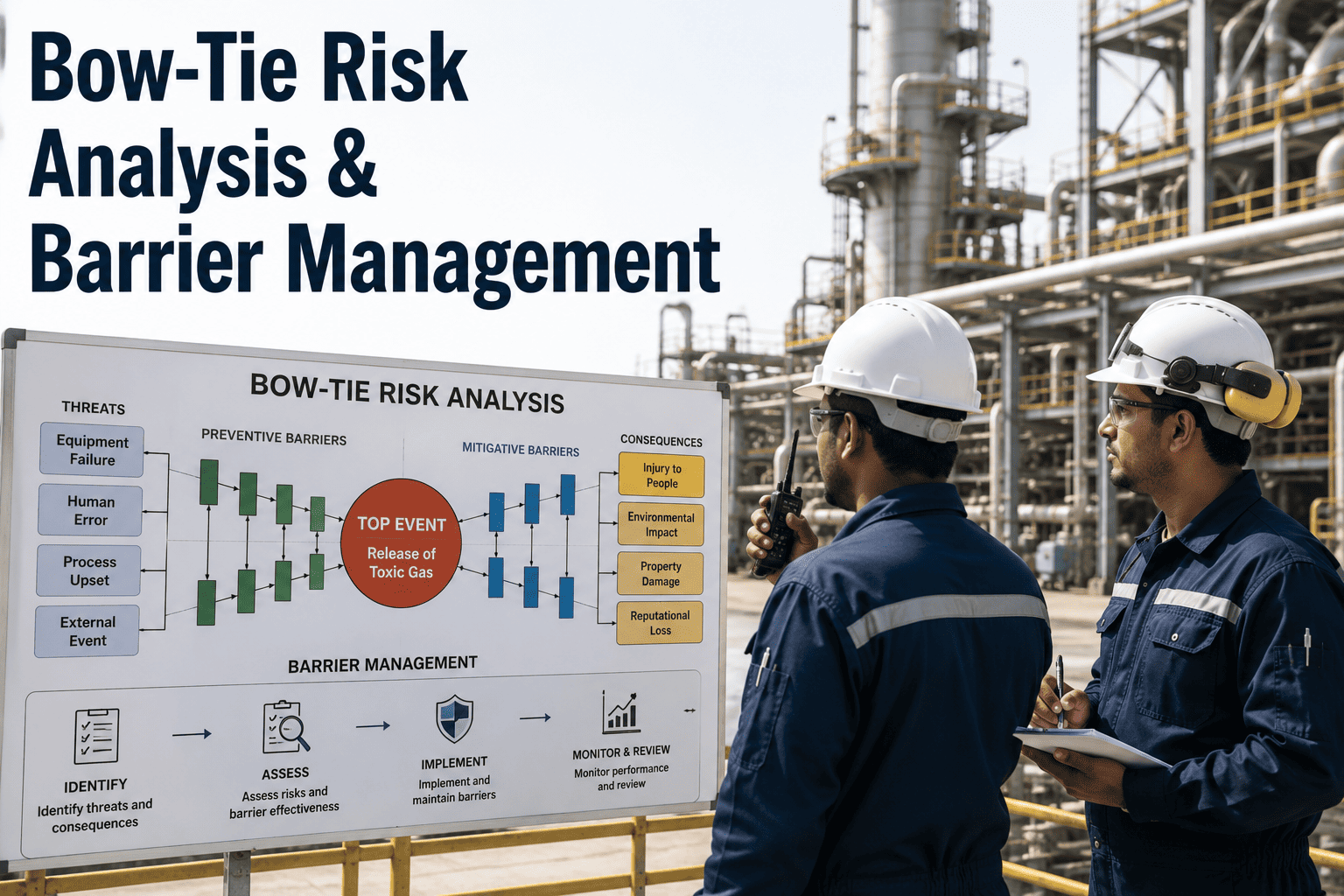
Emergency isolation for alkylation unit acid release scenarios is a layered engineering control problem — not a single valve or a single procedure. The U.S. Chemical Safety Board's investigation of the 2018 Husky Superior refinery explosion specifically cited inadequate remotely operated emergency isolation valves on HF-containing vessels as a contributing factor to consequence severity. API RP 751 and OSHA PSM requirements both mandate that refinery operators maintain operable, tested emergency isolation systems capable of limiting and containing an acid release before it reaches a size that places personnel and the public at risk.
Emergency isolation system readiness — valve operability, deluge system pressure integrity, detector calibration, and acid evacuation system functionality — must be verified on a documented testing schedule and the results retained as PSM compliance evidence. iFactory's predictive maintenance platform can monitor the mechanical condition of isolation valve actuators, deluge system pressure sensors, and detector calibration drift in real time, flagging deterioration in safety-critical system readiness before the next scheduled test date. Book a Demo to see how iFactory's platform integrates safety-critical system monitoring with your alkylation unit's operational analytics.
How AI-Driven Analytics Strengthens Alkylation Unit Acid Management
The operational challenge in alkylation unit acid management is that the most consequential process variables — acid strength, I/O ratio, settler interface level, reactor temperature, and moisture content — interact continuously and produce non-linear degradation patterns that threshold-based alarm systems consistently miss until a deviation has already developed into an operational problem. iFactory's AI-driven analytics platform changes this by training asset-specific ML models on your alkylation unit's historical DCS data, lab analysis records, and CMMS maintenance history — identifying compound degradation signatures across all monitored parameters simultaneously, weeks before they approach critical limits.
iFactory connects directly to OSIsoft PI Historian, AspenTech IP21, SAP PM, and IBM Maximo — ingesting years of alkylation unit process data without manual reformatting. Models learn your unit's specific acid strength behavior, seasonal feed composition patterns, and refrigeration system degradation profiles. Predictive alerts auto-generate work orders in your CMMS with recommended intervention and parts procurement triggers. For facilities managing OSHA PSM compliance, iFactory's predictive maintenance records provide structured documentation supporting PHA revalidation and incident investigation evidence requirements.
Expert Review: What Refinery Engineers Miss in Alkylation Acid Management
Conclusion: Acid Management in Alkylation Units Is a Continuous Monitoring Problem
HF and H2SO4 alkylation units produce some of the most valuable gasoline blending components in any refinery — and carry some of the most consequential operational risks if acid strength, settler performance, I/O ratio, and emergency system readiness are not actively managed. The process variables that drive these risks are not difficult to measure. They are already being measured, in most cases continuously, by the unit's DCS and historian. The gap is analytical: connecting those measurements across time and across parameters in a way that detects compound degradation patterns before they reach the emergency response threshold.
iFactory's AI-driven analytics platform closes that gap by training ML models on your alkylation unit's own historical process data, producing failure probability scores for acid strength drift, settler upsets, cooling system degradation, and safety-critical system readiness — with 1–6 week prediction lead time and CMMS-integrated work order generation. Book a Demo to see how iFactory deploys across your alkylation unit and broader refinery reliability stack in five weeks, with ROI evidence beginning in week three.