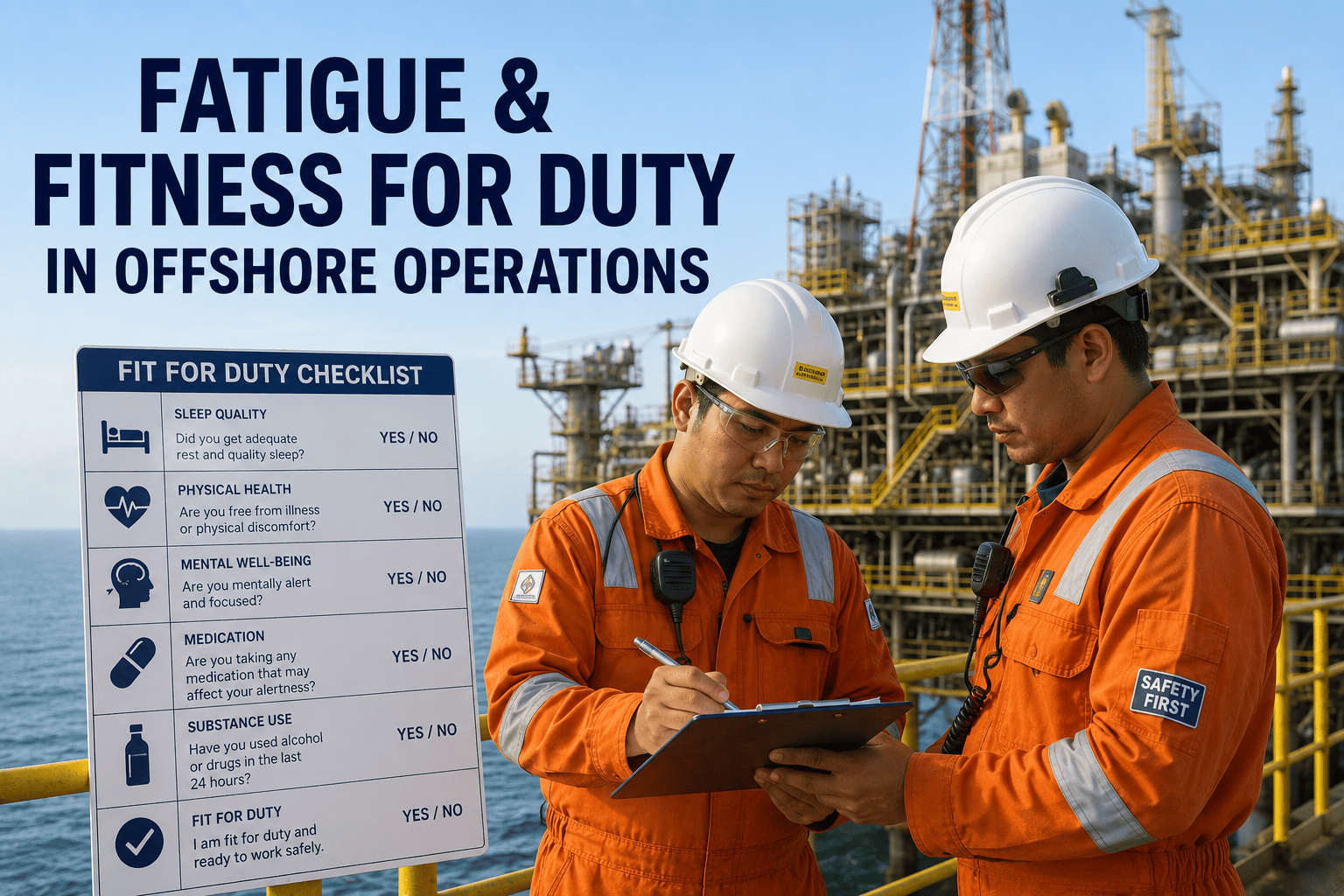
A control room operator on hour eleven of a twelve-hour shift, twenty-two days into a twenty-eight day rotation, is being asked to make the same split-second decisions expected of someone fully rested. The Chemical Safety Board's investigation into a major 2005 refinery disaster found operators had worked twelve-hour shifts for up to twenty-nine consecutive days before the incident — a finding that directly led to API RP 755. Fatigue is not a soft HR issue offshore, it is a process safety variable. See how iFactory tracks fatigue risk alongside your process data — book a demo.
Fatigue Risk Management
Your Riskiest Hour Isn't a Process Upset. It's Hour Eleven of the Shift.
iFactory builds fatigue risk visibility into your offshore and remote operations — shift pattern tracking, fitness-for-duty signals, and API RP 755 alignment in one system.
What Fatigue Actually Costs Offshore Operations
$18B+
estimated annual cost of fatigue-related lost productivity across industry, with the majority from reduced performance rather than absence
17 hrs
awake is roughly equivalent to a blood alcohol level of 0.05% in terms of reaction time and judgment impairment
2–6 AM
the circadian low window where human error rates rise sharply regardless of how experienced the worker is
How API RP 755 Defines a Fatigue Risk Management System
API RP 755, now an ANSI-designated standard, moved the industry from informal hour-tracking to a structured Fatigue Risk Management System covering scheduling limits, individual risk assessment, and supervisor accountability for every safety-sensitive role working night shifts, rotations, extended hours, or call-outs.
12h
Maximum recommended single shift length for most safety-sensitive roles under a compliant FRMS
10h
Minimum rest period required between the end of one shift and the start of the next
7
Maximum consecutive shifts before a mandatory extended rest break is triggered
24h
Minimum recovery window recommended following a call-out that extends a scheduled shift
Bring your current rotation schedule. iFactory will show you exactly where your shift patterns cross API RP 755 thresholds before an auditor does.
Five Warning Signs a Rotation Is Running Fatigued
01
Repeated call-outs stacking on top of scheduled shifts — each one erodes the rest period the next shift depends on.
02
Rising near-miss reports during the back half of a rotation — a pattern that tracks almost exactly with cumulative sleep debt.
03
Slower response times logged on routine checks and rounds — often the earliest measurable sign before an incident report exists.
04
Increased reliance on caffeine and stimulant use late in rotation — a coping signal, not a fatigue solution.
05
Crew self-reporting alertness scores trending downward — the single most predictive leading indicator when it's actually collected.
Fitness for Duty: Beyond the Hours Log
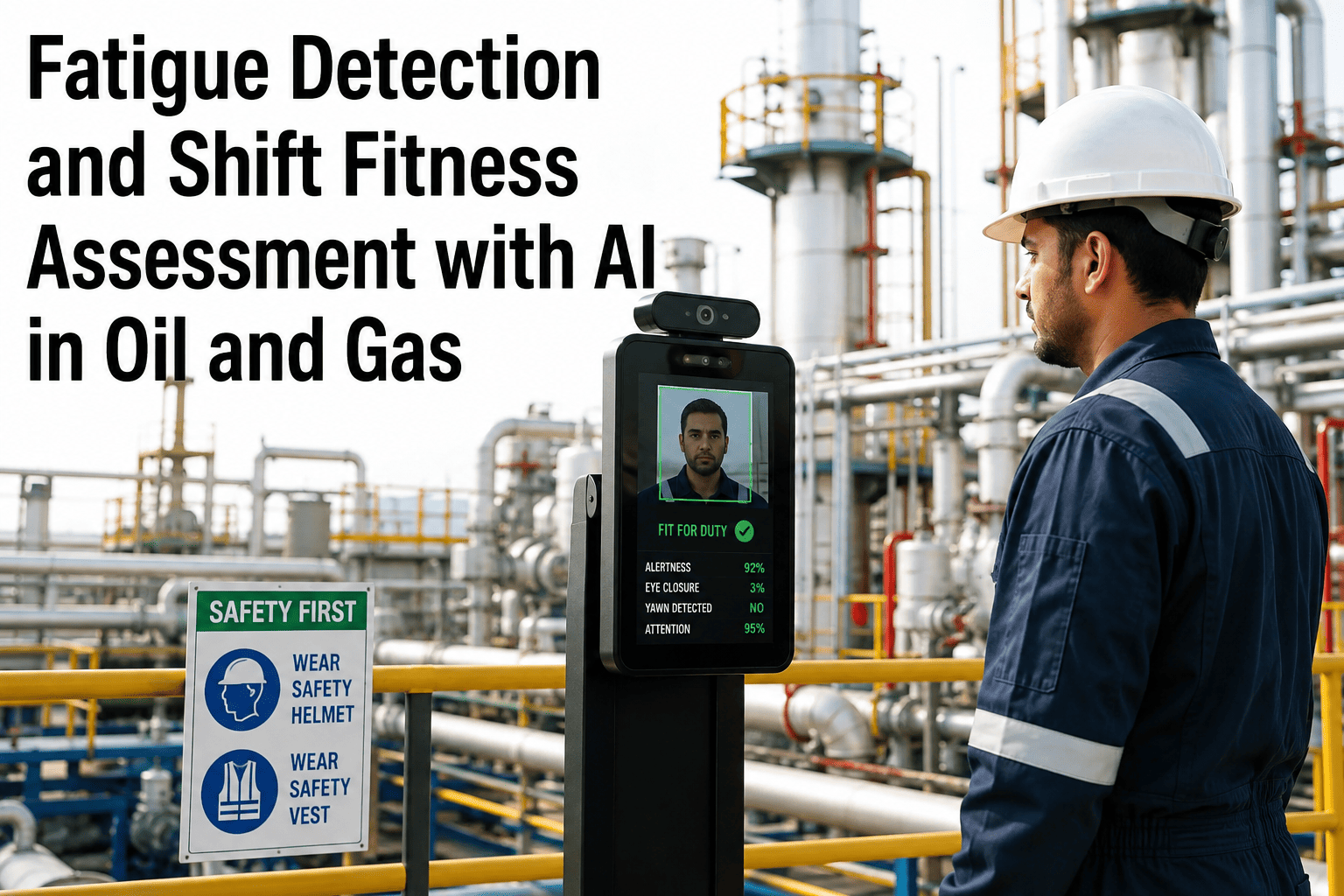
Objective Alertness Screening
Validated reaction-time and vigilance tools give a measurable fitness signal before a safety-critical task, rather than relying on self-report alone.
Environmental & Sleep Conditions
Cabin lighting, noise, and sleep-quarter conditions on offshore assets directly affect recovery quality between shifts, not just shift length itself.
Individual Risk Factors
Commute time, health conditions, and personal circumstances mean two workers on the same schedule can carry very different fatigue risk.
Supervisor Accountability
Trained supervisors empowered to stand down a fatigued worker without penalty are the backbone of a functioning FRMS, not just policy on paper.
Manual Hour-Tracking vs. an Integrated Fatigue Risk System
| Fatigue Risk Activity | Manual Hour-Tracking | iFactory Fatigue Risk System |
| Shift limit violations |
Caught during payroll review |
Flagged before the shift is scheduled |
| Call-out impact on rest |
Not automatically recalculated |
Rest window recalculated in real time |
| Alertness trend visibility |
Not systematically collected |
Tracked across the full rotation |
| Supervisor escalation |
Informal, inconsistent |
Structured stand-down workflow |
| API RP 755 audit readiness |
Weeks of manual reconstruction |
Reportable on demand |
Where Fatigue Risk Management Matters Most
Offshore Platforms
Extended rotations and isolated environments make recovery quality between shifts especially difficult to monitor without a system.
Control Rooms
Process safety-sensitive decision-making roles carry the highest consequence when alertness drops during a shift.
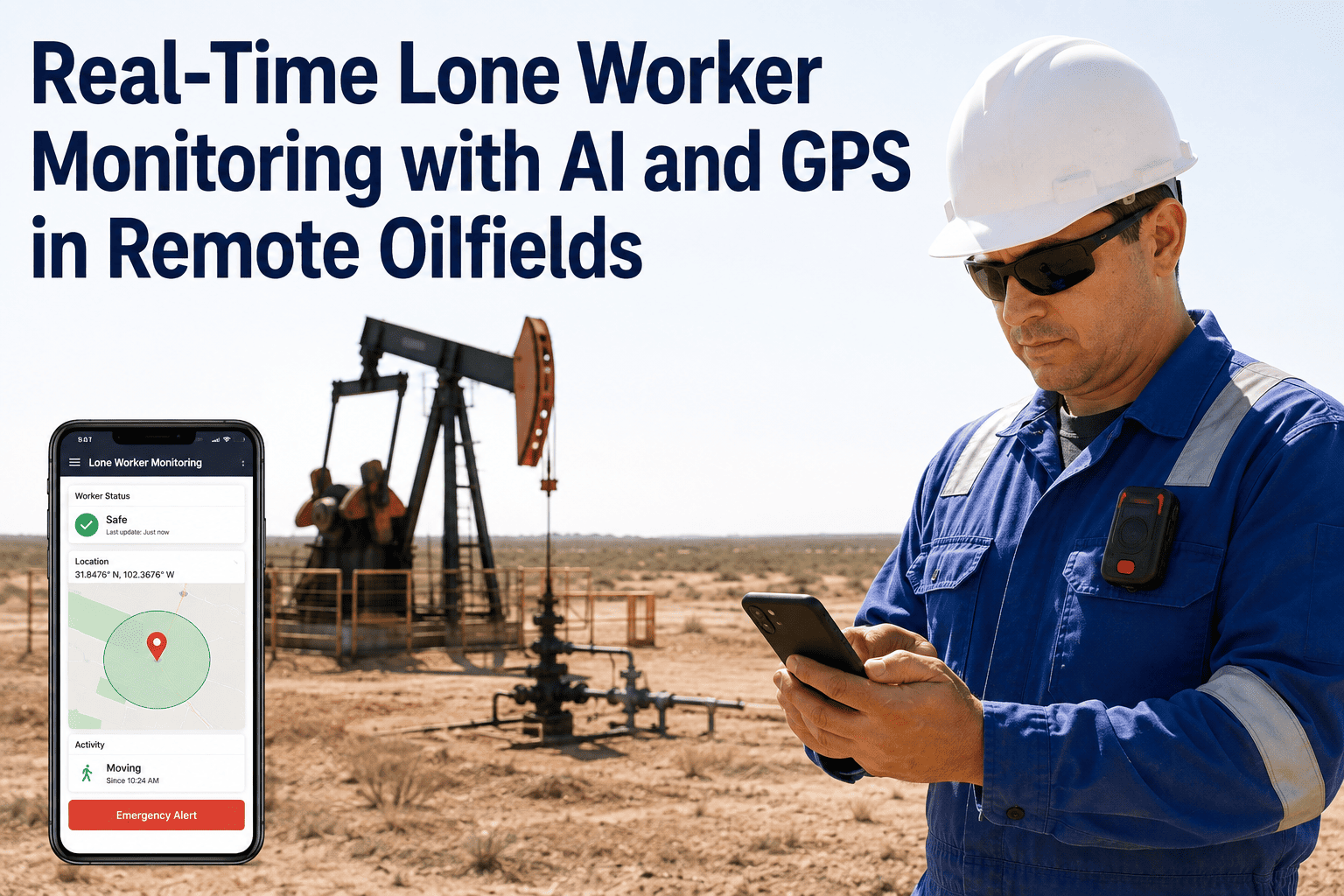
Remote Pipeline & Field Sites
Long commute times and on-call responsibilities compound scheduled hours in ways a simple hours log misses entirely.
Turnaround & Shutdown Crews
Compressed schedules and extended shifts during turnarounds are exactly when fatigue risk peaks fastest.
What a Mature Fatigue Program Looks Like Day to Day
Compliance on paper and a functioning FRMS are not the same thing. A mature program shows up in small, everyday behaviors: a worker flags themselves as unfit for a lifting operation without hesitation, a supervisor reassigns a fatigued crew member to a lower-risk task without treating it as a performance issue, and a rotation that's about to breach a consecutive-shift limit gets rescheduled before it happens rather than justified after the fact. None of that happens automatically just because a policy document exists — it requires visibility into the schedule and the alertness data in the moment a decision needs to be made, not in a quarterly report reviewed long after the shift has ended.
Building the Case for Investing in Fatigue Risk Management
Incident Cost Avoidance
A single fatigue-related incident in a safety-sensitive role can cost far more than years of a fatigue monitoring program, before accounting for regulatory exposure.
Retention & Morale
Crews that see fatigue reporting genuinely acted on, rather than penalized, tend to self-report earlier and more honestly.
Audit & Insurance Standing
Demonstrable API RP 755 alignment is increasingly a factor in both regulatory audits and operational risk insurance reviews.
FAQ: Fatigue and Fitness for Duty Offshore
Is API RP 755 legally mandatory for offshore and remote oil and gas operations?
API RP 755 is a recommended practice rather than a federal regulation, but it has been designated an American National Standard by ANSI and is widely treated as the industry benchmark for demonstrating due diligence on fatigue risk. Facilities covered by OSHA's Process Safety Management standard are expected to address fatigue as a contributing hazard, and RP 755 is the accepted framework for doing so. Many operators also apply it contractually to offshore and remote sites beyond its original refining and petrochemical scope, since the underlying physiology of fatigue doesn't change by facility type.
How is fitness for duty different from simply tracking hours worked?
Hours worked is one input into fatigue risk, but two workers who worked identical hours can arrive at a shift in very different states depending on sleep quality, commute time, health, and personal circumstances. Fitness for duty looks at the person's actual readiness for the task at hand, using objective screening tools alongside the schedule data, rather than assuming a compliant roster automatically means a rested crew. This is why a strong FRMS pairs scheduling limits with individual risk assessment rather than relying on either alone.
What should happen when a worker is flagged as too fatigued for a safety-critical task?
A functioning fatigue risk management system gives supervisors a clear, non-punitive stand-down process: the worker is reassigned to a lower-risk task, given a rest break, or relieved for the remainder of the shift without it counting against them. The key design principle from API RP 755 is that reporting fatigue must never be discouraged, because a culture where workers hide fatigue to avoid consequences produces worse outcomes than the fatigue itself.
Ask our team how stand-down workflows are configured.
Can a fatigue risk system integrate with our existing shift scheduling software?
Yes. iFactory is built to sit alongside your existing scheduling and workforce management tools, pulling shift, call-out, and rotation data to calculate rest windows and flag violations automatically rather than requiring a full scheduling system replacement. This keeps your existing rostering workflow intact while adding the fatigue-specific logic — cumulative shift limits, circadian exposure, and recovery tracking — that generic scheduling tools were not built to handle.
How quickly can an offshore or remote site get fatigue risk visibility running?
For a site with an existing digital shift roster, baseline fatigue risk dashboards covering shift-limit compliance and rest-window tracking are typically live within two to three weeks. Adding alertness screening and supervisor stand-down workflows extends that timeline modestly depending on crew size and rotation complexity.
Book a demo to scope your rollout.
Fatigue Risk + iFactory
Fatigue Is a Safety Variable. Start Managing It Like One.
iFactory gives offshore and remote operations real-time visibility into shift risk, fitness for duty, and API RP 755 compliance — before fatigue becomes an incident report.