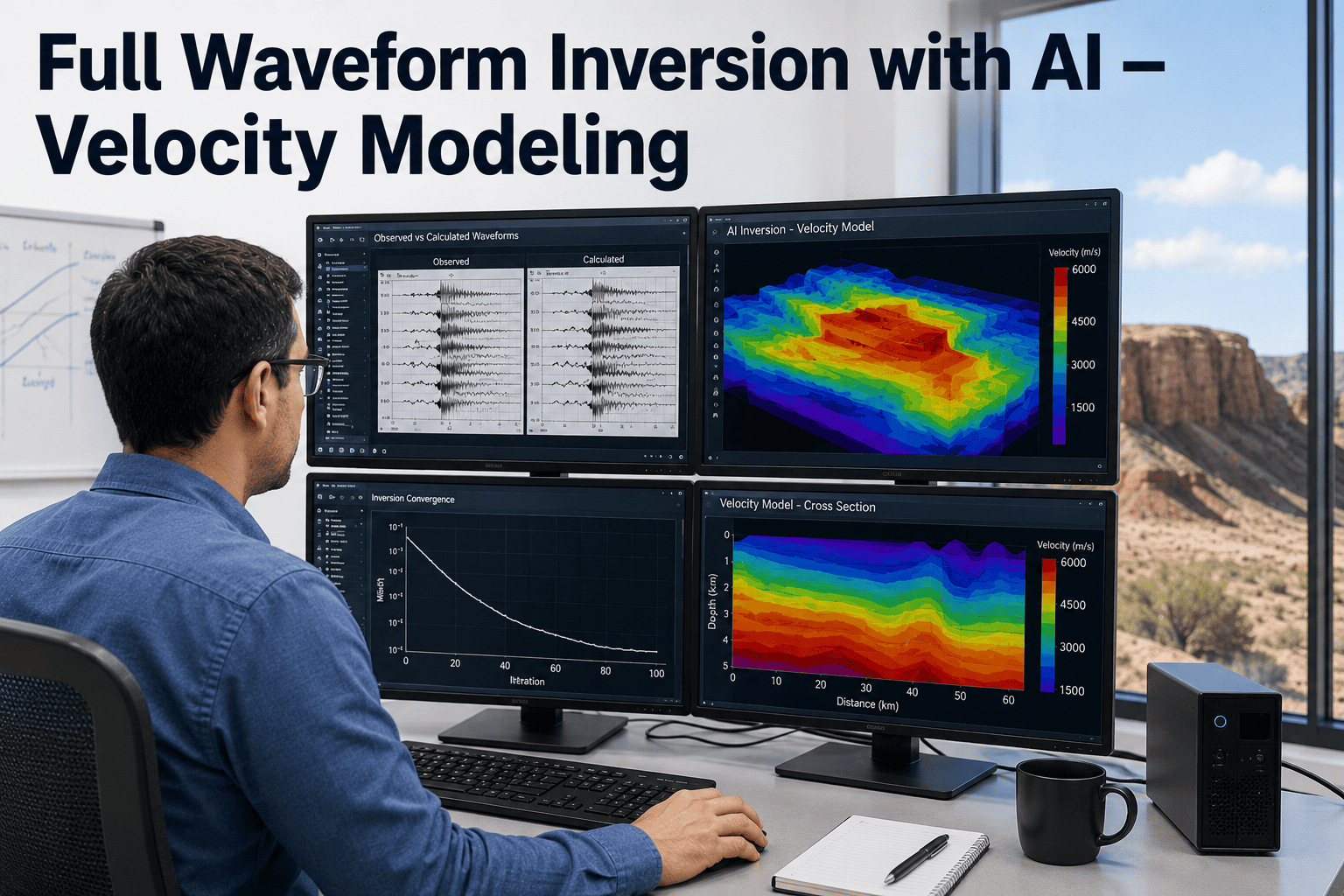
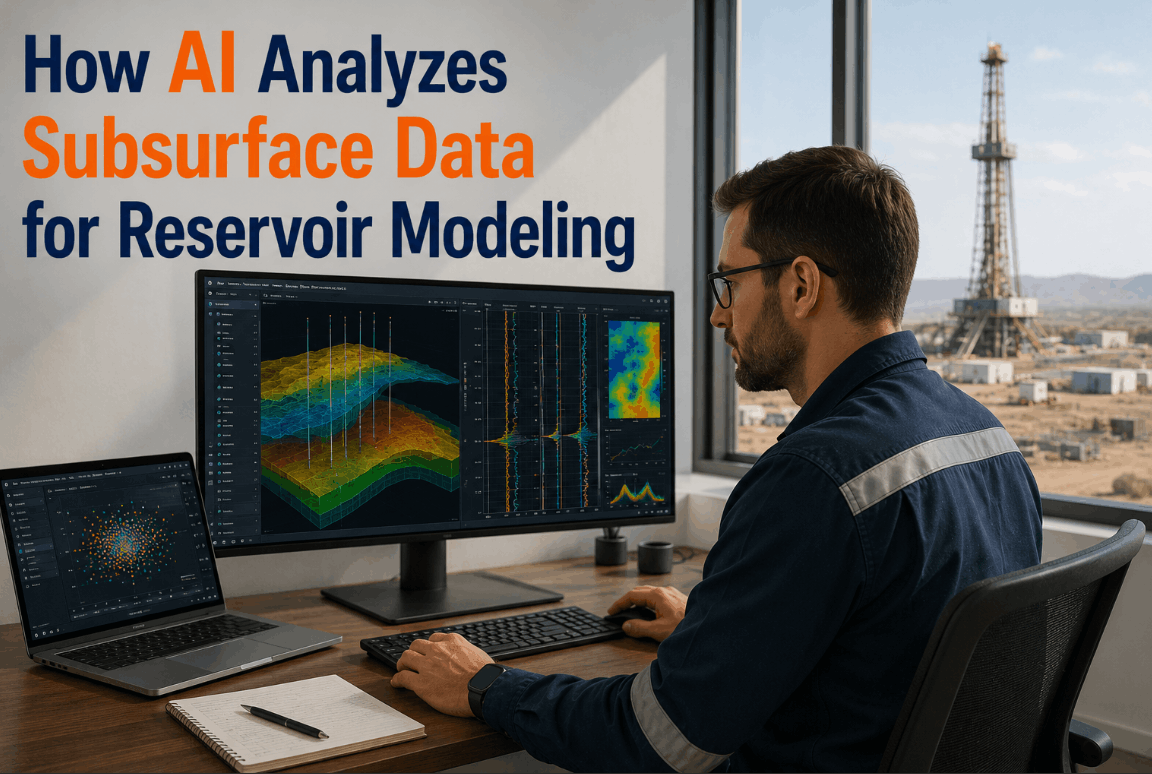
A drilling program lives or dies inside a narrow window between two limits: the pore pressure that will kick the well if mud weight drops below it, and the fracture gradient that will cause losses if mud weight climbs above it. Getting that mud weight window wrong is one of the most common causes of drilling incidents, and it usually happens because the geomechanical model behind it was built from sparse offset well data and a fair amount of engineering judgment about how stress behaves between control points. AI-assisted geomechanical modeling integrates seismic, log, and drilling data into a single 3D model that narrows those uncertainty margins before the bit ever gets there. A demo can show this modeled against a well you're currently planning.
Seismic Data Analytics
Geomechanical Modeling — Stress & Pore Pressure AI
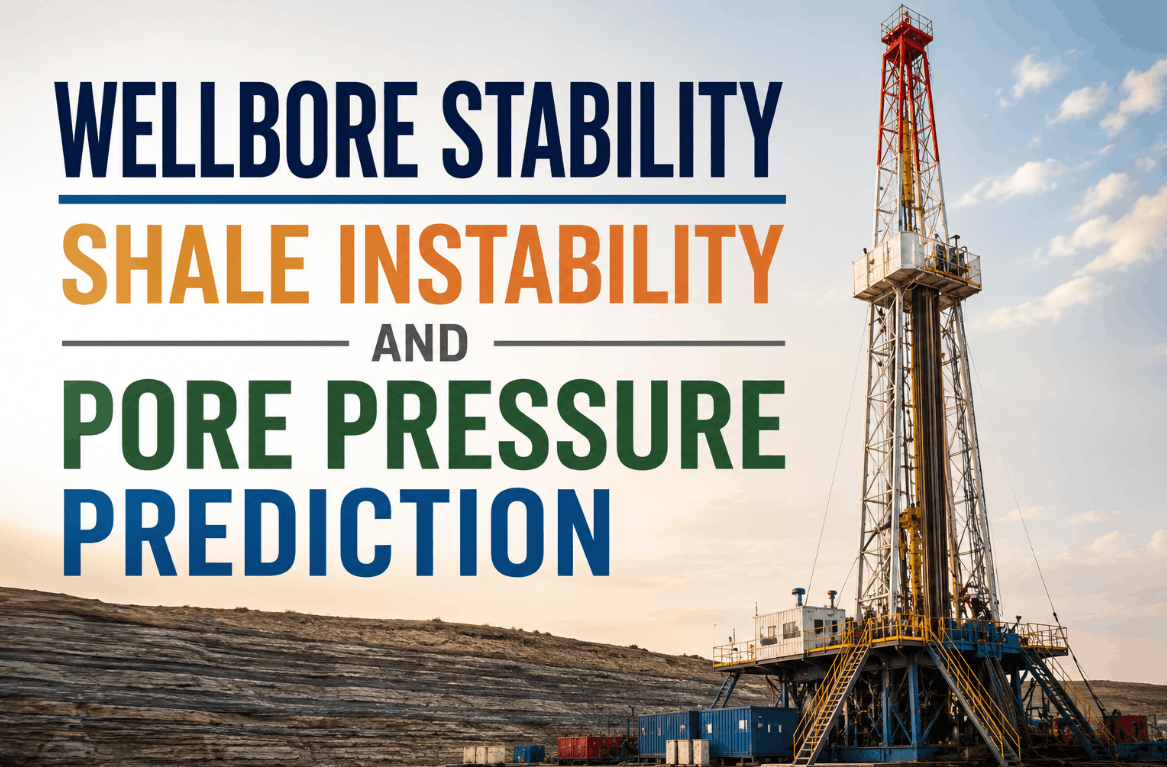
Build 3D geomechanical models that integrate seismic, log, and drilling data to predict pore pressure, stress, and wellbore stability before spud.
Why the Mud Weight Window Keeps Getting Missed
Traditional pore pressure prediction leans heavily on offset well data, applying empirical relationships calibrated to nearby wells and extrapolating them to the new location. That works reasonably well when the new well sits close to good offset control in similar geology. It works poorly the moment the well steps into a structurally different area, crosses a fault, or targets a formation with limited prior drilling history, exactly the situations where getting the pressure prediction wrong carries the highest cost.
The consequence of a narrow miss on either side of the window is expensive either way. Underestimating pore pressure risks a kick and, in the worst case, a well control event. Overestimating it means running a heavier mud weight than necessary, which increases the risk of losses into weaker formations and can damage reservoir quality on the way in. Both outcomes trace back to the same root cause: a geomechanical model built on sparse data and extrapolated further than the data actually supports.
What Feeds the Model
Seismic Velocity Data
Interval velocities provide a continuous, spatially complete estimate of pore pressure trends between well control points.
Well Log Data
Sonic, density, and resistivity logs calibrate the seismic-derived trend against direct measurements at each offset well.
Drilling Data
Mud weights used, kicks, losses, and gas readings from offset wells provide hard evidence of where the actual pressure window sat.
Regional Stress Data
Known fault orientations and stress regime data help the model account for structural effects that a purely vertical pressure trend would miss.
The Mud Weight Window, Visualized by Depth
Pore PressureFracture Gradient
The gap between the pore pressure line and the fracture gradient line at each depth is the safe mud weight window. Where that gap narrows, drilling margin shrinks and mud weight has to be managed with far less room for error, which is exactly the kind of depth interval a geomechanical model needs to flag clearly before the well plan is finalized rather than after a near-miss incident during drilling.
Reactive vs Predictive Geomechanics
Reactive Approach
Mud weight window based on offset well trends extrapolated with limited adjustment for local structure
Narrow-margin zones often identified only after a kick, loss, or stuck pipe event during drilling
Predictive Approach
3D model integrates seismic, logs, drilling history, and structural data before the well is spudded
Narrow-margin zones flagged in the well plan, with casing and mud program adjusted in advance
Model It Before You Drill
See Your Well's Mud Weight Window Before Spud
Bring offset well data and target formation details and see where drilling margin genuinely narrows across the planned trajectory.
What the Model Predicts and Why It Matters
| Parameter | What It Predicts | Why It Matters |
|---|
| Pore pressure | Formation fluid pressure by depth | Sets the minimum safe mud weight to prevent a kick |
| Fracture gradient | Pressure at which the formation will fracture | Sets the maximum safe mud weight before losses occur |
| Minimum horizontal stress | Stress magnitude perpendicular to the wellbore | Informs casing design and hydraulic fracturing planning |
| Wellbore stability | Risk of breakout or collapse at a given mud weight | Reduces stuck pipe and washout risk in the planned trajectory |
| Cap rock integrity | Sealing capacity of overlying formations | Relevant for injection, storage, and long-term containment planning |
Frequently Asked Questions
How much offset well data is needed to build a reliable model?
More offset data always improves calibration, but the model is designed to combine whatever log and drilling data exists with the seismic velocity trend, so a reasonable model can still be built in areas with limited offset control. Confidence in the prediction is reported explicitly, so the well planning team knows exactly where the model is well constrained and where it's extrapolating further.
A demo can show confidence reporting on a real well plan.
Can this model account for faults and structural complexity?
Yes, and this is one of the areas where it improves most on a purely offset-well-based approach. Known fault orientations and regional stress data are incorporated directly, so the predicted pressure and stress fields reflect structural effects rather than assuming a simple vertical trend that ignores nearby faulting.
Does this replace the need for real-time pressure monitoring while drilling?
No, real-time monitoring while drilling remains essential regardless of how good the pre-drill model is. What the model changes is how much of a surprise any given interval is likely to be, well planning built on a solid pre-drill model gives the drilling team a much better baseline expectation to compare real-time readings against.
How is this different from traditional pore pressure prediction software?
Traditional software typically applies a single empirical relationship extrapolated from offset wells along a 1D or pseudo-3D trend. This approach integrates seismic velocity, well logs, drilling history, and structural data into a genuinely 3D model, and continuously improves its calibration as new well data from the same field is incorporated.
Support can walk through how calibration updates work over time.
Is this useful for fields with a long drilling history, or only new exploration areas?
Both, but for different reasons. In mature fields, the model can incorporate a large volume of historical drilling data to sharpen prediction accuracy considerably. In new exploration areas with little or no offset control, it provides a structurally informed starting estimate that is far better constrained than a generic regional trend applied without local calibration.
Ready When You Are
Build a Geomechanical Model That Reflects Your Actual Subsurface
See pore pressure, stress, and wellbore stability predictions modeled against your own field data before the next well is planned.