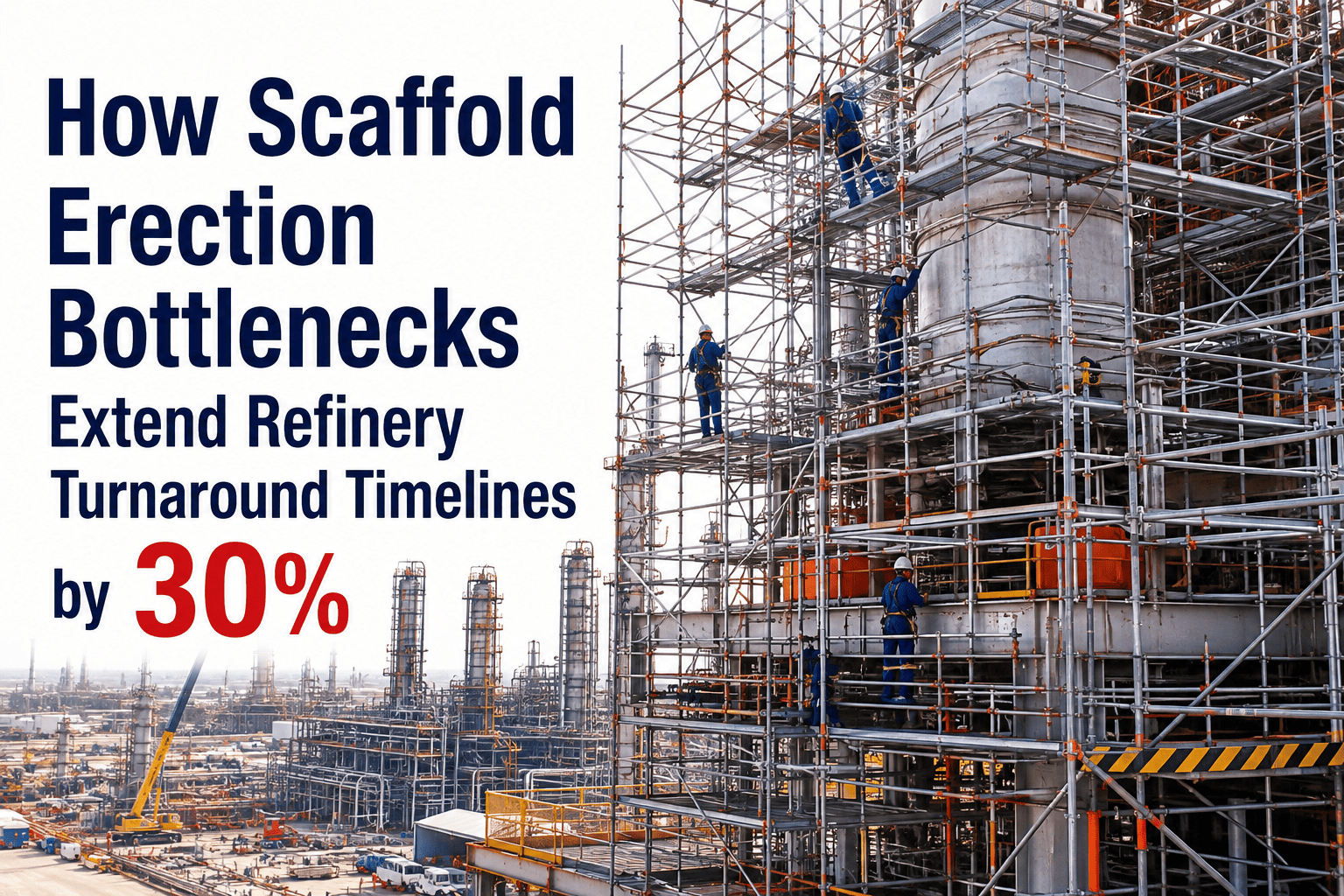
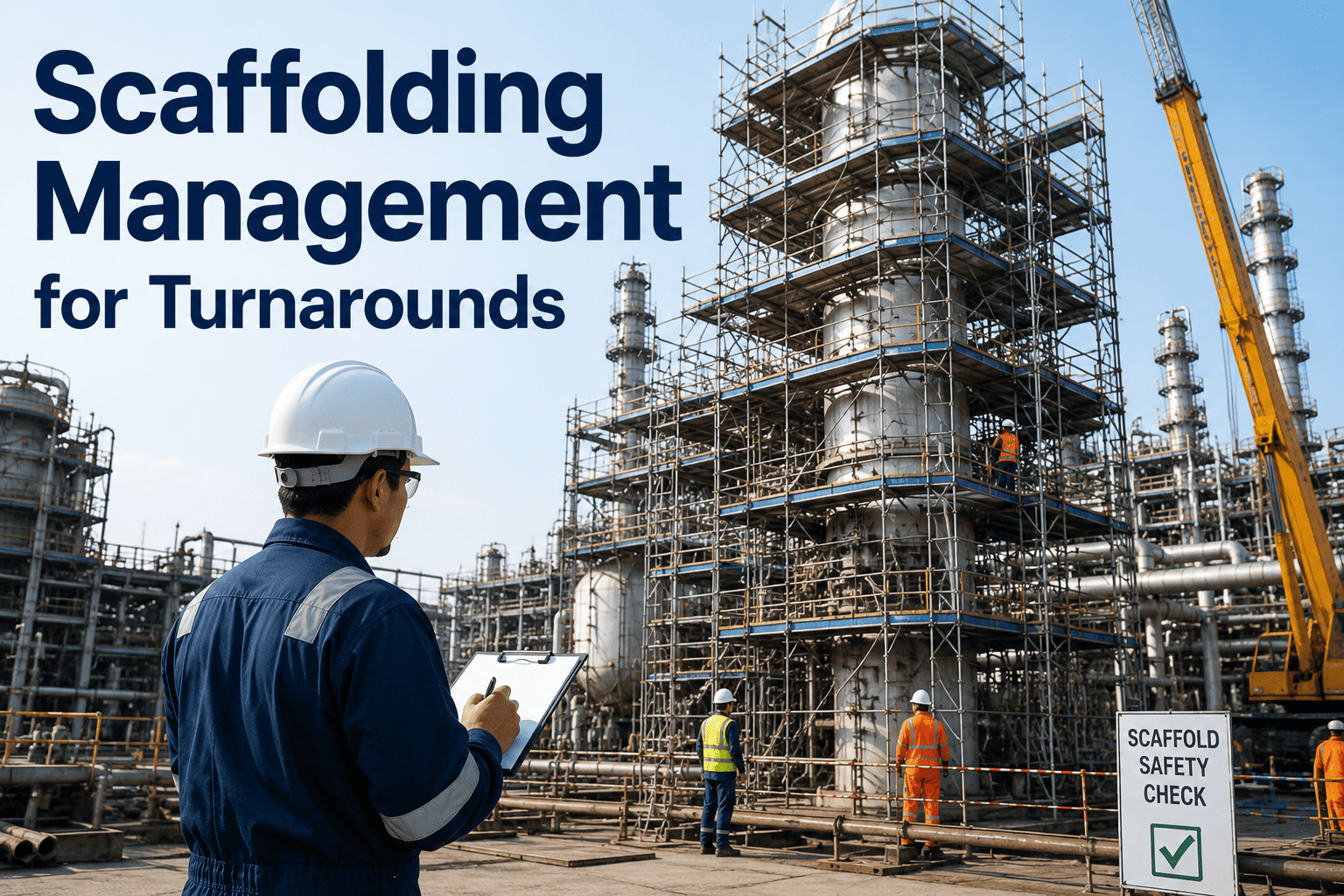
A distillation column scaffold at a Gulf Coast refinery does not go up once. It goes up for tray access, comes down for the entry permit, and goes up again when inspection finds a repair nobody scoped. Multiply that across forty vessels and a flare stack, and scaffold stops being a support activity and becomes the schedule itself. Benchmarking across major process units consistently shows scaffold erection and dismantling consuming 15-25% of total turnaround critical path duration. See how iFactory's planning tools model scaffold dependency against your work order backlog before the next scope freeze locks in the same bottleneck.
Refinery Turnaround Optimization
Scaffold Erection Is Quietly Running Your Turnaround Schedule
Most turnaround directors track critical path by mechanical scope: exchanger bundles pulled, trays replaced, relief valves tested. Few track it by access scope — and access scope, driven almost entirely by scaffold, is where 30% of schedule overrun actually originates.
15-25%Of critical path duration consumed by scaffold erection and dismantling
$250K-$500KTypical annual scaffold spend per process unit
80%Of turnarounds exceed budget, largely from scope-driven rework
Why This Bottleneck Is Structural, Not Occasional
The Access Problem Nobody Schedules For
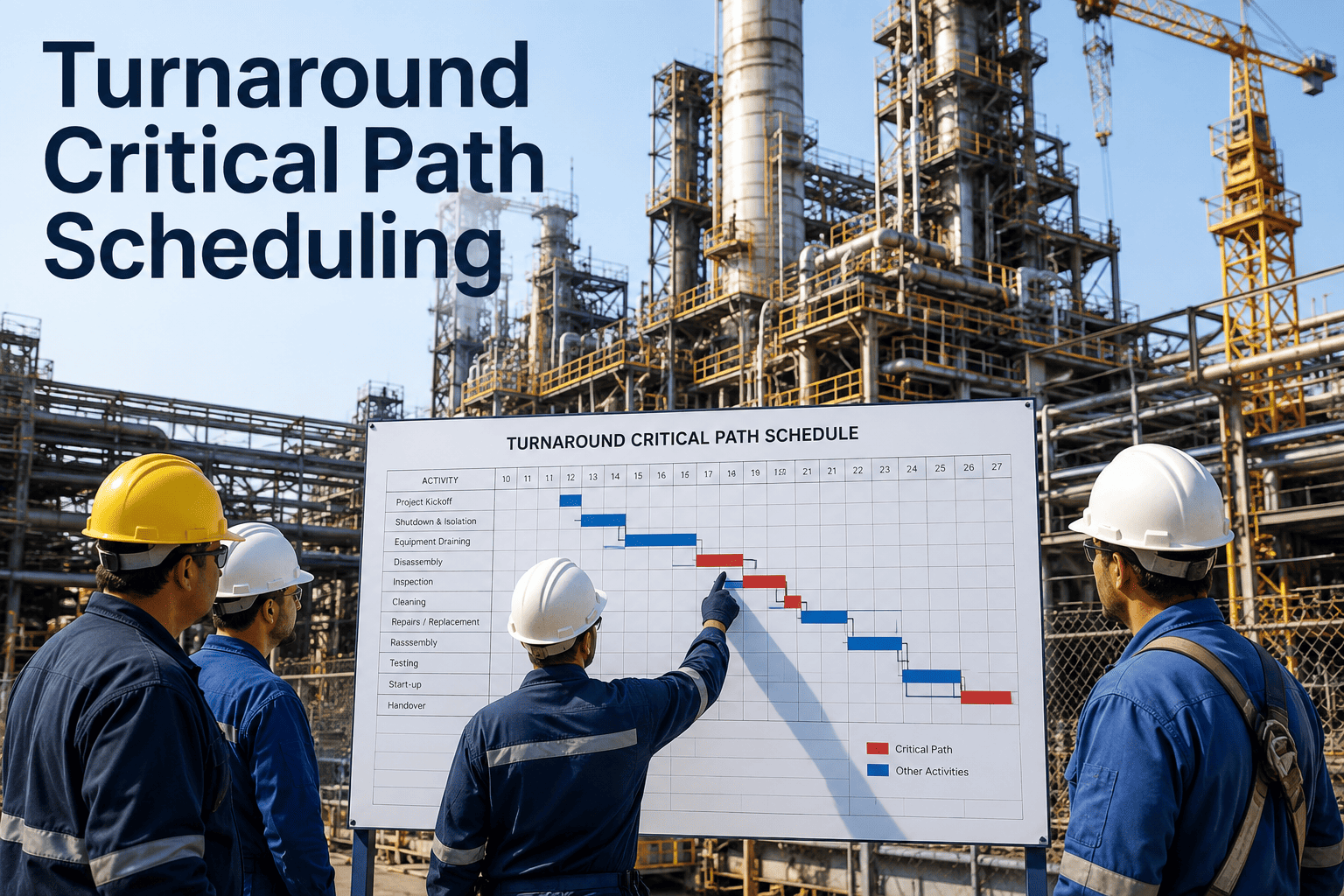
Turnaround schedules are built around mechanical work: pull the bundle, re-tube the exchanger, gauge the column wall, replace the tray deck. Scaffold is treated as a prerequisite line item, usually a single bar on the Gantt chart labeled "erect scaffold" with a duration nobody has stress-tested. In practice, scaffold is not one task. It is a dependency chain that touches almost every other work package, and it breaks in four predictable ways. Because none of these four failure modes shows up as a distinct line in a resource-loaded schedule, they tend to get absorbed into a generic "contingency" buffer rather than planned against directly, which is exactly why the same pattern repeats turnaround after turnaround.
01
Sequential Re-Erection
A single vessel often needs scaffold for internal access, comes down for confined space entry certification, and goes back up for post-repair inspection. Each cycle is a full crew mobilization, not a modification, which means engineering sign-off, wind-load recalculation, and a new erection permit every time the structure is rebuilt.
02
Scope Growth After Freeze
Inspection findings after scope freeze routinely require access nobody planned scaffold crews for. The scaffold contractor gets pulled off the critical path to build an unplanned structure while planned work stalls behind it, and the crew that should have started the next scheduled erection is now working an emergency request instead.
03
Crew Contention
A large turnaround runs hundreds of contractors simultaneously, and scaffold crews are one of the most contested resources on site. When two units need erection on the same day, one waits, and everything downstream of it waits too, because mechanical, inspection, and coatings crews cannot start until the structure they depend on exists.
04
Inspection-Driven Access
Visual and NDT inspection of columns, stacks, and internals is still overwhelmingly scaffold-dependent at most shops, even when the inspection itself takes twenty minutes once access exists. The structure, not the work, sets the duration, and that ratio rarely appears in the planning conversation until the outage is already underway.
Where the Days Actually Go
A Single Column Scaffold Cycle, Broken Into Its Real Components
A 50-metre column scaffold on a real refinery turnaround, benchmarked against published contractor case data, illustrates why the bottleneck is so persistent. The mechanical work the scaffold enables often takes less time than the structure built to reach it.
Day 1-2
Engineering & Site Survey
Wind load calculations, clash checks against existing piping and lift paths, and a 3D scan where site conditions are not fully documented before the outage begins.
Day 3-6
Erection
Full crew mobilization to build the structure around the column, coordinated with crane paths and adjacent units still running or in shutdown sequence.
Day 7
Actual Mechanical & Inspection Work
Tray replacement, internal inspection, and NDT gauging — the work the entire structure exists to support — frequently completes in under a day once access is in place.
Day 8-9
Dismantling
Structure comes down, materials are staged for the next unit, and the crew moves to the next contested scaffold request in the queue.
Self-Diagnosis
Six Signs Your Last Turnaround Had This Problem
Most planning teams underestimate their own scaffold exposure because the cost gets buried across dozens of individual work orders rather than appearing as one obvious line. These six patterns, pulled from post-turnaround reviews across contract machining and refining sites, are the clearest tell.
More than one scaffold re-erection request was logged against the same vessel or column within a single outage window.
Scaffold crew availability, not mechanical crew availability, was the stated reason for a work package slipping a day or more.
Post-turnaround review flagged inspection findings that surfaced after scope freeze and required emergency access to be built.
The scaffold line item in the final cost reconciliation exceeded the original budget by more than 15%.
Full-height column scaffolding was erected for work that, in hindsight, a targeted platform or basket lift could have covered.
Nobody on the planning team could produce a scaffold-specific critical path chart separate from the overall mechanical schedule.
Model The Bottleneck Before It Costs You Days
See Your Own Scaffold Dependency Chain Mapped Against Critical Path
iFactory's engineering team runs a scaffold-dependency audit against your last turnaround's actual schedule data and returns a report showing exactly where re-erection cycles cost you days, at no cost to scope your next outage.
Root Cause Breakdown
The Six Contributors Behind The 30% Overrun Figure
Turnaround directors rarely see a single cause when they investigate why a unit ran long. It is a compounding stack of smaller scaffold-driven delays, each individually reasonable, together adding up to a third of the schedule.
28%
of scaffold cost sits in erection and dismantling labor alone, the single largest line item in the entire access budget, and the one most sensitive to how many times a structure has to go up.
22%
of scaffold rework traces to inspection findings discovered after scope freeze, when the crew has already demobilized from that unit and has to be re-mobilized on short notice at a premium rate.
18%
of schedule slip on scaffold-dependent tasks comes from crew contention across simultaneous unit outages competing for the same erection teams, a problem that compounds during peak spring and fall turnaround season.
15%
is lost to sequencing errors, where scaffold is erected before permits, isolations, or lift paths are confirmed, forcing partial rebuilds once the missing prerequisite finally clears.
10%
comes from over-conservative scaffold requests, where planners specify full-height structures for work that a targeted platform would cover, adding days of unnecessary build time.
7%
is weather and wind-load related downtime on tall column and stack scaffolds, particularly during hurricane-season Gulf Coast turnarounds where erection has to pause entirely.
Cost & Duration By Access Type
How Scaffold-Dependent Access Compares Across Common Turnaround Assets
Not every asset carries the same scaffold burden. Tall columns and stacks are disproportionately expensive to access, which is exactly where planning attention should concentrate first.
| Asset Type | Typical Scaffold Duration | Erection Cost Range | Re-Erection Frequency |
| Distillation Column (30-60m) |
6-9 days |
$45K-$120K |
2-3 cycles |
| Flare Stack |
3-5 days |
$25K-$60K |
1-2 cycles |
| Shell-and-Tube Exchanger Bank |
2-4 days |
$12K-$35K |
1-2 cycles |
| Storage Tank (internal) |
4-7 days |
$20K-$55K |
1 cycle |
| Reactor Vessel |
5-8 days |
$35K-$90K |
2-3 cycles |
Columns and reactor vessels sit at the top of both cost and duration because their height multiplies engineering review time, wind-load complexity, and the number of trades that need simultaneous access at different elevations. Planning teams that concentrate optimization effort on these two asset classes first typically see the largest schedule recovery for the smallest planning investment, since a handful of tall assets frequently accounts for a disproportionate share of total site scaffold spend.
Closing The Gap
Five Ways AI-Optimized Planning Cuts The Scaffold Critical Path
None of these approaches eliminate scaffold. They eliminate the unplanned cycles, the contention, and the over-specification that turn a necessary structure into an accidental bottleneck.
01
Cross-Reference Inspection History Against Scope Before Freeze
AI models cross-check RBI and inspection databases against draft work order lists before scope freeze, catching findings that would otherwise surface mid-turnaround and force a second scaffold cycle. This is the single highest-leverage step, since every finding caught before freeze is one less emergency mobilization during execution.
02
Resource-Level Scaffold Crews Like Any Other Craft
Scaffold crews get modeled as a constrained resource pool with the same rigor as welders or pipefitters, so the schedule reflects real crew availability instead of an assumed infinite supply that quietly breaks down the moment two units need erection on the same day.
03
Right-Size Structures To The Actual Work Package
Historical work order data flags where a full-height column scaffold was requested for a task a targeted platform or basket lift would cover, reducing both erection time and cost per request without under-specifying access for the work that genuinely needs it.
04
Sequence Erection Against Permits and Isolation Status
Automated readiness checks confirm permits, isolations, and lift paths are locked before erection starts, cutting the partial rebuilds that come from starting scaffold work too early on a structure that then has to be modified around a late-arriving permit.
05
Continuously Rebalance As Scope Changes
When new work is added mid-turnaround, the schedule model re-sequences scaffold crews across all affected units in minutes rather than waiting for the next daily planning meeting to catch the conflict, keeping the access schedule current instead of a day behind reality.
The Business Case
What A Predictable Scaffold Schedule Is Worth
On a real refinery turnaround, AI-driven risk prioritization that cross-referenced inspection data against planned work reduced late-stage execution scope additions from fourteen items to three — and the resulting drop in unplanned scaffold re-erection saved over two million dollars on scaffolding alone, without changing a single scaffold vendor or crew rate. The planning team did not negotiate a better rate or switch contractors; they simply removed the eleven late-breaking findings that used to trigger an emergency mobilization, and the savings followed directly from fewer cycles rather than cheaper ones.
Unplanned scaffold re-erection cycles (before)14 units
Unplanned scaffold re-erection cycles (after)3 units
Scaffolding cost saved$2.1M+
Critical path days recovered4-7 days
Field Perspective
Every turnaround director I've worked with can tell you their mechanical critical path down to the hour. Almost none of them can tell you their scaffold critical path the same way, because it's treated as infrastructure rather than a schedule dependency in its own right. The turnarounds that come in on time are the ones where someone owns scaffold sequencing with the same discipline as a lead mechanical planner.
Marcus Delaney
Turnaround Planning Lead, Downstream Refining · 21 years in shutdown and outage management
Common Questions
Frequently Asked Questions
Why does scaffold erection consume so much more of the critical path than the actual repair work it enables?
Scaffold duration is driven by engineering review, crew mobilization, and structural build time, none of which scale down for a short mechanical task. A column inspection that takes twenty minutes still requires the same multi-day erection and dismantling cycle as a three-day repair, because the access structure has to meet the same wind-load and clash-check standards regardless of how long someone works inside it. This mismatch is exactly why scaffold consistently ranks as the single largest access-driven contributor to overall turnaround duration.
Talk to our engineering team about modeling this ratio against your own unit list.
How much of a typical turnaround budget goes to scaffolding specifically?
Refineries typically spend between $250,000 and $500,000 per year per process unit on scaffolding, with complex Gulf Coast facilities often exceeding that range due to $65-$75 per hour labor rates and extended erection cycles on tall columns and stacks. Across a full turnaround touching a dozen or more units, scaffold routinely represents one of the three largest line items in the entire outage budget, alongside labor and materials procurement, and it is usually the line item planning teams have the least granular visibility into once the outage is underway.
Can better scheduling actually reduce scaffold cost, or only labor cost?
Both. Reducing unplanned re-erection cycles cuts labor and rental cost directly, since each cycle is a full crew mobilization regardless of how small the triggering work item is. It also recovers schedule days, which reduces the extended-outage cost of lost production that typically dwarfs the scaffold line item itself on any unit running behind plan. Facilities that track both metrics separately tend to find the schedule-day savings are worth several times the direct labor savings alone.
What data does a shop need to model its own scaffold critical path?
A useful starting point is the last two turnarounds' actual schedule data, RBI and inspection history, and the scaffold vendor's erection and dismantling logs by unit. Cross-referencing these three sources typically surfaces the same pattern seen industry-wide — a small number of assets driving a disproportionate share of re-erection cycles.
Book a scoping call to walk through what your own data would show.
Does this apply to smaller turnarounds, or only major multi-week outages?
The pattern holds at any scale, though the dollar impact is naturally larger on major turnarounds touching many units simultaneously. Smaller, more frequent unit outages still suffer from the same re-erection cycles and crew contention, and because they run more often per year, the cumulative scaffold cost across a facility's outage calendar can exceed what a single large turnaround spends. Facilities running frequent short outages often benefit the most from fixing the pattern, since the same inefficiency compounds many times a year instead of once.
Ready to Close the Gap
Stop Letting Scaffold Set Your Turnaround Duration
iFactory's turnaround planning platform cross-references your inspection history, work order backlog, and scaffold crew capacity before scope freeze — so the structure built to reach the work stops being the reason the work runs long.