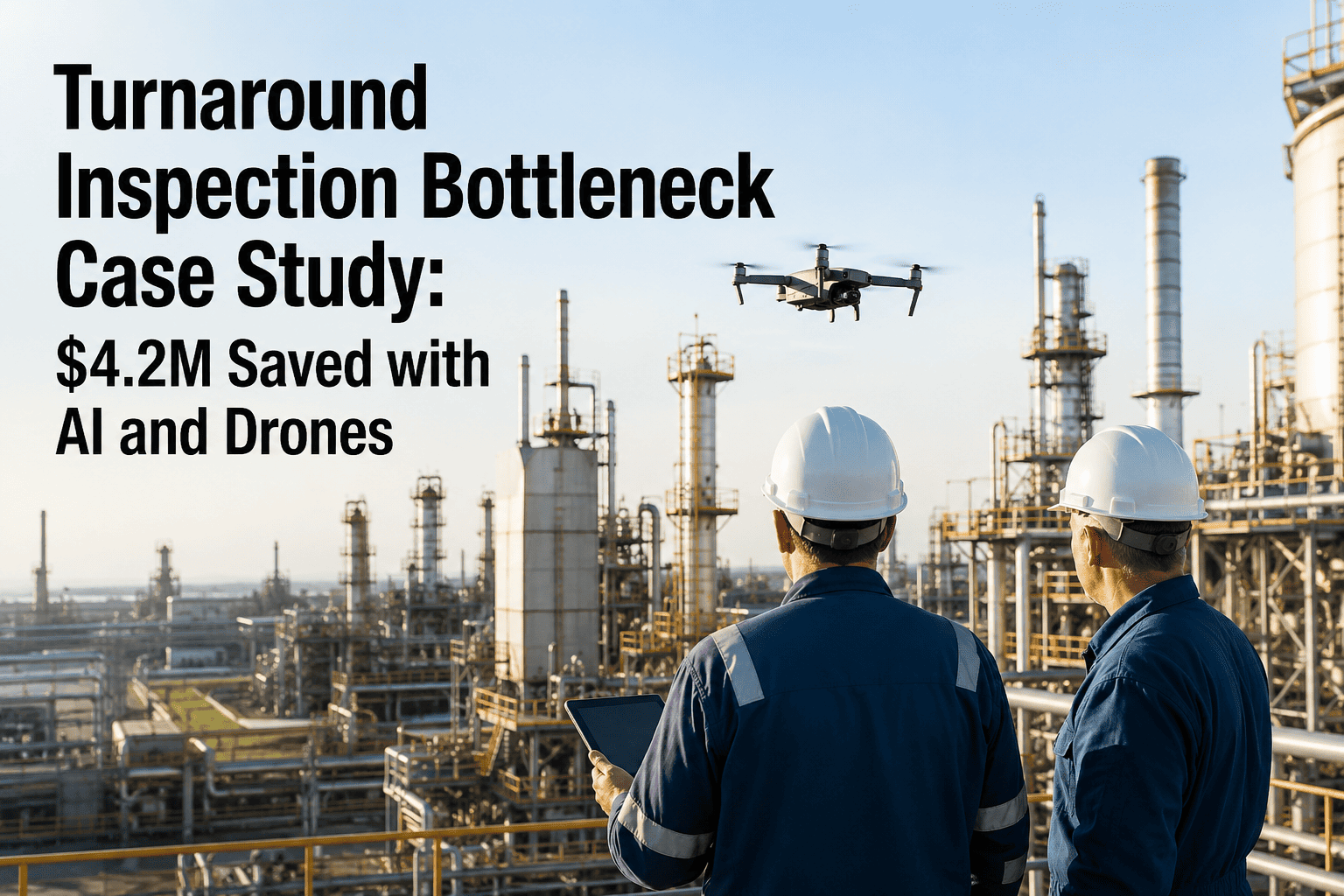
Every turnaround budget carries a line item that has almost nothing to do with the equipment being inspected: scaffolding. On a mid-size refinery or petrochemical turnaround, scaffold erection, rental, and dismantling can consume ten to fifteen percent of total spend before a single inspector even looks at a weld or a vessel wall. The good news is that a meaningful share of that access work no longer needs a single pole or plank. Drones, crawler robots, and rope-access technicians can now reach the same vantage points scaffolding was built to provide, often faster and at a fraction of the cost. This guide walks through how to decide which inspections can go scaffold-free on your next turnaround, and you can book a demo to see how iFactory's AI turns that footage into an inspection record automatically.
Build a Scaffold-Free Inspection Strategy That Cuts Turnaround Access Cost Without Cutting Coverage
A structured, asset-by-asset decision framework for replacing scaffold-dependent visual and thickness inspections with drones, crawler robots, and rope-access technicians, backed by AI that scores every image and reading automatically.
Scaffolding Is Rarely the Constraint You Planned For, But It Is Almost Always the One You Pay For
Turnaround schedules are built around process unit downtime, but the critical path is frequently dictated by how fast crews can get eyes and instruments onto elevated and confined-space assets. Scaffold erection has to happen before inspection can start, and dismantling has to wait until every inspection dependent on that structure is closed out, which means a single scaffold tower can hold up work in both directions. The figures below reflect what that dependency typically costs across a mid-size turnaround scope.
Which Inspections Can Actually Go Scaffold-Free, Asset by Asset
Not every inspection is a candidate for scaffold-free execution, and pretending otherwise is how strategies lose credibility with turnaround leadership. The honest framework sorts assets into three buckets: fully scaffold-free, hybrid, and scaffold-required, based on access geometry, required measurement precision, and code acceptance of remote data. Working through your own asset list against these six categories is the fastest way to size the opportunity before the turnaround freeze date.
External Vessel and Tank Shells
Visual and thermal survey of external shell condition, coating breakdown, and insulation jacket damage is well suited to drone flight, since the required standoff distance and resolution are both achievable without physical contact.
Flare Tips and Elevated Structures
Flare tip and structural steel inspection above 60 feet is one of the highest-value scaffold-free wins, since scaffolding to that height is slow, expensive, and carries elevated fall risk for a task drones complete in minutes.
Piping Runs in Confined Pipe Racks
Crawler robots designed for pipe rack geometry can travel along horizontal runs and capture continuous video and thickness readings without the need for elevated platforms across the full rack length.
Column Trays and Internal Nozzles
Rope-access technicians combined with borescope or crawler support can reach most internal points, though tray-by-tray mechanical measurement on certain column types still benefits from limited scaffold access.
Heat Exchanger Bundles
External bundle visual survey and thermal imaging can be done scaffold-free, but pulled-bundle tube inspection and eddy current testing generally still require a fixed platform for technician dwell time.
Precision Thickness Grid Mapping
Code-mandated grid UT mapping at fixed points with strict repeatability requirements still generally calls for a stable platform, though crawler-mounted UT is closing this gap for flat and mildly curved surfaces.
Drones, Crawlers, or Rope Access — Matching the Tool to the Asset
Once an asset is confirmed as a scaffold-free candidate, the next decision is which technology actually performs the inspection. Each option has a distinct reach envelope, data type, and cost structure, and most turnarounds end up deploying all three across different parts of the scope rather than standardizing on one.
Aerial Drones
Best for large-area external visual and thermal survey where standoff distance is acceptable — vessel shells, flare structures, tank roofs, and structural steel above typical scaffold reach, captured in a fraction of the time a manual climb requires.
Crawler Robots
Best for confined and contact-required inspection where a stable surface exists to travel on — pipe racks, tank floors, duct interiors, and vessel walls where magnetic or vacuum-adhesion crawlers can carry UT probes directly to the surface.
Rope Access Technicians
Best for irregular geometry, internal structures, and points requiring hands-on judgment that no current robotic platform replicates well, deployed selectively rather than across the full scaffold-free scope to control cost.
| Technology | Typical Access Speed | Data Captured | Cost vs Scaffold |
|---|---|---|---|
| Aerial Drone | Same-day, minutes per asset | 4K visual, thermal, photogrammetry | 70-85% lower |
| Crawler Robot | Hours per structure | Visual, UT thickness, MFL | 50-65% lower |
| Rope Access | Comparable to scaffold crew | Visual, manual UT, hands-on NDE | 30-45% lower |
| Traditional Scaffold | Days lead time before access | Any, full technician dwell time | Baseline |
Every Scaffold You Do Not Build Is Budget and Schedule You Get Back
iFactory's AI ingests drone, crawler, and rope-access inspection data and turns it into a scored, code-referenced inspection record automatically, so scaffold-free access does not create a manual review bottleneck of its own. Book a demo and see how your next turnaround scope maps against the framework above.
Six Steps to Building Your Scaffold-Free Inspection Plan Before the Turnaround Freeze
Scaffold-free inspection strategy has to be built into turnaround scope development, not bolted on after the scaffold contract is already signed. The steps below reflect the sequence that produces a defensible, code-accepted plan rather than a last-minute cost-cutting exercise that inspection leadership pushes back on.
Pull the Full Inspection Scope List Early
Start from the complete list of inspection line items generated during scope development, not just the ones already flagged as access-intensive, so nothing is excluded from consideration by default.
Classify Each Line Item Against the Three-Bucket Framework
Sort every inspection into scaffold-free, hybrid, or scaffold-required using asset geometry, required measurement precision, and applicable code acceptance criteria as the deciding factors.
Confirm Code and Client Acceptance for Remote Data
Check jurisdictional and internal engineering standards for acceptance of drone-captured visual data and crawler-mounted UT readings before committing to a scaffold-free approach for code-mandated inspections.
Match Technology to Asset and Book Vendor Capacity
Assign drone, crawler, or rope-access resources to each confirmed line item and secure vendor or internal team capacity well ahead of the turnaround window, since qualified crews book out early.
Build the Reduced Scaffold Package Around What Remains
Issue the scaffold contract only for confirmed scaffold-required and hybrid line items, which typically shrinks the total scaffold footprint enough to compress both cost and the access lead-time on the critical path.
Route Captured Data Into a Single Review Workflow
Feed drone, crawler, and rope-access findings into one inspection data system so review teams are not chasing footage, thickness logs, and photos across separate folders during a compressed turnaround window.
What Shifting Sixty Percent of Access Scaffold-Free Actually Saves
The comparison below models a representative mid-size turnaround where roughly sixty percent of scaffold-dependent inspection scope is reclassified as scaffold-free or hybrid, holding total inspection line-item count constant so the comparison isolates the access-method effect alone.
| Metric | Scaffold-Dependent Baseline | Scaffold-Free Strategy |
|---|---|---|
| Total Access Cost | 100% (reference) | 45-55% of baseline |
| Access Lead Time Before Inspection | 2-4 days per structure | Same day for most assets |
| Work-at-Height Exposure Hours | Full scaffold crew hours | 60-70% reduction |
| Critical Path Impact | Access-gated inspection start | 3-5 days typical compression |
Where Scaffold-Free Strategies Fall Apart Mid-Turnaround
Most failed scaffold-free initiatives are not technology failures, they are planning failures caught too late to fix without falling back on emergency scaffold requests that erase the cost savings entirely. The checklist below covers the pitfalls that show up most often once the turnaround is underway.
Weather Contingency Ignored
Wind and precipitation limits ground drone flights, so any scaffold-free plan needs a defined fallback window or backup technology for weather-sensitive days during the turnaround.
Late Code Acceptance Checks
Confirming remote-data acceptance after the inspection is already captured risks a full rework requirement, so acceptance criteria need sign-off during scope development, not execution week.
No Data Review Capacity Planned
Scaffold-free technology often produces far more images and readings per asset than a manual walk-down, and review teams without AI-assisted triage can become the new bottleneck.
Vendor Capacity Booked Too Late
Qualified drone pilots and rope-access crews with turnaround experience are in high demand during peak season, and last-minute bookings often mean less experienced crews.
Findings Not Linked to Work Orders
A scaffold-free finding that does not flow directly into the maintenance work order system creates the same tracking gap that causes repeat findings turnaround after turnaround.
No Baseline for Comparison
Without a prior turnaround's data captured in a comparable format, teams lose the ability to trend degradation across cycles, undermining one of the biggest long-term benefits of the switch.
What a Reclassified Scope Looks Like on a Real Turnaround
Consider a mid-size refinery unit with 40 vessels, 12 flare and structural steel points, and roughly 3,000 linear feet of pipe rack requiring inspection during a planned turnaround. Under a traditional scaffold-dependent plan, the full scope would require scaffold erection across nearly every asset, with lead times stacking up in the weeks before the turnaround window opens. Running the same scope through the three-bucket framework produces a very different picture.
The flare and structural steel points, all above typical scaffold reach, move entirely to drone survey, eliminating the highest-cost, highest-risk scaffold structures in the scope. The pipe rack inspection shifts to crawler robots that travel the full 3,000 feet without a single elevated platform. Of the 40 vessels, roughly 24 external shell surveys go scaffold-free via drone, 10 move to a hybrid rope-access approach for internal nozzle and tray work, and only 6 retain full scaffold access for precision grid UT mapping where code acceptance of remote data has not yet been confirmed with the authorized inspector.
The net effect is a scaffold package reduced by roughly 60 percent by area, translating into both direct cost savings and a materially shorter access-gated critical path, since the assets moved to drone and crawler technology no longer wait on scaffold lead time before inspection can begin.
A Practical Checklist Before You Approach Turnaround Leadership
Presenting a scaffold-free strategy to turnaround leadership lands very differently when it comes backed by a completed classification exercise rather than a general proposal to try new technology. The checklist below covers what to have ready before that conversation.
Completed Asset Classification
Every inspection line item in the current scope sorted into scaffold-free, hybrid, or scaffold-required, with the reasoning documented for each classification decision.
Preliminary Cost Comparison
A rough cost comparison between the current scaffold-dependent plan and the reclassified plan, even using conservative estimates, to demonstrate the scale of potential savings.
Code Acceptance Confirmation Started
Initial outreach to the authorized inspector or relevant regulatory body on remote-data acceptance for the specific asset categories being reclassified.
Vendor Availability Check
A preliminary check on drone, crawler, and rope-access vendor capacity for the turnaround window, since booking constraints can affect how aggressively the scaffold-free scope can be pursued.
Common Questions From Turnaround Planners About Scaffold-Free Inspection
Start Classifying Your Next Turnaround's Inspection Scope Today
See how the scaffold-free decision framework applies to your actual asset list, and how iFactory's AI turns drone, crawler, and rope-access data into a review-ready inspection record automatically.