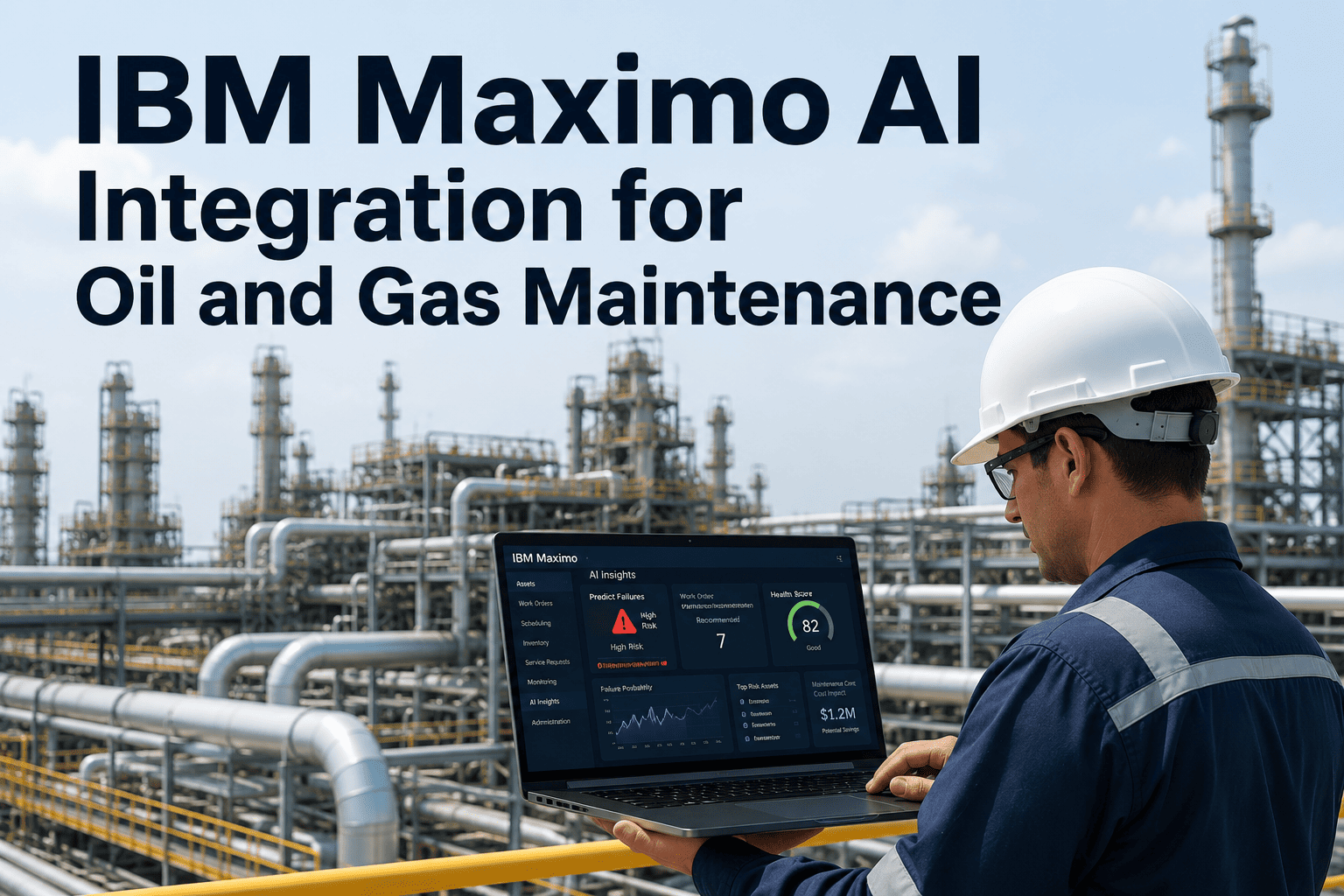
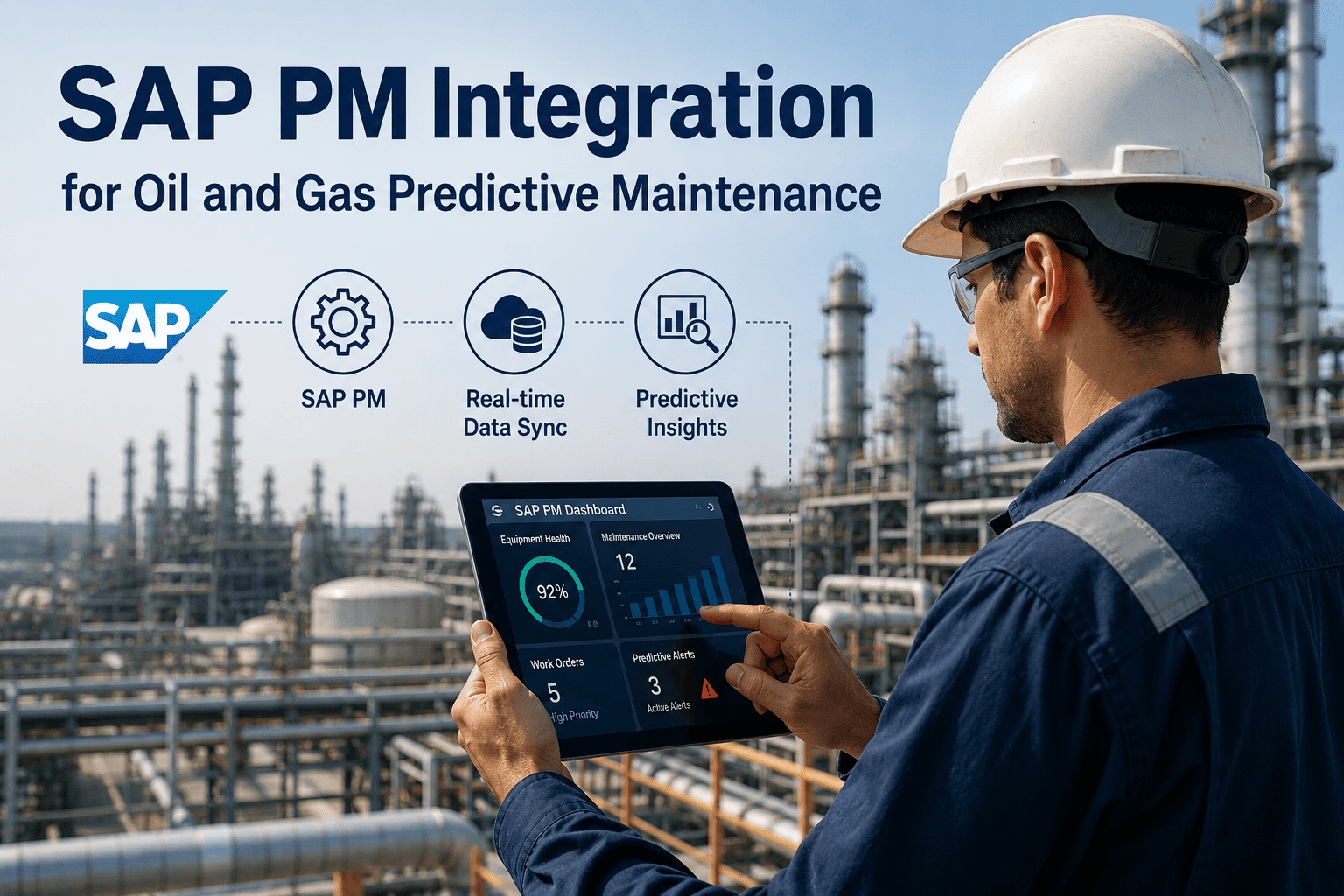
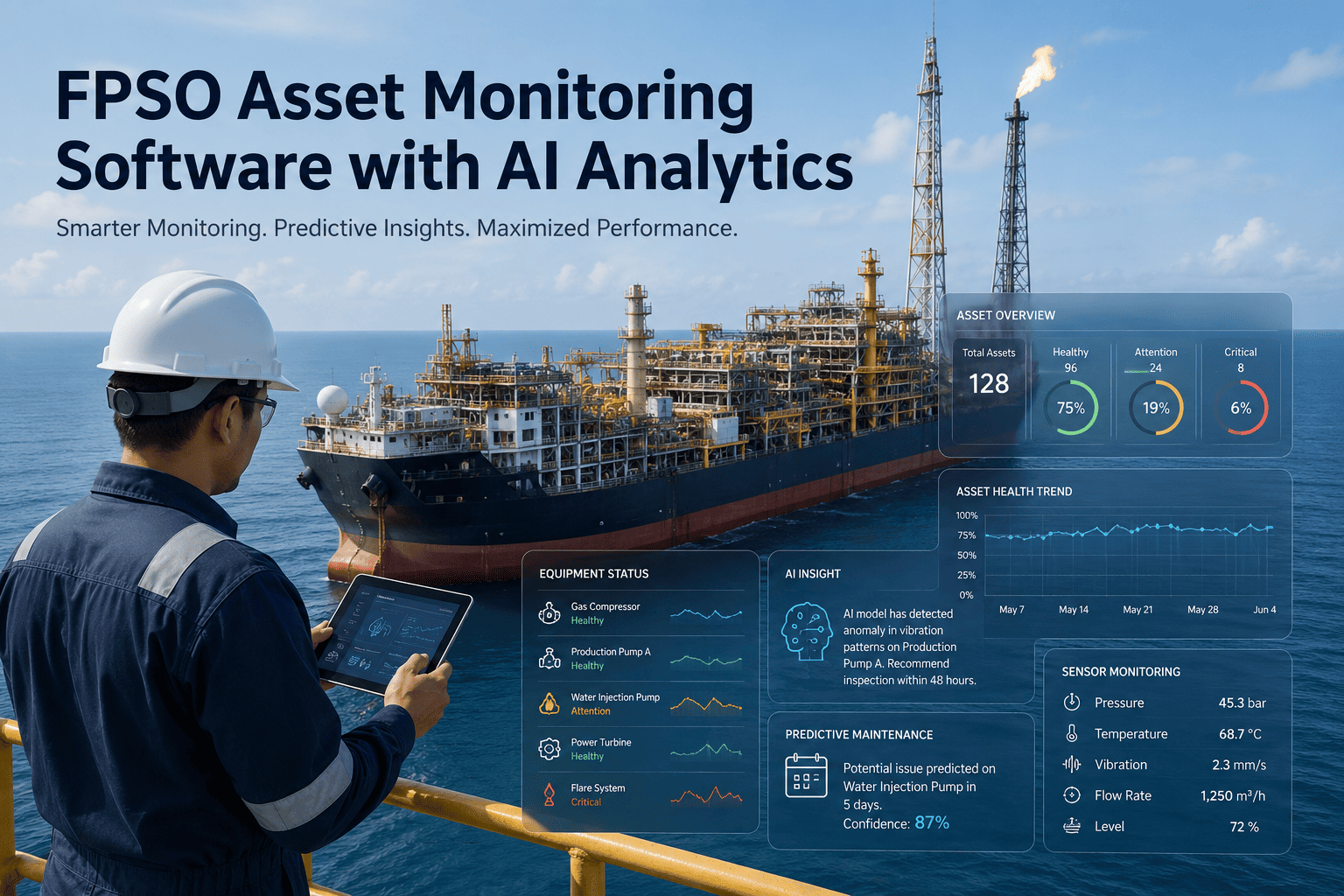
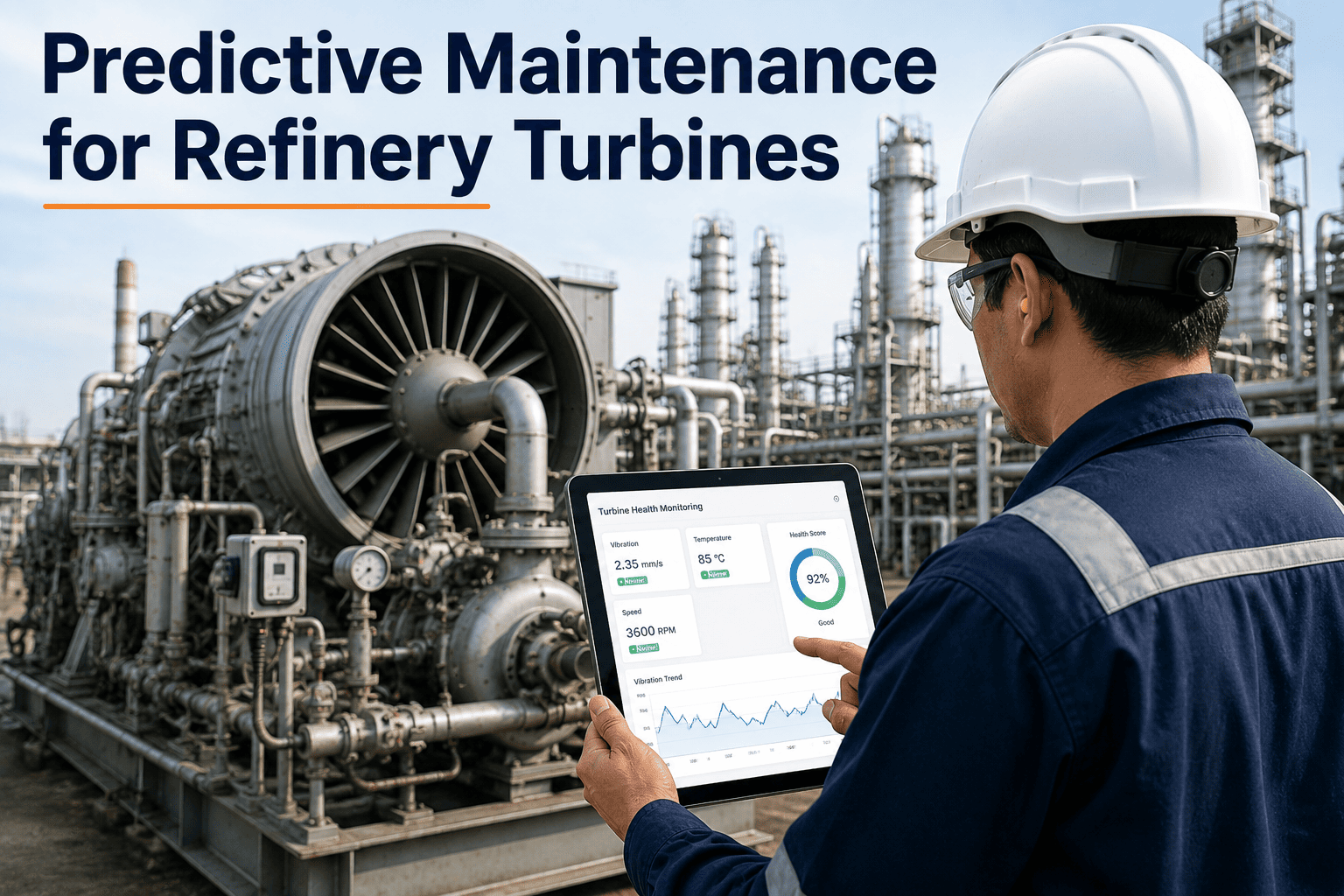
Most oil and gas operators running IBM Maximo already trust it as their system of record for work orders and asset history, but the health score sitting inside Maximo Predict is only as sharp as the data feeding it. Sensor readings, inspection notes, and usage patterns from compressors, pumps, and pipelines often reach Maximo late or incomplete, which means the risk-based prioritization planners rely on is working from an outdated picture. Closing that gap by streaming live condition data straight into Maximo's asset health and predictive models is what separates plants still reacting to failures from plants catching them weeks out, and reliability teams that want to see this running against their own asset register can book a demo before their next maintenance planning cycle.
Maximo AI Integration · Oil & Gas Reliability
Give IBM Maximo the AI Layer It Was Always Meant to Have
Feed asset health scores, risk rankings, and inspection evidence into Maximo automatically so work orders reflect actual equipment condition, not last quarter's inspection.
5
Prebuilt predictive model templates available inside Maximo Predict
25%
Typical reduction in unplanned downtime with AI-driven predictive maintenance
10-15%
Lower maintenance costs reported once condition data drives scheduling
What Maximo Already Does Well — And Where It Needs Help
Maximo Application Suite is built to assign health, risk, and criticality scores across rigs, wells, pipelines, pumps, and plants, and Maximo Predict adds Watson-powered failure forecasting on top. The part that determines whether any of that is accurate is upstream of Maximo entirely: the sensor and inspection data that feeds it.
Asset Health Scoring
Maximo assigns a composite score per asset from maintenance history, inspections, and sensor readings, but the score only updates as fast as that data arrives.
Risk & Criticality Ranking
Assets are ranked by failure probability and operational risk so planners know what to fix first, provided the underlying condition signals are current.
Reliability Centered Maintenance
RCM studies identify critical failure modes and build maintenance strategies around them, drawing on the same asset history Maximo already stores.
Automated Work Order Generation
Predict can draft and prioritize work orders based on risk and failure probability, assigning the right technician automatically when the data is trustworthy.
Where AI Integration Actually Plugs In
This isn't a Maximo replacement. It's a data layer that makes every score, ranking, and auto-generated order inside Maximo more accurate than it would be from manual entry alone.
1
Field Sensors & Inspections
Vibration, temperature, and visual inspection data captured continuously across compressors, pumps, and pipeline segments.
→
2
AI Normalization Layer
Readings are cleaned, timestamped, and mapped to the correct asset record before they ever touch Maximo.
→
3
Maximo Health & Predict
Health scores and failure probability update on live data instead of the last manual entry, sharpening every downstream decision.
→
4
Prioritized Work Order
Planners see a ranked, risk-scored list with the right technician and parts already attached, ready to release.
Maximo Running Alone vs. Maximo Fed by Live Condition Data
The interface planners use doesn't change. What changes is how current the numbers behind every score actually are.
| Function |
Maximo With Manual Data Entry |
Maximo With Live AI Integration |
| Asset health score |
Refreshed whenever a technician logs an inspection |
Refreshed continuously from live sensor streams |
| Risk ranking |
Reflects the last recorded condition, sometimes weeks old |
Reflects current degradation trends across the fleet |
| Failure forecasting |
Limited to patterns visible in historical work orders |
Trained on live vibration, temperature, and usage data |
| Balance-of-plant coverage |
Smaller pumps and valves often go unmonitored |
Tier 2 and Tier 3 assets get the same scrutiny as main units |
| Work order accuracy |
Scope drafted from memory or a paper report |
Scope pre-populated with failure data and parts needed |
Which Part of Maximo This Actually Plugs Into
Maximo Application Suite is not one monolithic tool; it's a set of modules that build on each other. Knowing which layer the AI integration strengthens helps planners understand exactly what improves and what stays the same.
Maximo Manage
The core EAM system of record for work orders, asset records, and maintenance history stays exactly as-is; the integration only enriches what feeds into it.
Maximo Health
Health scoring draws on maintenance records, inspections, and sensor readings, and gets noticeably sharper once those readings arrive continuously instead of periodically.
Maximo Predict
Watson-powered failure forecasting and the five prebuilt model templates perform best when trained on live operating data rather than static historical batches.
Maximo APM
Asset Performance Management's reliability engineering and prescriptive maintenance tools rely on the same continuous condition feed to prioritize corrective action correctly.
A health score is only as current as its last data point. If your Maximo scores are still updating on inspection schedules instead of live condition data, your risk rankings are already behind.
Reliability Perspective
Maximo gives you the structure to run a disciplined maintenance program, and most operators already have years of asset history sitting inside it. What's usually missing is a live feed connecting that structure to what's actually happening on the equipment right now. Once sensor data starts updating the health score in near real time, the risk ranking stops being a snapshot from last month's inspection round and starts being something planners can genuinely act on the same day.
Maintenance & Reliability Lead — Upstream and Midstream Asset Programs
Frequently Asked Questions
Does this replace Maximo Predict or work alongside it?
It works alongside Maximo Predict rather than replacing it. Maximo Predict's Watson-powered models and prebuilt templates stay in place as the forecasting engine; the integration layer simply keeps the data those models rely on current by streaming sensor and inspection readings in continuously instead of waiting for manual entry. Planners keep using the same Maximo screens and approval workflow they already know.
Book a demo to see the integration running against a live Maximo instance.
Which assets should be connected first?
Rotating equipment such as compressors and pumps is the strongest starting point, since these asset classes already have mature health-scoring models inside Maximo and clear failure signatures to validate against. Pipeline segments and balance-of-plant assets like smaller transfer pumps are typically added once the first group proves the data pipeline is reliable. Criticality rankings already stored in Maximo are a useful guide for sequencing which assets to connect next.
Contact support to map your asset register against a rollout sequence.
How does this affect the accuracy of Maximo's risk scores?
Risk and criticality scores in Maximo are only as accurate as the condition data behind them, and manual inspection cycles mean that data can be weeks old by the time a planner reviews it. Streaming live sensor readings in keeps the score reflecting current degradation trends rather than a historical snapshot, which is particularly important for assets that can deteriorate quickly between scheduled rounds. This does not change how Maximo calculates the score, only how current the inputs are.
Book a demo to compare a manually-updated score against a live one on the same asset.
Can this work on older brownfield equipment already tracked in Maximo?
Yes, and this is the most common scenario rather than an exception. Retrofitted wireless sensors can be added to decades-old pumps and compressors already sitting in the Maximo asset register without requiring a shutdown for installation, and the readings map directly onto the existing asset record. There is no need to recreate asset history that Maximo already holds; the integration simply adds a live data stream on top of it.
Contact support to check sensor compatibility with your current equipment fleet.
Do planners still approve work orders before they reach technicians?
Yes, the approval step stays exactly where it already sits in Maximo's workflow. Automated work order generation drafts the scope, risk ranking, and parts list based on live condition data, but a planner still reviews and releases every order before a technician receives it in the field. The difference is that the planner is reviewing a pre-populated, risk-ranked order instead of building one from scratch.
Book a demo to walk through the planner review screen directly.
Make Every Maximo Score Reflect Today's Equipment Condition
Stop letting inspection schedules decide how current your risk rankings are. Connect live sensor data to Maximo and see failures coming before they cost a shutdown.