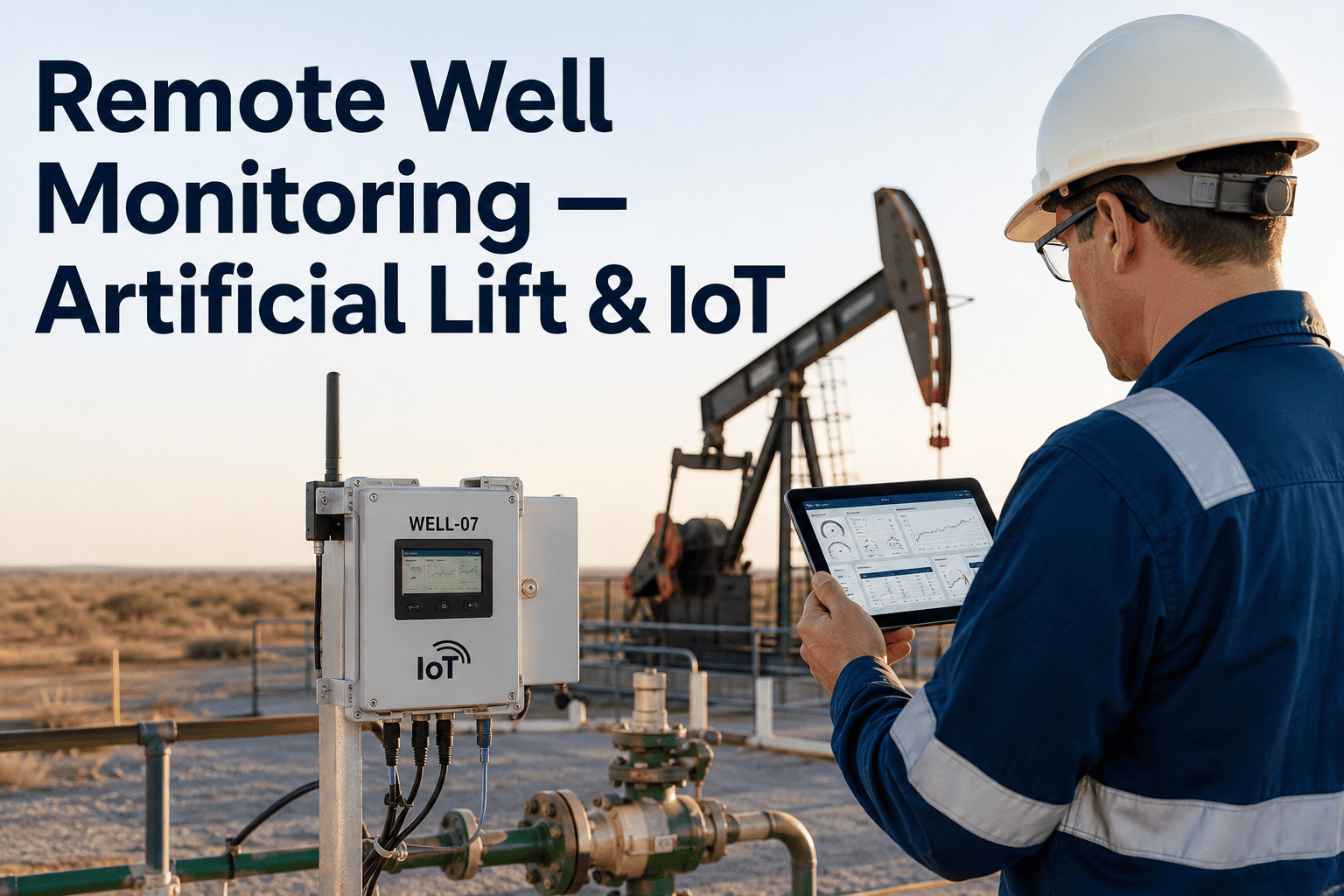
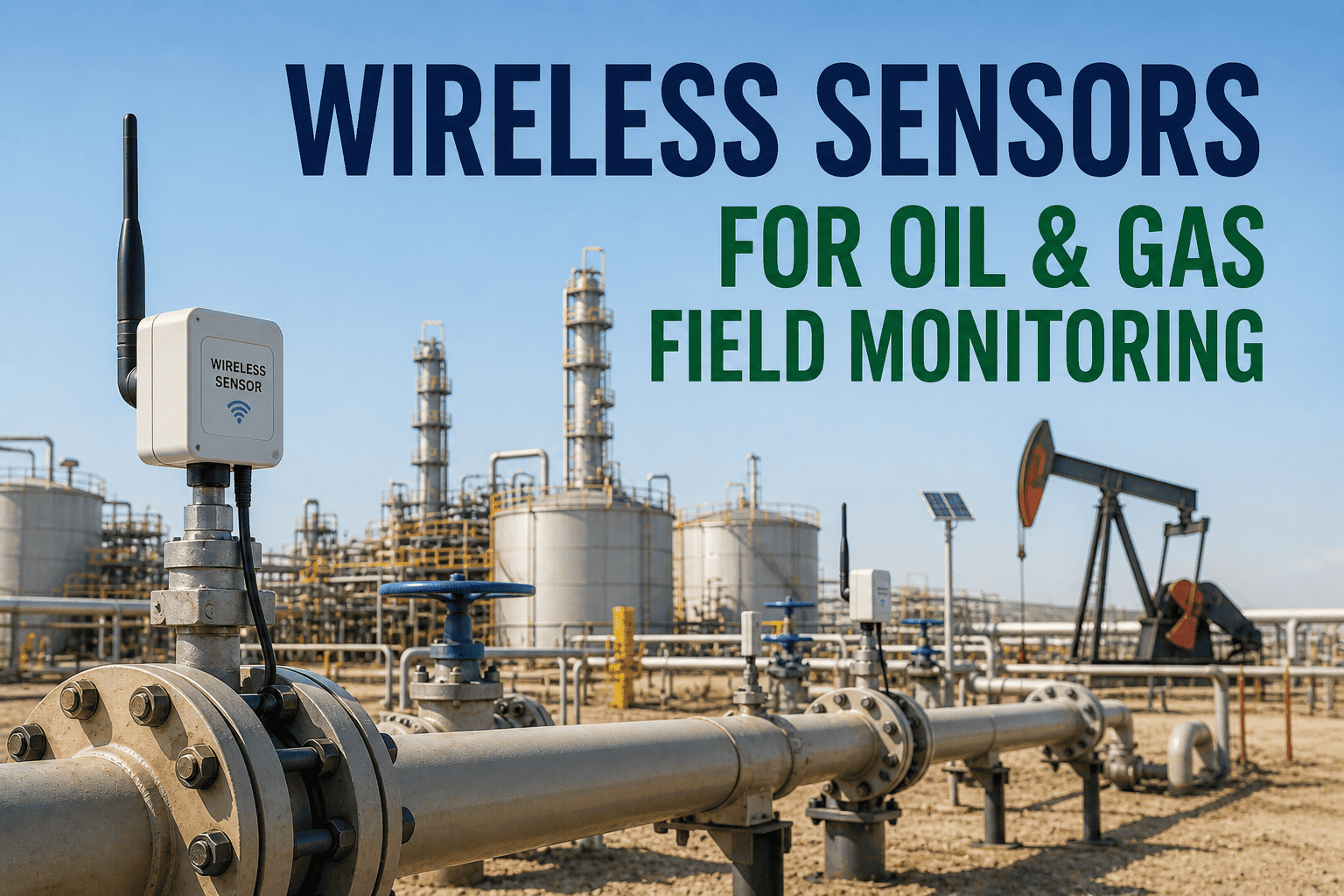
A wellpad forty miles from the nearest cell tower does not stop producing data just because the connection drops. Pressure, temperature, and vibration readings keep generating on schedule, and the difference between a monitoring system that survives that gap and one that silently loses six hours of history is almost always the messaging architecture underneath it, not the sensors themselves. HTTP polling and point-to-point SCADA protocols were never built for thousands of intermittently connected devices; MQTT was. iFactory builds MQTT broker architecture that collects sensor data reliably across cellular and satellite-linked wellpads, feeding the AI models that turn raw telemetry into early failure warnings — book an architecture review to map it against your current field connectivity.
Thousands of Wellpad Sensors, One Reliable Data Path
iFactory designs and deploys the MQTT broker topology, topic structure, and QoS configuration that keeps sensor data flowing from remote wellpads to your analytics stack, connection drops included.
The Connectivity Reality Most SCADA Architectures Were Not Built For
Upstream field sites are not a controlled network environment. Packet loss, latency spikes, and full disconnections happen routinely on cellular SCADA radios and satellite backhaul, and the messaging layer has to treat that as normal operation rather than an exception to handle later. A protocol built for a stable office network will keep losing data at wellpad scale no matter how much engineering effort goes into working around it.
in projected value that optimized field connectivity could add to upstream operations by 2030
average distance from a cell tower at many active wellsite locations across major basins
device protocols commonly found on one pad — PLC, Modbus RTU, DNP3, and OPC UA side by side
concurrent connections a single modern broker cluster can support, well beyond wellpad scale needs
The Layered Broker Architecture, From Sensor to Dashboard
Rather than one broker trying to serve every device directly, a field-grade architecture splits the path into layers so that a lost WAN link at one site never takes down visibility everywhere else.
Wellpad edge devices
Pressure transmitters, flow meters, vibration sensors, and RTUs publish readings as MQTT messages, often through an edge gateway that speaks Modbus or OPC UA locally and MQTT outward.
Local site broker
Each pad or facility runs a lightweight local broker that queues messages during a WAN outage and serves site-level alarms and dashboards with sub-second latency regardless of backhaul status.
Cellular or satellite backhaul
The local broker bridges its topics upstream over whatever WAN link is available, compressing and batching where bandwidth is limited, without blocking local operations if the link drops.
Cloud broker cluster
A multi-node cluster receives bridged data from every site, maintains shared subscription state, and gives fleet-wide subscribers one consistent view across hundreds of wellpads.
Analytics and AI consumers
Historians, dashboards, and iFactory's predictive maintenance models subscribe to the topics they need, decoupled entirely from which device or protocol produced the original reading.
Topic Design: The Difference Between Data and Noise
A flat topic namespace works for a pilot with twenty sensors and collapses once a fleet reaches thousands. A hierarchical structure that mirrors the physical asset tree keeps subscriptions precise and scoped, at any scale.
Field-level scope
basin/wellpad/well/device/metric
Every level narrows the scope, so a dashboard can subscribe to an entire basin or a single sensor with the same topic pattern and a wildcard.
Example: pressure reading
permian/padA/well12/wellhead-transmitter/pressure
A specific, addressable path that any subscriber can filter on, without parsing the message payload just to know what it is.
Fleet-wide subscription
+/+/+/+/pressure
A single-level wildcard lets an analytics service pull every pressure reading across every well and pad without a separate subscription per device.
Site-wide subscription
permian/padA/#
A multi-level wildcard captures every topic under a single pad, which is what the local site dashboard typically subscribes to.
Matching QoS Level to What the Data Is Actually For
Not every reading needs the same delivery guarantee, and treating all of them the same either wastes bandwidth on a satellite link or risks losing the one reading that mattered.
At most once
Fire-and-forget delivery with no acknowledgment. Fits high-frequency vibration or temperature streams where the next reading arrives in seconds and one missed sample does not matter.
At least once
Guaranteed delivery with possible duplicates. The right default for most wellpad telemetry, including pressure, flow, and status changes that feed alarms and predictive models.
Exactly once
The highest-overhead guarantee, reserved for events like emergency shutdown commands or billing-relevant volume totals where a duplicate or lost message has real consequences.
Sparkplug B: Giving the Payload a Standard Shape
MQTT defines how messages move, not what is inside them. Without a shared payload standard, every vendor's gateway ends up formatting sensor values differently, which pushes translation work onto every downstream consumer. Sparkplug B, built on top of MQTT, solves this by standardizing payload structure and adding built-in state management for cloud analytics integration.
Consistent payload schema
Every device reports metrics in the same structured format, so a new sensor type does not require a custom parser on the receiving end.
Built-in birth and death certificates
Devices announce their online state and metric definitions on connect, and the broker can signal offline state automatically, removing guesswork about whether a reading is current.
Cloud-analytics ready
Because the payload structure is standardized, connecting a new AWS IoT, Azure IoT Hub, or Google Cloud IoT pipeline is a configuration step rather than a mapping project for every field.
Map Your Wellpad Fleet Onto This Architecture
iFactory reviews your current sensor count, connectivity mix, and legacy protocols, then scopes the broker topology, topic tree, and QoS plan for your fleet specifically.
Choosing a Broker Topology for Your Fleet Size
A single broker is fine for a pilot. It becomes a single point of failure the moment hundreds of pads and every dashboard that operations relies on depend on it staying up.
Built-In Features That Handle a Dropped Connection
MQTT was designed for exactly the kind of unreliable link a remote wellpad has, and most of the resilience comes from features already built into the protocol rather than custom code layered on top.
Persistent sessions
The broker retains a client's session and undelivered messages across a disconnection, so a sensor gateway rejoining after a satellite outage does not start from zero.
Store-and-forward queuing
The local site broker keeps queuing readings during a WAN outage and delivers the backlog the moment connectivity returns, instead of dropping data silently.
Retained messages
A new subscriber, such as a dashboard reconnecting after a reboot, immediately receives the last known state of every topic instead of waiting for the next scheduled reading.
Last Will and Testament
If a gateway disconnects ungracefully, the broker automatically publishes a predefined alert, turning silence into a visible signal instead of an unnoticed gap.
Keep-alive heartbeat
A configurable ping interval lets the broker detect a dead connection quickly on a flaky cellular link, without waiting for a long TCP timeout to expire.
Bandwidth-aware batching
The local broker can aggregate and compress readings before forwarding over expensive satellite bandwidth, cutting WAN traffic without cutting data fidelity at the edge.
Securing a Broker That Talks to Field Devices You Don't Fully Control
Wellpad devices sit outside a typical IT perimeter, often on shared cellular networks, which makes broker-side security the primary control point rather than an afterthought.
TLS on every connection
MQTT over TLS on port 8883 is treated as non-negotiable for any production deployment, encrypting every message between device, local broker, and cloud cluster.
Per-device authentication
Individual client certificates or credentials per gateway mean a single compromised device can be revoked without disrupting the rest of the fleet.
Topic-level access control
Access control lists restrict each client to publish or subscribe only on the topics relevant to its pad, preventing one site's gateway from reading another site's data.
Segmented OT and IT paths
Bridging traffic between local and cloud brokers over a private APN or VPN keeps field telemetry off the open internet as it crosses cellular or satellite links.
Legacy Polling Versus an MQTT Pub/Sub Backbone
Point-to-point polling architectures were designed for a smaller, wired footprint. They still work, but the cost of running them at wellpad-fleet scale over unreliable links shows up in gaps, latency, and integration effort that compounds every time a new sensor or a new dashboard gets added to the mix.
A Pad That Kept Reporting Through a Six-Hour Outage
A multi-basin operator running satellite backhaul on its most remote pads used to lose visibility completely whenever the link dropped, which happened often enough during weather events to become routine rather than exceptional. After moving to a local-broker-plus-cloud-bridge architecture, the same weather event that used to mean six hours of blank dashboards instead meant six hours of queued readings sitting safely on the site broker. When the satellite link came back, the backlog delivered in minutes, the historian filled in without a gap, and the predictive maintenance model kept its full data trail for the vibration trend it had been tracking on a compressor going into that outage window.
What Changes When the Data Path Gets Fixed
Fleet-wide MQTT deployments in industrial and energy settings consistently show the same pattern: connectivity issues stop being data-loss events and start being brief, recoverable gaps.
Frequently Asked Questions
Do we need to replace our existing Modbus and DNP3 field devices to use MQTT?
No. Most upstream sites run a mix of Modbus RTU flow computers, DNP3 telemetry units, and OPC UA-enabled PLCs, and none of that needs to be replaced. An edge gateway sits between the field devices and the broker, speaking the legacy protocol locally and publishing MQTT messages outward, so existing instrumentation keeps working exactly as installed. The migration happens at the data-collection layer, not the field-instrumentation layer, which is why most deployments can start with the highest-value pads and expand from there. Talk to support about mapping your current device mix to a gateway plan.
How does the local broker avoid losing data when a satellite link drops for hours?
The local site broker is designed to keep operating independently of the WAN connection. It continues receiving and queuing every published message from the pad's devices during the outage, using persistent sessions and store-and-forward behavior that are native to the MQTT protocol rather than a custom workaround. When the satellite or cellular link comes back, the queued backlog forwards to the cloud cluster, typically resolving within minutes even after several hours offline. Site-level dashboards and alarms also keep working locally throughout the outage, since they subscribe to the local broker directly.
What size fleet actually needs a clustered broker instead of a single instance?
A single broker is reasonable for a pilot covering a handful of pads, but it becomes a single point of failure the moment the data feeds operational decisions across a wider fleet. The practical threshold is less about raw device count and more about consequence — once dashboards, alarms, or predictive models that operations depends on daily are running on the data, a multi-node cluster or at minimum an HA pair is worth the added setup. Modern clusters scale to millions of concurrent connections, so the architecture itself is rarely the limiting factor; the harder question is usually how many sites should bridge into the same cluster versus running regionally federated clusters. Book a demo to size the right topology for your fleet.
Does adding predictive maintenance AI on top of this architecture require a separate data pipeline?
No, and this is one of the main advantages of the pub/sub model. iFactory's predictive maintenance models subscribe directly to the same topics that feed dashboards and historians, receiving the identical real-time stream without a parallel integration or a batch export step. Because the broker decouples publishers from subscribers entirely, adding an AI consumer to an existing topic tree is a subscription, not a new data engineering project.
How is security handled for devices sitting on cellular networks outside our IT perimeter?
Security is enforced at the broker rather than relying on the network perimeter, since field devices on cellular or satellite links sit outside a conventional IT boundary by definition. Every connection runs over TLS, each device authenticates with its own credentials or certificate so a single compromised gateway can be revoked without affecting others, and topic-level access control lists keep each site's data scoped to that site. Bridging traffic between local and cloud brokers over a private APN or VPN adds a further layer that keeps telemetry off the open internet entirely.
Build a Broker Architecture That Survives Your Field Conditions
Bring your sensor count, connectivity mix, and legacy protocol list to a 30-minute call and leave with a scoped MQTT broker topology, topic tree, and QoS plan for your fleet.