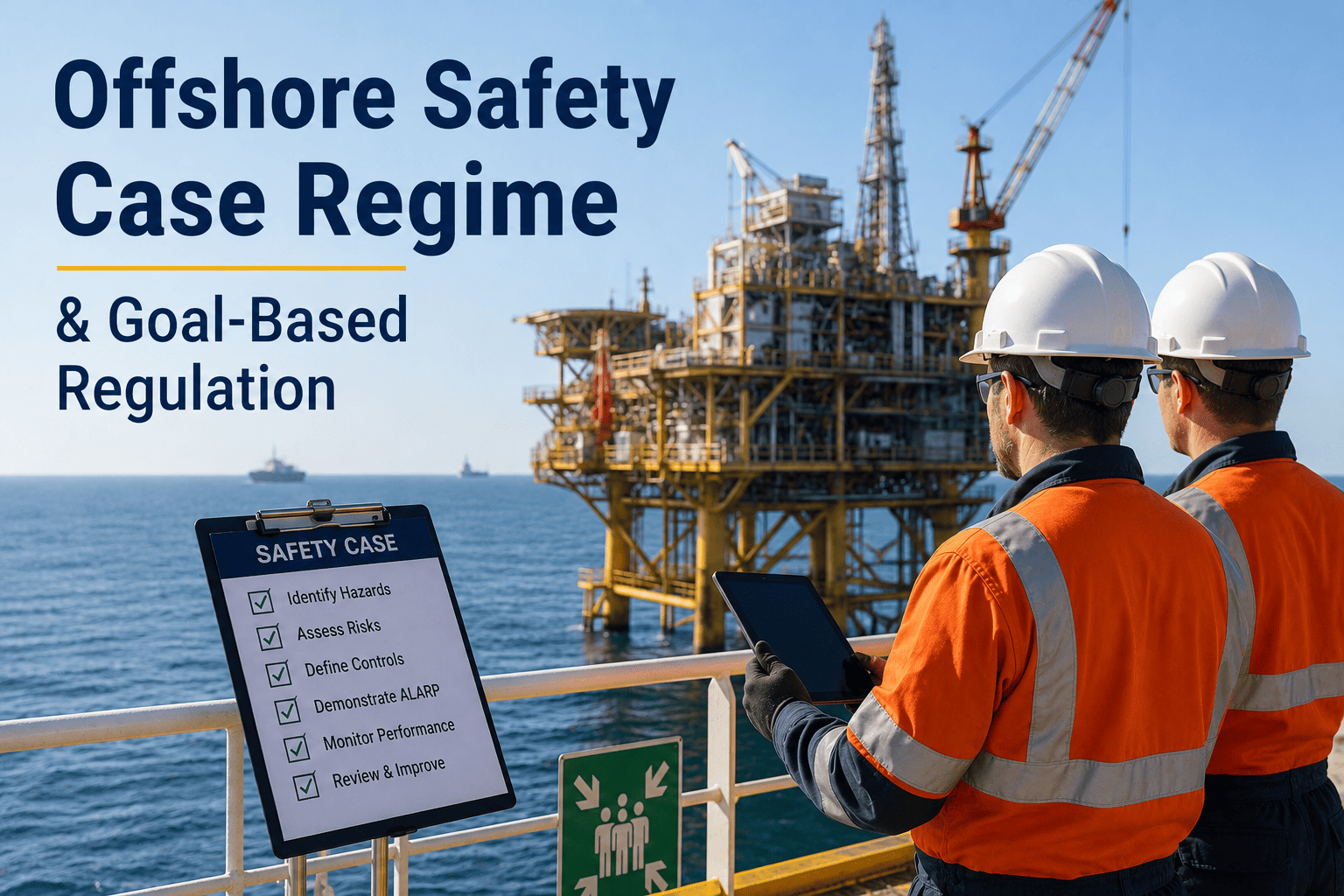
Offshore oil and gas operations sit at the intersection of extreme environmental conditions, complex process systems, and regulatory frameworks that demand more than checkbox compliance. A safety case regime built on goal-based regulation shifts the burden from prescriptive rule-following to demonstrating that all major accident hazards have been identified, risks reduced to a level that is as low as reasonably practicable, and safety critical elements will perform as intended throughout the installation lifecycle. Most operators still assemble safety cases in document-driven workflows that fracture when a barrier degrades, a maintenance record goes missing, or an audit asks for real-time evidence that a performance standard is being met. iFactory connects barrier health data, maintenance completion records, and safety critical element performance into one live safety case model, and you can book a demo to see how your existing SEMS, HSE, or NOPSEMA documentation maps into a continuously verified digital safety case.
OFFSHORE SAFETY CASE INTELLIGENCE
Goal-Based Regulation Demands a Living Safety Case — Most Operators Still Submit a Dead One
iFactory transforms static safety case documents into continuously verified digital models where barrier status, performance standard compliance, and ALARP demonstration are backed by live operational data instead of periodic manual review.
REGULATORY FRAMEWORKS
Three Regimes, One Core Demand: Prove Your Risks Are Under Control
Whether an installation falls under BSEE SEMS in the US Gulf of Mexico, the HSE safety case regime in the UKCS, or NOPSEMA in Australian waters, the fundamental expectation is identical. The operator must demonstrate understanding of major accident hazards, show that risks are reduced to ALARP, and prove that safety critical elements will work when needed. The table below maps how each regime frames these obligations.
MAJOR ACCIDENT HAZARDS
The Hazard Landscape That Drives Every Safety Case Decision
A safety case is only as strong as its hazard identification foundation. If a major accident scenario is missed during the initial assessment, every barrier strategy, performance standard, and ALARP argument built on top of it is structurally unsound. The categories below represent the dominant hazard groups that offshore safety cases must address with explicit risk demonstration.
Blowout and Well Control
Uncontrolled release of reservoir fluids through the wellbore, including surface and subsea blowout scenarios during drilling, completion, intervention, or production phases.
Fire and Explosion
Ignition of hydrocarbon releases from process equipment, risers, or wellheads with potential for pool fires, jet fires, vapor cloud explosions, and cascading structural failure.
Structural Failure
Loss of structural integrity from extreme weather, fatigue, corrosion, dropped objects, or vessel collision that compromises the installation ability to support operations or evacuation.
Loss of Containment
Breaches in process piping, vessels, subsea flowlines, or export systems that release hydrocarbons or hazardous chemicals into the marine or atmospheric environment.
Marine and Dropped Object Hazards
Riser or mooring failure, vessel collision, helicopter incidents, or dropped objects from cranes and lifting equipment that can trigger secondary hydrocarbon events.
Evacuation and Escape Failure
Scenarios where temporary refuge is compromised, lifeboat systems fail to deploy, or escape routes become impassable due to fire, smoke, or structural damage.
SAFETY CRITICAL ELEMENTS
From Identification to Assurance: The Safety Critical Element Lifecycle
Safety critical elements are the equipment, systems, and structures whose failure could directly cause or contribute to a major accident. Identifying them is the starting point. The real regulatory challenge is demonstrating ongoing assurance that each SCE meets its performance standard throughout the installation lifecycle, not just at the time of safety case submission.
01
SCE Identification
Map each SCE to specific major accident scenarios it prevents or mitigates
02
Performance Standard
Define function, integrity, reliability, and availability targets for each SCE
03
Assurance Task
Specify inspection, testing, and maintenance regimes that verify performance
04
Verification Record
Capture evidence that each assurance task was completed and standard met
05
Regulatory Demonstration
Present continuous assurance evidence during audit or safety case revision
ALARP DEMONSTRATION
What Regulators Actually Expect When They Ask for ALARP
ALARP is not a calculation you run once and file. It is a structured argument that shows, for each major accident hazard, the operator has considered all reasonably practicable risk reduction measures, implemented those where the cost is not grossly disproportionate to the benefit, and documented the reasoning for any measure not taken. The framework below shows how this argument should be built and maintained.
BROAD RISK SEARCH
Identify all reasonably practicable risk reduction measures for each hazard scenario, including engineering controls, procedural safeguards, and monitoring systems, without pre-filtering by cost.
GROSS DISPROPORTIONATE TEST
Compare the cost of each additional measure against the risk reduction benefit it delivers. Measures where cost is grossly disproportionate to benefit may be deferred with documented rationale.
GOOD PRACTICE BASELINE
Demonstrate that all measures required by industry good practice, recognized standards, and regulatory guidance are implemented regardless of the disproportionality calculation.
REVIEW TRIGGER
Revisit the ALARP argument when operational experience, incident data, equipment modifications, or changes in good practice indicate that previously deferred measures may now be reasonably practicable.
Your Safety Case Says Risks Are ALARP — Can You Prove It With Live Data?
iFactory builds a continuously verified digital safety case where barrier health, SCE performance standards, and ALARP arguments are backed by operational data rather than periodic manual review cycles.
SAFETY CASE DEVELOPMENT
How a Robust Safety Case Actually Gets Built From Scratch
Safety case development is not a documentation exercise layered on top of existing operations. It requires a structured process that starts with hazard identification and builds through barrier definition, performance standard setting, and assurance planning to a point where the complete argument can be presented to a regulator and defended under scrutiny.
PHASE 1
Scope and Context Setting
Define the installation boundary, operational phases covered, interface with shared infrastructure, and the regulatory framework the safety case must satisfy.
PHASE 2
Major Accident Hazard Identification
Conduct systematic MAH identification using bow-tie analysis, HAZOP, or equivalent methods, producing a complete register of scenarios with consequence and likelihood characterization.
PHASE 3
Barrier and SCE Definition
Map prevention and mitigation barriers to each MAH scenario, identify the equipment and systems that underpin each barrier, and formally designate safety critical elements.
PHASE 4
Performance Standard Development
Define the function, integrity, reliability, availability, and survivability requirements for each SCE in a format that can be objectively verified through inspection and testing.
PHASE 5
ALARP Argument Construction
For each MAH, document the risk reduction measures considered, the good practice baseline applied, the gross disproportionality evaluation, and the rationale for any deferred measures.
PHASE 6
Assurance and Verification Planning
Define the inspection, testing, maintenance, and audit regime that will generate ongoing evidence that SCEs meet their performance standards and the safety case remains valid.
DOCUMENT VS DIGITAL
Why Document-Based Safety Cases Fail Under Regulatory Scrutiny
Regulators increasingly expect to see evidence that a safety case reflects the current state of the installation, not the state at the time of submission. The comparison below illustrates where document-driven approaches break down and what changes when safety case data is connected to live operational systems.
DOCUMENT-BASED SAFETY CASE
Barrier status updated during periodic review cycles, leaving gaps where degradation occurs between reviews
SCE performance standard compliance demonstrated through spreadsheet-based tracking disconnected from CMMS work orders
ALARP arguments reference risk assessments that may not reflect current operational conditions or equipment modifications
Audit preparation requires manual assembly of evidence from multiple disconnected systems over weeks
DIGITAL LIVE SAFETY CASE
Barrier health indicators updated from real-time sensor data and maintenance system status continuously
SCE performance verified automatically against work order completion, inspection results, and test data as they are recorded
ALARP arguments linked to current hazard register, incident history, and modification records so the argument stays current
Audit evidence available on demand with full traceability from barrier status back to source data and verification activity
READINESS CHECK
Safety Case Readiness Checklist Before Regulatory Submission
Use this checklist to verify that the safety case package meets the evidentiary standard that regulators in SEMS, HSE, and NOPSEMA jurisdictions consistently apply during assessment and audit.
01
Major accident hazard register covers all installation phases with explicit scenario descriptions and consequence characterization
02
Every MAH scenario has prevention and mitigation barriers mapped with clear identification of underlying safety critical elements
03
Each SCE has a written performance standard specifying function, integrity, reliability, availability, and survivability requirements
04
ALARP demonstration for each MAH includes good practice baseline, disproportionality evaluation, and documented rationale for deferred measures
05
Assurance plan specifies inspection, testing, and maintenance tasks for each SCE with defined frequencies and acceptance criteria
06
Independent and competent person review completed with findings resolved and documented in the safety case record
07
Management of change process linked to safety case so any modification triggers reassessment of affected MAH scenarios and SCE performance standards
08
Temporary refuge impairment criteria defined with clear triggers for mustering, evacuation, or escape based on event severity and duration
FREQUENTLY ASKED QUESTIONS
Questions Operators Ask About Digital Safety Case Management
How does a digital safety case differ from simply storing the safety case PDF in a document management system?
A document management system stores the safety case as a static artifact that reflects the installation state at a point in time. A digital safety case connects the underlying data sources, barrier models, SCE performance standards, and ALARP arguments into a living structure where changes in equipment status, maintenance completion, or operational conditions automatically update the assurance picture. When an auditor asks whether a specific safety critical element is currently meeting its performance standard, the answer comes from live data rather than a document that may be months out of date.
Book a demo to see how this works in practice.
Can iFactory integrate with our existing CMMS and process safety management tools?
iFactory connects to existing maintenance management systems, process safety databases, and operational data sources through standard integration pathways, reading work order completions, inspection results, and sensor inputs without replacing the systems that generate them. The safety case model sits above these sources, correlating the data they produce into a unified assurance view. This means your teams continue using familiar tools while gaining a connected safety case layer that eliminates manual evidence assembly during audits.
Contact support to discuss integration with your current systems.
What happens to the safety case model when a modification or management of change is initiated?
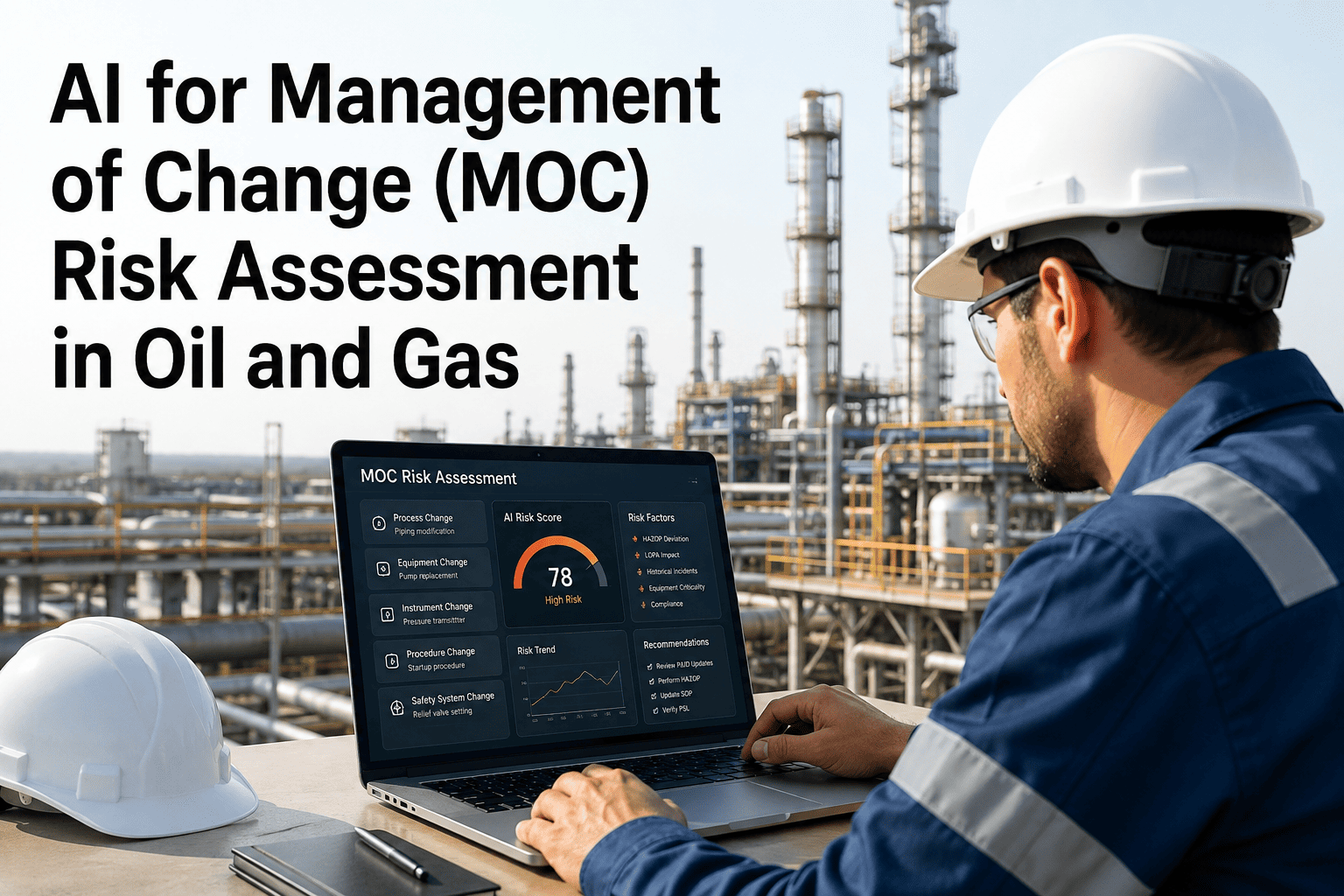
When a management of change request is logged, the digital safety case model identifies which major accident hazards, barriers, and safety critical elements are affected by the proposed change and flags them for reassessment. This ensures that the ALARP argument, performance standards, and assurance tasks for the impacted SCEs are reviewed and updated before the modification is implemented, rather than discovered during the next periodic safety case review cycle.
Book a demo to see the MOC integration workflow.
How does this approach support multiple regulatory jurisdictions for a fleet with installations in different regions?
The core safety case structure, major accident hazard register, barrier models, and SCE performance standards remain consistent across jurisdictions because the fundamental engineering reality of the hazards does not change based on geography. The digital safety case model applies jurisdiction-specific formatting, terminology, and reporting requirements as a presentation layer on top of the shared data foundation, so a single installation model can produce a BSEE SEMS audit package, an HSE safety case revision, or a NOPSEMA compliance report without duplicating the underlying analysis.
Contact support to discuss multi-jurisdiction configuration.
What is the typical implementation timeline for connecting an existing safety case to live operational data?
Most operators complete the initial digital safety case build within 8 to 14 weeks, depending on the maturity of their existing hazard register, the number of safety critical elements requiring performance standard mapping, and the number of data sources that need integration. The first phase focuses on getting the MAH register, barrier model, and SCE performance standards into the digital structure, followed by connecting CMMS, inspection, and sensor data sources to automate assurance tracking.
Book a demo to get a timeline estimate based on your current safety case maturity.
Stop Defending a Safety Case That Was Current Six Months Ago
iFactory gives your safety engineering team a continuously verified digital safety case where barrier health, SCE performance, and ALARP arguments are backed by live data from your existing systems. Book a demo to see your offshore safety case rebuilt as a living operational model.