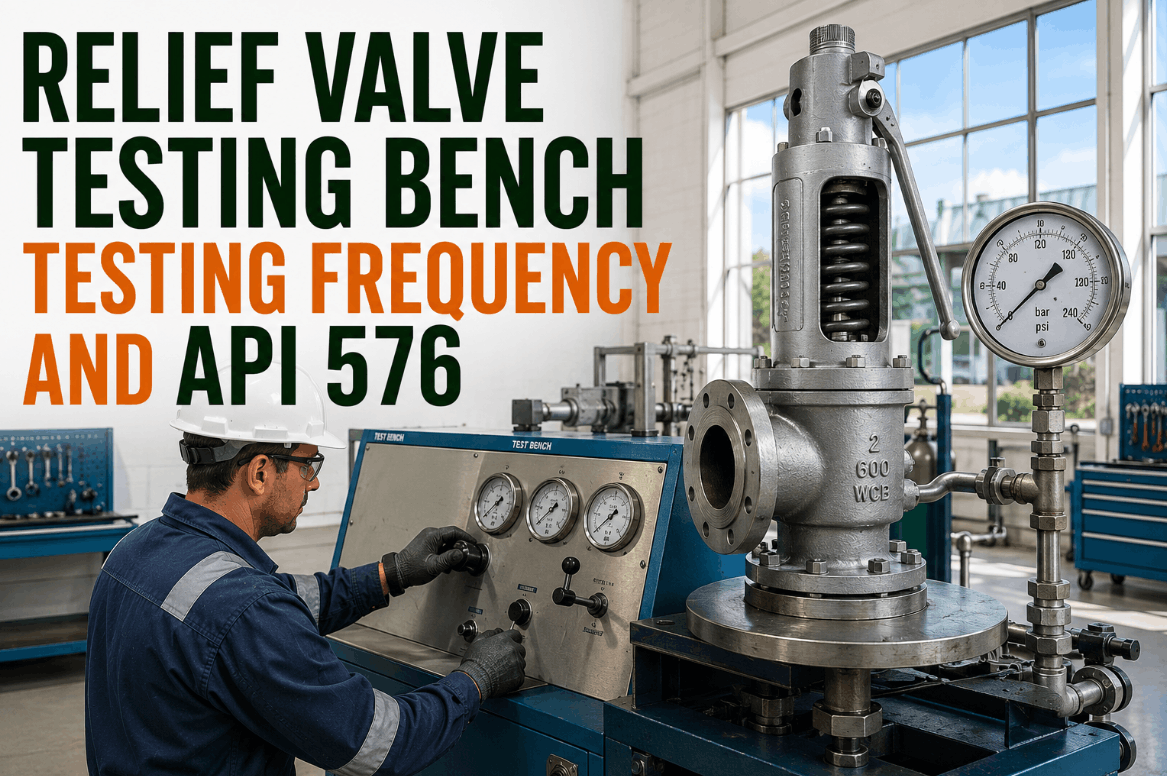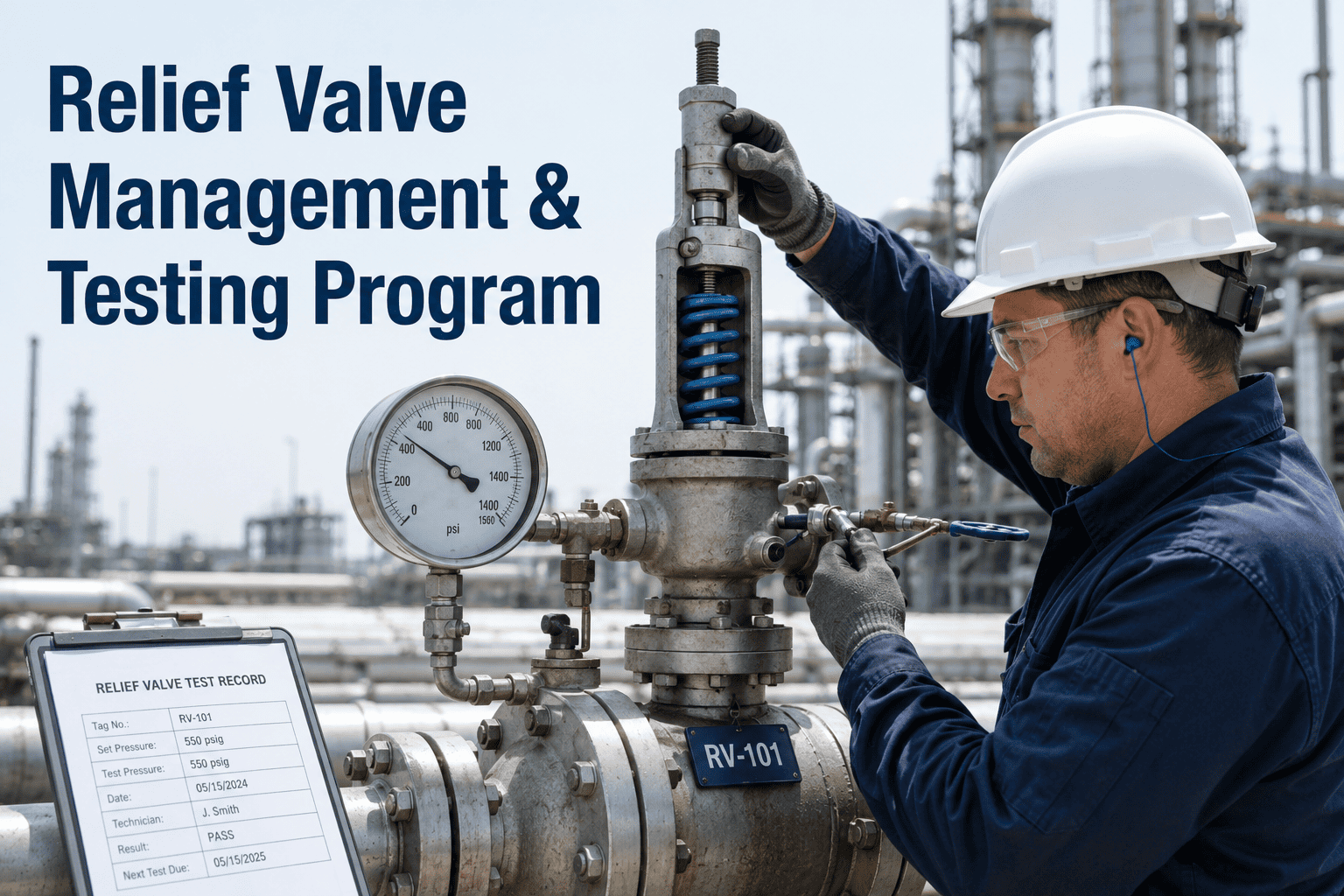
A pressure safety valve is the one piece of equipment on a unit that is designed to do almost nothing for years at a stretch, and then perform perfectly the one time it actually matters. That inversion is exactly what makes PSV and PRV management so easy to get wrong — a valve can pass every visual inspection for a decade while its spring quietly fatigues or its seat slowly fouls, and the only way to know it will actually open at set pressure is to test it. API 576 sets ten years as a maximum interval, not a target, and explicitly ties the real interval back to how each individual valve has actually performed in its specific service. For process safety engineers and reliability managers responsible for a plant-wide relief valve inventory, the challenge isn't understanding that principle — it's building a program disciplined enough to apply it valve by valve, across sometimes thousands of devices. Talk to our support team about what that looks like across your own PSV inventory.
Why "Ten Years" Is a Ceiling, Not a Default Schedule
It's common for a valve testing program to default every device to the maximum ten-year interval simply because that's the number most people remember from API 576 — but the code itself is explicit that the interval should be set by how that specific valve has performed in its specific service, and defaulting everything to the ceiling quietly ignores that requirement. A valve in clean, dry, non-fouling service with a strong multi-cycle as-found pass history has earned the right to sit closer to that ten-year maximum. A valve in a corrosive, fouling, or polymerizing service — or one that has ever failed an as-found test — has not, and testing it on the same schedule as the clean-service valve is a documented gap waiting to be found during an incident investigation rather than a routine audit.
Pilot-operated relief valves deserve particular attention in this conversation, since their tighter manufacturing tolerances and pilot inlet filters make them more sensitive to fouling and particulate buildup than conventional spring-loaded valves, and a blanket application of the conventional-valve interval to a pilot-operated device in a demanding service can leave a meaningful gap between assumed and actual reliability.
What Actually Happens During a Valve Test Cycle
Valve is pulled from service at its scheduled interval or in response to a performance concern, with inlet and outlet piping inspected for fouling or corrosion products before the valve leaves the unit.
The valve is tested exactly as it arrived, with no adjustment, to record its actual relieving pressure and seat tightness. This is the single most important reading in the whole cycle — it tells you how the valve was really performing in service, not how it performs after a shop overhaul.
Based on as-found results and physical condition, the valve is cleaned, has worn components replaced, and is reset to its correct set pressure per the applicable seat tightness standard.
The rebuilt valve is tested again to confirm it now meets set pressure and seat tightness requirements before being certified fit to reinstall.
Valve is returned to service with its as-found and as-left results logged against its permanent history — the record that will determine whether its next interval can extend, hold, or must shorten.
Signals That Should Shorten a Valve's Test Interval
A handful of conditions consistently justify testing a valve more often than the default schedule, and a mature relief valve program treats each one as a trigger rather than waiting for a scheduled review to catch up. Reviewing these signals valve by valve, rather than applying a single blanket policy across the whole inventory, is what actually keeps the highest-risk devices on a schedule that matches their real behavior.
| Signal | Why It Matters | Typical Response |
|---|---|---|
| As-found test failure | Valve was not performing to spec while in service for an unknown portion of the last interval | Shorten interval until multiple consecutive passing as-found results are established |
| Fouling or polymerizing service | Deposit buildup on the seat or pilot inlet filter degrades performance faster than clean service | Interval set well below the 10-year maximum, often 2-3 years depending on severity |
| Chattering reported in service | Indicates instability that accelerates seat and spring wear beyond normal expectations | Root cause investigation plus accelerated re-test regardless of remaining scheduled interval |
| Corrosive process fluid | Internal components degrade faster than the standard interval assumption accounts for | Interval shortened and materials of construction reviewed for suitability |
What a Disciplined Testing Program Is Actually Worth
The value of rigorous PSV management shows up in two very different places — avoided catastrophic consequences on the rare occasion a valve is actually called on to relieve, and meaningful cost savings from not over-testing valves that have already proven themselves reliable in clean service. Book a demo to see how a risk-informed interval review would reshape your own testing schedule and shop workload.
| Value Driver | Typical Impact | How It Shows Up |
|---|---|---|
| Extended intervals on proven clean-service valves | Fewer unnecessary valve pulls and shop overhauls per turnaround cycle | Reduced valve shop labor and production risk from unnecessary equipment isolation |
| Shortened intervals on flagged valves | Failures caught in the shop instead of during an actual overpressure event | As-found failure rate trending down over successive test cycles per valve |
| Full inventory traceability | Every valve's complete as-found/as-left history available for any audit or MOC review | Faster regulatory audit turnaround and fewer inspection program findings |
| Turnaround planning integration | Valve pulls bundled into already-scheduled outages rather than standalone trips | Reduced incremental downtime attributable to relief valve testing specifically |
Building One Record Per Valve Instead of a Spreadsheet Per Turnaround
Most relief valve programs accumulate their test history the same way most piping and tank inspection programs do — one spreadsheet or shop report per testing cycle, filed away once the valve is reinstalled and rarely cross-referenced against the valve's earlier history. That approach makes it almost impossible to spot a slow trend, like a set pressure that has drifted a little further from nominal at each successive as-found test, or a seat tightness result that keeps landing right at the acceptance limit without ever clearly failing. Individually, each of those results might get signed off as passing. Viewed together as one continuous record per valve, the same results describe a device that is trending toward failure and deserves a shortened interval well before it actually fails an as-found test outright.
The practical fix is treating every valve in the inventory as its own asset record — tag number, service, set pressure, materials of construction, and every as-found and as-left result it has ever produced, in one place. That record becomes the single source of truth for interval decisions, MOC reviews, and audits, replacing the scramble to track down which shop performed the last three overhauls and whether their result formats even match. It also makes onboarding a new reliability engineer or process safety lead dramatically easier, since the full performance story of every valve in the plant is immediately visible rather than locked in institutional memory or a filing cabinet of shop reports.
A Process Safety Engineer's View on Relief Valve Discipline
Relief valve programs are one of the few places in a plant where nobody notices the work until something goes wrong, which is exactly why it's so easy for the discipline to slip. I audited a unit a few years back where nearly every conventional PSV had been defaulted to the ten-year interval regardless of service, including several in genuinely fouling applications with no strong as-found history to justify that schedule. When we actually pulled the test records valve by valve, a meaningful share of the fouling-service valves had as-found results close to the acceptance limit — not failures yet, but clearly trending in a direction that the blanket ten-year schedule was never designed to catch early. Rebuilding the interval logic around each valve's actual service and test history, rather than a single company-wide default, was not a popular change with the shop workload in the short term, but it is the difference between a program that reacts to a valve failure and one that actually prevents it.
Where Relief Valve Data Fits Into the Broader Fixed Equipment Picture
Relief valve performance rarely exists independently of the rest of a unit's mechanical integrity story. A PSV protecting a vessel that has shown accelerating corrosion in recent thickness readings deserves closer scrutiny than the same valve model protecting a vessel with a stable, well-understood corrosion rate, since the consequence side of the risk equation has changed even if the valve itself hasn't. Similarly, a process change that alters the fluid composition feeding a relief system — a new feedstock, a different chemical injection program, a shift in operating temperature — can change a valve's fouling risk profile in ways that a testing schedule built years earlier never anticipated. Reviewing relief valve intervals in isolation from these broader process safety and mechanical integrity signals means missing exactly the kind of compounding risk that incident investigations so often trace back to afterward.
Facilities that bring relief valve history into the same connected reliability platform used for vessel, piping, and tank integrity data get a meaningfully different view of risk than one built from siloed spreadsheets. A management-of-change review for a new process condition can immediately surface every relief valve, vessel, and piping circuit affected, rather than relying on someone remembering to loop in the valve shop separately. That connected view is what turns relief valve management from a standalone compliance obligation into a genuine part of the plant's overall process safety program.
Frequently Asked Questions — PSV and PRV Management
The as-found test measures the valve exactly as it was pulled from service, with no adjustment made beforehand, and it's the reading that tells you how the valve was truly performing during the interval it was just in service — including any drift in set pressure or degradation in seat tightness that occurred over time. The as-left test happens after cleaning, repair, or overhaul, confirming the valve now meets its set pressure and seat tightness requirements before it's certified to go back into service. Some organizations focus almost entirely on the as-left result because that's the number that gets the valve reinstalled, but the as-found result is actually the more valuable data point for interval decisions, since it's the only honest measure of real in-service performance. Reach out to support if you want help auditing your as-found pass rate across your inventory.
Extending an interval is legitimate and code-supported when it's backed by a documented history of consecutive passing as-found tests in a stable, well-understood service, since API 576 ties interval determination directly to actual device performance rather than a fixed default. The key word is documented — an extension needs a clear paper trail showing the valve's test history, service conditions, and any process changes that might affect its performance, so that the extended interval can be defended in an audit or incident investigation. Facilities that have never formally reviewed their interval logic often find a meaningful share of their inventory qualifies for a longer interval than the conservative default they've been running, once the actual test history is examined valve by valve.
Pilot-operated relief valves have inherent design characteristics — tighter manufacturing tolerances and a pilot inlet filter or screen — that make them more sensitive to particulate buildup, polymer fouling, and general service conditions than conventional spring-loaded PSVs. This means the same interval logic that works fine for a conventional valve in a given service can be genuinely risky when applied to a pilot-operated device in the same service, particularly where trace moisture or particulate contamination is present. A risk-based interval review should evaluate pilot-operated valves against their own performance history and design sensitivities rather than assuming conventional-valve intervals transfer directly across.
Any as-found test failure, reported chattering or instability while the valve was in service, a documented process change affecting the fluid the valve sees, or corrosion products found in the inlet or outlet piping during valve removal should all trigger an interval review independent of the regular testing calendar. Waiting for the next scheduled test to address one of these signals defeats the purpose of tracking them in the first place — the value of a relief valve history is in catching a developing problem between scheduled tests, not just confirming it at the next one.
Every as-found and as-left test result, along with valve service history and any interval changes, is logged against the valve's permanent record and made available directly to your CMMS and management-of-change workflows, so an interval extension or reduction is backed by a traceable data trail rather than a standalone decision. Test due dates generate work orders automatically ahead of the deadline, cross-referenced with turnaround planning so valve pulls can be bundled into already-scheduled outages wherever the interval allows. Book a demo to see this running against your current PSV inventory and CMMS setup.