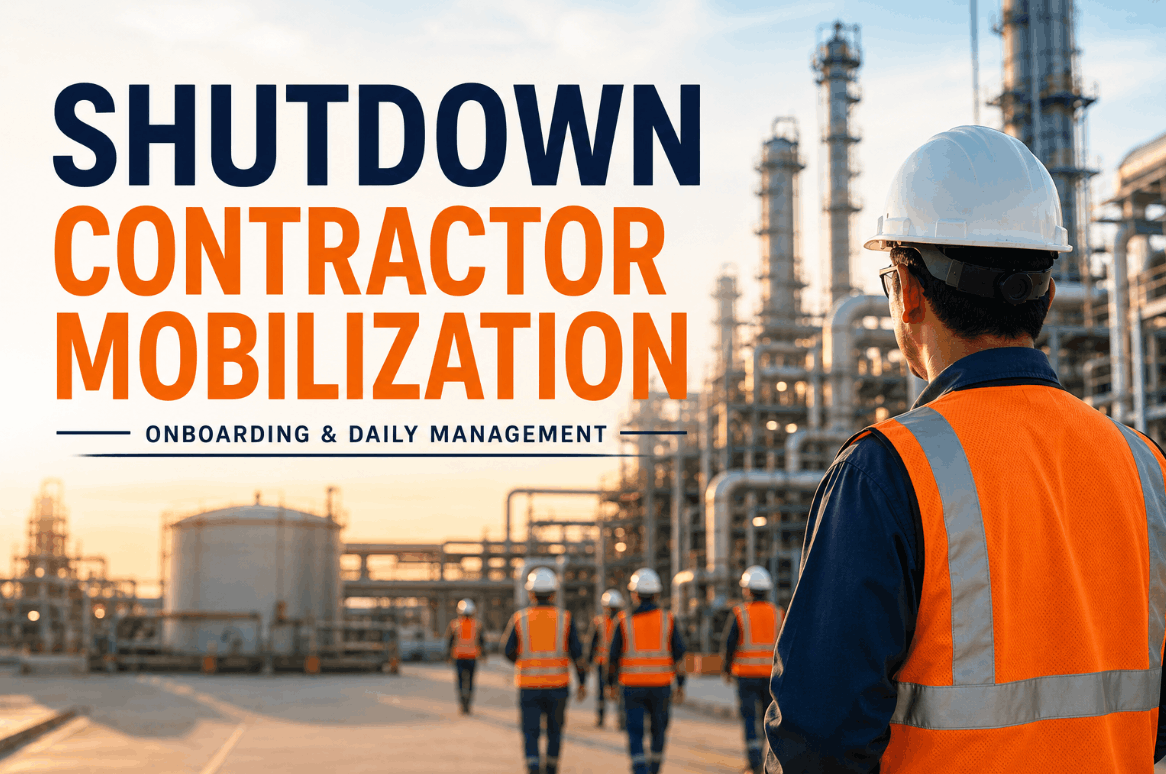
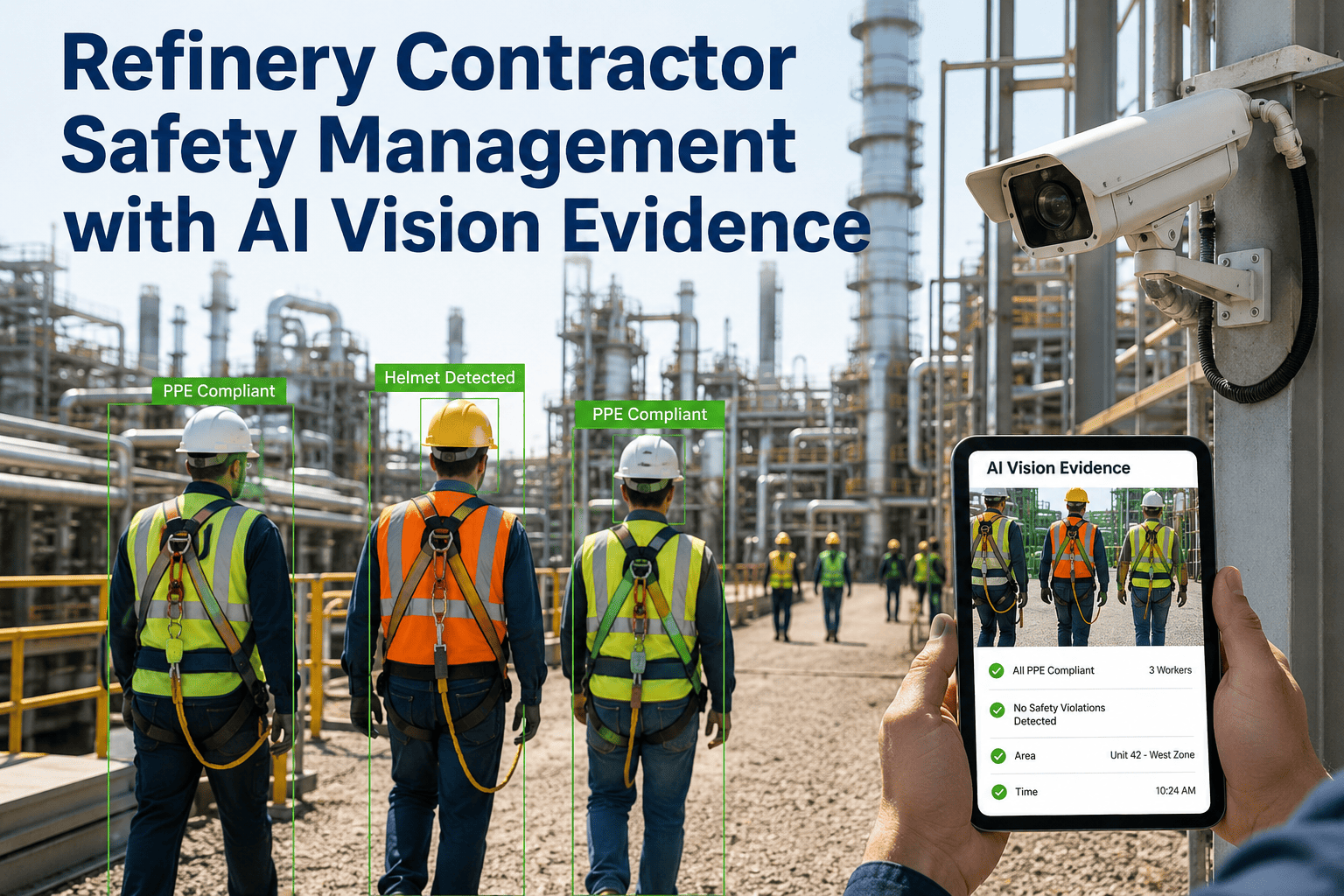
A major refinery or chemical plant turnaround can triple the on-site headcount in a matter of days — bringing in 500 to 2,000 contract workers who arrive with varying trade certifications, safety training histories, and zero familiarity with your specific process hazards, isolation boundaries, and permit-to-work requirements. That surge of contractor labor is what makes the TAR execution possible. It is also the single highest-risk period for safety incidents, schedule overruns, and cost blowouts. The difference between a contractor mobilization that executes cleanly and one that fractures into coordination failures, safety events, and rework cycles starts before the first worker steps through the gate — in the prequalification process, the onboarding protocol, and the daily management structure that governs how hundreds of contractor crews receive, execute, and hand off work across a compressed multi-week execution window. Book a Demo to see how iFactory's digital platform connects contractor work packages, permit tracking, and real-time progress monitoring to give TAR managers full execution visibility from day one of mobilization.
3×
Typical headcount surge during peak TAR contractor mobilization at a mid-size refinery
20–30%
Of TAR schedule overruns trace directly to contractor coordination failures and uncontrolled scope additions
12–16 Wks
Best-practice lead time for contractor prequalification and scope package distribution before shutdown
15–25%
Shorter TAR durations at facilities using digital contractor management and real-time progress tracking
TAR Contractor Headcount Triples Overnight. Your Management Process Has to Be Ready Before They Arrive.
iFactory's digital TAR management platform connects contractor work packages, permit-to-work workflows, toolbox talk records, and daily progress tracking into a single execution system — giving TAR managers real-time visibility into contractor performance, schedule compliance, and safety documentation status across every work front simultaneously.
Contractor Prequalification: The Foundation That Determines TAR Execution Quality
Contractor prequalification is not a procurement formality. It is the only point in the TAR lifecycle where the plant can reject a contractor before the cost of poor performance is embedded in the schedule. Best practice is to begin prequalification 12–16 weeks before the shutdown date — enough lead time to verify trade capabilities, assess safety records, confirm insurance documentation, and distribute scope packages before contractors begin staffing and training their crews.
The metrics that matter in a TAR prequalification process go beyond TRIR and EMR scores. Leading indicators — the quality of the contractor's written safety program, their site-specific hazard identification procedures, their supervisor-to-worker ratios, and their documented toolbox talk and JHA processes — predict execution quality more reliably than historical recordable rates alone. Facilities that treat prequalification as a checkbox process routinely discover contractor capability gaps during execution, when the cost of substitution or supplemental supervision inflates far beyond what better upfront screening would have required. Book a Demo to see how iFactory structures contractor qualification data and work package assignment into a single traceable pre-TAR workflow.
Safety Record Verification
3-year TRIR, DART rates, EMR with carrier letter, OSHA 300/300A logs, and documented corrective actions for any recordable citations. Thresholds set against BLS industry averages for the relevant trade classification.
Trade Certification Validation
Verification of current craft certifications, NDT qualifications, confined space entry training, LOTO competency, and hot work authorization for each role against the TAR scope requirements — not just company-level documentation.
Insurance and Legal Compliance
COIs with correct limits and endorsements covering GL, auto, workers' compensation, and umbrella; waiver of subrogation; additional insured status; and license verification for the work jurisdiction with automated expiration tracking.
Scope-Specific Safety Program Review
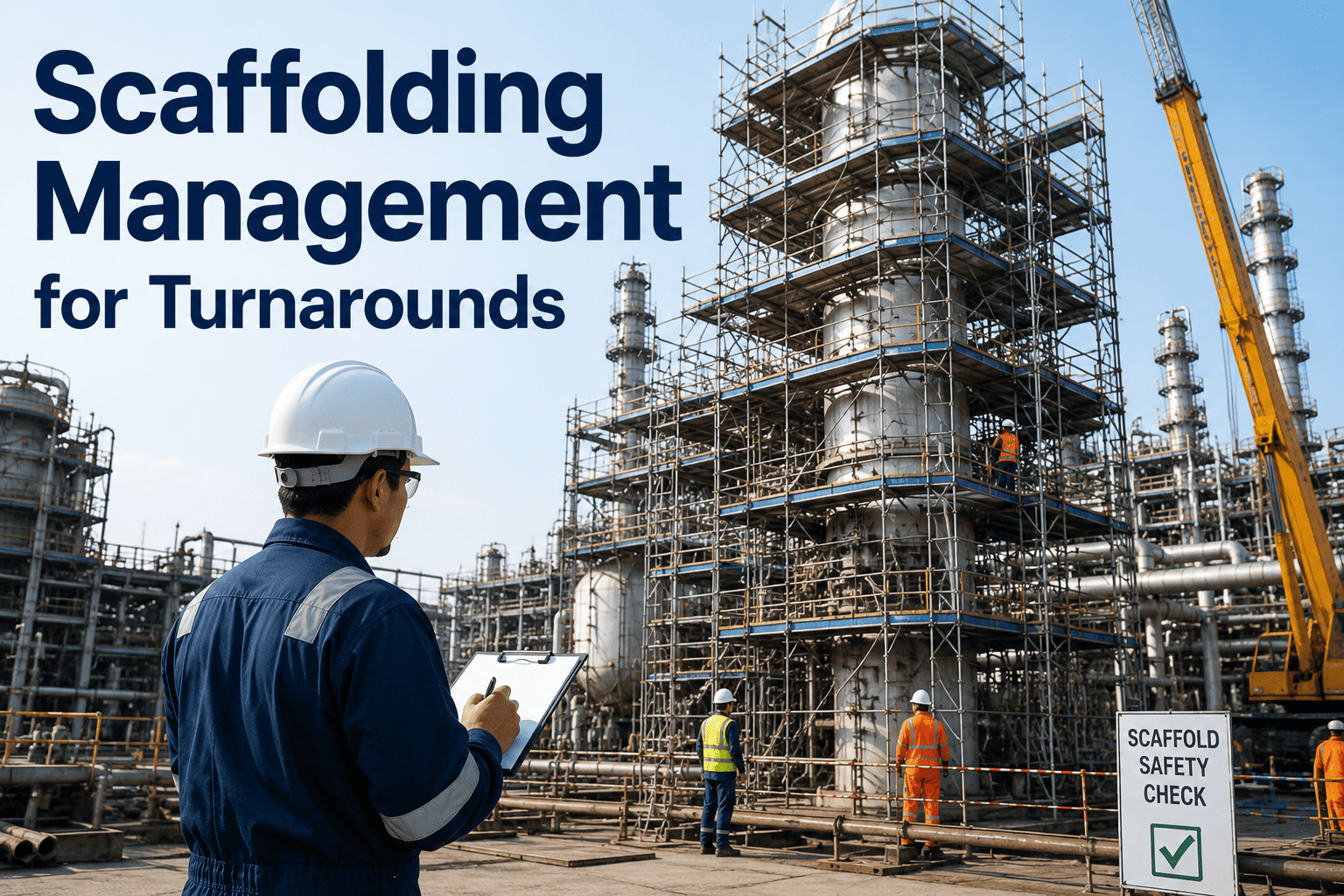
Evaluation of the contractor's written safety program against the specific hazard profile of their assigned scope — not a generic review. A scaffolding contractor and a catalyst handler require entirely different hazard identification and mitigation documentation.
12–16 Wks
Lead time for prequalification, scope distribution, and contractor staffing confirmation before shutdown
TRIR + EMR
Minimum lagging indicators — supplement with leading indicators including JSA quality and supervisor ratios
Annual
Minimum prequalification renewal frequency — refresh at mobilization, scope change, and after any incident
Site Orientation, Badging, and Onboarding: The 48-Hour Window That Sets the Tone
The first 48 hours of contractor mobilization establish the behavioral norms, communication expectations, and safety discipline that will govern the entire TAR execution. A poorly structured orientation process — one that processes workers through generic slide decks, issues badges without verifying training completion, and releases crews to work fronts before supervisors have reviewed their specific work packages and permit requirements — creates a permissive environment that compounds into safety events and rework within the first week.
Effective onboarding is site-specific, role-differentiated, and completion-verified. A pipefitter entering a confined space on Day 1 requires different orientation content than a scaffold builder working at elevation on the external structure. Badging should function as a verification gate — not issued until orientation completion is confirmed, trade certification is validated against the work assignment, and the relevant permit-to-work authorizations are documented. Digital badging systems that link to training records and work package assignments eliminate the gap between orientation completion and work authorization that paper-based processes routinely fail to close.
01
Pre-Arrival Documentation Verification (1–2 Weeks Before Mobilization)
All contractor personnel documentation — craft certifications, medical clearances, required training completions, and drug screening results — verified and recorded before the worker arrives on site. Workers with incomplete documentation are flagged and held from the mobilization roster until requirements are met. This prevents gate-day congestion and eliminates the pressure to waive documentation gaps under mobilization schedule pressure.
02
Site-Specific Safety Induction (Day 1, Role-Differentiated)
Orientation covers facility emergency response procedures, muster station locations, site-specific process hazards relevant to the worker's assigned work zone, permit-to-work system requirements, isolation and LOTO procedures applicable to their scope, and communication protocols for shift handover and supervisor escalation. Content is differentiated by trade and work zone — workers entering high-hazard areas receive additional module-specific induction before area access is granted.
03
Badging as a Verified Completion Gate
Site access badges are issued only after orientation completion is recorded, trade certification is matched to the assigned work scope, and relevant permit authorizations are confirmed. Badge data links to the worker's digital training record and work package assignment — enabling real-time verification at access control points throughout the TAR execution that a given worker is authorized for their current work location and task category.
04
Work Package Handover to Contractor Supervisor
Each contractor supervisor receives a structured work package covering their assigned task sequence, dependency relationships to adjacent contractor crews, required permits for each activity, isolation boundaries, material and tool staging locations, and shift handover documentation requirements. The handover is documented — not verbally communicated — and confirmed as received before the crew is released to the work front.
05
Day 1 Toolbox Talk and JHA Review
Before any work begins, each crew conducts a site-specific toolbox talk covering the specific hazards of the first-day task, the permit-to-work requirements for that activity, and the stop-work authority expectations. The JHA for the first activity is reviewed with every crew member before signing. Toolbox talk completion is recorded by the TAR management system for daily compliance tracking and audit documentation.
Daily Contractor Management: Work Front Control, Permit Discipline, and Progress Tracking
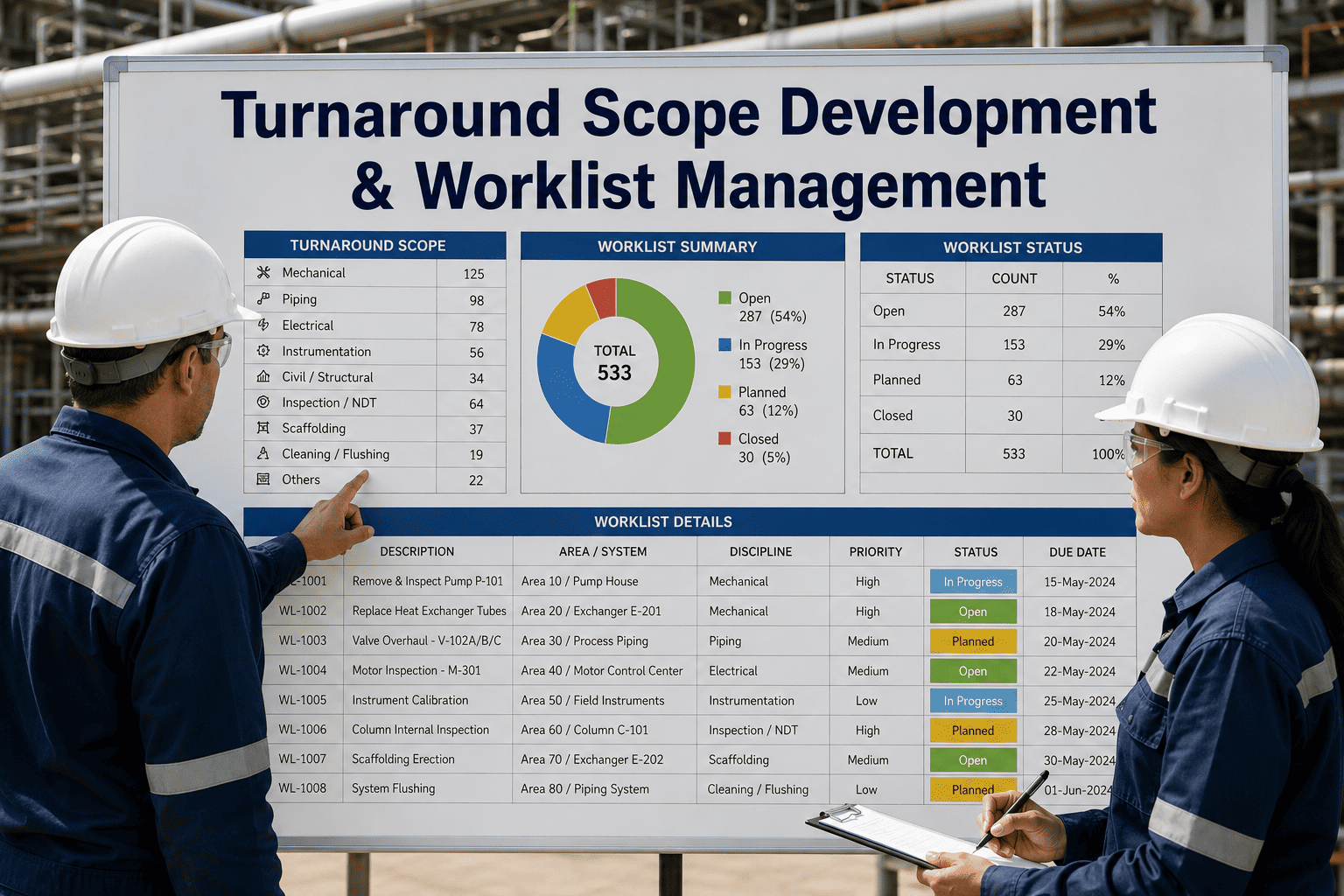
Contractor management during TAR execution is not supervision — it is coordination. The TAR manager's job is not to watch individual contractors work; it is to ensure that work fronts open when they are supposed to, permits are active for the right activities, crews are not blocked by staging delays or upstream task dependencies, and schedule deviations are identified and addressed the same day they occur — not at the weekly review. That requires a daily management cadence built around real-time schedule status, not verbal status reports.
Contractor Safety Metrics and Performance Scoring During TAR Execution
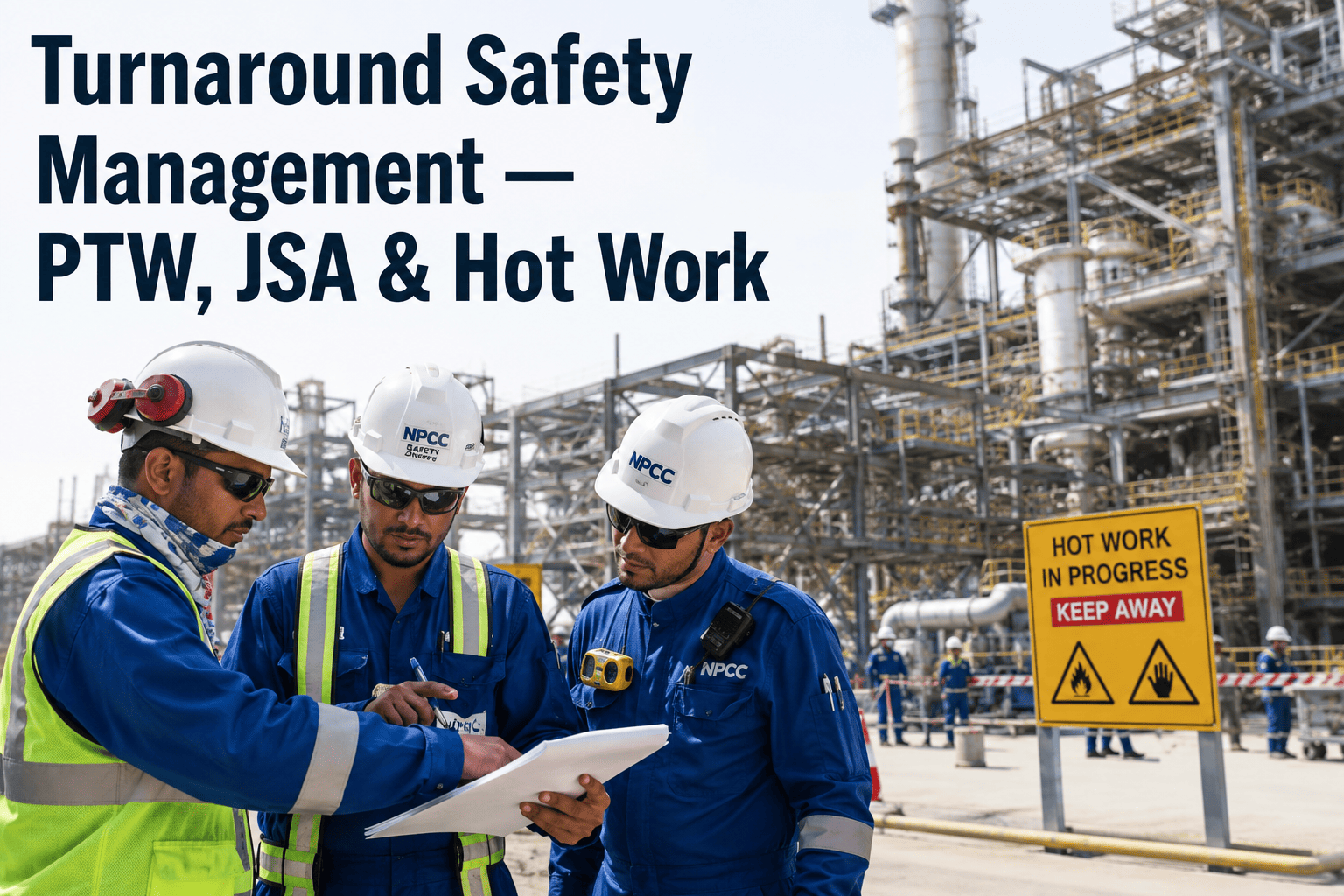
Safety performance during contractor mobilization requires active measurement — not end-of-TAR review. Facilities that track leading safety indicators daily, not just after incidents occur, consistently achieve lower total recordable rates and identify contractor behavioral trends early enough to intervene before an event occurs. The metrics that drive performance during TAR execution are different from the prequalification metrics used to select contractors: they shift from historical rates to real-time activity data.
Daily
Toolbox Talk Completion Rate
Percentage of crews with documented task-specific toolbox talk completion before beginning work. Target is 100% daily; any gap is addressed at morning standup the following day.
Zero
Unauthorized Work Starts
Activities begun without an active permit, incomplete isolation, or without documented JHA review. Any instance triggers immediate stop-work and supervisor review before restart authorization.
Stop-Work
Authority Usage Rate
Number of stop-work authorities exercised per week — a leading indicator. Low rates signal either an unsafe culture or an unusually clean execution; both warrant investigation.
Near-Miss
Reporting Rate Per Crew
High near-miss reporting indicates a contractor safety culture that identifies and surfaces hazards. Low reporting warrants field observation — it rarely reflects genuinely hazard-free conditions.
Schedule
Compliance per Contractor
Actual versus planned task completion by contractor per shift. Contractors consistently below target receive additional supervision and resource review before float is consumed on their assigned critical path activities.
Post-TAR
Performance Score
Aggregated safety, schedule, and quality performance score compiled at TAR close-out — fed back into the prequalification system to govern future bid invitations and mobilization priority for each contractor.
100%
Permit Verification Before Work
No crew begins confined space, hot work, or LOTO-required activity without confirmed active permit in system
Digital
Toolbox Talk Logging
Every toolbox talk recorded per crew per shift — audit-ready for safety compliance and post-incident review
Real-Time
Progress Tracking
Work order status updated per shift; TAR manager sees schedule variance before it becomes critical path impact
7 Days
CMMS Integration
Full integration with SAP PM, IBM Maximo, and Infor EAM — contractor work orders connected to your existing maintenance stack
Expert Review: What TAR Managers Miss When Contractor Mobilization Fails
The most consistent mistake I see in contractor mobilization is treating badging and orientation as an administrative event rather than a safety verification gate. Plants spend months on prequalification and then issue badges in a warehouse on Day 1 without confirming that the individual worker — not just the contractor company — has completed the required induction for their specific scope. I have walked into TAR executions on Day 3 and found confined space crews with no completed confined space entry training records, scaffold builders working at elevation without documented fall protection briefings, and permit boards that showed 40 active permits with 12 of them expired. Every one of those situations traced back to an onboarding process that prioritized moving workers through the gate quickly over confirming they were actually ready to work. The schedule pressure of mobilization day is real, but releasing unqualified workers to live work fronts is how you generate the kind of safety events that shut down the entire TAR — which is exactly what the schedule cannot absorb.
Senior Turnaround Safety Manager
Petrochemical Complex, U.S. Gulf Coast — 22 Years TAR Execution Experience
On the scheduling side, the contractor coordination failure I encounter most often is the absence of daily float tracking by contractor crew. TAR managers run morning standups, but they are tracking percentage complete — and percentage complete tells you nothing about whether you are on schedule to finish on the committed date. A contractor who is 60% complete with three days remaining on a 5-day task and has consumed all their float is not "ahead of schedule" — they are on the critical path and the TAR manager does not know it yet. When we implemented real-time work order status tracking tied to the CPM schedule, the TAR managers could see float consumption by contractor activity every shift. It changed how they ran morning standups entirely — they were solving problems on Day 2 that previously would not have surfaced until Day 5. That shift alone delivered measurable schedule improvement on every TAR we ran after deployment.
TAR Planning and Scheduling Lead
Crude Distillation and FCC Complex, U.S. Midwest Refinery — 16 Years TAR Planning
Connect Contractor Work Packages, Permits, Toolbox Talks, and Daily Progress in One TAR Execution Platform.
iFactory's digital TAR management platform gives shutdown managers real-time visibility into contractor schedule compliance, permit status, toolbox talk completion, and scope change activity — across every contractor crew simultaneously, from mobilization day through restart.
Book a Demo and see a live walkthrough of the contractor management workflow in an active refinery TAR deployment.
Conclusion: Contractor Mobilization Quality Is a TAR Schedule and Safety Decision
Every day of TAR schedule overrun is a production revenue loss event. Every safety incident during contractor execution is a schedule disruption, an investigation, and a workforce morale event that degrades productivity for the remainder of the shutdown. Both outcomes trace back to the same root causes: contractor workers who were not properly screened, not adequately oriented to the specific hazards of their work scope, not integrated into a daily management system that surfaces schedule deviations and permit gaps before they compound, and not held to a documented post-TAR performance standard that governs whether they are invited back.
The facilities that execute contractor-intensive TARs on schedule and without significant safety events are not operating with better contractors than everyone else. They are operating with better systems for qualifying, onboarding, managing, and tracking those contractors — systems that treat mobilization day as the culmination of months of preparation rather than the beginning of ad-hoc coordination. That is what iFactory's digital TAR management platform is built to support: structured prequalification workflows, verified onboarding gates, real-time work order and permit tracking, and daily progress reporting that gives TAR managers the schedule visibility to act on problems the day they appear. Book a Demo to see how.
Frequently Asked Questions
How far in advance should contractor prequalification begin for a major refinery TAR?
Best practice is 12–16 weeks before the shutdown date — providing enough lead time to verify safety documentation, distribute scope work packages, confirm contractor staffing levels, and complete any remediation of documentation gaps before mobilization day.
What is the right safety metrics framework for evaluating contractors during TAR execution?
During execution, leading indicators — daily toolbox talk completion rates, near-miss reporting frequency, stop-work authority usage, and permit compliance — predict safety performance more accurately than lagging TRIR and DART rates, which reflect past events rather than current behavioral trends.
How does iFactory support contractor work package distribution and progress tracking during TAR execution?
iFactory connects contractor work packages to the CPM schedule, tracks work order status per shift, monitors permit readiness, and generates daily float consumption reports — giving TAR managers real-time schedule compliance visibility across every contractor crew without manual data collection.
What should a contractor site orientation cover that is different from a standard safety induction?
TAR orientation must cover site-specific process hazards relevant to the worker's assigned work zone, the facility's permit-to-work system requirements, LOTO isolation boundaries for their scope, and shift handover protocols — content that generic safety inductions do not address and that varies by work zone and trade.
How does post-TAR contractor performance scoring improve future shutdowns?
Post-TAR performance scores — aggregating safety compliance, schedule adherence, and quality metrics per contractor — feed directly into the prequalification system, determining bid invitation priority and mobilization sequencing for subsequent TARs based on documented execution history rather than relationship preferences.
Digitize Your TAR Contractor Management — From Prequalification to Post-Shutdown Performance Scoring.
iFactory gives shutdown teams a structured digital workflow for contractor prequalification, onboarding verification, permit tracking, toolbox talk logging, daily schedule compliance reporting, and post-TAR performance scoring — all connected to your CMMS and CPM schedule in a single execution platform.
Digital Work Package Distribution
Permit-to-Work Tracking
Real-Time Schedule Compliance
CMMS Connected in 7 Days
Post-TAR Performance Scoring