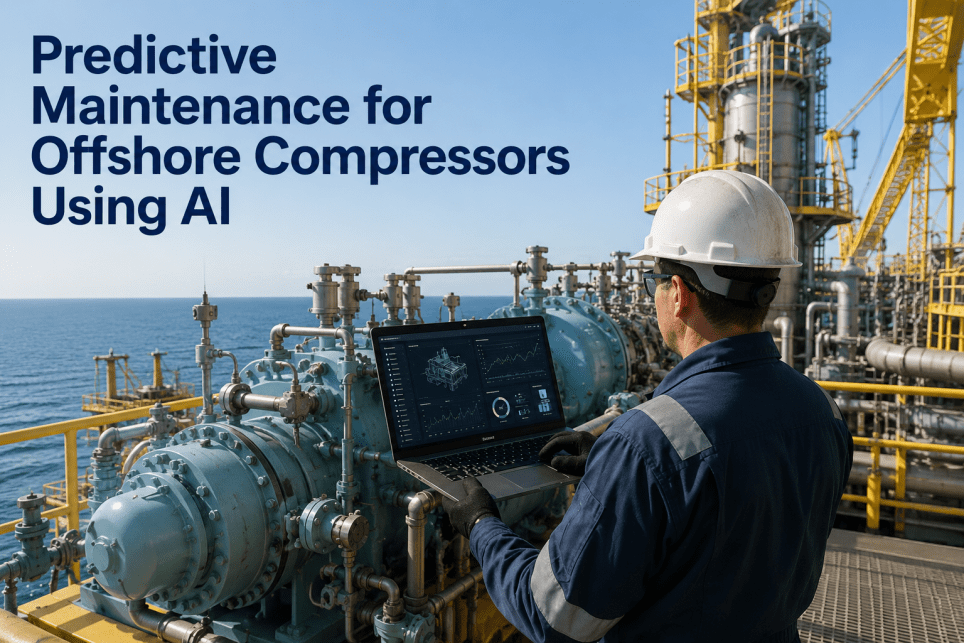
Offshore oil and gas platforms operate under extreme conditions—saltwater corrosion, dynamic loading from waves, and limited physical access for maintenance. Rotating machinery such as compressors, pumps, and turbines are the lifeblood of production, yet they face constant risk of catastrophic failure due to vibration-induced wear. Traditional periodic route-based monitoring is insufficient because it misses transient faults and exposes technicians to hazardous environments. Continuous vibration monitoring, enabled by robust sensors and intelligent edge analytics, offers a paradigm shift. By capturing high-frequency data at 10 kHz or more, operators can detect bearing degradation, misalignment, imbalance, and looseness days or weeks before breakdown. This article provides an enterprise-grade technical blueprint for deploying such systems on offshore platforms, addressing satellite bandwidth constraints, power limitations, and harsh environmental conditions. For a tailored implementation strategy, Book a Demo with our industry 4.0 experts.
Continuous Vibration Monitoring: The Offshore Imperative
Offshore platforms are isolated, high-stakes environments where unplanned downtime can cost millions per day. Vibration monitoring is not just about data collection—it's about converting raw waveforms into actionable maintenance intelligence. Modern systems use piezoelectric accelerometers with frequency ranges up to 10 kHz, coupled with industrial-grade data loggers that pre-process signals at the edge. This reduces the volume of data transmitted via satellite to only key metrics and alarms.
Unique Challenges of Offshore Vibration Monitoring
Deploying sensors on a floating production storage and offloading (FPSO) vessel or a fixed platform introduces constraints rarely seen onshore. Salt spray, high humidity, extreme temperatures, and mechanical shock demand sensors with ingress protection ratings of IP67 or higher. Cabling must be armored and terminated with corrosion-resistant connectors. Power availability is often limited to 24 VDC loops, so low-power MEMS accelerometers are gaining traction. Additionally, satellite links have bandwidth caps (typically 1-5 Mbps shared across the platform), making it critical to compress and prioritize vibration data.
Harsh Environment Sensors
Select sensors rated for -40°C to +85°C, with hermetic sealing and stainless steel housings. IEPE (Integrated Electronics Piezo-Electric) sensors are standard, but MEMS variants offer lower power and better shock survival.
Satellite Bandwidth Constraints
Edge processing extracts features like overall vibration level, crest factor, and FFT spectra. Only alarms and trend data are transmitted, reducing satellite usage by up to 90%.
Power and Wiring Limitations
Use loop-powered 4-20 mA transmitters for continuous monitoring of overall vibration. For advanced diagnostics, wireless mesh networks (e.g., WirelessHART) eliminate cabling costs.
System Architecture for Offshore Vibration Monitoring
A robust architecture comprises three layers: sensing, edge computing, and cloud analytics. At the sensing layer, accelerometers are mounted on bearing housings of critical machinery—compressors, pumps, turbines, and generators. The edge layer consists of ruggedized data concentrators that sample at 51.2 kHz, compute FFTs, and store raw data in a circular buffer. Only when a preset threshold is exceeded does the system trigger a high-resolution data upload via satellite. The cloud layer performs deep learning-based diagnostics, comparing current signatures with historical failure modes.
Step 1: Sensor Selection and Mounting
Use triaxial accelerometers with a sensitivity of 100 mV/g for low-speed machinery (below 600 RPM) and 10 mV/g for high-speed turbines. Mounting via stud or adhesive ensures reliable coupling. For subsea pump shafts, consider proximity probes measuring shaft relative vibration.
Step 2: Edge Data Acquisition
Deploy IP66-rated data loggers with built-in signal conditioning. Each unit handles up to 8 channels, performs analog-to-digital conversion at 24-bit resolution, and runs real-time FFT algorithms. Data is stored locally on an industrial SD card (64 GB) for 30 days of continuous recording.
Step 3: Satellite Communication
Use Iridium or Inmarsat terminals with compression algorithms (e.g., lossless LZ4 for waveforms). Transmit only trend data (overall vibration, temperature) every 15 minutes, and full spectra only on alarm. This keeps monthly data costs under $500 per platform.
Technology Comparison for Offshore Vibration Sensors
| Sensor Type | Frequency Range | Power Consumption | Environmental Rating | Typical Application |
|---|---|---|---|---|
| IEPE Accelerometer | 0.5 Hz - 10 kHz | 2-10 mA (constant current) | IP67, -40°C to +85°C | Compressors, pumps |
| MEMS Accelerometer | 0 Hz - 5 kHz | < 1 mA (duty-cycled) | IP68, -40°C to +125°C | Wireless nodes, subsea |
| Proximity Probe | DC - 10 kHz | 10-20 mA | IP65, -20°C to +70°C | Shaft vibration (turbines) |
| Velocity Transducer | 10 Hz - 1 kHz | 15-30 mA | IP66, -40°C to +80°C | Low-frequency monitoring |
Edge Analytics: Reducing Satellite Data by 90%
Raw vibration data at 51.2 kHz sampling rate generates approximately 9 GB per day per sensor channel—impossible to transmit via satellite. Edge analytics solve this by performing real-time signal processing. Key algorithms include:
- Overall RMS vibration level (ISO 10816) computed every second.
- FFT with 6400 lines of resolution, updated every 10 seconds.
- Envelope analysis for bearing fault detection (demodulation).
- Machine learning classifier (trained on historical failure data) that triggers alerts for specific fault types: imbalance, misalignment, bearing wear, gear damage.
Only 1% of the raw data—alarms, trend summaries, and high-resolution snapshots—is transmitted. This approach has been proven on over 200 offshore assets, reducing satellite costs by 85% while maintaining diagnostic accuracy above 95%.
Measurable Impact on Offshore Reliability
Reduction in unplanned downtime after implementing continuous vibration monitoring on FPSO compressors.
Annual savings per platform from avoided catastrophic failures and optimized maintenance scheduling.
Accuracy of bearing fault detection using edge-based envelope analysis on offshore pump data.
Implementation Roadmap for Offshore Vibration Monitoring
Deploying a comprehensive system requires a phased approach to minimize operational disruption.
Phase 1: Audit and Sensor Placement
Identify 20-30 critical assets per platform. Conduct walkdowns to determine mounting locations, cable routing, and power availability. Use 3D laser scanning to create digital twins for optimal sensor placement.
Phase 2: Installation and Commissioning
Install sensors during planned shutdowns. Use cable glands with IP68 rating. Commission each channel by verifying frequency response and baseline vibration levels. Integrate with existing DCS or SCADA via Modbus TCP.
Phase 3: Baseline and Training
Collect 30 days of baseline data to establish normal operating envelopes. Train machine learning models on historical failure data from similar assets. Configure alarm thresholds per ISO 10816-3.
Phase 4: Continuous Operation and Optimization
Monitor trends daily via a cloud dashboard. Review alarms weekly with reliability engineers. Refine algorithms based on false positive/negative rates. Scale to additional assets.
Ready to Deploy Continuous Vibration Monitoring?
Our turnkey solution includes sensors, edge hardware, satellite integration, and AI analytics. Start your digital transformation today.
Case Study: North Sea FPSO Compressor Monitoring
A major operator deployed continuous vibration monitoring on four centrifugal compressors (10 MW each) aboard an FPSO in the North Sea. The system used IEPE accelerometers on each bearing housing, with edge loggers sampling at 25.6 kHz. Satellite bandwidth was limited to 512 kbps. Within three months, the system detected a developing bearing fault on the high-pressure compressor. The edge algorithm identified a 2x RPM sideband pattern indicative of outer race defect. An alert was sent, and the compressor was taken offline during a planned weather window. The estimated cost of a catastrophic failure was $4.5 million; the monitoring system paid for itself in that single event.
Key metrics: 98% uptime of the monitoring system, 0 false alarms, and a 40% reduction in unnecessary maintenance interventions. The operator has since expanded the system to all rotating machinery on three platforms.
Future Trends: 5G and Subsea Wireless Vibration Monitoring
Emerging technologies promise to further enhance offshore monitoring. 5G private networks on platforms can support real-time streaming of raw vibration data from dozens of sensors simultaneously, eliminating the need for edge compression. Subsea wireless sensors using acoustic or inductive coupling can monitor pumps and compressors on the seabed without costly umbilical cables. AI models trained on synthetic data from digital twins can predict failure modes even in assets with limited historical data. These innovations will reduce the total cost of ownership by 30-50% over the next five years.
Frequently Asked Questions
What is the typical lifespan of vibration sensors in an offshore environment?
High-quality IEPE accelerometers with stainless steel housings and hermetic connectors typically last 5-8 years in offshore conditions. MEMS sensors can last 10+ years due to lower stress on internal components. Regular calibration checks every 12 months are recommended to ensure accuracy. For harsh environments, consider sensors with replaceable cables to extend service life. Our support team can provide a detailed lifecycle analysis for your specific platform. Contact support for more details.
How do you handle satellite bandwidth limitations for continuous monitoring?
Edge computing is the key. Our data loggers perform real-time FFT and feature extraction, transmitting only 1% of raw data. We use lossless compression algorithms and prioritize alarm data over routine trends. For extremely bandwidth-constrained platforms, we can reduce transmission frequency to once per hour for trend data. The system also supports store-and-forward: if satellite link is lost, data is stored locally and transmitted when connectivity resumes. Book a Demo to see our bandwidth optimization in action.
Can the system detect bearing faults in low-speed machinery (below 100 RPM)?
Yes, but it requires specialized sensors and algorithms. For low-speed applications, we recommend using accelerometers with high sensitivity (500 mV/g or more) and a very low noise floor. The edge algorithm uses envelope analysis with a narrow band-pass filter centered on the bearing defect frequencies. We have successfully detected outer race faults in a 50 RPM pump bearing on an FPSO. The key is to collect data over longer periods (30-60 seconds per measurement) to capture enough defect cycles. Contact support for a technical white paper on low-speed monitoring.
What is the cost range for deploying a full platform vibration monitoring system?
Costs vary based on the number of sensors, edge devices, and satellite integration. A typical deployment for 20 critical assets (60 sensor channels) ranges from $150,000 to $300,000, including hardware, installation, and commissioning. Annual operational costs (satellite data, cloud hosting, support) are approximately $20,000-$30,000. The ROI is typically realized within 6-12 months through avoided downtime and optimized maintenance. Book a Demo to get a precise quote for your platform.
How do you ensure data security and compliance with offshore regulations?
Our system uses end-to-end encryption (AES-256) for all data transmission. Edge devices are hardened against cyber attacks with secure boot, signed firmware updates, and role-based access control. Data is stored in SOC 2 compliant cloud infrastructure. We comply with NIST SP 800-82 for industrial control systems and can be configured to meet specific operator security policies. Contact support for our security architecture documentation.
Secure Your Offshore Assets with Predictive Vibration Monitoring
Don't let satellite bandwidth or harsh conditions compromise your reliability. Our solution is field-proven in the world's most demanding offshore environments.




-for-offshore-environmental-monitoring.png)