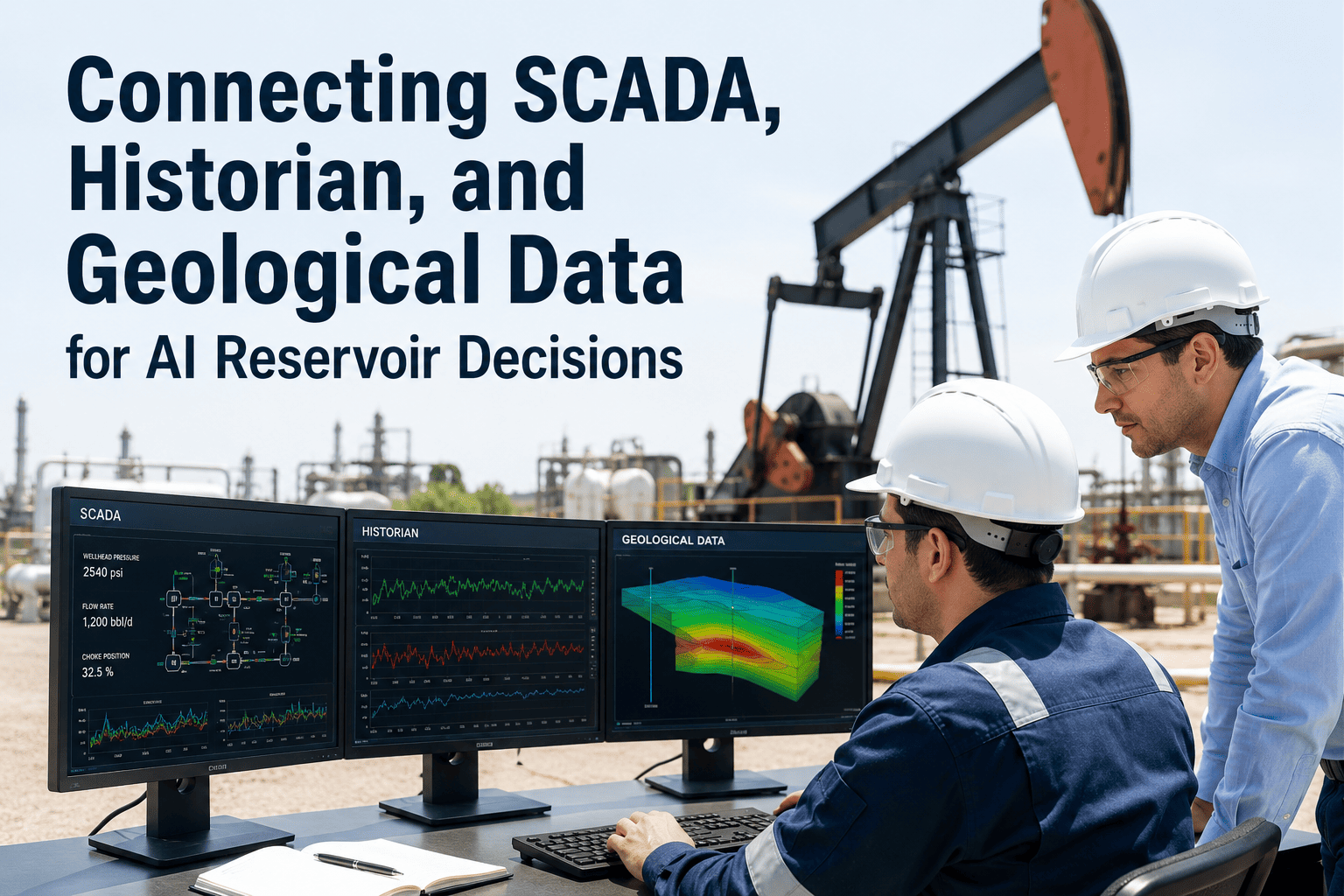
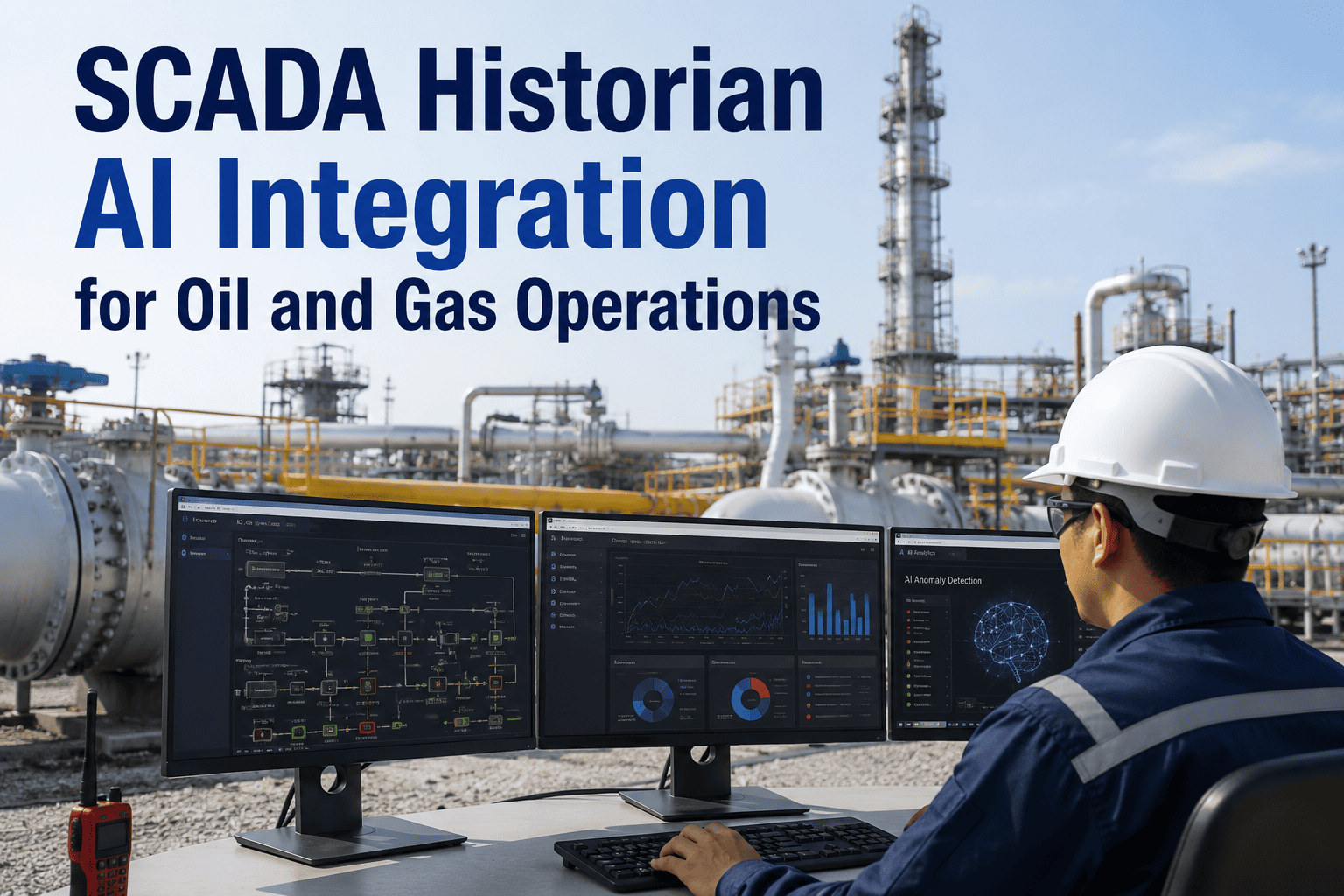
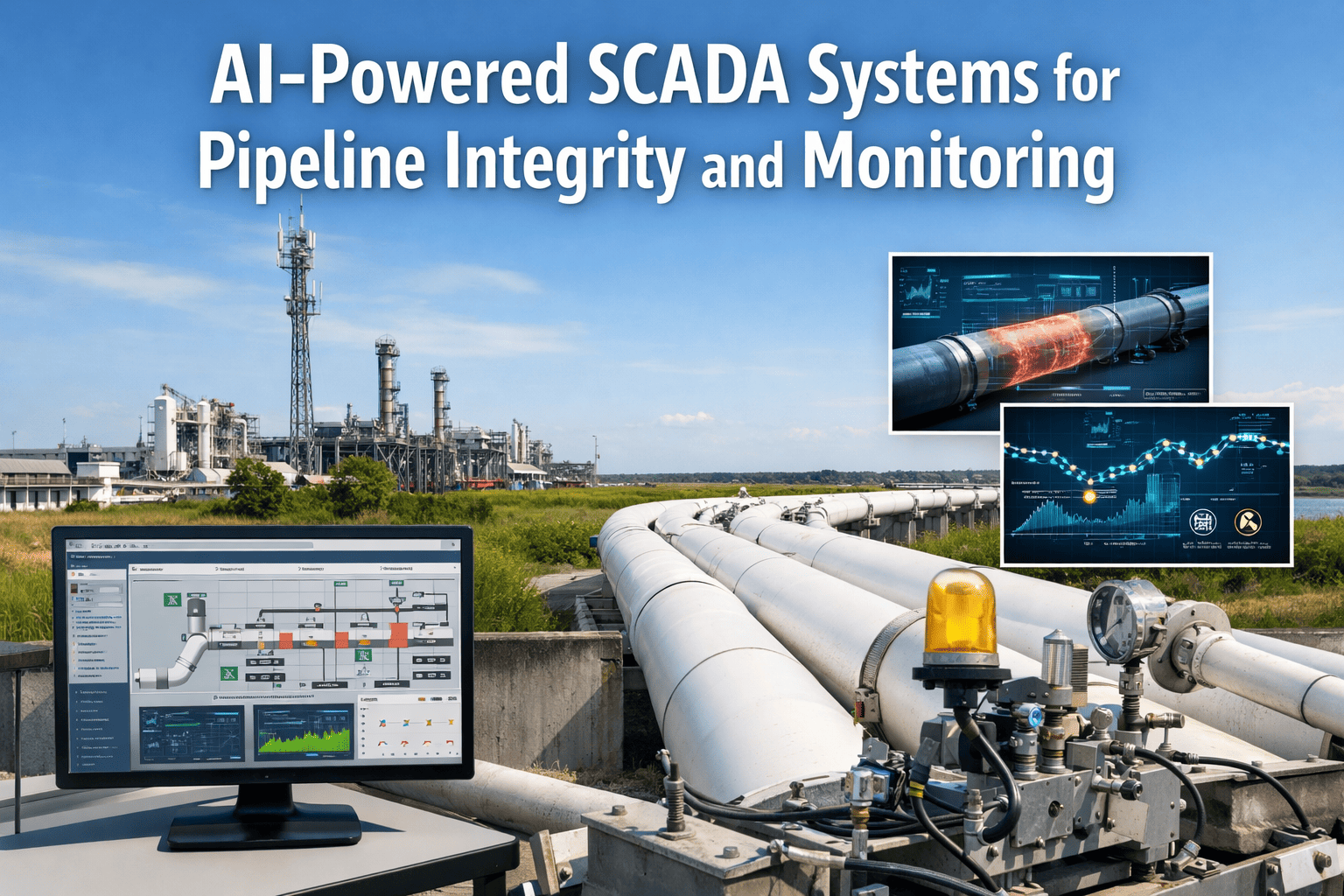
The AI model works beautifully in the lab. It runs cleanly against historical data, hits solid accuracy numbers, and gets sign-off from the data science team. Then it goes into production and cannot see the plant, because nobody built the pipe connecting it to the SCADA and DCS systems generating real-time data on the floor. This single gap, not model quality, is why most industrial AI projects stall before they ever influence an operational decision, and you can book a demo to see integration handled from day one instead of as an afterthought.
Why 70 Percent of Oil and Gas AI Projects Fail at Integration With Legacy Systems
AI models are frequently built and validated successfully, then fail in production because they cannot access real-time SCADA and DCS data. Here is how to bridge that gap with OPC UA, MQTT, and historian APIs.
It Is Rarely the Model — It Is Almost Always the Pipe
Industrial AI failure gets blamed on model accuracy far more often than it deserves, because the visible symptom is a project that never delivers value, and accuracy is the easiest thing to point to. In practice, the model built and validated in a data science environment is frequently a working model. What fails is everything between that model and the live SCADA or DCS system it needs to read from and act on in real time, a gap that data science teams are rarely equipped to close alone.
Where Oil and Gas AI Projects Actually Break Down
The same handful of integration failure patterns show up across nearly every stalled industrial AI project, regardless of the specific model or use case involved. Recognizing them early is the difference between a project that recovers and one that quietly gets shelved.
No Real-Time Data Path
The model was trained and validated on a historical data export, but no live connection to SCADA or DCS was ever built to feed it in production.
OT Team Brought In Too Late
Integration requirements surface only after the model is built, forcing OT teams to retrofit access to systems they were never consulted on during design.
Protocol Mismatch Underestimated
The project scope assumed a single integration protocol would cover the site, when in practice legacy DCS, newer SCADA, and historian systems each require a different approach.
Security Review Stalls the Pipeline
OT network security policy blocks the data path the AI needs at the point of deployment, an issue that should have been resolved during design, not after go-live.
No Plan for Latency or Data Gaps
The model assumes continuous, clean input data, but real SCADA feeds include dropouts, timestamp drift, and sensor noise the model was never tested against.
Three Protocols That Actually Bridge AI to the Plant Floor
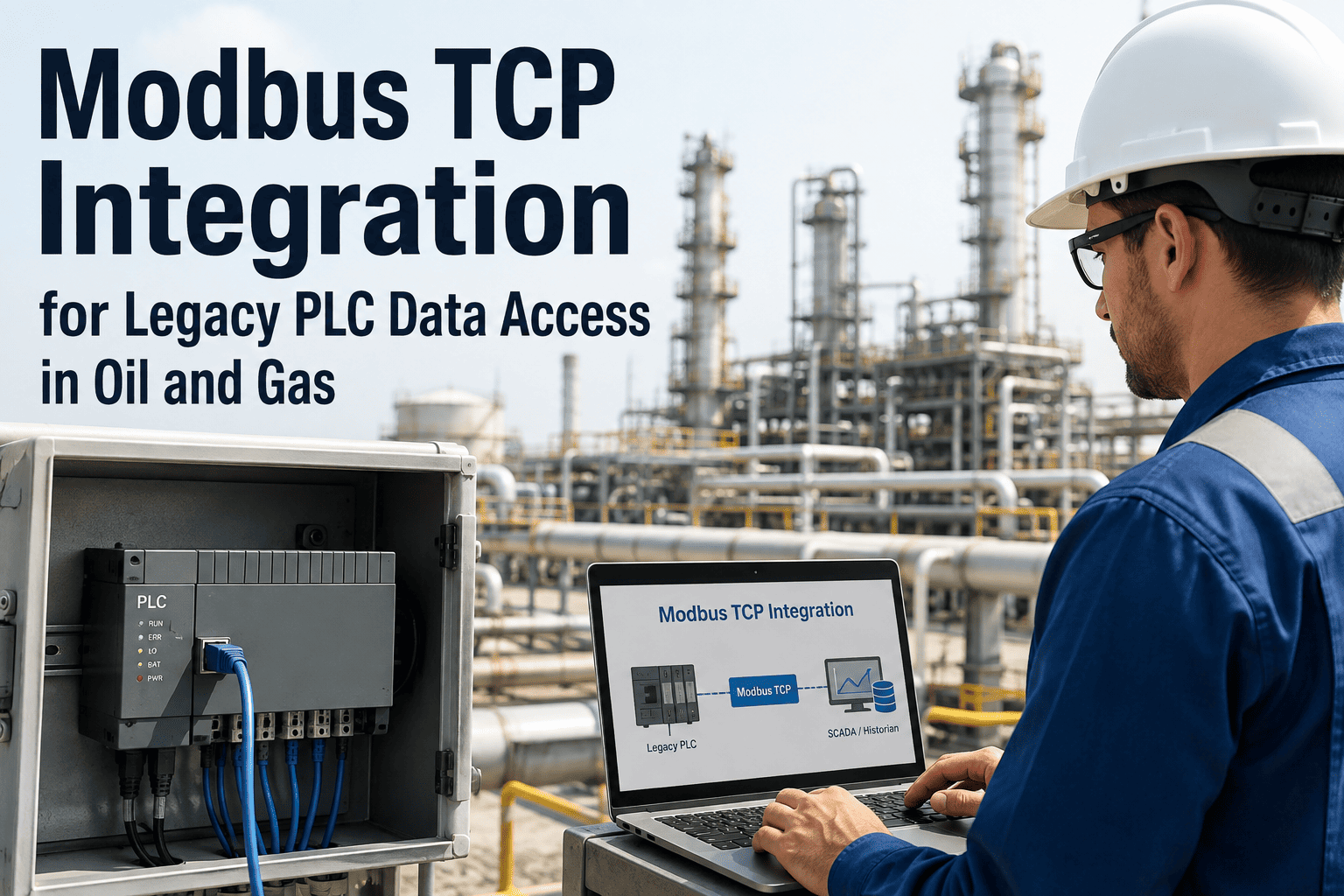
Bridging AI models to live operational data does not require a single universal standard, it requires the right protocol matched to the right source system, often combined within the same site.
| Protocol | Best For | Typical Use in AI Integration |
|---|---|---|
| OPC UA | Modern SCADA and DCS systems | Standardized, secure real-time tag access |
| MQTT | Distributed and remote field sites | Lightweight publish-subscribe telemetry |
| Historian API | Trend and time-series data | Training data and near-real-time backfill |
A Model That Cannot See the Plant Cannot Help Run It
iFactory's platform includes the OPC UA, MQTT, and historian integration layer from the start, so AI deployment does not stall waiting for a data pipeline nobody scoped. Book a demo and see integration handled end to end.
Five Steps to an AI Project That Actually Reaches Production
None of the fixes below require abandoning your existing model development process, they require sequencing integration work alongside it instead of after it.
Involve OT Teams at Project Kickoff
Bring OT and control systems teams into scoping conversations before model development starts, not after a working model needs a data source.
Map Every Required Data Source and Protocol
Identify which SCADA, DCS, and historian systems the model will actually need in production, and confirm the protocol each one supports before committing to an architecture.
Resolve Security Review Requirements Early
Submit the integration architecture for OT network security review during the design phase, since a blocked data path discovered at go-live can add months to the timeline.
Test Against Live Data Quality, Not Just Historical Exports
Validate the model against real-time data including typical dropouts, timestamp drift, and sensor noise, so production performance does not fall short of lab results.
Build the Integration Layer as a Reusable Asset
Treat the OT-to-AI data pipeline as reusable infrastructure for future models rather than a one-off build, so the next AI project does not repeat the same integration work from scratch.
What Separates the Thirty Percent That Reach Production
The comparison below reflects the practical differences observed between industrial AI projects that reach sustained production use and those that stall after model sign-off.
OT engaged only after the model is built
Single protocol assumed for the whole site
Security review happens at go-live
Model validated only on historical exports
OT engaged during initial scoping
Protocol matched per source system
Security review completed during design
Model validated against live data quality
How a Well-Built Model Stalled for Eight Months
Consider a predictive maintenance model built by a data science team to flag early signs of compressor failure, trained and validated against a year of historical sensor exports with strong accuracy results. The project was approved for deployment, and the model was handed to the operations team to put into production. At that point, the project stalled, not because the model underperformed, but because nobody had built a live connection between the model and the DCS system generating real-time compressor sensor data.
The OT team, brought into the project for the first time at this stage, identified that the DCS ran an older protocol version incompatible with the connector the data science team assumed would work, and that any new data path required a security review the OT network security policy mandated for all new external connections. Resolving the protocol mismatch and completing the security review took an additional eight months, during which the validated model sat unused while the compressor failure risk it was built to catch continued unmonitored.
Had OT and security teams been involved during initial scoping, the protocol requirement and security review timeline would have been known before model development began, allowing both workstreams to proceed in parallel rather than sequentially.
What to Confirm Before Your Next AI Project Kicks Off
Running through the items below before model development begins is the single highest-leverage step in avoiding the integration failure pattern described above.
OT Team Sign-Off Secured
OT and control systems teams have reviewed the proposed data sources and confirmed technical feasibility before model development starts.
Protocol Versions Confirmed
The specific OPC UA, MQTT, or historian API version in use at the target site has been confirmed, not assumed from general documentation.
Security Review Timeline Known
The OT network security review process and expected timeline are understood and built into the project schedule from the start.
Live Data Quality Sample Obtained
A sample of real, unfiltered live data has been reviewed for dropouts, noise, and timestamp issues the model will need to handle in production.
Why the Second AI Project Should Be Faster Than the First
Organizations that treat OT integration as a one-off task tied to a single AI project tend to repeat the same protocol mapping, security review, and data quality validation work every time a new model needs deployment, which is one of the quieter reasons industrial AI programs struggle to scale past a single successful pilot. Organizations that instead treat the integration layer as shared infrastructure see a very different pattern: the first project takes the expected time to establish OT connectivity and clear security review, but every subsequent model that needs the same SCADA or DCS data source can be deployed against an already-validated pipeline.
This distinction is often what separates a single successful proof of concept from a genuine AI program, since the second, third, and tenth model each need meaningfully less integration effort than the first once the underlying data pipeline is built to be reused rather than rebuilt.
Common Questions From Teams Deploying Industrial AI
Get Your Next AI Project Past the Integration Wall
See how iFactory connects to SCADA, DCS, and historian systems from day one, so your AI initiative reaches production instead of stalling after sign-off.