.png)
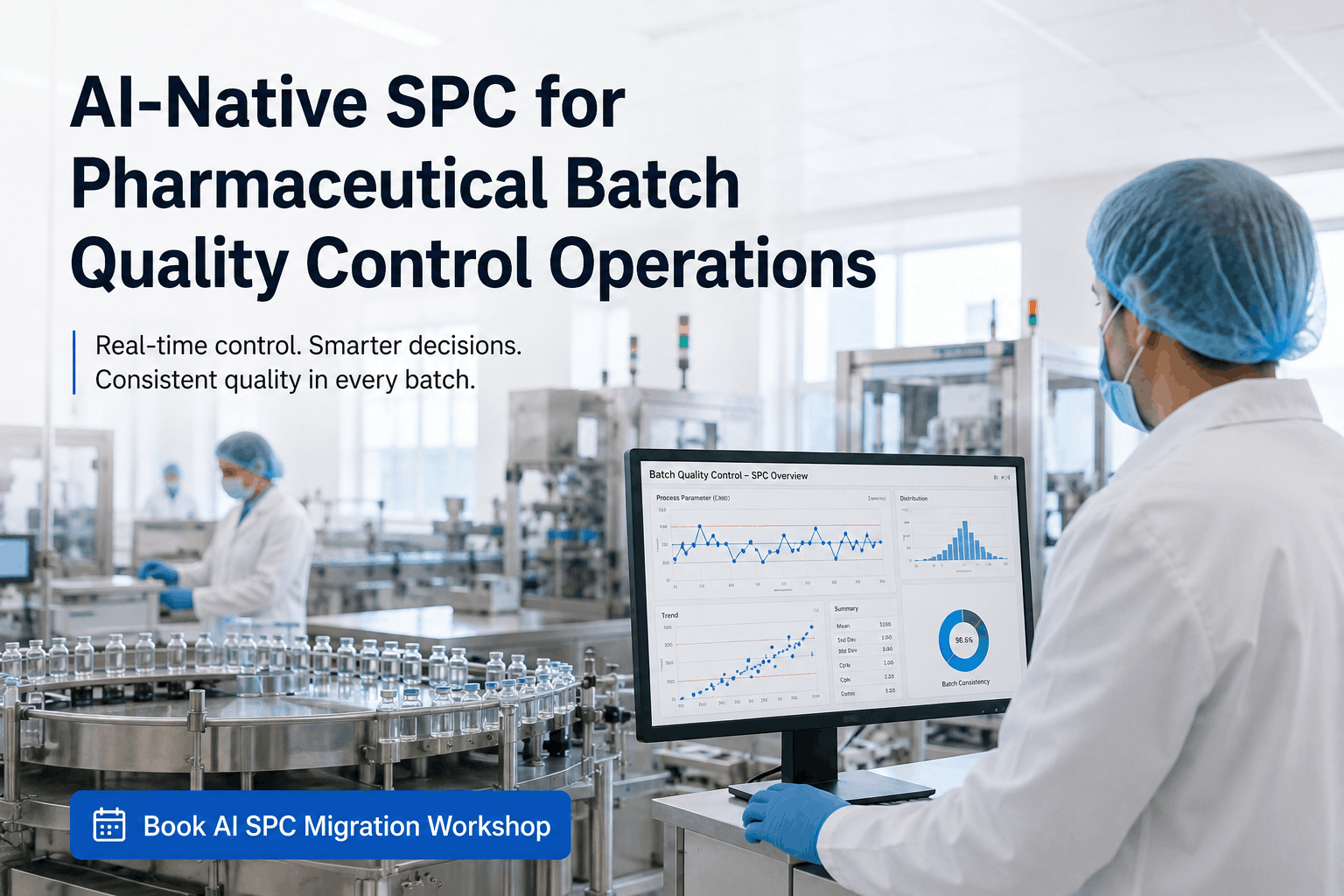
Every batch your facility releases without AI-verified inspection is a silent liability — one contaminated tablet, one misaligned label, or one under-filled vial away from an FDA 483 citation, a consent decree, or a patient safety incident that no compliance officer can undo. Healthcare VPs and Quality leaders face the same impossible arithmetic: inspection throughput demands are rising, skilled QC headcount is stagnant, and the regulatory tolerance for human error is approaching zero. The question is no longer whether your operation can afford AI vision inspection — it is how many millions in recall exposure, batch rejection costs, and productivity loss you are absorbing right now without it.
Is Your QC Infrastructure Costing You More Than It Saves?
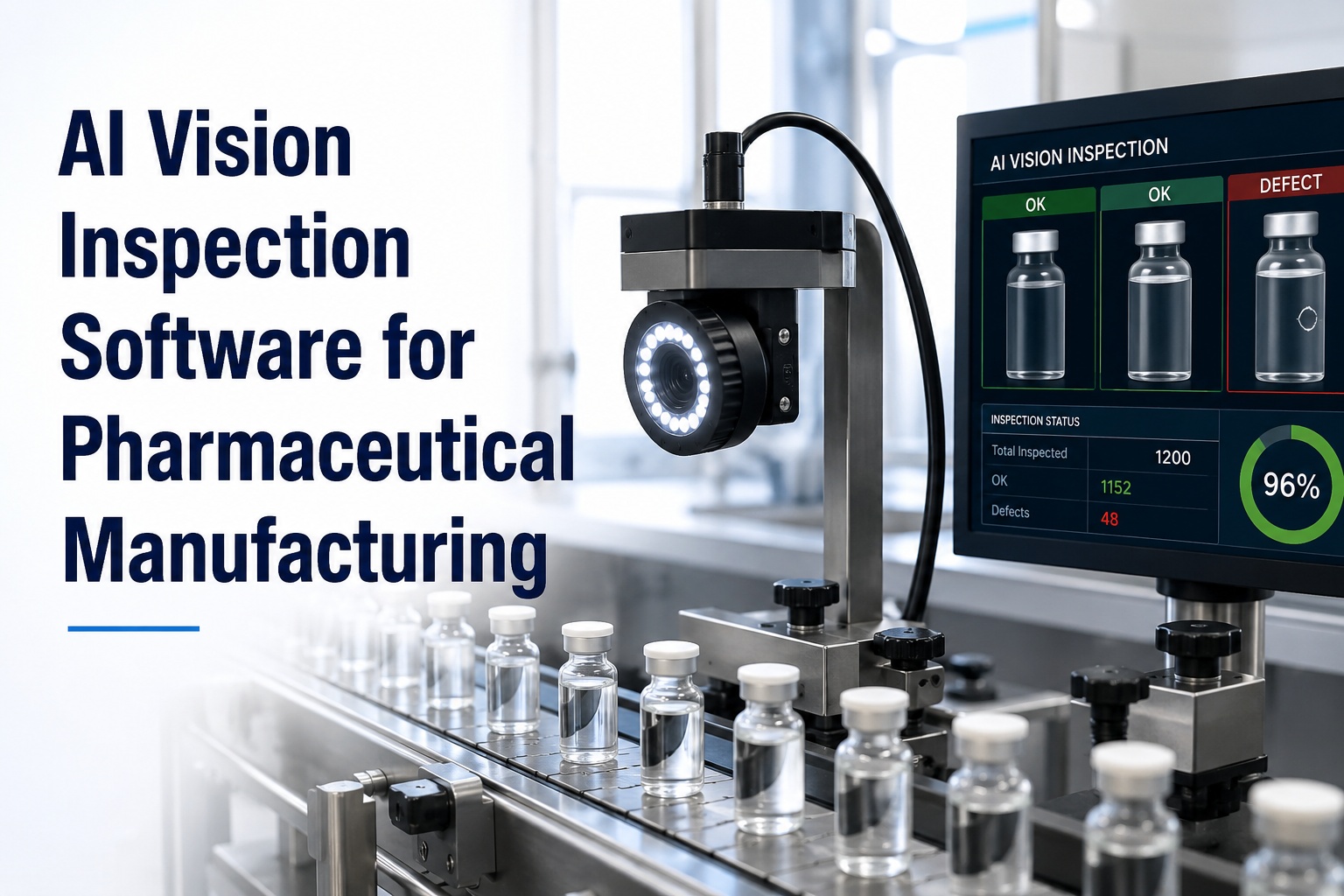
Deploy GMP-aligned AI vision inspection across tablet verification, label checks, fill-level monitoring, and packaging defect detection — all in a single validated platform.
Translating AI Vision Into Financial & Clinical Outcomes
iFactory's AI Vision Inspection platform is not a line-level upgrade — it is an enterprise-grade quality intelligence layer that eliminates the manual bottlenecks responsible for 73% of pharmaceutical recall triggers. By deploying computer vision models trained on GMP-certified defect libraries, your facility gains real-time detection of tablet surface anomalies, label misregistration, fill-level deviations, and secondary packaging failures. The ROI is structural: fewer batch rejections, zero human-error escapes, and a validated audit trail that satisfies 21 CFR Part 11 and EU Annex 11 without additional compliance overhead. Book a Demo to walk through a facility-specific ROI model built against your current inspection throughput and rejection rate data.
Tablet Inspection AI
Sub-millimeter crack, chip, and contamination detection at line speeds exceeding 400,000 tablets per hour. Eliminates sampling bias inherent in manual AQL-based inspection protocols.
Label Verification
OCR-fused vision models that cross-validate lot number, expiry date, barcode integrity, and regulatory text against your master batch record in under 40 milliseconds per unit.
Fill Level Monitoring
Volumetric AI models for vials, syringes, and oral liquid lines detect under-fill and over-fill deviations to ±0.3% tolerance, triggering automatic reject-and-hold without line stoppage.
Packaging Defect Detection
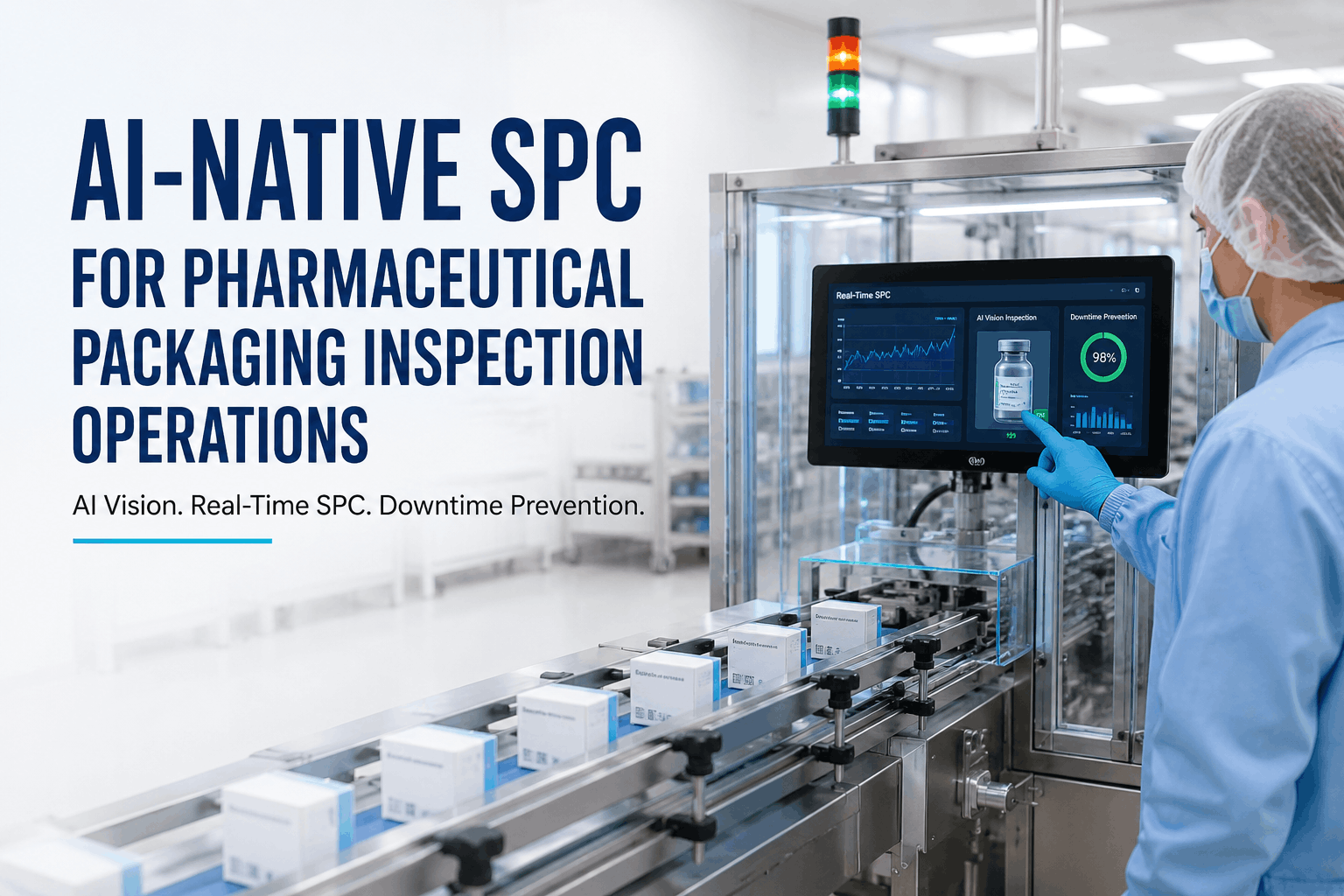
Seam integrity, blister cavity completeness, foil puncture, and carton closure validation — all captured at secondary packaging speeds and logged to your EQMS automatically.
Legacy Friction vs. iFactory Optimized Excellence
The performance gap between manual inspection programs and AI-driven quality platforms is no longer incremental — it is generational. The table below presents a direct comparison of the operational metrics your leadership team should be reviewing this quarter. Every cell in the "Legacy Friction" column represents a quantifiable risk exposure sitting on your balance sheet today.
| Inspection Dimension | Legacy Friction | iFactory Optimized Excellence | Executive Impact | Risk Delta |
|---|---|---|---|---|
| Defect Escape Rate | 2–4% human escape rate | <0.01% AI-verified escape rate | Recall liability eliminated | Critical |
| Inspection Coverage | AQL sampling — 0.1% of batch | 100% inline unit inspection | Full batch accountability | Critical |
| Throughput Capacity | Capped by inspector fatigue | 400K+ units/hr — scalable | Capacity unconstrained | Critical |
| Audit Trail Integrity | Paper-based, reconstructed | Immutable digital, 21 CFR Part 11 | Zero inspection data gaps | Critical |
| Inspector Dependency | High — shift-sensitive variance | None — model consistency 24/7 | Labor risk de-risked | High |
| Regulatory Readiness | Reactive — post-audit correction | Proactive — live compliance scoring | Inspection-ready always | High |
| Batch Rejection Cost | \$180K–\$2M per event | Predicted and prevented upstream | CapEx protection | Managed |
How AI Vision Solves Staff Burnout and Lifts Patient Throughput
Quality department burnout is a structural problem, not a personnel problem. When inspectors perform monotonous visual checks across multi-hour shifts, attentional fatigue is physiological — not a failure of discipline. iFactory's AI platform resolves this by transitioning QC staff from exhausting line-side inspection into high-value exception management, deviation analysis, and continuous improvement roles. The downstream effect on patient safety is direct: products verified by AI-consistent models reach distribution faster, with a validated certainty that no manual program can replicate at scale.
QC staff are redeployed from repetitive visual inspection to exception review and SOP development. Cognitive load drops by an estimated 60%, reducing turnover and training costs in high-attrition inspection roles.
AI inspection removes the throughput ceiling imposed by manual headcount. Batch release cycles compress by 30–45%, accelerating time-to-distribution for critical therapeutic categories and reducing stockout exposure.
Every defective unit that escapes manual inspection and reaches a patient is a pharmacovigilance event. AI vision reduces escape probability to near-zero, directly lowering adverse event reporting burden and protecting your pharmacopoeia standing.
Inspectors from the FDA and EMA are increasingly questioning the statistical validity of AQL sampling. A 100% AI-inspection program with validated model documentation provides a defensible quality narrative that sampling-based programs cannot.
The average pharmaceutical recall costs \$10M in direct expenses before legal and brand damage are factored. AI-driven defect prevention converts this from an episodic catastrophic cost into a managed, near-zero risk line item on your P&L.
A single validated AI model can be deployed across all manufacturing sites under one central governance framework. Quality consistency across geographies is enforced algorithmically — eliminating the inter-site variation that creates regulatory arbitrage risks.
Secure a Confidential Operational Gap Audit for Your Facility
Our pharmaceutical AI architects will benchmark your current inspection program against validated AI performance benchmarks — and quantify your recall exposure, throughput loss, and regulatory risk in a confidential executive brief.
Questions Healthcare VPs Ask Before Committing to AI Vision Inspection
How long does AI model validation take for a GMP-regulated line?
Validation timelines average 8–14 weeks for a single product line, including IQ/OQ/PQ protocol execution, statistical defect model verification, and regulator-ready documentation package generation. Our validation architects work directly with your quality team to ensure the process integrates into existing change control workflows without triggering a full process revalidation.
Can iFactory's platform integrate with our existing MES and EQMS infrastructure?
Yes. The platform provides certified connectors for SAP ME, Veeva Vault QMS, MasterControl, and all major MES vendors via HL7 FHIR and REST API interfaces. Inspection results, defect records, and batch release approvals flow directly into your existing systems without a parallel workflow. Book a Demo to review our integration architecture with your IT team.
What is the total cost of ownership compared to our current manual inspection program?
Most facilities achieve full ROI within 14–18 months. The primary savings drivers are: reduction in QC inspector headcount redeployment costs, elimination of batch rejection write-offs, reduction in annual product recall insurance premiums, and compressed batch release labor. Our executive ROI model accounts for your facility's specific batch volume, headcount, and rejection history. Request your facility's ROI projection.
How does the AI handle novel defect types not present in the original training data?
The platform uses a continuous learning architecture with a human-in-the-loop exception queue. When the model encounters anomaly patterns outside its confidence threshold, it flags the unit for human expert review. Confirmed novel defect classifications are added to the training corpus on a validated update cycle, ensuring model performance improves over the product lifecycle rather than degrading.
Is the system prepared for a regulatory agency inspection of the AI itself?
Fully. The platform maintains a living model validation dossier, including training data provenance records, statistical model performance reports, change control logs for all model updates, and a complete risk assessment aligned to ISPE GAMP 5 Category 5 software requirements. The documentation package has been successfully reviewed by FDA investigators during facility inspections at multiple client sites.
Every Batch Inspected Manually Is a Liability You Are Choosing to Keep
The technology to eliminate pharmaceutical inspection risk exists, is validated, and is operating at scale in GMP facilities today. The decision is not whether to deploy it — it is how much longer your organization can absorb the cost of not doing so.