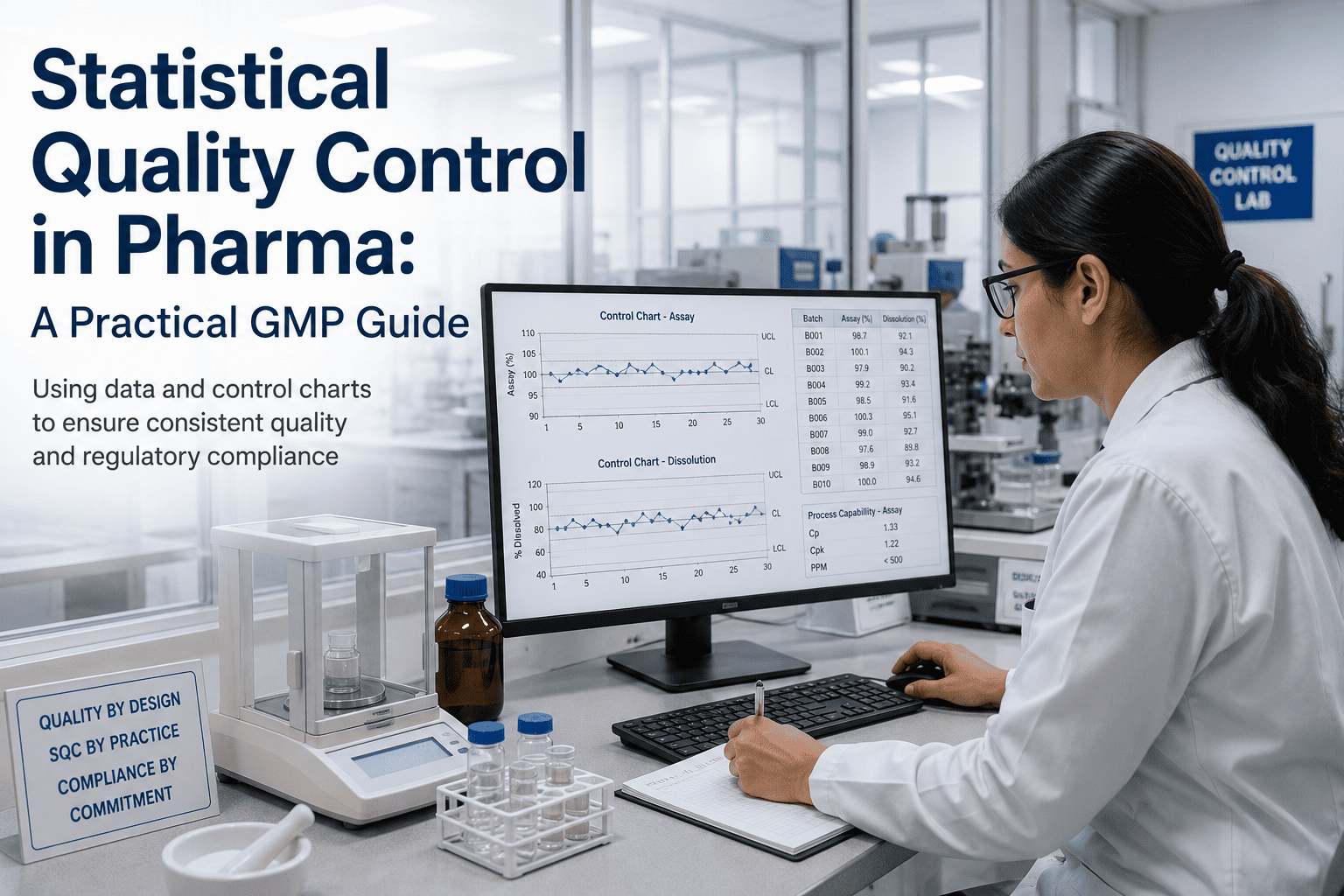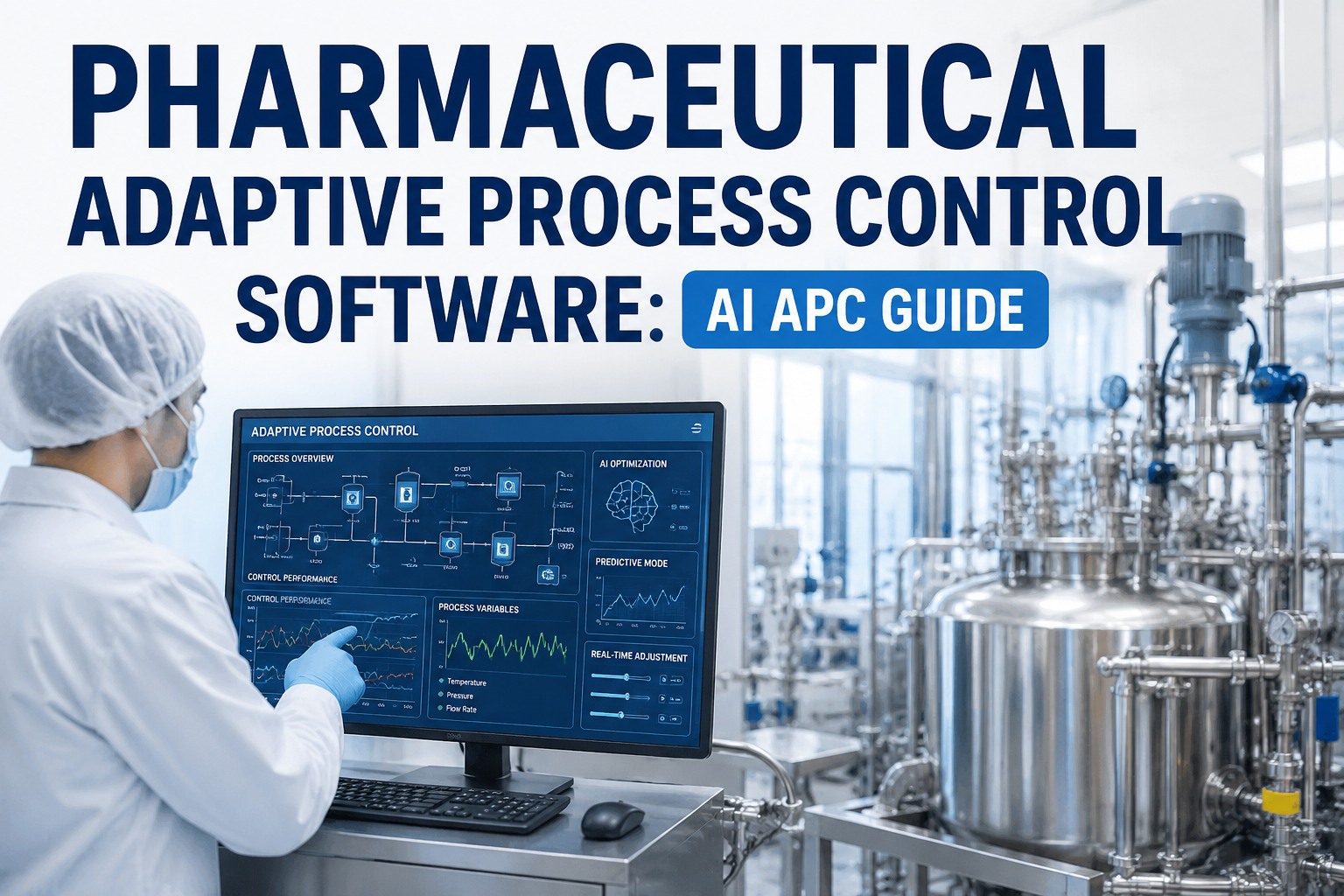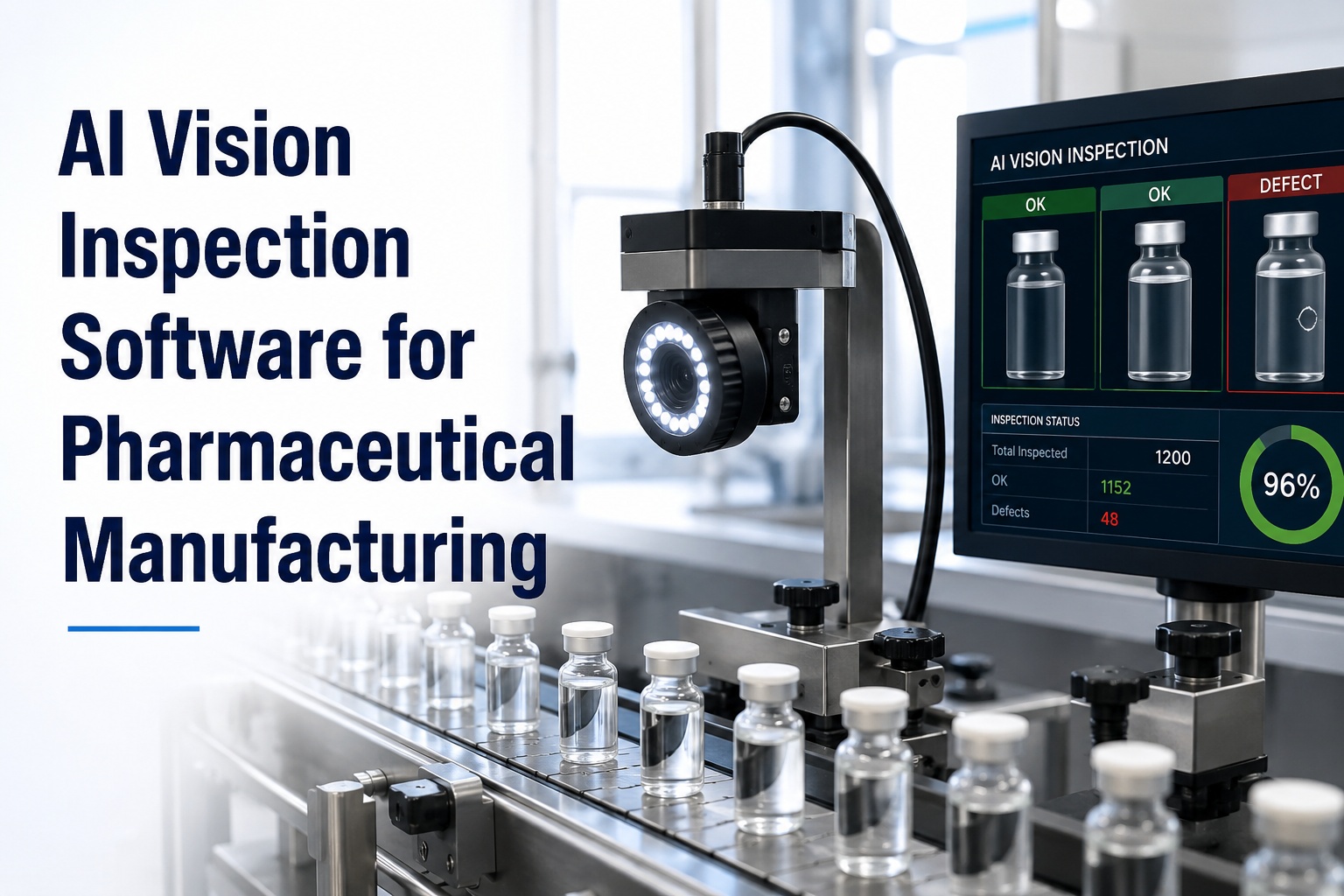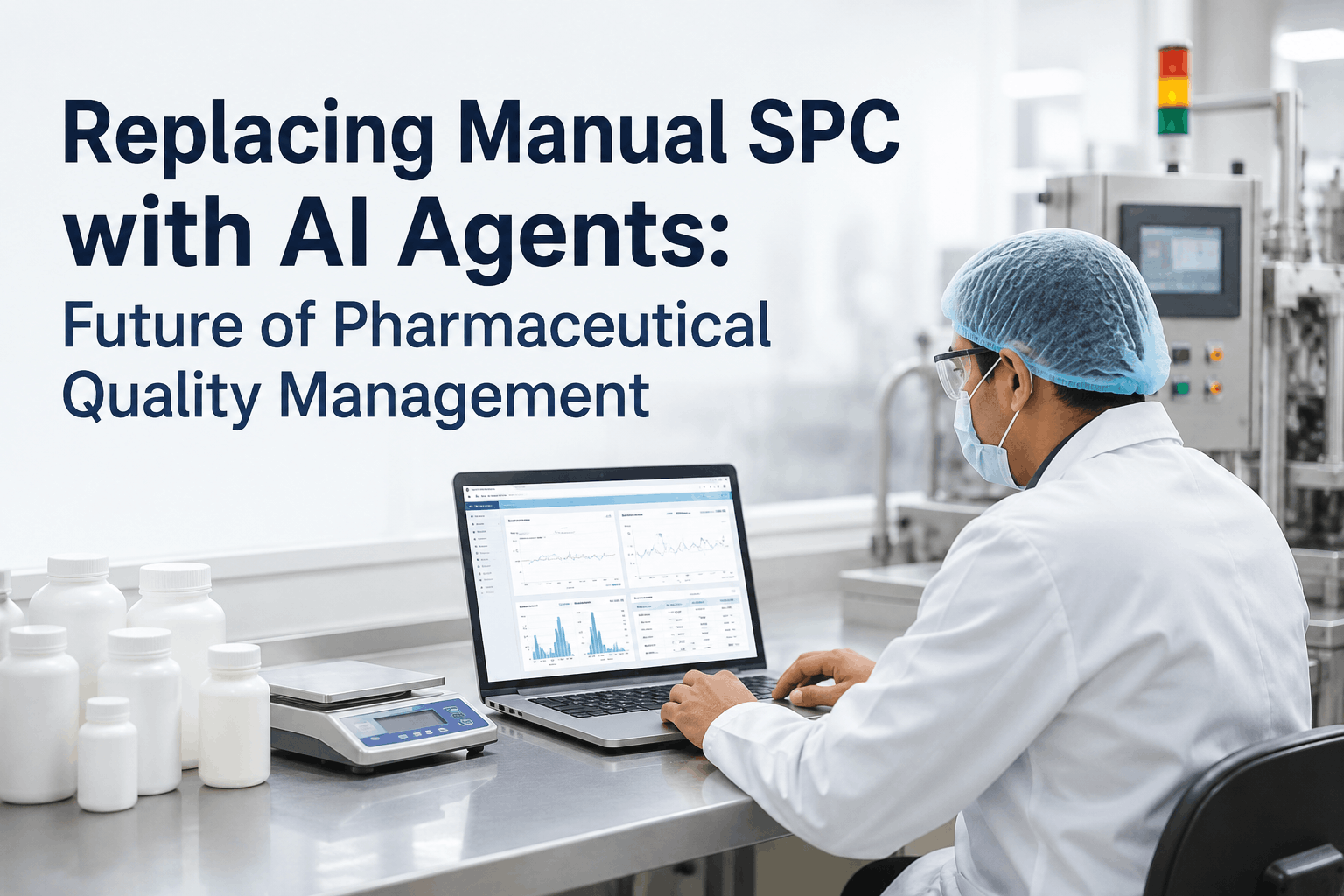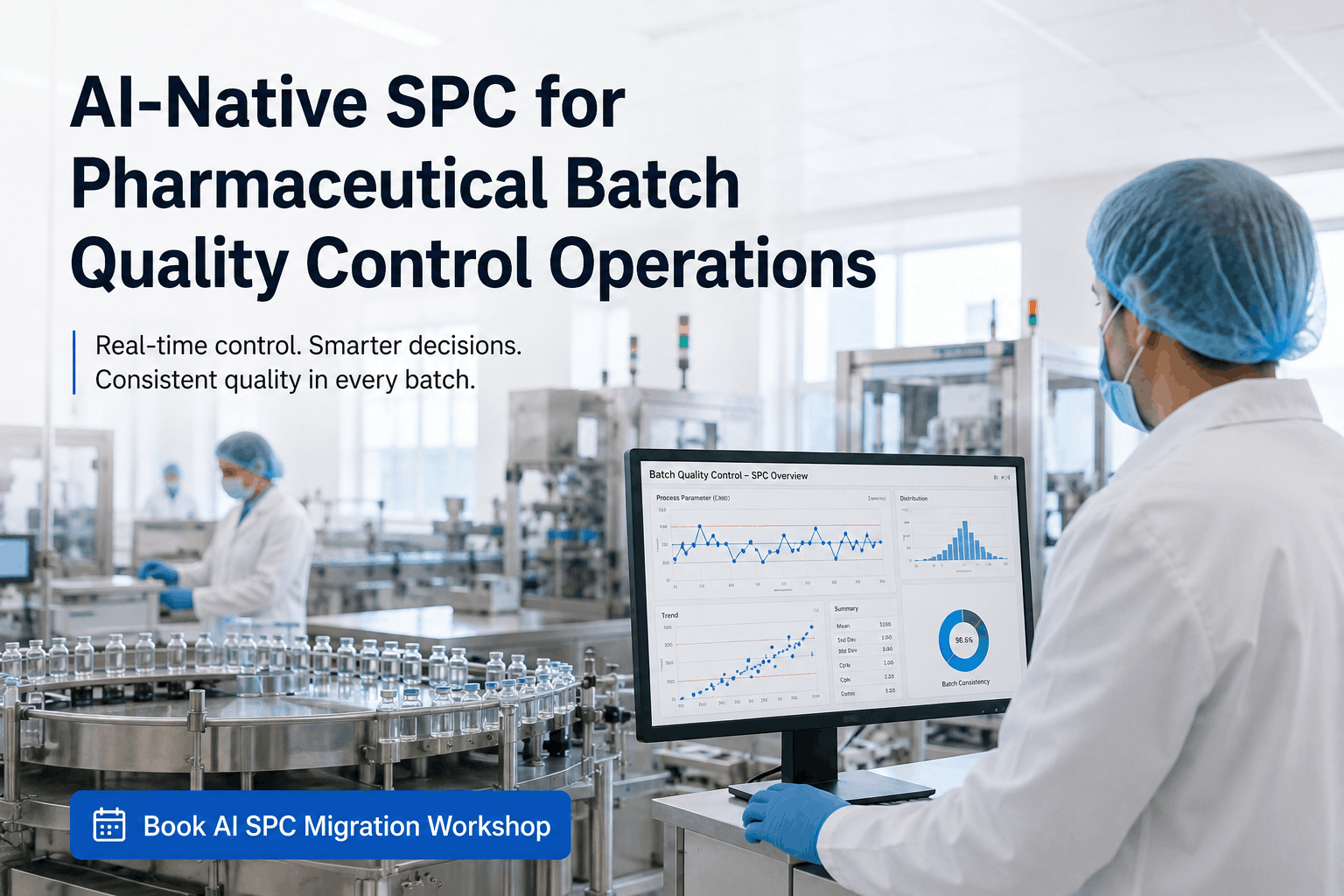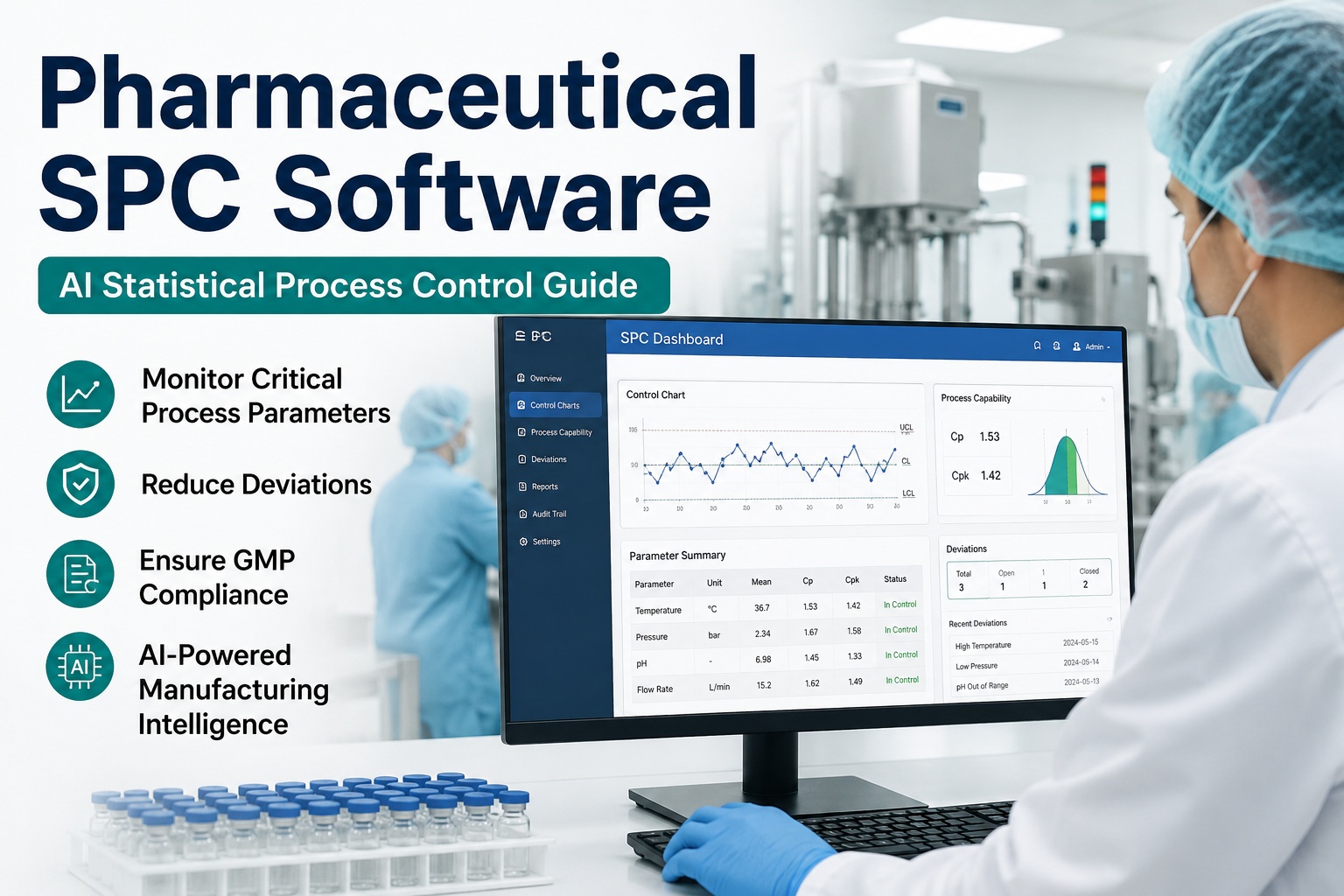
In pharmaceutical manufacturing, SPC isn't just a quality tool — it's the statistical engine of Continued Process Verification, the FDA's Stage 3 requirement that every commercial batch proves the process is still in a state of control. Run that on manual sampling and quarterly Minitab exports, and you're always looking backward: a drift in fill volume or tablet hardness surfaces in a periodic review, weeks after the batches shipped, as a deviation investigation and a CAPA. AI-native SPC changes the timeline — monitoring every Critical Process Parameter and Critical Quality Attribute continuously, predicting drift before it breaches a limit, and assembling the audit trail as it goes. This guide explains how modern pharmaceutical SPC software works, how it powers CPV and data integrity under 21 CFR Part 11, and how iFactory replaces legacy SAP MII and SAP PCo with on-premise AI that keeps regulated data inside your fence.
Pharmaceutical SPC Software: The AI Statistical Process Control Guide
Real-time control charts on every CPP and CQA, continuous Cp/Cpk, Nelson-rule detection, and AI that predicts process drift before it becomes a deviation — with ALCOA+ data integrity and 21 CFR Part 11 audit trails built in. The SPC engine for Continued Process Verification. On-premise so API yields, batch genealogy, and deviation logs never leave your fence. A modern SAP MII and PCo alternative.
SPC Is the Engine of Continued Process Verification
Process validation is a lifecycle, not a one-time event. Stage 1 designs the process, Stage 2 qualifies it, and Stage 3 — Continued Process Verification — proves it stays in control across every commercial batch, indefinitely. SPC is what makes Stage 3 real: control charts and capability indices on Critical Process Parameters and Critical Quality Attributes, trended over time, with early-warning signals. The question is only how fast and how intelligently that SPC runs.
Reactive vs Predictive — The Deviation You Don't Have to Investigate
Traditional pharma SPC is reactive: a control chart flags an out-of-control signal after a parameter has already breached, which means a deviation, an investigation, a CAPA, and possibly affected batches. Predictive SPC uses machine learning to forecast where a parameter trajectory is heading, surfacing drift while the batch is still in-spec. The FDA itself now encourages AI-assisted analytics to detect process drift or outliers for real-time release decision support.
Same drifting parameter, two very different days. Reactive SPC catches the breach after it happens — and in a GMP environment that means a deviation record, an investigation, a CAPA, and potentially quarantined product. Predictive SPC sees the trajectory early, the process is adjusted while still in-spec, and there's simply no deviation to investigate. ML models also help distinguish true signals from false positives, reducing investigation burden on the QA team.
Data Integrity Is the Other Half of the Job
In pharma, an SPC result is only as good as its data trail. Regulators scrutinize CPV systems as part of GMP inspections, and every data point must satisfy ALCOA+. AI-native SPC has to be built for this from the start — not bolted on — so the audit trail, electronic signatures, and access controls are a property of the system rather than a manual reconciliation.
Want to see SPC running with a full 21 CFR Part 11 audit trail on your own CPPs? Book a 30-minute demo — iFactory will show real-time control charts, capability tracking, and ALCOA+ records on a representative process. Sessions available this week.
What Pharmaceutical SPC Software Includes
CPP & CQA control charts
I-MR, X̄-R, and X̄-S charts on every critical parameter and quality attribute, updating in real time.
Continuous Cp/Cpk
Capability indices trended batch-to-batch with visual indicators — capability drift seen live, not at review.
Nelson-rule detection
Automatic Nelson and Western Electric rule violation flags — trends, shifts, and runs caught instantly.
Predictive drift alerts
ML forecasts parameter trajectories and flags drift ahead of breach — fewer deviations, fewer false positives.
CPV & APQR ready
Stage 3 trending and annual product quality review on shared data — no silos, no manual Minitab exports.
Deviation & CAPA link
Parameter shifts correlate to quality events and CAPA — root cause linked to the data that revealed it.
Not sure which CPPs and CQAs to put under predictive SPC first? Ask iFactory Support with your product modalities and current CPV plan, and the team will map a prioritized monitoring scope and validation path — typically a response within 3 business days, no obligation.
Compliance Built In, Not Bolted On
iFactory is designed around the frameworks pharmaceutical quality lives under, so SPC outputs and CPV evidence are inspection-ready as a property of normal operation rather than a separate scramble.
Replacing SAP MII and SAP PCo — On-Premise by Necessity
Many pharma plants run their SPC pipeline through SAP PCo collecting OPC tags and SAP MII processing them into charts — middleware that moves data but adds no intelligence. For a regulated environment, the deployment model isn't a preference: API yields, batch genealogy, and deviation logs can't traverse a public cloud, so data sovereignty is the regulator's expectation. iFactory connects to the same sources directly, adds the AI prediction SAP never had, and runs on-premise inside the fence — GAMP 5 categorized and Part 11 audit-ready.
iFactory On-Premise Appliance The pharma necessity — regulated data stays in-fence
- Pre-configured NVIDIA AI server — racked, loaded, inside your fence.
- Data sovereignty — API yields and genealogy never leave the site.
- GAMP 5 categorized — lifecycle-aware, validation-ready.
- Direct OPC-UA / historian connection — replaces PCo middleware.
iFactory Cloud For validated, governed multi-site programs
- Fully managed — where governance and policy permit.
- Same SPC engine — CPP/CQA charts, Cpk, AI prediction.
- Cross-site CPV benchmarking — compare capability across plants.
- Shared CPV + APQR analytics — one source of truth.
The best deviation is the one your SPC predicted away.
Pharmaceutical SPC is the engine of Continued Process Verification — and only AI-native, continuous SPC catches drift before it becomes a deviation and a CAPA. iFactory delivers real-time CPP/CQA control charts, rolling Cpk, predictive alerts, and ALCOA+ audit trails on a pre-configured on-premise appliance inside your fence, replacing SAP MII and PCo. GAMP 5 categorized, Part 11 audit-ready, ROI proven on one process first.
Frequently Asked Questions
How does SPC relate to Continued Process Verification?
SPC is the statistical engine of CPV, the FDA's Stage 3 of process validation. CPV requires ongoing proof that a validated process stays in a state of control across every commercial batch, and SPC — control charts and capability indices on CPPs and CQAs, trended over time with early-warning alerts — is how that proof is generated. Running SPC continuously rather than from quarterly exports is what makes CPV real-time.
How is AI SPC different from traditional pharma SPC?
Traditional SPC is reactive — it flags an out-of-control signal after a breach, triggering a deviation and CAPA. AI SPC is predictive: machine learning forecasts where a parameter is heading and flags drift while the batch is still in-spec, so the process is corrected before any deviation occurs. ML also helps distinguish true signals from false positives, and the FDA now encourages AI-assisted analytics for drift and outlier detection.
Is it compliant with 21 CFR Part 11 and data integrity rules?
Yes. iFactory is built around ALCOA+ data integrity with electronic records, audit trails, electronic signatures, and role-based access — designed in, not bolted on. It aligns with 21 CFR Part 11, EU Annex 11, FDA Process Validation Guidance, ICH Q8/Q9/Q10, EU GMP Annex 15, and GAMP 5. Contact iFactory Support for a mapping of how each requirement is satisfied for your systems.
Why does it have to run on-premise?
For regulated pharma data, sovereignty is the regulator's expectation, not a preference. API yields, batch genealogy, and deviation logs shouldn't traverse a public cloud. iFactory's on-premise appliance runs the AI inside your fence — GAMP 5 categorized and Part 11 audit-ready — so regulated data never leaves the site. A governed cloud option exists for multi-site programs where policy permits.
Is this a replacement for SAP MII and SAP PCo?
It replaces the SPC and intelligence layer while connecting directly to your equipment. SAP PCo moves OPC tags and SAP MII charts them; iFactory connects to the same sources over OPC-UA and historian interfaces, adds predictive analytics SAP never had, and syncs results back to SAP or MES — no enterprise-wide rip-and-replace. A demo is the fastest way to see it; schedule one here.
How do I book a demo or get a validation-path assessment?
Two routes. For a live walkthrough on your own process data, schedule a 30-minute demo — it covers CPP/CQA control charts, predictive drift alerts, CPV/APQR trending, and the Part 11 audit trail. For a written validation-path and scope assessment, contact iFactory Support with your modalities and CPV plan and expect a response within about 3 business days. No obligation either way.
Prove control continuously — and predict the drift before it's a deviation.
The 2026 pharmaceutical SPC baseline is AI-native, continuous, on-premise: real-time CPP/CQA control charts, rolling Cpk, predictive drift alerts, and ALCOA+ audit trails — the engine of Continued Process Verification, replacing SAP MII and PCo without touching your equipment. GAMP 5 categorized, Part 11 audit-ready, ROI proven on one process first. The next step is a 30-minute demo against your own data. Sessions available this week.