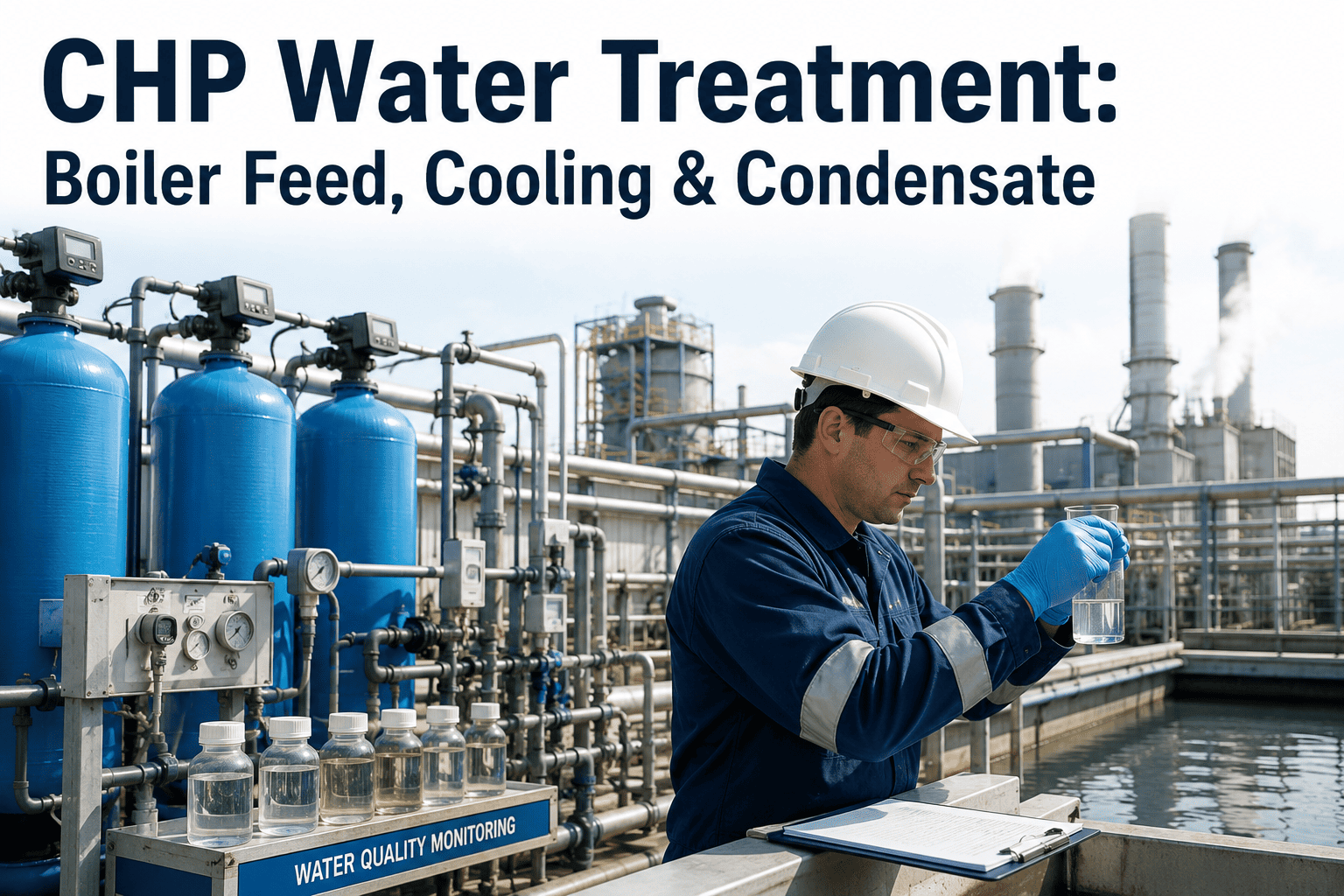
A combined heat and power plant runs three separate water systems at once, boiler feedwater, cooling water, and condensate, and each one has its own chemistry targets, its own failure modes, and its own consequences when treatment drifts off spec. Running all three under one generic water treatment program, rather than three coordinated but distinct ones, is how a plant ends up chasing scale in the boiler while never noticing that cooling tower biological growth has been quietly climbing for months. Contact support to see how chemistry data across all three systems can be tracked in one place without being treated as one program.
CHP Heat Power Imbalance · Water Treatment
CHP Water Treatment: Boiler Feed, Cooling, and Condensate Systems
Three water systems, three sets of chemistry targets, three different consequences when something drifts. Coordinated but system-specific treatment is what keeps all three running the way they should.
System Overview
Three Water Systems Running in Parallel
Boiler Feedwater
Makeup Treatment
Deaeration
Chemical Dosing
Boiler Drum
Cooling Water
Makeup Water
Cooling Tower
Biocide & Scale Control
Heat Exchangers
Condensate
Turbine Exhaust
Condenser
Polishing
Return to Boiler
Why Separate Programs
Why One Chemistry Target Cannot Serve All Three Systems
Boiler Feedwater
Requires extremely low dissolved oxygen and tight control of dissolved solids and silica, since even trace contamination can cause scale or corrosion on high-heat-flux boiler tubes operating at elevated pressure and temperature.
Cooling Water
Operates as a recirculating, evaporating system where dissolved solids concentrate over time, and the dominant risks are scale formation, corrosion, and biological growth rather than the ultra-pure requirements of boiler feed.
Condensate
Sits between the turbine and the boiler feed system, and its quality directly affects feedwater purity, making condensate polishing and leak monitoring critical to protecting the boiler from contamination introduced downstream.
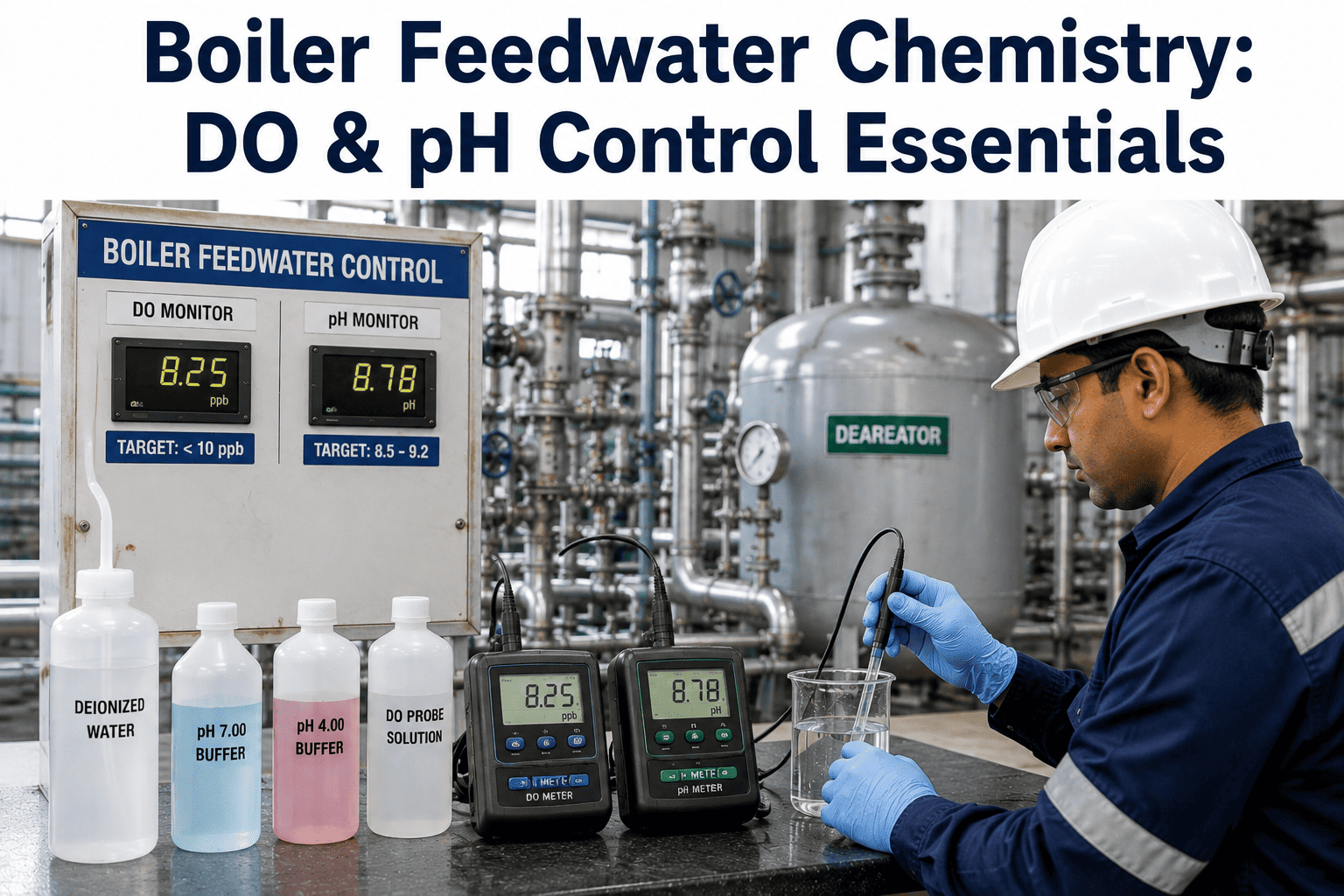
Boiler Feedwater
Core Chemistry Parameters to Track
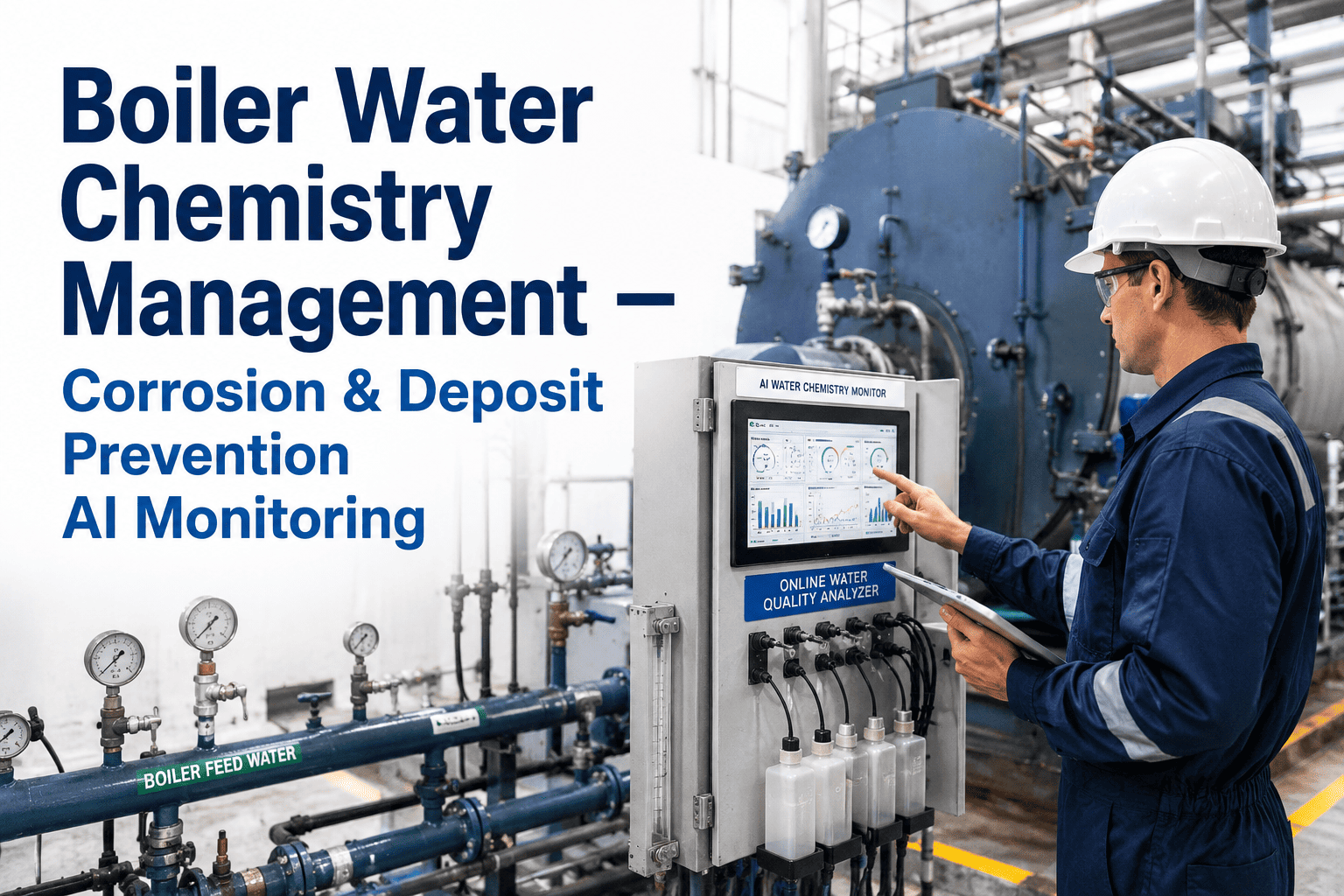
Boiler feedwater chemistry is managed against a narrow band of acceptable values, and drift in any one parameter can compound with drift in another, making consistent tracking more valuable than any single spot-check measurement.
1
Dissolved Oxygen Control
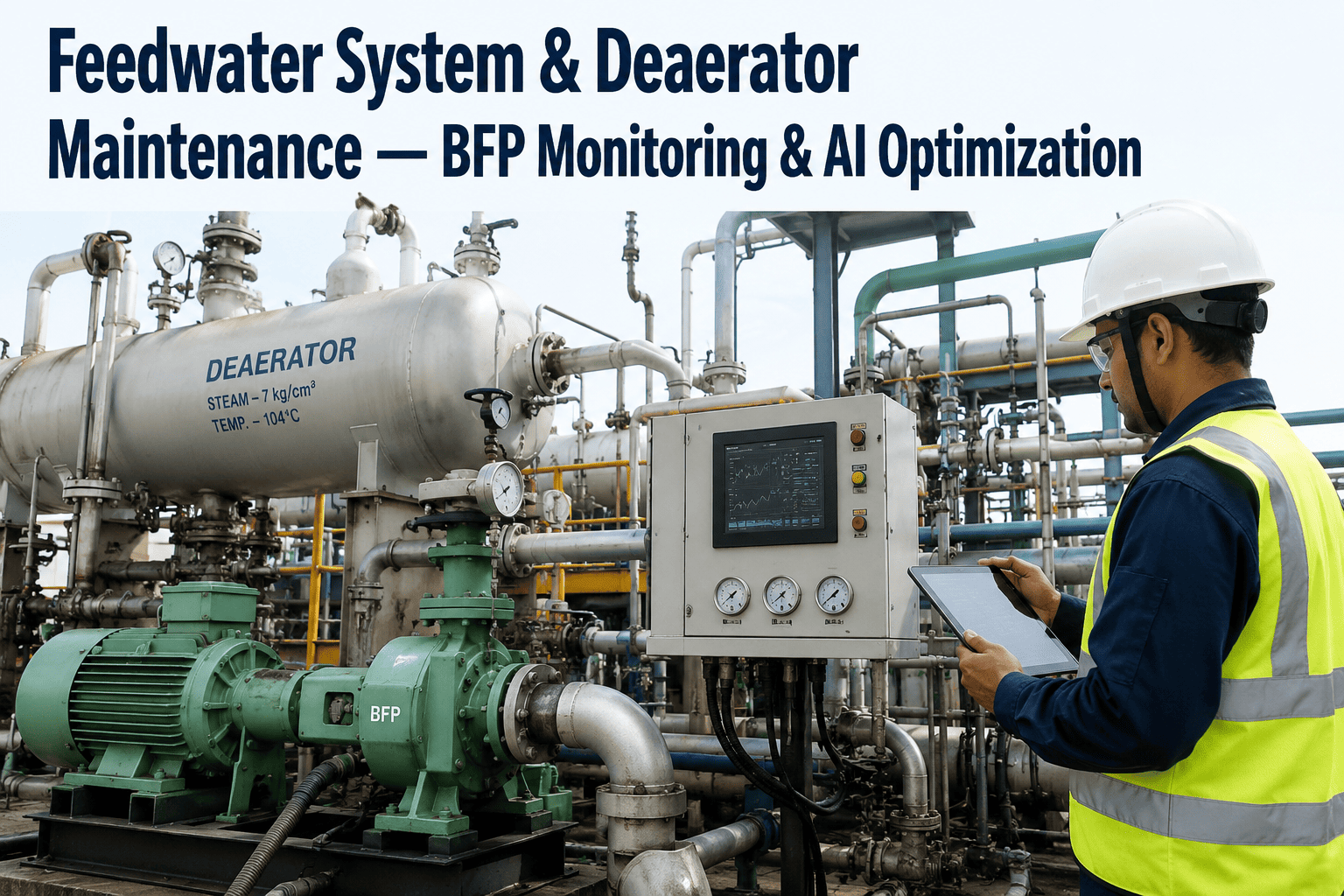
Mechanical deaeration combined with chemical oxygen scavenging keeps dissolved oxygen low enough to prevent pitting corrosion on feedwater piping and boiler tubes, with continuous monitoring catching deaerator performance issues before they affect the boiler.
2
pH and Alkalinity Management
Maintaining feedwater pH within the specified range protects against both acidic corrosion and caustic attack, with the correct target depending on the specific treatment program and metallurgy in use.
3
Total Dissolved Solids and Silica
Blowdown rate is adjusted to keep dissolved solids and silica concentration within limits appropriate to the boiler's operating pressure, since silica carryover into steam can deposit on turbine blades and affect efficiency.
4
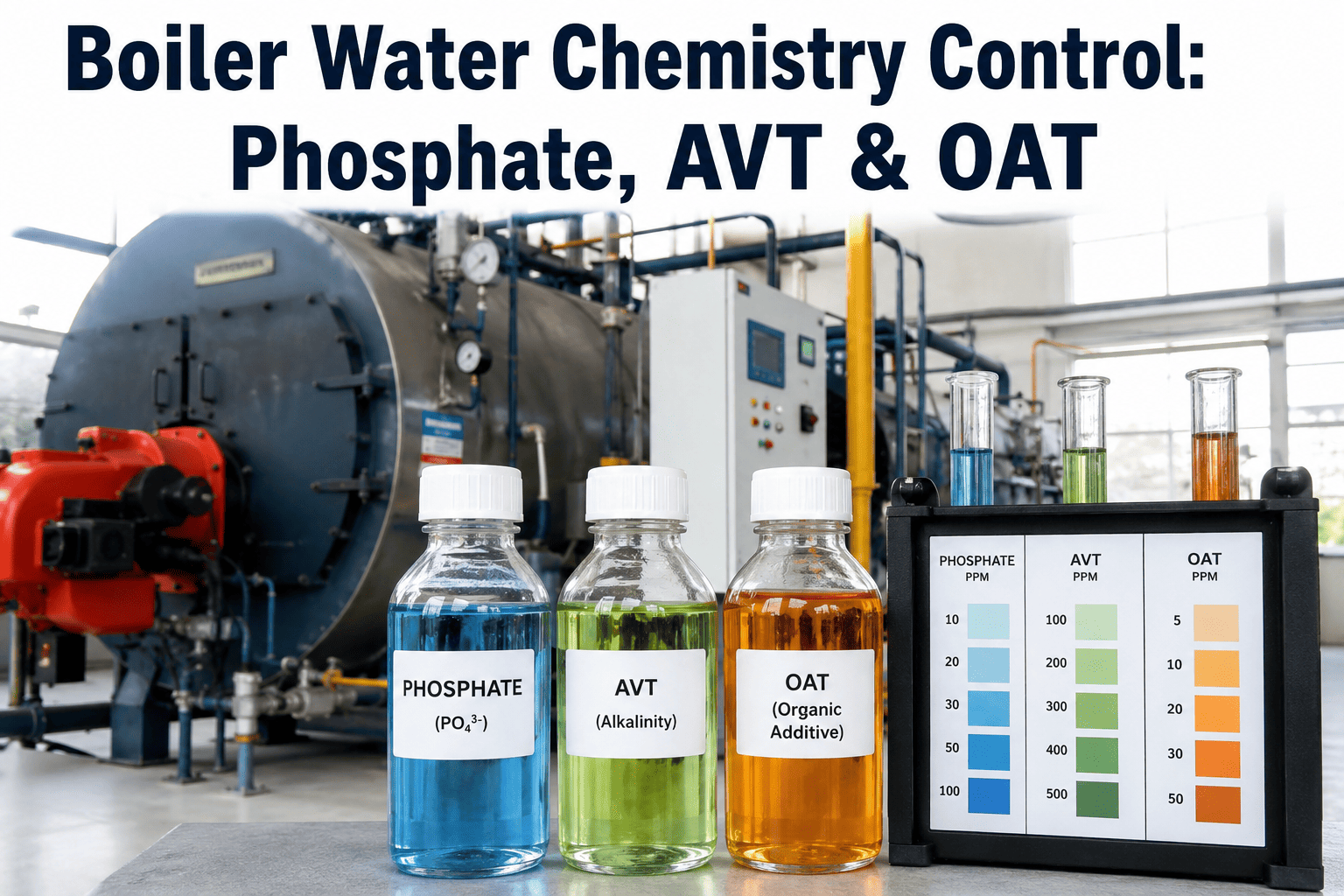
Chemical Dosing Consistency
Oxygen scavengers, pH adjusters, and phosphate or polymer treatments need dosing rates matched to actual feedwater flow rather than a fixed rate, since flow variation without corresponding dosing adjustment leads to under- or over-treatment.
iFactory Tracks Chemistry Across All Three Water Systems Without Blending Them Into One Number.
Feedwater, cooling water, and condensate chemistry stay organized as three coordinated but distinct programs, so a drift in one system is visible without being averaged out by the others.
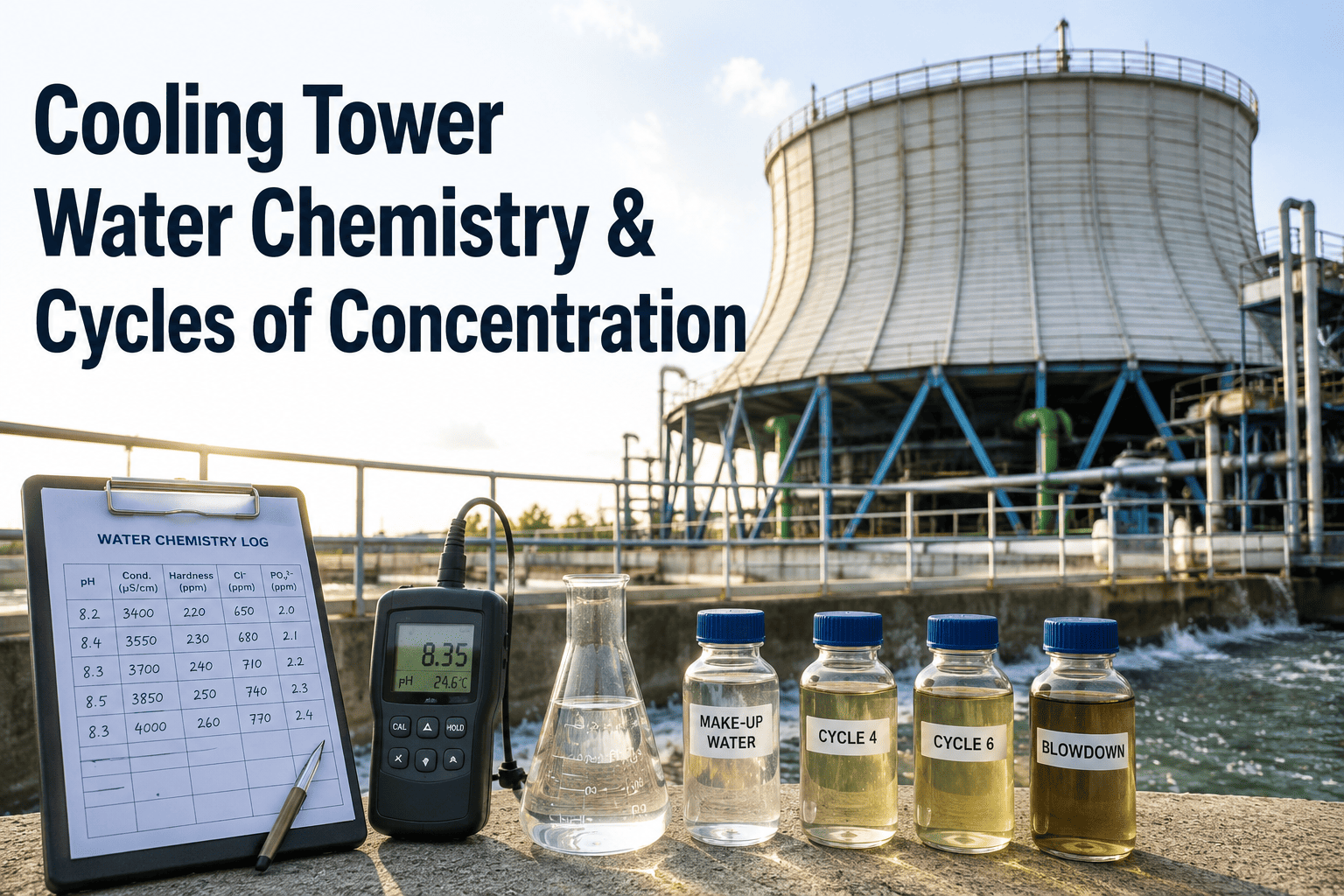
Cooling Water
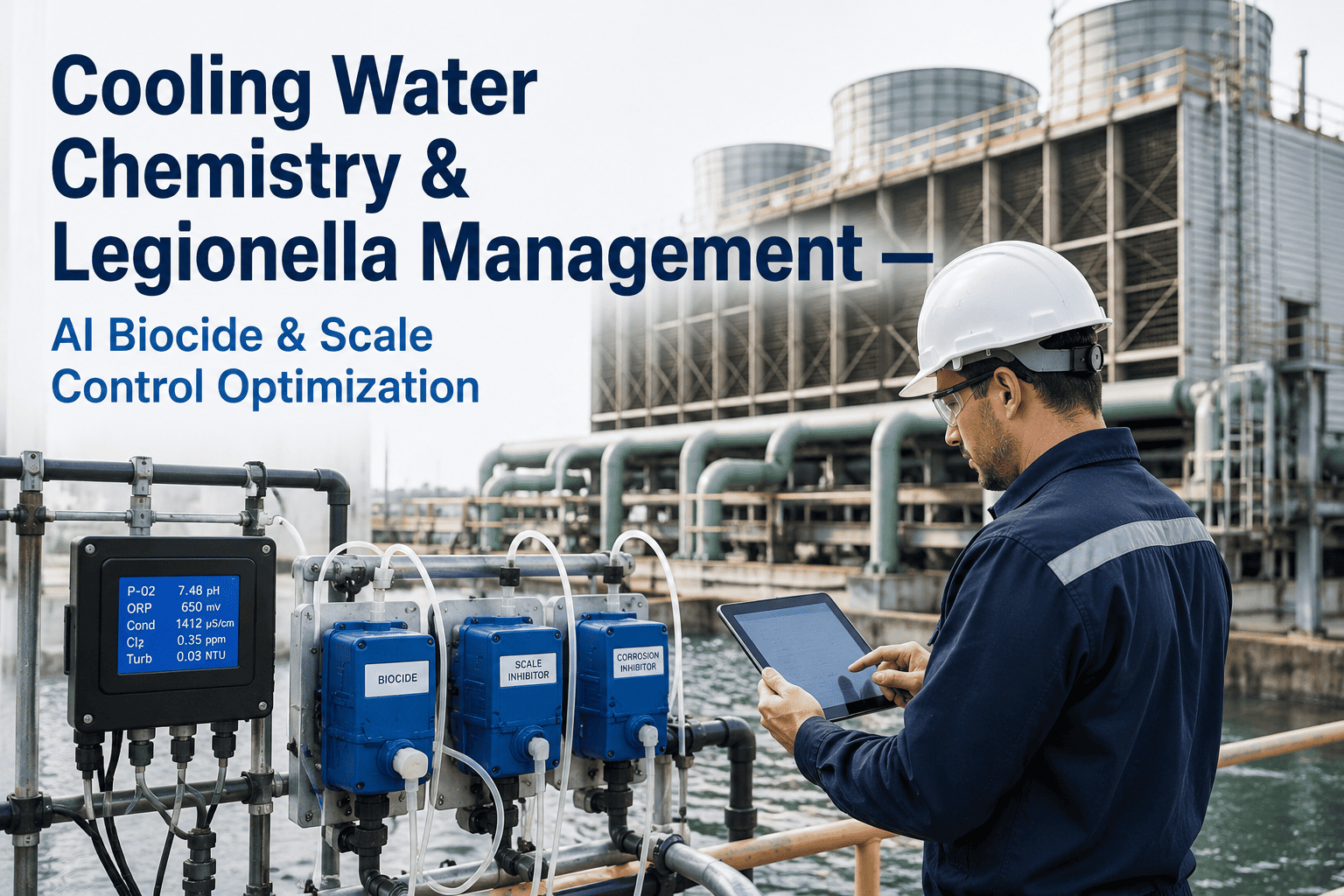
Managing Concentration, Scale, and Biological Growth
Cycles of Concentration
As cooling tower water evaporates, dissolved solids concentrate in the remaining water, and blowdown rate controls how many cycles of concentration the system runs at before makeup water dilutes it back down.
Scale and Corrosion Inhibitors
Chemical treatment keeps calcium and other scale-forming minerals in solution while protecting heat exchanger surfaces from corrosion, with dosing adjusted as cycles of concentration and makeup water quality change.
Biocide Programs
Warm, oxygenated cooling tower water is a favorable environment for microbial growth, and a biocide program, often alternating between oxidizing and non-oxidizing treatments, controls biofilm that would otherwise foul heat exchanger surfaces.
Heat Exchanger Fouling Monitoring
Tracking heat transfer performance over time flags fouling before it significantly affects cooling capacity, giving an earlier warning than waiting for a visible scale or biofilm inspection during a planned outage.
Before vs. After
One Blended Program vs. Three Coordinated Programs
Category
Blended Approach
Coordinated System-Specific Approach
Monitoring Frequency
Same testing schedule applied to all three systems regardless of risk profile
Frequency matched to each system's specific failure consequence and volatility
Condensate-Feedwater Link
Condensate quality reviewed separately, missing its direct effect on feedwater purity
Condensate contamination flagged as an immediate feedwater risk factor
Cooling Tower Biological Control
Biocide dosing on a fixed schedule regardless of actual biological activity
Dosing adjusted based on monitored biological activity and cycles of concentration
Root Cause Tracing
A boiler chemistry excursion investigated without checking condensate return quality
Cross-system data reviewed together to trace contamination back to its actual source
Chemical Spend
Generic dosing rates applied without adjusting for each system's actual demand
Dosing matched to real-time flow and chemistry data specific to each system
Avoid These
Common Mistakes in CHP Water Treatment Programs
Missing Condenser Tube Leaks in Feedwater Data
A small condenser tube leak introduces cooling water contamination into condensate, and if condensate and feedwater chemistry are not reviewed together, the resulting feedwater excursion can be misattributed to a different cause entirely.
Fixed Biocide Dosing Regardless of Season
Biological activity in cooling towers often varies seasonally with temperature, and a fixed year-round dosing schedule can under-treat during warm months while over-treating during cooler ones.
Adjusting Blowdown Without Checking Cycles of Concentration
Changing cooling tower blowdown rate without recalculating cycles of concentration against current makeup water quality can push the system into a scale-forming or corrosive chemistry range without an obvious trigger.
Treating Deaerator Performance as Fixed
Deaerator efficiency can degrade with internal component wear, and relying solely on chemical oxygen scavenging to compensate, without investigating the mechanical cause, treats a symptom rather than the underlying equipment issue.
From the Field
A Feedwater Excursion That Was Actually a Condenser Problem
We had intermittent conductivity spikes in feedwater that our chemistry team kept chasing with dosing adjustments, and nothing stuck because the dosing wasn't actually the problem. Someone finally cross-referenced the timing of the spikes against cooling water flow data and noticed they lined up with periods of higher cooling water demand. That pointed us toward the condenser, and we found a small tube leak that only became significant under higher differential pressure. Once we isolated and plugged that tube, the feedwater conductivity spikes stopped completely, and we hadn't needed to change a single dosing rate.
— Water Treatment Specialist, CHP Facility, Pacific Northwest Region
1Condenser tube leak found as the actual root cause
0Dosing changes ultimately needed to fix it
100%Conductivity spikes resolved after plugging the tube
Conclusion
Three Systems, One Coordinated View
Boiler feedwater, cooling water, and condensate each need chemistry management built around their own specific risks, but they are not fully independent of each other, and problems in one frequently show up as symptoms in another. A coordinated view that keeps each system's data distinct while still allowing cross-system comparison is what catches issues like a condenser leak masquerading as a feedwater dosing problem.
iFactory keeps chemistry data for all three systems organized separately while making cross-system comparison straightforward, so a pattern like a cooling-driven feedwater excursion is visible instead of buried across disconnected reports. Book a demo to see how this applies to your CHP water treatment program.
Frequently Asked Questions
CHP Water Treatment — Common Questions
How often should boiler feedwater chemistry be tested?
Critical parameters such as dissolved oxygen and pH are commonly monitored continuously through online instrumentation, while additional parameters like silica and total dissolved solids are often checked on a more frequent periodic basis depending on boiler operating pressure and treatment program requirements. Higher-pressure boilers generally warrant tighter monitoring given their lower tolerance for chemistry excursions.
Contact support for guidance on monitoring frequency for your specific boiler configuration.
What are cycles of concentration in a cooling tower?
Cycles of concentration describe how many times the dissolved solids in cooling tower water have concentrated relative to the makeup water feeding the system, a natural result of water evaporating while dissolved minerals remain behind. Operating at higher cycles reduces water consumption but increases scale and corrosion risk, making blowdown rate a key control point for balancing water use against chemistry stability.
Can a condenser tube leak really affect boiler feedwater chemistry?
Yes. Since condensate returns to the boiler as feedwater, any cooling water contamination entering through a leaking condenser tube travels directly into the feedwater stream, potentially raising conductivity, hardness, or other contaminants that the boiler treatment program was not designed to handle. This is why condensate and feedwater chemistry are best reviewed together rather than as fully separate concerns.
How is condensate typically polished before returning to the boiler?
Condensate polishing commonly uses ion exchange resin beds to remove dissolved contaminants and, in many systems, filtration to remove suspended solids such as iron oxide particles carried from piping and equipment surfaces. The specific polishing approach depends on boiler pressure and the acceptable contamination tolerance for that specific system.
Book a demo to see how condensate quality is tracked alongside feedwater chemistry.
Why does cooling water need a different biocide strategy than a simple continuous dose?
Microorganisms can develop resistance to a single biocide type used continuously at the same dose, which is why many programs alternate between oxidizing and non-oxidizing biocides or vary dosing based on monitored biological activity levels. A strategy adjusted to actual conditions, including seasonal temperature changes, generally maintains control more effectively than a fixed continuous dose.
Keep All Three Water Systems in View at Once
Boiler feed, cooling water, and condensate chemistry tracked as coordinated but distinct programs, so a drift in one system is never hidden by the others.