Boiler tube failures account for 52 percent of all forced outages in thermal power plants, and the majority trace back to a single root cause that has nothing to do with the metal itself: water chemistry drifting outside its target range long enough for the protective magnetite layer on the tube's inner surface to break down. Once that layer is compromised, corrosion mechanisms from oxygen pitting to caustic gouging accelerate quickly, and what started as a chemistry deviation becomes a six-figure repair bill. This page breaks down the three chemistry programs used to prevent that outcome, phosphate treatment, all-volatile treatment, and oxygenated treatment, and how continuous monitoring keeps each one inside its control band before a deviation reaches the tube wall.
Boiler Tube Defects — Chemistry Control
Phosphate, AVT, or OAT: Choosing and Holding the Right Chemistry Program
The wrong program for your metallurgy and pressure class creates risk on day one. The right program, run without continuous monitoring, still drifts. Both problems are solvable before they reach a tube failure.
52%of all forced outages in thermal power plants trace back to boiler tube failure
$200K/dayaverage cost of lost generation, emergency repair, and replacement power during an outage
$1.9Bannual water/steam cycle corrosion cost across the US fossil power industry, per EPRI
Why Chemistry Control Is a Tube Defect Problem, Not a Water Problem
A new, clean boiler tube protects itself. Deoxygenated water reacts with the steel to form magnetite, a black, dense, self-healing oxide layer that sits between the metal and anything corrosive in the water flowing past it. That layer is the entire defense mechanism, and it depends on the water chemistry staying inside a narrow band. Push pH too low, let dissolved oxygen creep up, or let phosphate concentrate unevenly across load swings, and the magnetite layer turns porous and brittle, at which point corrosion is no longer being prevented, it is actively underway on the metal underneath.
This is why chemistry control belongs in the same conversation as tube inspection rather than treated as a separate water-treatment topic. Oxygen pitting, caustic gouging, acid attack, and hydrogen damage, four of the most common waterside corrosion mechanisms behind tube failures, are all chemistry-driven. A tube inspection program that never looks at the chemistry data is inspecting the symptom while missing the cause.
Three Chemistry Programs, Three Different Risk Profiles
There is no universally correct chemistry program. The right choice depends on boiler pressure, tube metallurgy, makeup water quality, and how much operator attention the plant can consistently commit to chemistry monitoring.
Program 01
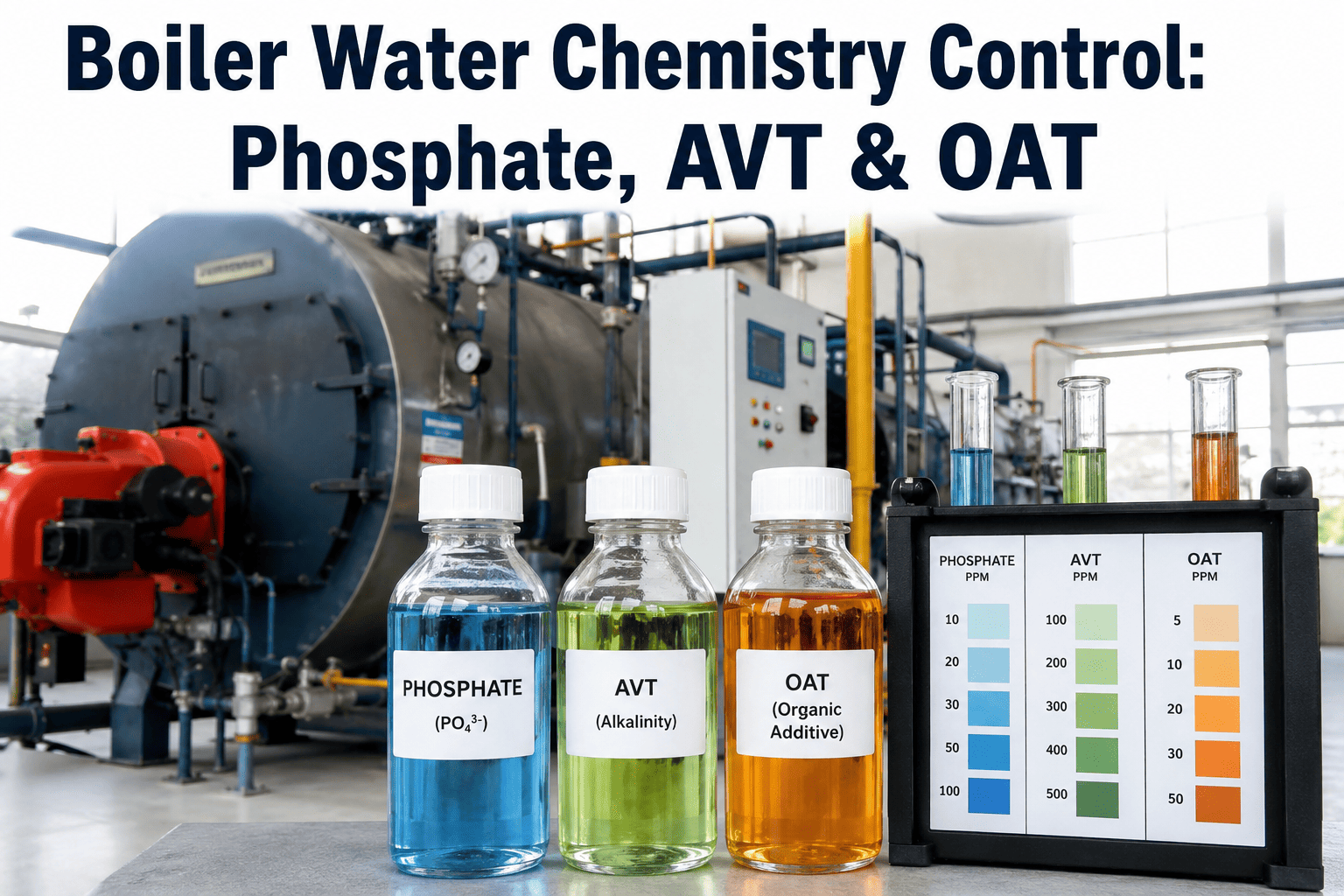
Phosphate Treatment
Phosphate is dosed to buffer pH and precipitate hardness contaminants into a removable sludge, and it can absorb small contamination excursions, acid, caustic, process liquor ingress, without immediately damaging the boiler. The tradeoff is phosphate hideout: at high boiler water temperatures, sodium phosphate is only slightly soluble and precipitates on internals, then redissolves as load changes, making the sodium-to-phosphate ratio genuinely difficult to hold steady through cycling operation.
Program 02
All-Volatile Treatment (AVT)
AVT controls chemistry with only ammonia or amine and, where copper alloys are present, an oxygen scavenger, no dissolved solids at all. Feed and control are simpler, with only pH, conductivity, silica, and iron to track, and there is no phosphate or polymer chemistry to manage. The tradeoff is that AVT is far less forgiving of contamination: feedwater iron limits run as low as 2 ppb, versus roughly 10 ppb tolerated under a well-run phosphate program.
Program 03
Oxygenated Treatment (OAT/OT)
OAT deliberately introduces a small, controlled amount of dissolved oxygen to build a tighter, more protective oxide layer than AVT alone produces, primarily used on high-purity, all-ferrous once-through and drum units at higher pressures. It delivers the lowest iron transport of the three programs when run correctly, but it demands very high feedwater purity and tight operating discipline, since even minor process upsets can push dissolved oxygen or contaminant levels outside a narrow safe window.
Program Comparison at a Glance
The Parameters Every Program Ultimately Depends On
01pH control — the single most consequential number in any chemistry program, since both low pH acid attack and high pH caustic gouging directly degrade the protective oxide layer on the tube wall.
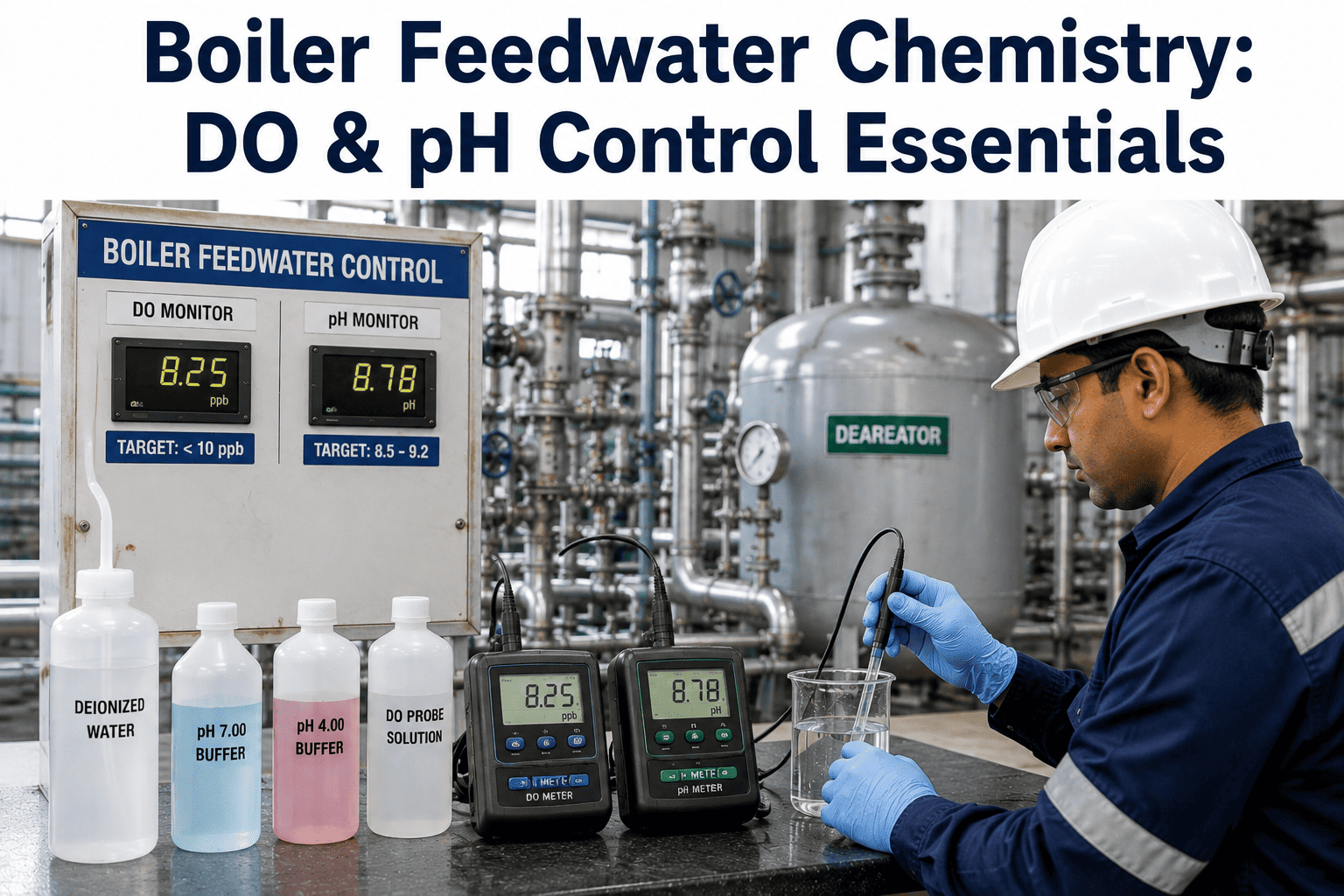
02Dissolved oxygen management — excess oxygen drives pitting corrosion in AVT and phosphate systems, while OAT programs require oxygen held within a precise target band rather than simply minimized.
03Feedwater and condensate purity — iron and copper transport into the boiler concentrates at heat transfer surfaces and directly determines how much margin any chemistry program actually has before deposition begins.
04Chemical dosing accuracy — under-dosing leaves contaminants unmanaged, while over-dosing in a phosphate program in particular risks the hideout and redissolution cycle that makes ratio control so difficult.
Why Manual Testing Alone Cannot Hold the Line
Grab-sample testing on a fixed schedule, hourly, per shift, or daily, tells an operator what chemistry looked like at the moment the sample was pulled. It says nothing about what happened in the hours between samples, and boiler chemistry does not wait for a convenient testing window. A softener exhausting mid-shift, a load swing triggering phosphate hideout, or a condenser leak introducing contamination can all push chemistry outside a safe range and back again before the next scheduled sample ever catches it, leaving a corrosion event running in a blind spot that the testing log never shows.
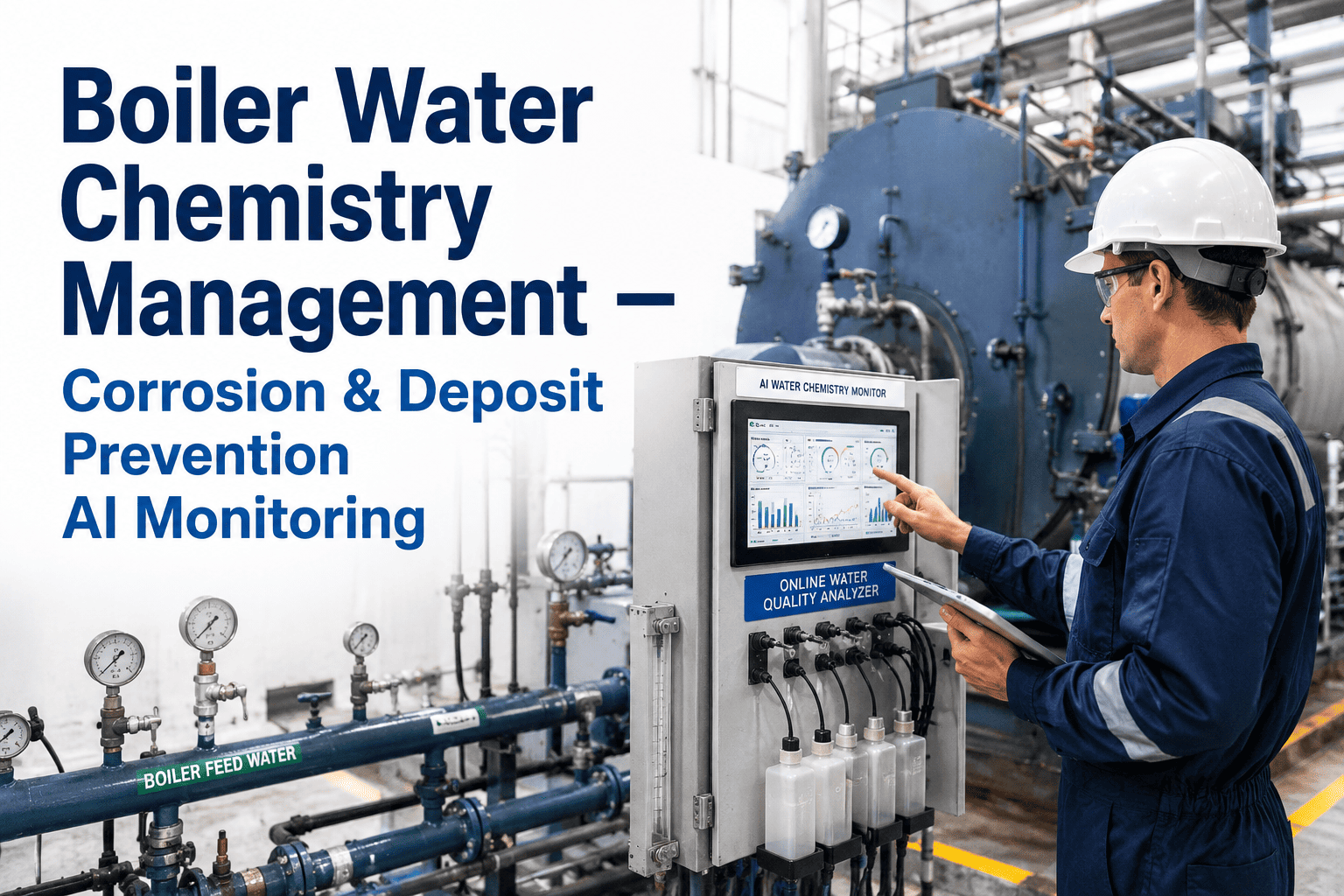
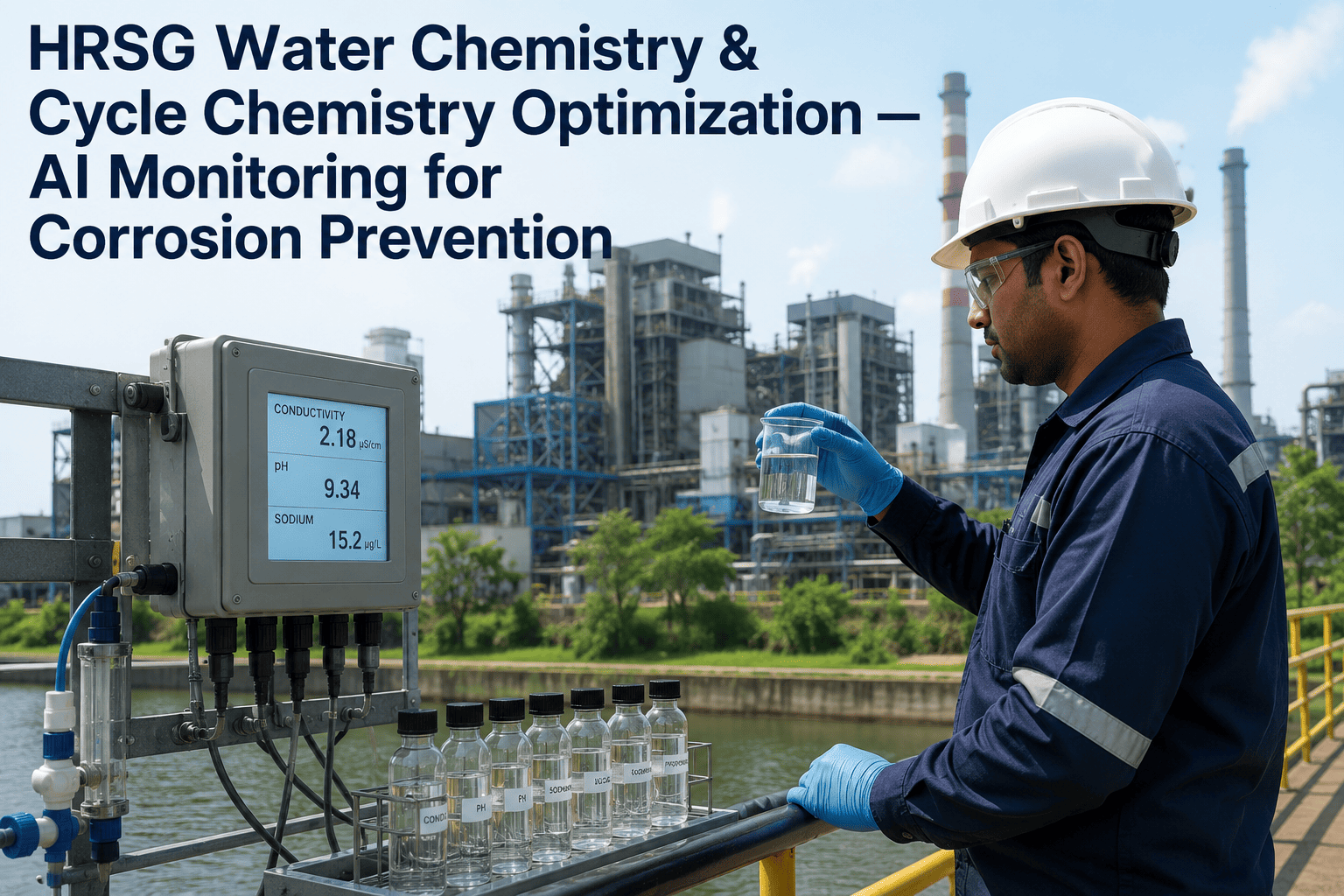
Continuous online monitoring closes that gap by tracking conductivity, pH, dissolved oxygen, and chemical residuals in real time rather than at sample intervals, and pairing that stream with automated dosing adjustment means chemistry gets corrected the moment it starts drifting rather than after a lab result confirms it already had. Manual testing remains necessary for calibration and verification, but the strongest programs run both together rather than relying on manual sampling as the primary control mechanism.
A chemistry excursion that lasts three hours between scheduled samples can do more damage to the magnetite layer than months of correctly controlled operation repair. Continuous monitoring turns that blind spot into a real-time control loop.
From Chemistry Drift to Tube Failure: The Path Monitoring Interrupts
1
Chemistry Parameter Drifts Out of Range
A contamination event, a load swing, or a dosing system fault pushes pH, dissolved oxygen, or the Na:PO4 ratio outside its control band, often for a window shorter than the gap between manual samples.
2
Protective Oxide Layer Begins Breaking Down
The magnetite layer that normally shields the tube metal turns porous under the wrong chemistry conditions, exposing bare steel to whatever corrosive species are present in the water.
3
Localized Corrosion Mechanism Takes Hold
Depending on which parameter drifted, the result is oxygen pitting, caustic gouging under deposits, acid attack, or hydrogen damage, each progressing quietly with no external symptom yet visible.
4
Wall Thinning Accumulates Over Months
Corrosion damage from a chemistry excursion does not reverse itself once conditions are corrected. Each undetected event adds to cumulative wall loss that scheduled visual inspection may not catch until it is advanced.
5
Tube Ruptures During Operation
The tube fails at the weakened point, typically during a load change or startup that stresses the already-compromised wall, forcing an unplanned outage that traces back to a chemistry event weeks or months earlier.
Frequently Asked Questions
How do we know which chemistry program is right for our boiler?
The choice depends primarily on boiler pressure, whether copper-bearing alloys are present in the steam cycle, feedwater purity achievable at your site, and how consistently your team can maintain tight operating discipline. Phosphate programs tend to suit industrial boilers and cycling units that need more forgiveness for contamination events, AVT suits both copper-bearing and all-ferrous systems where feed and control simplicity matters, and OAT suits high-purity, all-ferrous, higher-pressure units where the operational discipline to hold a narrow window is already in place.
Book a demo to review your specific pressure class, metallurgy, and makeup water quality against the three programs.
Can we switch chemistry programs on an existing boiler without a major shutdown?
Program transitions are common, most notably the industry-wide move away from coordinated and congruent phosphate programs toward equilibrium phosphate or AVT alternatives, and they are generally planned around an existing outage window rather than requiring one to be created specifically for the switch. The transition itself typically involves a controlled chemistry ramp, close monitoring during the changeover period, and confirmation that the new program's control parameters are holding steady before returning to a normal testing cadence.
What is phosphate hideout and why does it make chemistry control harder?
At typical boiler water temperatures above 600°F, sodium phosphate is only slightly soluble and much of it precipitates onto boiler internals rather than staying dissolved in the water where it can be measured and controlled. When boiler load drops, that precipitated phosphate redissolves back into solution, which means the same dosing rate can produce very different measured phosphate concentrations depending on recent load history. This cyclic hideout and redissolution behavior is the main reason phosphate ratio control is difficult on units that cycle on and off frequently, and it is a major driver behind the industry shift toward AVT on high-pressure cycling units.
How quickly does a chemistry excursion actually damage the boiler tubes?
Damage does not require a dramatic, sustained deviation. A brief excursion, even one lasting a few hours between scheduled manual samples, can compromise the protective magnetite layer at localized points on the tube surface, and that damage does not reverse itself once chemistry returns to normal. Repeated short excursions accumulate the same way repeated stress cycles accumulate fatigue damage, which is why continuous monitoring that catches a deviation within minutes rather than hours materially changes the cumulative corrosion risk over a boiler's operating life.
Contact support to discuss continuous chemistry monitoring alongside existing tube condition monitoring.
Does continuous chemistry monitoring replace the need for manual lab testing?
No, and the strongest programs explicitly run both together. Online sensors need periodic calibration and verification against manual grab samples to confirm they remain accurate, and manual testing catches certain parameters that online instrumentation does not measure as reliably. What continuous monitoring changes is the response time between a chemistry deviation occurring and someone knowing about it, closing the gap from hours between scheduled samples down to real time, while manual testing continues to serve as the accuracy check on the automated system.
Catch the Chemistry Excursion Before It Reaches the Tube Wall
See continuous boiler water chemistry monitoring running alongside real tube condition data, closing the gap between a deviation occurring and someone knowing about it.