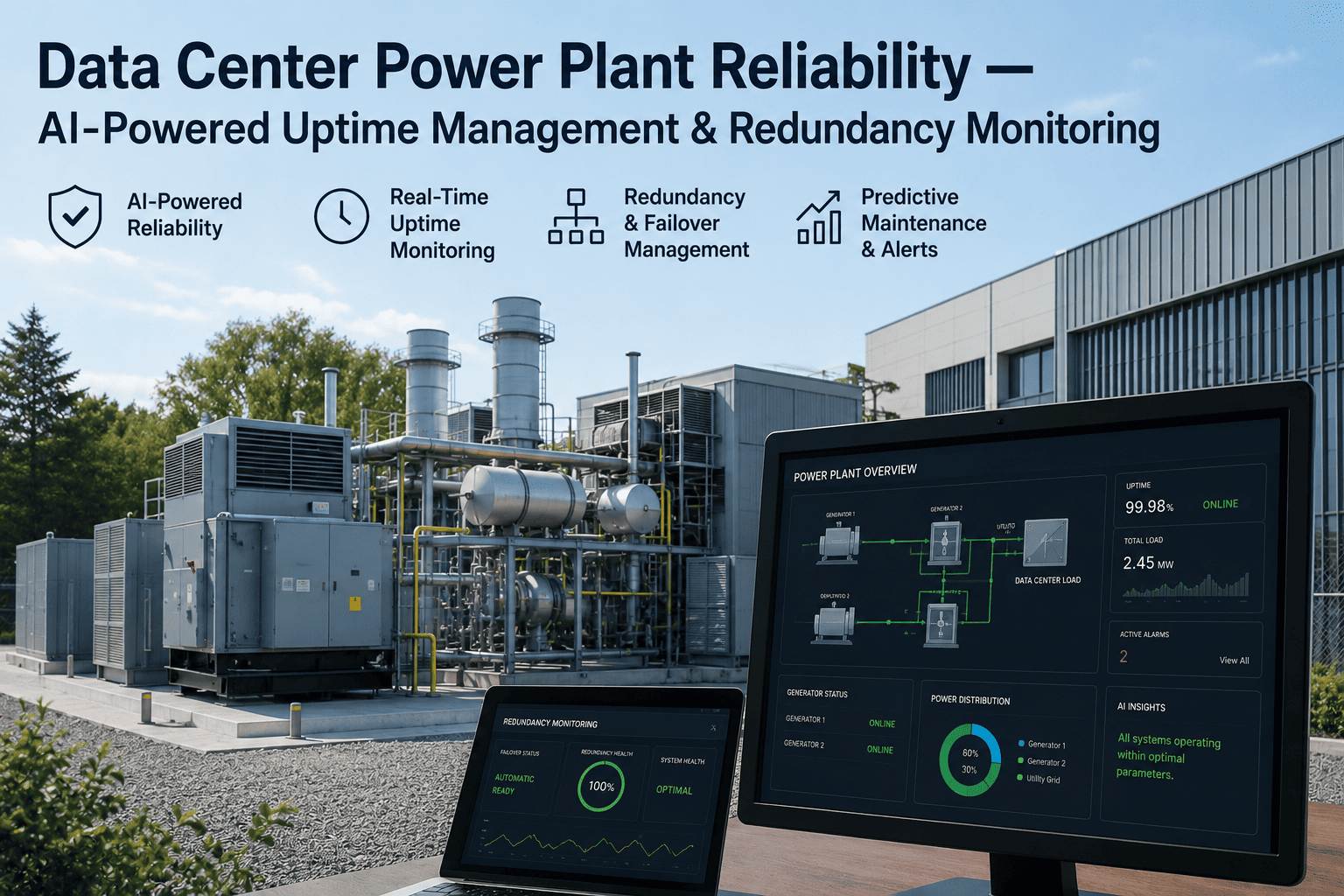
A data center's five-nines commitment lives or dies on equipment most tenants never see: the generator yard. Tier III and Tier IV facilities are built to hold annual downtime under roughly an hour and a half, and the entire promise rests on backup generators starting within seconds and carrying full load for as long as a grid outage lasts. Diesel and natural gas units both get exercised on a schedule, both get load-bank tested, and both still fail in the field more often than operators would like to admit, usually for reasons that never showed up on a paper inspection checklist. iFactory's generator monitoring platform was built to catch those reasons before an outage does.
Your backup generators only get one real test, and it's not the monthly exercise cycle
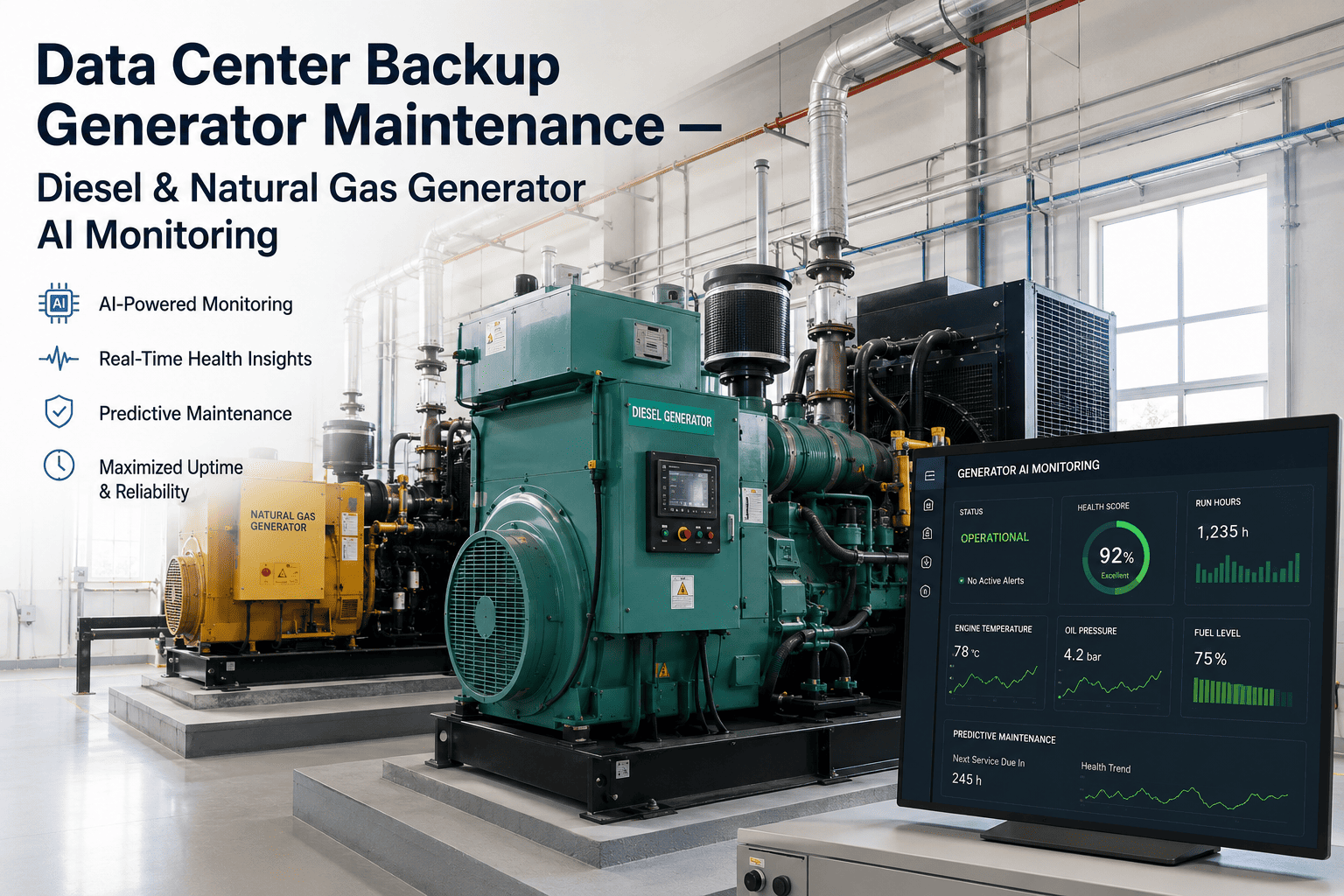
iFactory continuously reads engine, fuel, and starting-system condition on diesel and natural gas generators so plant managers know a unit will carry load before the grid ever fails.
Monthly exercise cycles test that a generator runs, not that it will hold load
A no-load monthly run confirms the engine turns over and the automatic transfer switch functions. It does not confirm the unit can carry a full data hall load for six or twelve hours without wet-stacking, fuel starvation, or a cooling system that can't reject the heat a real event generates. Facilities have learned this the hard way during actual utility failures, when a generator that passed every scheduled test still couldn't hold rated output past the first hour.
Starting reliability degrades quietly
Battery state of charge, cranking amperage, and glow plug or ignition condition all drift over months of standby duty. A unit that started fine last quarter can fail to reach cranking speed today, and nothing on a visual inspection reveals that until it's tested under real conditions.
Fuel quality erodes during long dormancy
Diesel stored for months develops water contamination, microbial growth, and particulate buildup that clogs filters exactly when the engine needs full fuel flow. Natural gas units face their own risk in supply pressure instability during a grid event that also stresses the gas distribution network.
Load bank tests happen too infrequently to catch drift
Full load bank testing at rated capacity is the gold standard for verifying a generator can actually carry a data hall, but most sites can only justify it annually or semi-annually. Between tests, cooling system performance, injector condition, and alternator health can all shift enough to matter.
Wet-stacking hides inside light-load exercise runs
Routine exercise cycles often run generators at low load for a short window, which is exactly the condition that causes wet-stacking in diesel units: unburned fuel and carbon accumulate in the exhaust path and quietly reduce the engine's true capacity over time.
Two fuel paths, two different failure signatures
Plant managers running mixed fleets need condition monitoring tuned to each engine type, since the leading indicators of trouble look nothing alike between a diesel standby set and a natural gas unit.
| Factor | Diesel Generators | Natural Gas Generators |
|---|---|---|
| Primary reliability risk | Fuel degradation and wet-stacking during standby periods | Gas supply pressure and quality during grid-stress events |
| Runtime dependency | Limited by onsite tank capacity, often 48 to 96 hours | Dependent on pipeline continuity unless dual-fuel equipped |
| Cold-start behavior | Sensitive to battery condition and injector fouling | Sensitive to ignition timing and gas train valve response |
| Load bank test focus | Exhaust temperature spread and fuel consumption rate | Air-fuel ratio stability and exhaust gas composition |
| Common failure mode missed by manual checks | Injector nozzle wear reducing peak output under sustained load | Gas regulator drift causing lean misfire under load transients |
Most operators discover their weakest generator during an actual outage, not during a scheduled test. Book a walkthrough and see which units in your yard need attention before that happens.
AI-driven load growth is raising the cost of a missed backup
Utility grids serving data center corridors are under more strain than they were even two years ago, as hyperscale and AI cluster buildouts pull load faster than transmission infrastructure can expand in some regions. That makes planned and unplanned grid events more frequent, not less, and it raises the stakes on every generator in the yard actually performing when called.
The financial exposure has grown alongside it. Downtime costs at high-density colocation and hyperscale sites now regularly reach five figures per minute, and a chain of AI training or inference workloads interrupted mid-job can compound that cost well beyond the immediate SLA penalty. A generator that fails to pick up load isn't a maintenance line item at that scale, it's a board-level incident.
Regulatory pressure is tightening too. Emissions standards for standby diesel generators continue to get stricter at the state level, and facilities juggling compliance requirements alongside reliability targets need condition data that supports both conversations, not just a pass or fail on the annual load bank test.
Continuous condition intelligence for every unit in the yard
Monitor starting and cranking health
Battery voltage, cranking amperage, and start-time trends are tracked continuously across every unit, flagging degradation weeks before it would cause a failed start.
Track fuel and gas supply quality
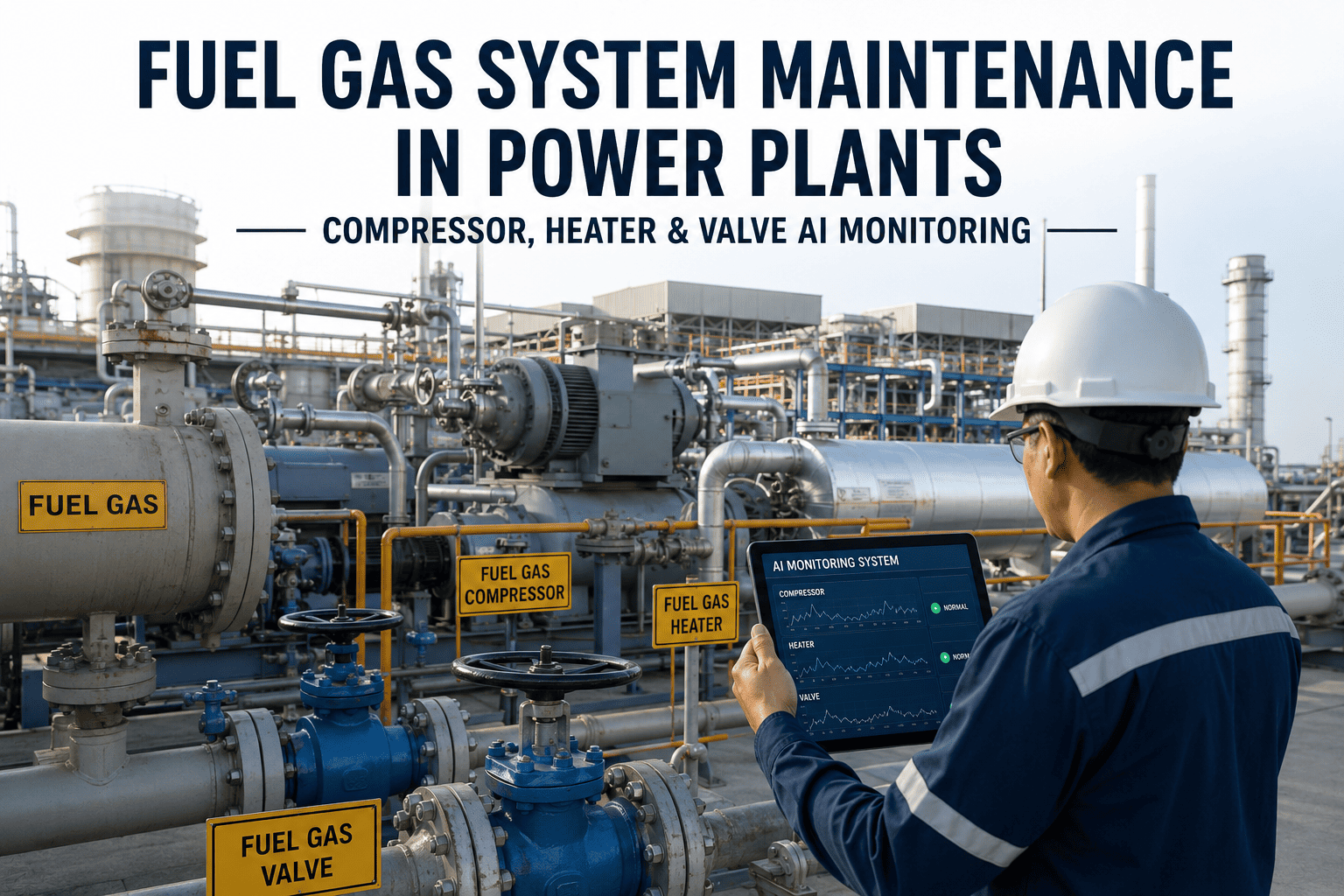
Diesel tanks are monitored for water content and particulate trends, while natural gas trains are watched for pressure stability, so fuel-related failures are caught during standby, not during the event.
Verify load bank test results against baseline
Exhaust temperature spread, output stability, and cooling performance from each load bank test are compared against the unit's own historical baseline, surfacing gradual degradation that a pass/fail result alone would miss.
Rank units by readiness, not just schedule
Plant managers get a readiness score per generator, so maintenance attention goes to the units actually showing drift instead of following a uniform calendar that treats every unit the same.
What a generator yard pilot includes
Works across mixed fleets
Diesel and natural gas units, different OEMs and ages, are monitored on a common readiness scale.
Connects to existing controls
Pulls from generator control panels, ATS logs, and fuel monitoring hardware already installed on site.
6–10 week pilot
Includes baseline calibration against historical load bank test records and shadow-mode validation.
On-premise deployment
Runs on an NVIDIA appliance inside the facility network, keeping generator and power data on site.
Unit-by-unit rollout
Start with the generators covering your most critical data halls and expand yard-wide from there.
24x7 managed service
iFactory's team monitors readiness trends so your facilities engineers aren't managing another dashboard.
Know which generator would fail before the grid does
iFactory gives plant managers a readiness score for every unit in the yard, backed by continuous condition data instead of a once-a-year test.
Generator monitoring AI, explained plainly
Get a readiness score for every generator in your yard
Book a demo and iFactory will walk through what continuous condition monitoring would surface on your specific fleet.