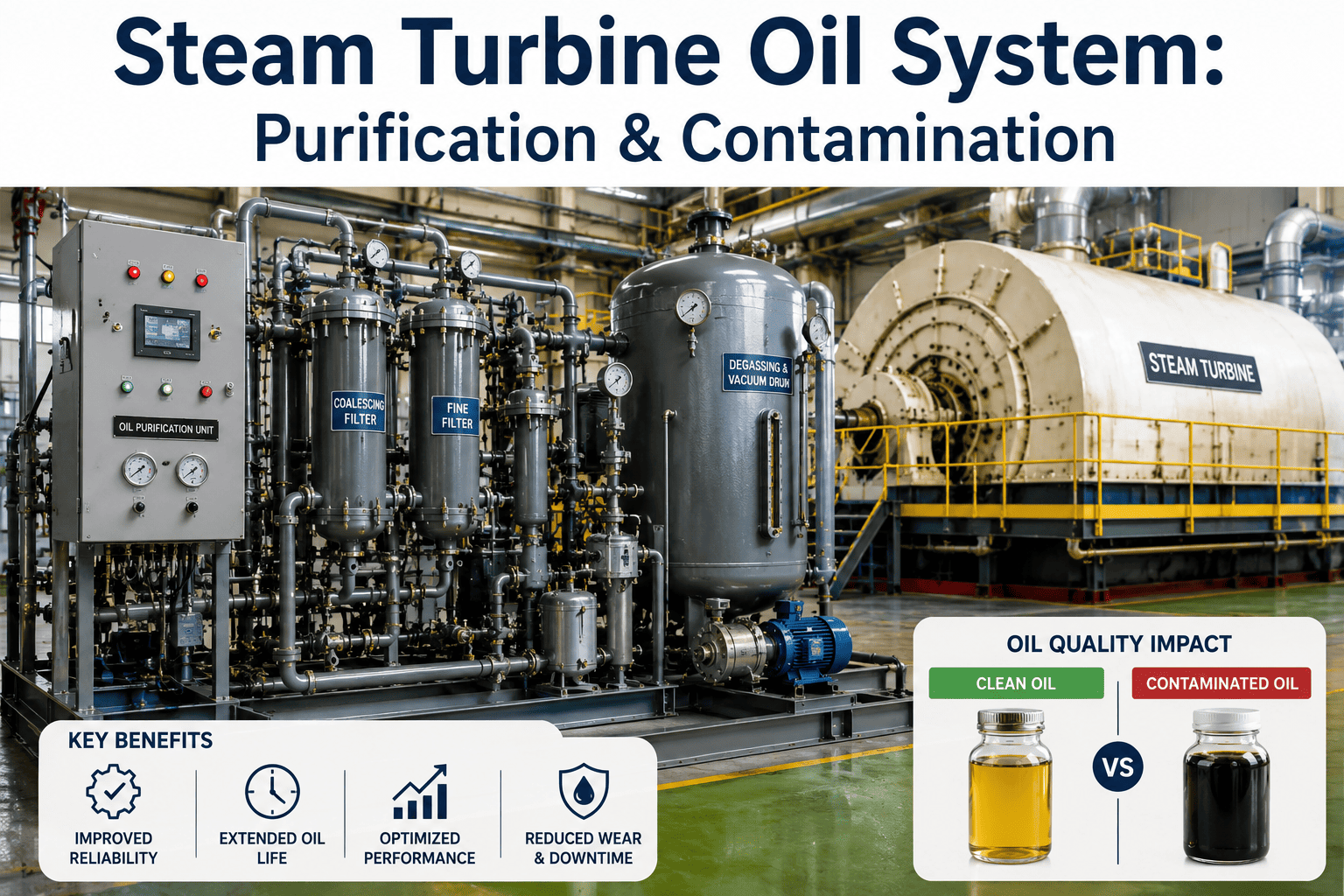
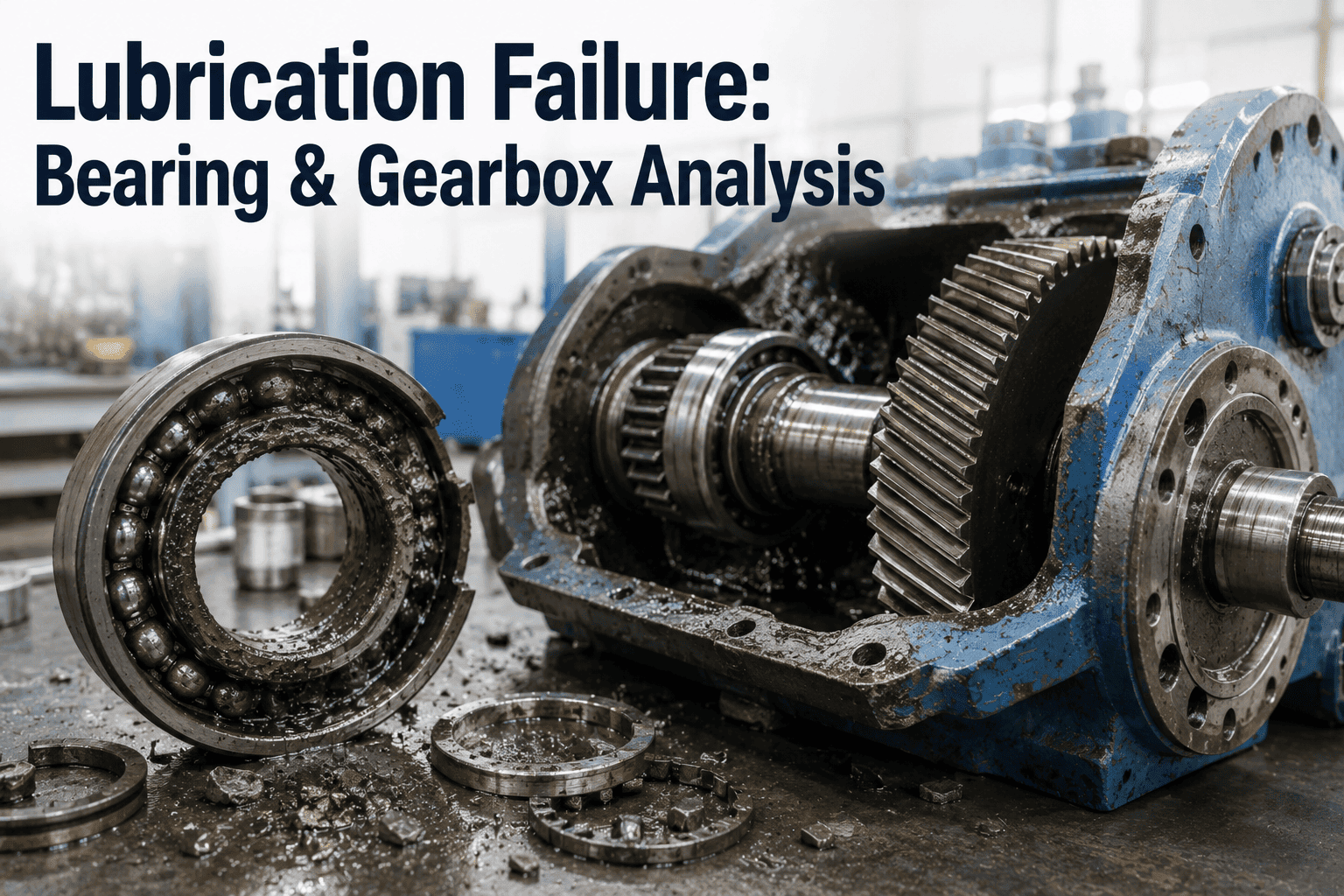
Gas turbine bearing and control oil looks clean right up until the moment it isn't. Varnish forms silently inside servo valves, control oil filters, and bearing housings long before a standard oil spec sheet shows anything out of range. By the time a servo valve starts sticking or a filter starts plugging early, the varnish has usually been building for months without anyone noticing. See how iFactory tracks varnish potential, contamination trends, and oil conditioning performance in real time with a Book a Demo.
Varnish Doesn't Show Up On A Spec Sheet Until It's Already A Problem
Standard oil analysis checks viscosity, acid number, and particle counts, but none of those catch varnish precursors forming inside your control and bearing oil. iFactory trends MPC scores, filter patch results, and conditioning system performance so degradation is visible weeks before it affects turbine operation.
How Clean Oil Turns Into Varnish-Forming Oil
Varnish is not contamination in the traditional sense. It is the byproduct of oxidation reactions inside the oil itself, accelerated by heat, air entrainment, water, and catalytic metals such as copper and iron. Once soluble degradation byproducts exceed the oil's ability to hold them in solution, they precipitate out as sub-micron insoluble particles that stick to any surface cooler than the bulk oil temperature, which is exactly what servo valve clearances, bearing journals, and cooler tubes provide.
Four Contamination Paths That Feed Varnish Formation
Varnish rarely comes from a single cause. It is usually the compounding effect of several contamination paths running in parallel over months of operation, each one small enough to pass a routine spot check but significant enough to shorten oil life when combined.
Particulate Ingress
Worn seals, breather caps, and top-up practices introduce hard particles that abrade additive packages and act as catalytic sites for oxidation, especially when metallic wear debris is present.
Moisture Ingress
Condensation from temperature cycling, humid ambient conditions, or a failed seal introduces water that hydrolyzes additives and accelerates the same oxidation pathways that produce varnish precursors.
Additive Depletion
Antioxidants and detergent-dispersant packages deplete gradually with operating hours, and once remaining useful life drops below roughly 25 percent, varnish formation typically accelerates sharply.
Thermal And Oxidative Stress
Localized hot spots near bearings, seals, and reduction gears run oil at temperatures well above the bulk reservoir reading, and this is where the majority of oxidation actually initiates.
What Unmanaged Varnish Actually Costs A Plant
The cost of varnish rarely shows up as a single dramatic failure. It shows up as a slow accumulation of small operational frictions across control response, maintenance labor, and unplanned outage exposure that together add up to a meaningful hit to both reliability and budget over a single operating cycle.
Reliability Engineers Lose Predictability
Without a trended MPC and filter patch history, reliability teams are forced to react to symptoms like sticking valves or restricted flow rather than planning conditioning interventions ahead of a known degradation curve. This turns oil management into firefighting instead of scheduled maintenance, and it makes it far harder to forecast when a conditioning skid or filtration upgrade should actually be budgeted for the following operating cycle.
Plant Managers Absorb Unplanned Downtime Risk
A servo valve that sticks during a load transient or a startup sequence can force a trip or a delayed start, both of which carry real financial consequences beyond the immediate repair cost. Because varnish-related failures often appear suddenly even though the underlying degradation was gradual, plant managers frequently discover the problem only after it has already affected an operating event rather than during a planned maintenance window.
Your Oil Report Says Normal. Your Servo Valves Disagree.
iFactory connects MPC trending, filter patch data, and conditioning system performance into one view so varnish risk is visible before it becomes a control problem.
Which Test Actually Catches Varnish Before It Causes A Trip
Standard oil analysis packages were built to catch wear and bulk contamination, not the sub-micron deposit-forming chemistry that produces varnish. The tests below are the ones reliability teams add specifically to close that gap, and each answers a different piece of the varnish question. Running all four together, rather than picking one and skipping the rest, is what turns a lab report into an early-warning system instead of a historical record of a problem that has already happened.
| Test Method | What It Measures | Typical Frequency |
|---|---|---|
| MPC (ASTM D7843) | Colorimetric score of insoluble varnish precursors on a membrane patch | Quarterly |
| Filter Patch Analysis | Visual and microscopic inspection of particulate and soft deposits captured on a filter membrane | Quarterly |
| RPVOT (ASTM D2272) | Remaining oxidative life of the antioxidant package under accelerated pressure conditions | Semi-annual |
| Viscosity And Acid Number Trend | Long-term drift in bulk oil chemistry indicating oxidation progression | Monthly |
MPC and filter patch results are most useful when trended over consecutive samples rather than read as a single result, since a single elevated reading can be sample-handling noise while a sustained upward trend is a genuine warning sign.
Three Ways To Remove Varnish Precursors Before They Deposit
Once varnish potential is trending upward, the choice of conditioning technology determines whether the problem gets resolved or just slowed down. Each of the three common approaches works on a different fraction of the contamination and is typically selected based on how advanced the varnish condition already is. Choosing the wrong technology for the current condition is one of the more common and avoidable ways plants end up spending on conditioning equipment without seeing a corresponding improvement in MPC or filter patch trends.
Electrostatic Oil Cleaners
Charged plates attract polar varnish precursors out of solution as oil passes through, making this the preferred method for proactive conditioning while MPC scores are still in the caution range rather than critical.
Ion Charge Bonding
Balanced charge agglomeration causes sub-micron precursors to clump into larger particles that a standard depth filter can then capture, which works well when existing filtration is already in place.
Fuller's Earth Filtration
Depth media adsorbs both varnish precursors and some beneficial additives, so this method is typically reserved for advanced cases where deposits are already visible and a more aggressive intervention is justified.
A Sampling Schedule Built Around When Varnish Actually Develops
Varnish potential changes slowly compared to particle counts or moisture content, but by the time a single quarterly sample shows a critical result, deposits have often already formed. A layered sampling cadence catches the trend earlier without adding unnecessary lab cost.
Where Most GT Oil Monitoring Programs Fall Short
Plants that struggle with recurring varnish problems tend to share the same handful of gaps in their monitoring approach, and most of them are process gaps rather than equipment gaps. Fixing the process gap is usually far cheaper than the conditioning hardware itself, which is exactly why it tends to get overlooked in favor of buying another skid.
Reading MPC As A Single Number
A single MPC result below the critical threshold can still sit on a steep upward trend, and treating each sample in isolation instead of as part of a trend line delays intervention by months.
Sizing Conditioning Systems For Day One
Electrostatic and ion charge bonding units sized for initial commissioning conditions often fall behind as oil volume, operating hours, and thermal load increase over the years.
Treating Symptoms Instead Of Root Cause
Running a conditioning system harder without addressing the underlying air entrainment, seal leakage, or hot spot driving oxidation only slows the problem instead of resolving it.
Inconsistent Sample Handling
Sampling from different points in the system, using inconsistent bottle cleanliness, or sampling right after a top-up introduces enough noise to mask a genuine trend for several sample cycles.
What Plants Typically See After Adding Varnish-Specific Monitoring
Plants that add MPC trending, filter patch analysis, and conditioning system performance tracking to their existing oil analysis program tend to see the same categories of improvement, though the magnitude depends on how advanced the varnish condition was before monitoring began.
Frequently Asked Questions
Q: Why does my oil pass standard analysis but still show varnish deposits?
Standard oil analysis packages are built around viscosity, acid number, and particle counts, none of which directly measure the sub-micron insoluble precursors responsible for varnish. An oil can sit well within normal viscosity and acid number ranges while its MPC score is already climbing toward the critical range, because varnish chemistry develops independently of the properties a routine spec sheet checks. This is exactly why MPC and filter patch analysis are typically added as separate tests rather than assumed to be covered by a standard panel. Reach out through Support Contact to review what your current lab panel does and does not cover.
Q: How high does an MPC score need to be before it becomes a real concern?
Scores below roughly 30 are generally considered clean, scores between 30 and 40 fall into a caution range worth monitoring closely, and scores above 40 are typically treated as critical and warrant conditioning system action. The more important signal, though, is the trend across consecutive quarterly samples rather than any single reading, since a steady climb from 15 to 28 over a year indicates active degradation even though every individual result still falls in the clean range. Trending this consistently is exactly the kind of pattern a connected monitoring platform is built to surface early.
Q: Can an existing filtration system be upgraded to address varnish, or is new equipment required?
In many cases an existing depth filtration system can be paired with an ion charge bonding unit, since ion charge bonding agglomerates sub-micron precursors into particles large enough for standard filters to capture, meaning the base filtration hardware does not need replacement. Electrostatic oil cleaners and fuller's earth systems are typically added as standalone units rather than retrofits. The right choice depends on how advanced the current varnish condition is and how much oil volume needs to be conditioned per hour. A Book a Demo session can walk through which option fits your current system.
Q: How often should filter patch analysis be performed compared to MPC testing?
Filter patch analysis and MPC testing are generally run on the same quarterly cadence because they answer complementary questions from the same sample, with MPC giving a numeric colorimetric score and filter patch analysis providing a visual and microscopic look at what is actually depositing on the membrane. Running them together also makes it easier to catch sample handling inconsistencies, since a filter patch that looks clean alongside a high MPC score often points to a lab or sampling issue rather than a genuine result, and vice versa.
Q: Does varnish monitoring apply to bearing oil systems, control oil systems, or both?
Both systems are susceptible, though the consequences differ. Varnish in control oil systems tends to show up first as sticking servo valves and slow actuator response, which can directly affect turbine control response time. Varnish in bearing oil systems more commonly shows up as restricted oil flow through bearing clearances and gradually rising bearing temperatures. Many plants run a shared reservoir for both functions, in which case a single monitoring and conditioning program covers both, but plants with separated systems typically benefit from tracking each independently since degradation rates can differ significantly between the two.
Catch Varnish While It's Still A Trend, Not A Trip
iFactory brings MPC scores, filter patch results, and conditioning system data into one connected view so your team acts on the trend, not the surprise.