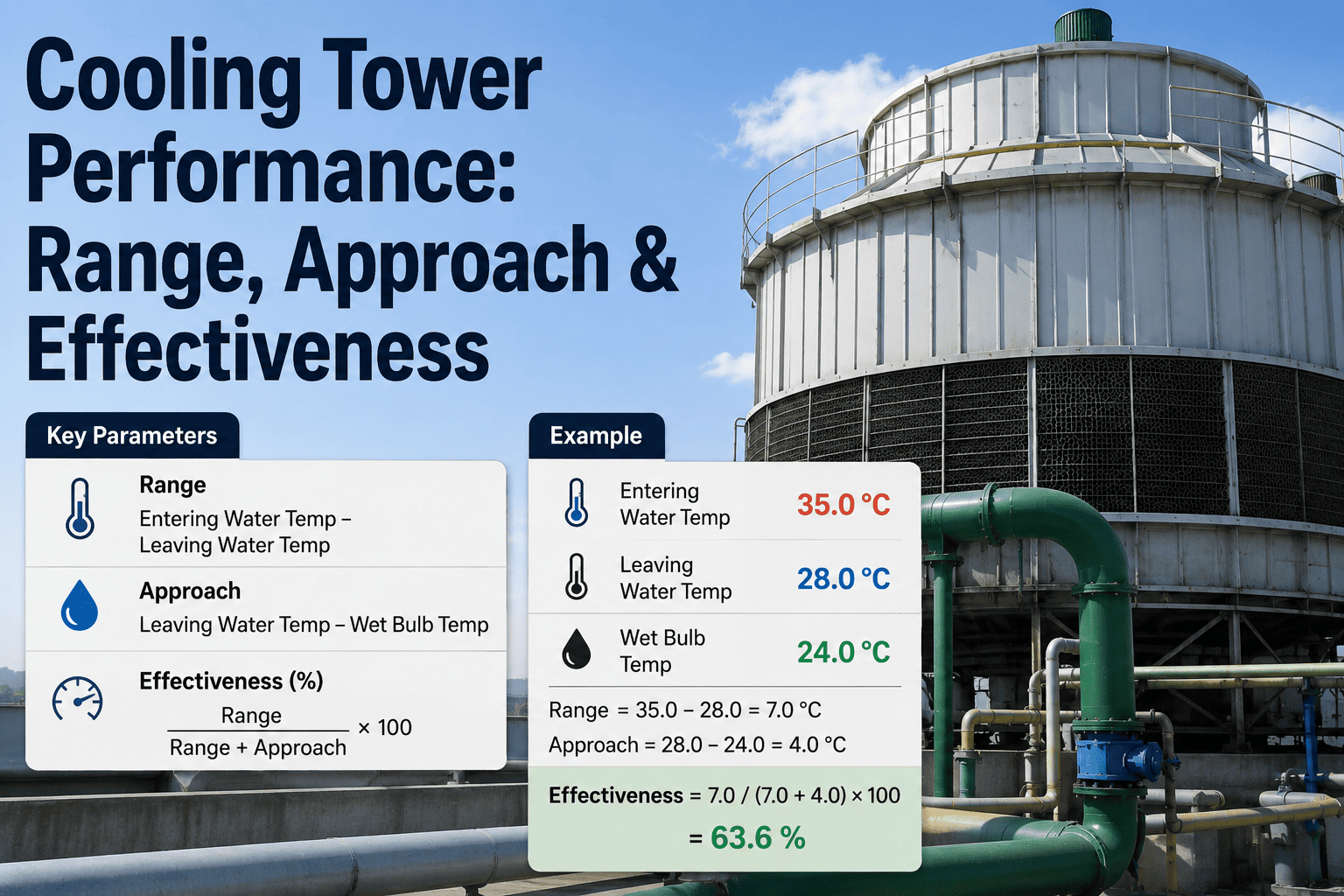
A hyperbolic natural draft cooling tower can stand for fifty years or more, but the concrete shell, internal columns, and fill support structure inside it are aging every one of those years under a combination of moisture cycling, temperature swings, and constant mechanical vibration that few other plant structures ever experience. Cracks in the shell rarely start as emergencies — they start as hairline surface checks that widen slowly across dozens of inspection cycles until someone finally notices the pattern has changed. Because a tower's structural integrity directly affects worker safety during internal access and the plant's ability to keep the tower in service without a costly emergency shutdown, structural inspection cannot be treated as a box to check once every few years. Reliability teams building a real inspection and repair program can Book a Demo to see how iFactory tracks tower condition across inspection cycles.
Why Natural Draft Towers Demand a Different Inspection Discipline
Unlike mechanical draft towers with replaceable fan assemblies and fill sections, a natural draft tower's primary structural element is a single reinforced concrete shell, often exceeding 400 feet in height, that has no mechanical redundancy if it develops a serious structural problem. The shell relies on its hyperbolic geometry for strength, and any degradation to the concrete, the reinforcing steel inside it, or the internal support columns holding the fill pack in place reduces the margin the structure was originally designed with. Because towers of this scale are rarely taken fully out of service for inspection, most structural assessment happens through a combination of internal access during planned outages and periodic external surveys, making the quality and consistency of those inspection windows critical.
Why Structural Issues Go Undetected Until They Are Expensive
Cracks Are Measured, Not Tracked
An inspector recording a crack width during a single visit produces a snapshot, not a trend, and without comparing that measurement against the same crack's prior readings, slow progression toward a structural threshold goes unnoticed.
Internal Access Windows Are Short and Infrequent
Internal inspection typically requires the tower to be partially or fully out of service, and the pressure to minimize downtime often compresses the inspection scope, leaving less-visible areas like internal columns under-examined.
Reports Live in Separate Files by Inspection Year
When each inspection produces its own standalone PDF report, comparing this year's findings against five years of prior history requires manually cross-referencing documents that were never designed to be compared side by side.
Fill Support Condition Gets Less Attention Than the Shell
Because the exterior shell is the most visible structural element, internal fill support columns and diagonal bracing often receive a lighter inspection pass even though they carry significant structural and operational load.
Four Areas Every Structural Inspection Should Cover
A complete natural draft tower inspection touches several structurally distinct systems, each with its own failure modes and inspection techniques. Treating the tower as a single object rather than a set of interrelated structural systems is one of the more common ways inspection scope narrows over time.
| Structural Element | Primary Failure Mode | Typical Inspection Method | Review Frequency |
|---|---|---|---|
| Concrete Shell | Cracking, spalling, reinforcing steel corrosion | Visual survey, crack mapping, cover meter testing | Annual external, 3-5 year comprehensive |
| Internal Columns and Diagonals | Concrete deterioration, connection wear, misalignment | Internal visual inspection during outage | Every planned internal access outage |
| Fill Support Structure | Corrosion, sagging, connection fatigue under vibration | Internal walkdown, load path assessment | Every planned internal access outage |
| Drift Eliminators and Louvers | Material degradation, mounting failure, water carryover | Visual inspection, drift loss measurement | Annual, more often in high-wind regions |
From Walkdown to Repair Plan: The Inspection Flow
Pre-Inspection Records Review
Prior inspection findings, crack maps, and repair history are reviewed before the inspection team enters the tower, so known areas of concern get focused attention rather than a generic full-surface sweep with equal weight everywhere.
External Shell Survey
The exterior shell is surveyed for cracking, spalling, efflorescence, and surface staining that indicates water infiltration, with each finding mapped to a specific elevation and orientation on the shell.
Internal Structure Access
During a planned outage, internal columns, diagonal bracing, and fill support structure are inspected directly, checking connection integrity and looking for corrosion or misalignment under vibration loading.
Crack Measurement and Comparison
Existing cracks are measured against their documented history rather than in isolation, distinguishing stable, long-standing cracks from ones that have widened meaningfully since the last inspection cycle.
Repair Prioritization and Scheduling
Findings are ranked by severity and progression rate, feeding a repair plan that addresses active deterioration first while scheduling lower-priority items into the next available access window.
Classifying Distress: Minor, Moderate, and Major Findings
Minor Distress
Hairline surface cracking, minor efflorescence, or superficial staining with no measurable change from prior inspections. Typically logged for continued monitoring rather than immediate repair.
Moderate Distress
Cracks showing measurable width increase since the last inspection, localized spalling, or visible reinforcing steel exposure in isolated areas. Typically scheduled for repair within the next planned access window.
Major Distress
Wide or rapidly progressing cracks, significant spalling with exposed and corroding reinforcement, or any finding suggesting reduced load-carrying capacity. Requires engineering assessment before the next planned outage.
Common Mistakes in Tower Structural Programs
Measuring Cracks Without a Consistent Reference Point
If crack locations are not precisely documented with consistent reference markers, successive inspections may unknowingly measure slightly different points, producing a false sense of stability or false alarm on progression.
Skipping Internal Inspection to Preserve Uptime
Deferring internal column and fill support inspection because taking the tower offline is operationally costly leaves structural elements carrying real load unexamined for years at a time.
Treating Each Inspection Report as a Standalone Document
Without a running comparison across inspection cycles, a crack that has actually doubled in width over three inspections can look unremarkable when each report is only read on its own.
Deferring Minor Repairs Until They Become Major Ones
Minor spalling left unaddressed exposes reinforcing steel to moisture and accelerates corrosion, turning a low-cost surface repair into a structural rehabilitation project within a few inspection cycles.
Case Scenario: A Crack Pattern That Only Made Sense Across Three Years
A utility operating a large natural draft tower had documented a set of hairline cracks near the base of the shell during three consecutive annual inspections, each report noting the cracks as present but stable based on that year's measurement alone. When the facility began maintaining measurements against a fixed reference grid rather than approximate visual comparison, the data showed the cracks had actually widened by a small but consistent amount each year, a trend invisible when each report was reviewed in isolation. The consistent progression prompted an engineering assessment that identified early-stage reinforcing steel corrosion at the base, an area subject to more moisture exposure than the mid-shell. Because the pattern was caught through cross-year comparison rather than a single alarming measurement, the utility was able to schedule the repair into the next planned outage rather than facing an emergency shell rehabilitation project.
Structural Program Readiness Checklist
Frequently Asked Questions: Natural Draft Cooling Tower Structural Inspection
How often should a natural draft tower receive a comprehensive internal structural survey?
Many facilities target a comprehensive internal structural survey every three to five years, supplemented by lighter external surveys on an annual basis, though the right interval depends on tower age, environmental exposure, and any history of prior distress findings. Towers with documented moderate or major distress findings typically warrant more frequent internal access than towers with a clean recent history. Establishing a consistent interval and sticking to it, rather than letting the schedule slip during busy outage seasons, is what actually keeps the structural history usable for trend analysis.
What crack width should trigger a repair rather than continued monitoring?
There is no single universal threshold, since acceptable crack width depends on the crack's location, orientation, and whether reinforcing steel is exposed to moisture, but many structural engineers use progression rate as a more meaningful trigger than absolute width alone. A crack that has remained stable at a given width across several inspection cycles may warrant continued monitoring, while a crack of similar width that has grown measurably since the last inspection often warrants a closer engineering look regardless of its current size.
Can drone or remote imaging replace hands-on internal inspection?
Remote imaging techniques are increasingly useful for external shell surveys, particularly on tall towers where physical access to upper elevations is difficult, but they generally cannot fully replace hands-on internal inspection of columns, diagonal bracing, and fill support connections, which often require close physical examination to detect connection wear or early corrosion. Most facilities use remote imaging as a complement to internal access rather than a substitute for it.
How does fill support structure condition affect tower thermal performance, not just structural safety?
A sagging or misaligned fill support structure can distort airflow and water distribution through the fill pack, reducing cooling efficiency even before the structural issue becomes a safety concern, which means fill support inspection has both a structural and a performance dimension worth tracking together. Facilities that only inspect fill support from a pure safety lens can miss the gradual thermal performance decline that a distorted support structure produces.
Who should be involved in reviewing structural inspection findings each cycle?
A complete review typically involves the plant's reliability or civil engineering staff, an outside structural engineer with cooling tower experience for findings above minor severity, and outage planning personnel who need lead time to schedule repair access windows. Facilities looking to formalize this review process and keep findings visible across all three groups can contact iFactory Support to discuss structural data integration options.